PepsiCo(PEP)

Search documents
Coca-Cola Vs. PepsiCo: Which Beverage Giant is Poised for the Top Spot?
ZACKS· 2025-10-27 18:41
Core Insights - The rivalry between The Coca-Cola Company (KO) and PepsiCo, Inc. (PEP) is a defining feature of the global beverage industry, with both companies holding significant market shares across various beverage and snack categories [1][2]. Coca-Cola (KO) - Coca-Cola maintains a dominant position in the carbonated beverage market, achieving 18 consecutive quarters of value share gains and a strong presence in the non-alcoholic ready-to-drink sector [3][7]. - The company reported 6% organic revenue growth in Q3 2025, with strong free cash flow generation projected near $10 billion, supporting reinvestment and shareholder returns [7]. - Coca-Cola's business model emphasizes brand strength and operational efficiency, with a focus on digital marketing and refranchising efforts to enhance core competencies [5][6]. - The portfolio includes affordable and premium products, catering to diverse consumer preferences and health-conscious trends [6]. PepsiCo (PEP) - PepsiCo's diversified model spans beverages and convenient foods, with its beverage segment contributing significantly to overall revenues, supported by flagship brands like Pepsi and Gatorade [8][10]. - The company achieved nearly 3% reported net revenue growth in Q3 2025, driven by strong performance in snacks and digital transformation initiatives [13]. - PepsiCo's innovation strategy focuses on health-oriented products and a revamped snacks portfolio, appealing to modern consumers seeking transparency and nutrition [11][12]. - The stock trades at a lower forward P/E multiple of 17.88X compared to Coca-Cola's 21.94X, indicating a more attractive valuation [16][18]. Performance Comparison - In the past three months, PepsiCo shares increased by 7%, while Coca-Cola's stock rose by only 2.3%, reflecting shifting investor sentiment towards PepsiCo's operational improvements [15][24]. - PepsiCo's consistent international momentum and robust North American execution position it as a more balanced and growth-oriented investment choice compared to Coca-Cola [24][25]. - Recent upward revisions in earnings estimates for PepsiCo suggest optimism about its ability to sustain profitability and margin expansion despite external pressures [24].


PepsiCo, Alliance of Bioversity International, and CIAT Launch Major Update to Open-access Climate Resilience Platform to Accelerate Climate Adaptation
Prnewswire· 2025-10-27 12:30
Core Insights - PepsiCo, in collaboration with the Alliance of Bioversity International and CIAT, announced a significant update to the Climate Resilience Platform (CRP), aimed at helping agricultural stakeholders address climate change impacts [2][3] - The updated CRP 2.0 enhances capabilities and accessibility, promoting regenerative agriculture practices and building a more resilient agricultural supply chain [6][8] Development of the Climate Resilience Platform - Originally developed in 2023, the CRP translates climate research into actionable insights for agricultural stakeholders, enabling them to anticipate yield risks and implement targeted interventions [4] - The platform has been recognized for its transformative potential in food and agriculture, distinguishing itself from proprietary tools that may impose high consultancy fees [4] Funding and Collaboration - The September 2025 release of CRP 2.0 was co-funded by the Foundation for Food & Agriculture Research (FFAR), which contributed $1 million to enhance the platform's impact [6][8] - New organizations, including Olam Agri and Bonsucro, have joined the platform, contributing funding and data to support climate adaptation and agricultural innovation [10] Enhanced Features of CRP 2.0 - CRP 2.0 introduces quantification of climate risk exposure and opportunities in business terms, including investment requirements and projected yield improvements [9] - The platform has expanded to include two new crops and six new countries, enhancing its reach and fostering collaboration among organizations [9] Industry Impact and Future Goals - The collaboration aims to empower stakeholders across the food and agriculture system to make informed decisions and strengthen supply chains [7][11] - The initiative reflects ongoing efforts in climate resilience and regenerative agriculture, with a focus on creating long-term value for supply chains and securing livelihoods for farmers in vulnerable regions [11]


Global FMCG Cos face disruption in Sep qtr, upbeat about future growth on favourable macros
BusinessLine· 2025-10-26 13:10
Core Insights - Multinational FMCG companies in India experienced sales impacts in the September quarter due to GST reforms and heavy rains, but anticipate growth in upcoming quarters supported by favorable macroeconomic conditions [1][2] Company Performance - Unilever reported that its emerging market performance is improving, particularly in India, despite short-term impacts from GST reforms, which are expected to benefit 40% of its portfolio with nearly a 10% price reduction [3] - Reckitt's net revenue growth in India was affected by new GST slabs, but it achieved volume-led growth in its Dettol brand [4] - Reckitt's CFO noted that the impact of GST phasing in Q3 was low to mid-single digits, with like-for-like growth in India being low single digits [5] - Heineken's beer volume in India declined by mid-single digits due to heavy rains, but its organic net revenue grew by a mid-single-digit percentage, supported by price hikes [7][8] - Coca-Cola and PepsiCo reported disruptions in the September quarter due to weather conditions, with Coca-Cola's COO highlighting the potential for long-term growth in India despite current competitive pressures [9][10] - Pernod Ricard's sales in India increased by 3%, although they were negatively impacted by excise policy changes in Maharashtra [10][11] - Nestle SA noted strong performance and good momentum in India in its global earnings report [12]

PepsiCo (PEP) vs. Coca-Cola (KO): What's the Stronger Near-Term Buy?
ZACKS· 2025-10-24 16:16
Core Insights - The performance disparity between Coca-Cola (KO) and PepsiCo (PEP) has been notable in 2025, with KO shares outperforming PEP shares [2] - Both companies reported better-than-expected quarterly results, leading to post-earnings gains [3][5] PepsiCo Earnings - PEP's quarterly results exceeded consensus expectations, with a 2.7% year-over-year sales growth and a -0.8% decline in adjusted EPS [3][6] - Analysts raised EPS expectations for PEP, resulting in a Zacks Rank 2 (Buy) rating [3][5] - PEP affirmed its FY25 guidance, indicating strong momentum in North America Beverages and stable international performance [6] Coca-Cola Earnings - KO exceeded the Zacks Consensus EPS estimate by 5% but fell short of sales expectations by 0.1% [9] - KO reported a 5.1% year-over-year sales growth and a 6.5% increase in adjusted EPS, reflecting a turnaround compared to previous periods [11] - Sales growth was supported by a 6% increase in price/mix, successfully passing costs to consumers [13] Valuation Comparison - PEP shares trade at an 18.1X forward 12-month earnings multiple, below the five-year median of 23.1X, while KO shares trade at 22.4X, close to the five-year median [14] - PEP's improved EPS outlook and favorable Zacks Rank 2 (Buy) rating provide it an edge over KO in terms of near-term performance [16]
Consumer Staples Under Pressure: PepsiCo vs Coca-Cola Handle Inflation Differently
Investing· 2025-10-23 07:30
Group 1 - The article provides a market analysis focusing on Coca-Cola Co and PepsiCo Inc, highlighting their performance within the consumer staples sector [1] - It discusses the Consumer Staples Select Sector SPDR® Fund as a benchmark for evaluating the performance of these companies [1] Group 2 - The analysis includes insights into market trends affecting Coca-Cola and PepsiCo, emphasizing their competitive positioning in the beverage industry [1] - It examines financial metrics and growth prospects for both companies, indicating potential investment opportunities [1]

Coke & Pepsi Earnings to Lift Consumer Staples ETFs?
ZACKS· 2025-10-22 12:31
Core Insights - Coca-Cola and PepsiCo reported strong third-quarter 2025 earnings, indicating positive trends in the consumer staples sector [1][2] - Both companies are adapting to changing consumer behaviors, focusing on affordability and health-conscious products [7][8] Coca-Cola Summary - Coca-Cola's third-quarter 2025 comparable earnings per share (EPS) reached 82 cents, a 6% increase year over year, surpassing the Zacks Consensus Estimate of 78 cents [3][4] - Revenues for Coca-Cola were $12.46 billion, reflecting a 5% year-over-year growth and exceeding the Zacks Consensus Estimate of $12.43 billion [4] - The company expects slight currency tailwinds for both revenue and comparable earnings in 2026, with minimal currency impact anticipated for fourth-quarter 2025 [5] PepsiCo Summary - PepsiCo's third-quarter 2025 net revenues were $23.94 billion, a 2.6% increase year over year, beating the Zacks Consensus Estimate of $23.87 billion [6] - Core EPS for PepsiCo was $2.29, surpassing the Zacks Consensus Estimate of $2.27, although it represented a 0.9% decline year over year [6] - PepsiCo is also maintaining its full-year outlook, indicating stability in its financial projections [6] Consumer Trends - Both Coca-Cola and PepsiCo are responding to price-sensitive and health-conscious consumers by offering smaller, more affordable packaging options [7] - Coca-Cola is seeing increased sales from dollar stores as low-income consumers cut back on spending [7] - PepsiCo is reformulating its snack products with healthier ingredients and reducing prices on multipacks and single-serve snacks to attract budget-conscious buyers [8] Investment Opportunities - Investors may consider ETFs that include Coca-Cola and PepsiCo, such as the Consumer Staples Select Sector SPDR Fund (XLP), Fidelity MSCI Consumer Staples Index ETF (FSTA), and Vanguard Consumer Staples ETF (VDC) [9]
Coke Is Leaning Into the Protein Craze as It Lands in More Drinks, Snacks—and Pet Foods
Investopedia· 2025-10-21 22:15
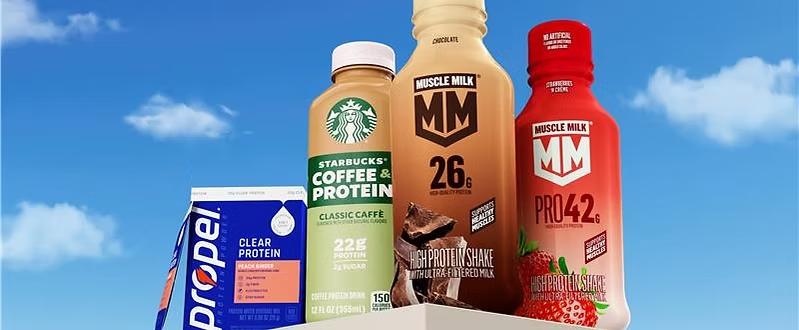
Core Insights - Coca-Cola is expanding its dairy processing capabilities by opening one of the largest dairy processing plants in the U.S. to meet the rising demand for protein-rich products, particularly Fairlife milk, which is lactose-free and lower in sugar [1][2] - The interest in protein-rich foods is increasing, partly due to the growing use of GLP-1 medications among American adults, with about 12% currently using these drugs [2][4] - Competitors across the food and beverage industry are also innovating to introduce protein-dense products, indicating a broader dietary shift among consumers [3][4] Company Strategies - Coca-Cola's CEO, James Quincey, acknowledges the competitive landscape as other companies release their own protein-focused products, emphasizing the need for innovation [2][3] - General Mills is actively launching high-protein versions of various products, including Cheerios and mac and cheese, and is also considering protein content in pet foods [4][5] - Other companies, such as Starbucks and PepsiCo, are also enhancing their product lines with high-protein options, indicating a trend towards protein fortification across the industry [6][7] Market Trends - The demand for protein-rich products is reflected in consumer purchasing behavior, with Premier Protein Shakes ranking among the top purchases during Amazon's Prime sales [4] - The trend is supported by a general consumer preference for protein, which is associated with feelings of fullness and muscle building, despite nutritionists noting that Americans typically consume enough protein [4][5] - Companies like Ingredion are experiencing significant demand increases for protein fortification products, highlighting the market's shift towards protein [5]

North America Beverage Surge: Will PepsiCo Sustain Its Growth Streak?
ZACKS· 2025-10-21 17:56
Core Insights - PepsiCo's North America beverage segment showed strong performance in Q3 2025 with 2% organic revenue growth, driven by successful brands like Pepsi Zero Sugar and Propel, indicating renewed consumer engagement [1][8] - The sustainability of this growth is contingent on balancing pricing discipline with volume expansion amid a challenging macroeconomic environment [2] Group 1: Performance and Growth Drivers - The growth in PepsiCo's beverage segment was fueled by innovative marketing campaigns and the success of new product launches, particularly in health-focused categories [1][3] - The company is adapting to evolving consumer preferences through portfolio reshaping and the introduction of modern beverages [1] Group 2: Challenges and Strategic Adjustments - PepsiCo faces challenges related to pricing pressures and the transition away from its case-pack water business, which necessitates strategic adjustments to retain consumer loyalty [2] - The company is optimizing its price-pack architecture and investing in accessible pack sizes to appeal to budget-conscious consumers [2] Group 3: Competitive Landscape - Competitors like Coca-Cola and Keurig Dr Pepper are also leveraging innovation and pricing discipline to sustain growth in the North American beverage market [4][5][6] - Coca-Cola's focus on zero-sugar offerings and functional beverages has helped maintain demand despite volume pressures, while Keurig Dr Pepper benefits from a diversified portfolio [5][6] Group 4: Valuation and Earnings Estimates - PepsiCo's shares have increased by 5.5% over the past three months, outperforming the industry [7] - The forward price-to-earnings ratio for PepsiCo is 18.17X, slightly above the industry average of 18.14X, with earnings estimates for 2025 indicating a slight decline and a projected growth of 5.6% in 2026 [9][10]
5 Safe Income Stocks Still Worth Owning
Yahoo Finance· 2025-10-20 23:30
Company Overview - Enbridge (ENB) is valued at $143.9 billion and is recognized for its long and reliable dividend track record in North America, primarily transporting oil and natural gas through a vast pipeline network [2] - Realty Income (O) is a real estate investment trust (REIT) focused on freestanding, single-tenant commercial properties, known for its monthly dividend payments and stable rental income [4][5] - Johnson & Johnson (JNJ) has a diverse business portfolio focusing on pharmaceuticals and MedTech, with a strong history of dividend payments [9][10] - PepsiCo (PEP) is known for its global brand presence and reliable dividend payouts, having increased its dividend for 53 consecutive years [11][12] - Procter & Gamble (PG) has a robust portfolio of trusted brands and has paid and increased dividends for 70 consecutive years, earning the title of Dividend King [14][15] Dividend Performance - Enbridge offers a forward dividend yield of 5.8%, significantly higher than the energy industry average, supported by stable cash flows from long-term contracts [1] - Realty Income has a current dividend yield of 5.45%, making it one of the most attractive REITs [4] - Johnson & Johnson's dividend yield is around 2.69%, above the healthcare sector average of 1.58%, with 63 years of consecutive increases [10] - PepsiCo's dividend yield stands at 3.7%, backed by consistent earnings and free cash flow [12] - Procter & Gamble's dividend yield is approximately 2.79%, supported by strong free cash flow and a cautious payout ratio of about 57% [14] Analyst Ratings and Price Targets - Enbridge stock is rated a consensus "Moderate Buy" with an average target price of $49.91, suggesting a potential 6% increase from current levels [7] - Realty Income stock is generally viewed as a dependable dividend stock, with a focus on predictable cash flow and steady growth [5] - Johnson & Johnson has a "Moderate Buy" rating with a mean target price of $199.83, indicating a potential upside of 3% [10] - PepsiCo is rated a "Moderate Buy" with a mean target price of $154.31, suggesting a potential increase of 12% [13] - Procter & Gamble stock is also rated a "Moderate Buy," with a mean target price of $170.14, indicating a potential upside of 12% [16]




2026蛋白战打响,百事、通用磨坊抢先出手,巨头到底盯上了什么?
3 6 Ke· 2025-10-20 11:23
Core Insights - The article discusses the ongoing protein revolution led by international food giants, particularly focusing on PepsiCo's strategic shift towards multifunctional protein innovations in its product lineup by 2026 [1][10]. Group 1: Company Strategies - PepsiCo is expanding its protein product offerings, including brands like Propel and Muscle Milk, and collaborating with Starbucks to enhance its market presence [1][3]. - The company has a long-term vision for the protein market, having attempted to acquire CytoSport in 2007, which was a significant player in the protein beverage sector [3][5]. - After several strategic moves, including the acquisition of Muscle Milk and Health Warrior, PepsiCo is now fully engaged in the protein market, focusing on innovation and product development [5][6]. Group 2: Industry Trends - Major food companies, including Danone and Nestlé, are also entering the protein food sector, indicating a broader industry trend towards high-protein products [3][10]. - The Chinese protein market is evolving, with a growing variety of protein sources and products, as evidenced by the increasing percentage of new products featuring protein claims, which reached 15% this year [10][11]. - Consumer awareness of protein supplementation remains limited, with 45% of respondents in a survey indicating they do not consume enough protein, highlighting a gap in education and product offerings [11][14]. Group 3: Product Innovations - Innovative protein products are emerging across various categories, including beverages and snacks, with a focus on convenience and taste [14][22]. - Examples include high-protein drinks like protein-infused bubble water and solid snacks like high-protein nut cookies, which cater to consumer preferences for easy-to-consume protein sources [22][24]. - The rise of microbial protein is also noted, providing new opportunities for product innovation due to its superior amino acid profile and digestibility [31]. Group 4: Market Potential - The article suggests that the entry of international giants into China's protein market, projected to be worth 900 billion yuan, could significantly impact local companies, pushing them to diversify and innovate [32].