P&G(PG)

Search documents
Is the Options Market Predicting a Spike in Procter & Gamble Stock?
ZACKS· 2026-01-16 14:30
Core Viewpoint - Investors should closely monitor Procter & Gamble's stock due to significant implied volatility in the options market, particularly for the Jan. 16, 2026 $85 Call option, which indicates expectations of a substantial price movement [1] Company Analysis - Procter & Gamble currently holds a Zacks Rank of 4 (Sell) within the Consumer Products – Staples industry, which is positioned in the bottom 20% of the Zacks Industry Rank [3] - Over the past 60 days, no analysts have raised earnings estimates for the current quarter, while three analysts have lowered their estimates, resulting in a decrease of the Zacks Consensus Estimate from $1.88 to $1.87 per share [3] Options Market Insights - The high implied volatility surrounding Procter & Gamble suggests that options traders anticipate a significant price movement, which could indicate an upcoming event that may lead to either a rally or a sell-off [2] - Seasoned options traders often seek to sell premium on options with high implied volatility, aiming to benefit from the decay of the option's value if the underlying stock does not move as much as expected by expiration [4]


[Earnings]Upcoming Earnings: Big Names and Financials Dominate the Week


Stock Market News· 2026-01-16 14:12
Earnings Reports Overview - Next Wednesday and Next Thursday are expected to have the highest earnings density, with over 25 reports each day [1] - Key market movers include Johnson & Johnson reporting pre-market on Next Wednesday, and Procter & Gamble, GE Aerospace, Abbott Laboratories, and Intuitive Surgical reporting pre-market on Next Thursday [1] - Netflix is scheduled to report after market close on Next Tuesday, while Intel and Capital One Financial will report after market close on Next Thursday [1] - Financials are highlighted as a consistent sector theme throughout the week [1]
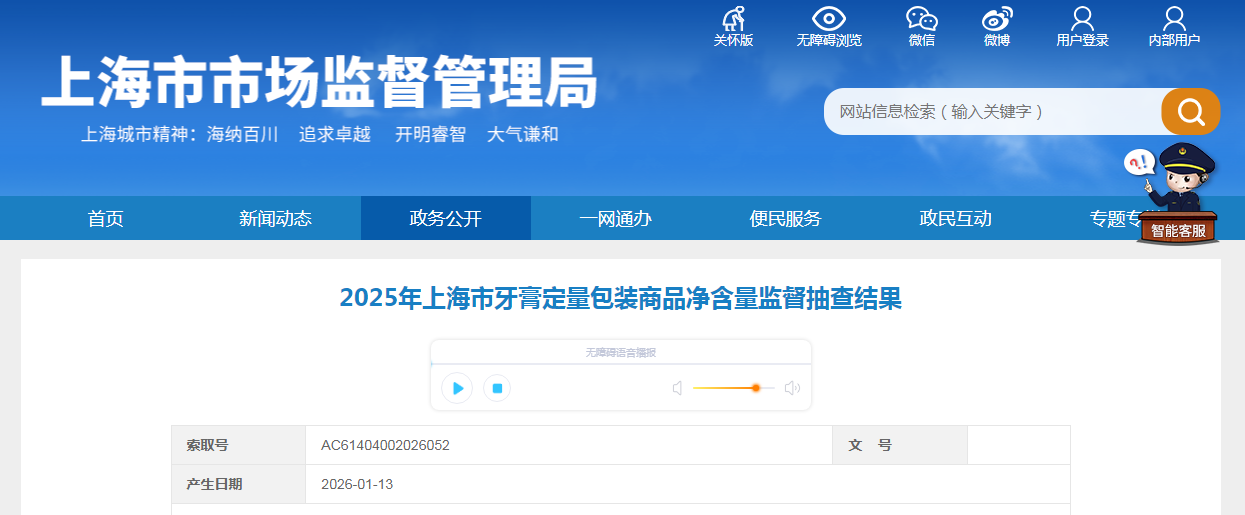
2025年上海市牙膏定量包装商品净含量监督抽查结果公布
Zhong Guo Zhi Liang Xin Wen Wang· 2026-01-16 08:35
Core Insights - The Shanghai Municipal Market Supervision Administration conducted a quality inspection of toothpaste products in 2025, with 30 batches tested and no non-compliance found [2]. Group 1: Inspection Results - The inspection was based on the JJF 1070-2023 standards for measuring the net content of packaged goods, focusing on net content labeling and actual net content [2]. - All tested toothpaste products met the relevant standards, indicating a high level of compliance in the market [2]. Group 2: Product Details - Various brands and types of toothpaste were included in the inspection, such as: - DARLIE's mineral toothpaste (120g) from Haolai Chemical [2] - Yunnan Baiyao's sensitive toothpaste (110g) from Yunnan Baiyao Group [2] - Colgate's 3D whitening toothpaste (90g) from Procter & Gamble [2] - The inspection covered products sold in multiple retail locations, including shopping malls and e-commerce platforms [2].


Earnings Preview: Procter & Gamble (PG) Q2 Earnings Expected to Decline
ZACKS· 2026-01-15 16:01
Core Viewpoint - Procter & Gamble (PG) is anticipated to report a year-over-year decline in earnings despite an increase in revenues for the quarter ending December 2025, with actual results being a significant factor influencing its near-term stock price [1][2]. Earnings Expectations - The upcoming earnings report is scheduled for January 22, and if the reported figures exceed expectations, the stock may rise; conversely, a miss could lead to a decline [2]. - The consensus estimate for PG's quarterly earnings is $1.87 per share, reflecting a year-over-year decrease of 0.5%, while revenues are projected to be $22.28 billion, an increase of 1.8% from the previous year [3]. Estimate Revisions - The consensus EPS estimate has remained unchanged over the last 30 days, indicating that analysts have not significantly altered their initial projections during this period [4]. - The Most Accurate Estimate for PG is lower than the Zacks Consensus Estimate, resulting in an Earnings ESP of -0.94%, suggesting a bearish outlook from analysts [12]. Earnings Surprise Prediction - The Zacks Earnings ESP model compares the Most Accurate Estimate to the Zacks Consensus Estimate, with a positive Earnings ESP indicating a higher likelihood of an earnings beat, particularly when combined with a strong Zacks Rank [8][10]. - PG currently holds a Zacks Rank of 4, which complicates the prediction of an earnings beat given the negative Earnings ESP reading [12]. Historical Performance - In the last reported quarter, PG was expected to post earnings of $1.90 per share but exceeded this with actual earnings of $1.99, resulting in a surprise of +4.74% [13]. - Over the past four quarters, PG has beaten consensus EPS estimates three times [14]. Conclusion - While PG does not appear to be a strong candidate for an earnings beat, investors should consider other factors when deciding to invest in or avoid the stock ahead of its earnings release [17].

Procter & Gamble CEO could see major wealth boost from stock incentives
Yahoo Finance· 2026-01-14 21:02
Core Viewpoint - Procter & Gamble has provided its new CEO, Shailesh Jejurikar, with a significant performance incentive in the form of stock options to enhance the company's performance amid slowing sales growth [1][9]. Group 1: CEO Compensation and Stake - Jejurikar currently holds a stake worth $14.9 million in the company, which could increase to over $28 million with new stock grants and options [2]. - The new CEO's stock options are currently "underwater," meaning they hold no value until P&G's stock price exceeds $153.18, while it closed at $143.46 on January 12 [4]. - All 27 top executives and board members collectively own less than 0.2% of P&G's outstanding shares, which total more than $330 billion [3]. Group 2: Leadership Background and Strategy - Jejurikar was appointed as the next CEO on July 28, 2022, succeeding Jon Moeller, and has been viewed as a potential leader for some time [6]. - Prior to his CEO appointment, Jejurikar led P&G's Global Fabric and Home Care division, managing iconic brands that account for a third of the company's sales and profit [7]. - Under Jejurikar's leadership, P&G plans to boost sales by investing in product improvements while cutting jobs, having announced a reduction of 7,000 office positions amid slowing sales [9]. Group 3: Compensation Structure - Jejurikar's annual salary is set at $1.6 million, with potential additional incentive pay of up to $3.2 million, alongside a long-term incentive award valued at $14 million [8].
P&G Recommends Stockholders Reject Mini-Tender Offer by Potemkin Limited
Businesswire· 2026-01-14 17:12
Core Viewpoint - Procter & Gamble (P&G) has been notified of an unsolicited mini-tender offer from Potemkin Limited to purchase up to 50,000 shares of its common stock at a price of $100.00 per share, which is approximately 31% below the market price of $145.52 as of December 18, 2025 [1]. Group 1 - P&G recommends that shareholders do not tender their shares in response to the unsolicited mini-tender offer due to the below-market price and various conditions attached to the offer [2]. - Shareholders who have already tendered their shares can withdraw them within 14 days after submitting their acceptance form [2]. - The mini-tender offer is set to expire on October 13, 2026, but Potemkin may extend the offering period at its discretion [2]. Group 2 - P&G does not endorse Potemkin's mini-tender offer and clarifies that it is not associated with Potemkin or the offer documentation [3]. - Mini-tender offers typically seek to acquire less than 5% of a company's outstanding shares, which means they do not provide the same level of investor protections as larger tender offers under U.S. securities laws [3]. Group 3 - The SEC has issued tips for investors regarding mini-tender offers, highlighting that some bidders may offer below-market prices to catch investors off guard [4]. - P&G urges shareholders to obtain current market quotations and consult with their brokers or financial advisors before responding to Potemkin's offer [5]. - Brokers and dealers are encouraged to review the SEC's recommendations regarding mini-tender offers [5].

TD Cowen is Bullish on The Procter & Gamble Company (PG)
Yahoo Finance· 2026-01-14 16:11
Core Viewpoint - The Procter & Gamble Company (NYSE:PG) is recognized as one of the best beauty stocks to invest in currently, despite facing challenges in the consumer staples sector in 2026 [1]. Group 1: Analyst Insights - TD Cowen analyst Robert Moskow has reduced the price target for Procter & Gamble from $168 to $150 while maintaining a buy rating, reflecting concerns about the consumer staples sector's performance in 2026 [2]. - The firm projects that volume growth for large-cap consumer staples will remain stagnant, with an expected decline of -0.9% in 2025, and pricing is anticipated to remain subdued [2]. Group 2: Regulatory Developments - Texas Attorney General Ken Paxton announced that Procter & Gamble has reached an agreement regarding the marketing and packaging of Crest children's toothpaste, ensuring accurate representation of fluoride content [3]. - The updated packaging for Crest children's toothpaste took effect on January 1, 2026, and P&G is required to comply with the agreement for five years [3]. Group 3: Company Overview - Procter & Gamble is one of the largest consumer product manufacturers globally, with annual revenues estimated at approximately $85 billion [4]. - While the company shows potential as an investment, there are suggestions that certain AI stocks may offer better upside potential with lower downside risk [4].
2025年面部护肤电商消费趋势
知行战略咨询· 2026-01-14 14:24
Investment Rating - The report indicates a positive investment outlook for the facial skincare industry, particularly in the e-commerce segment, with a projected growth rate of 19.4% year-on-year [9]. Core Insights - The facial skincare category is leading the beauty and skincare market, with significant sales growth on e-commerce platforms, especially on Douyin, which is expected to surpass 1340.39 billion in sales by 2024 [9][10]. - Tmall's market share is declining, projected to drop to 30.5% by 2024, while Douyin is rapidly gaining market share [9][10]. - The report highlights various product categories within facial skincare, noting that while some categories are experiencing growth, others are facing declines [12][14][16]. E-commerce Market Trends - The overall e-commerce market for facial skincare is expected to grow by 19.4% year-on-year, with Douyin becoming the leading platform [9]. - Tmall's sales are projected to decline, while Douyin's sales are expected to grow significantly, reaching 1340.39 billion by 2024 [9][10]. - The report provides detailed sales figures for major platforms, indicating a shift in consumer preferences towards Douyin [10]. Product Category Performance - The report categorizes facial skincare products into several key segments, including serums, creams, masks, and cleansers, with varying growth rates across these categories [8][12][14][16]. - Specific product categories such as lotions and toners are showing positive growth, while others like facial scrubs and certain masks are declining [12][14][16]. - Douyin shows remarkable growth in categories like facial care sets and liquid serums, with growth rates of 48.6% and 54.0% respectively [16][17]. Brand Performance - The report lists top-performing brands in the facial skincare market, highlighting significant sales figures and growth rates for brands like Proya, L'Oreal, and Estee Lauder [19][20][21]. - Proya is noted for its strong growth, with a sales increase of 103.9%, while other brands like Sk-II and Olay are experiencing declines [19][20][21]. - The competitive landscape is shifting, with emerging brands gaining traction alongside established players [19][20][21].



Is Procter & Gamble's 4% Sales Growth Target at Risk From Tariff Woes?
ZACKS· 2026-01-13 17:15
Core Insights - Procter & Gamble (PG) aims for up to 4% organic sales growth in fiscal 2026, but faces challenges from tariff-related cost pressures and a slowing consumer environment [1][9] - The company reported 2% organic sales growth in Q1 of fiscal 2026, with flat volumes, indicating a deceleration in consumption, particularly in North America and Europe [2][9] - PG is focusing on productivity and restructuring to achieve its growth targets, aiming for up to $1.5 billion in gross cost-of-goods savings [3][4] Financial Performance - In Q1 fiscal 2026, PG's organic sales growth was driven equally by pricing and mix, while volumes remained flat [2][9] - The company is experiencing tariff-related costs of approximately $500 million, which could impact pricing flexibility and volumes [1][9] - PG's shares have declined by 6.7% over the past six months, compared to a 10.4% decline in the industry [8] Strategic Initiatives - PG is implementing productivity savings and innovation-led pricing to offset tariff impacts and protect growth targets [3][9] - Management has indicated caution regarding price increases in a value-conscious market, emphasizing the need for effective execution on productivity and innovation [3][4] Market Context - The consumer staples sector, including competitors Church & Dwight (CHD) and Colgate-Palmolive (CL), is also facing tariff challenges, testing their brand strength and pricing power [5][6][7] - CHD reported 3.4% organic sales growth in Q3 2025, driven by volume gains, while CL has maintained 28 consecutive quarters of organic sales growth [6][7]


Should You Invest in the State Street Consumer Staples Select Sector SPDR ETF (XLP)?
ZACKS· 2026-01-13 12:20
Core Insights - The State Street Consumer Staples Select Sector SPDR ETF (XLP) is a passively managed ETF launched on December 16, 1998, providing broad exposure to the Consumer Staples sector [1] - The ETF is the largest in its category with over $14.9 billion in assets, aiming to match the performance of the Consumer Staples Select Sector Index [3] - It has a low expense ratio of 0.08% and a 12-month trailing dividend yield of 2.67%, making it an attractive option for investors [4] Fund Details - XLP seeks to replicate the performance of the Consumer Staples Select Sector Index, which represents the consumer staples sector of the S&P 500 Index [3] - The ETF has a 100% allocation in the Consumer Staples sector, providing diversified exposure [5] - The top three holdings include Walmart Inc (11.83%), Costco Wholesale Corp, and Procter & Gamble Co, with the top 10 holdings comprising 61.12% of total assets [6] Performance Metrics - As of January 13, 2026, the ETF has increased by approximately 3.22% year-to-date and 7.83% over the past year, trading between $75.6 and $83.6 in the last 52 weeks [7] - The ETF has a beta of 0.51 and a standard deviation of 11.61% over the trailing three-year period, indicating medium risk [7] Alternatives - XLP carries a Zacks ETF Rank of 3 (Hold), suggesting it is a viable option for investors seeking exposure to the Consumer Staples sector [8] - Other alternatives include Fidelity MSCI Consumer Staples Index ETF (FSTA) with $1.35 billion in assets and Vanguard Consumer Staples ETF (VDC) with $7.47 billion, both with competitive expense ratios [10]