
Shopify(SHOP)

Search documents
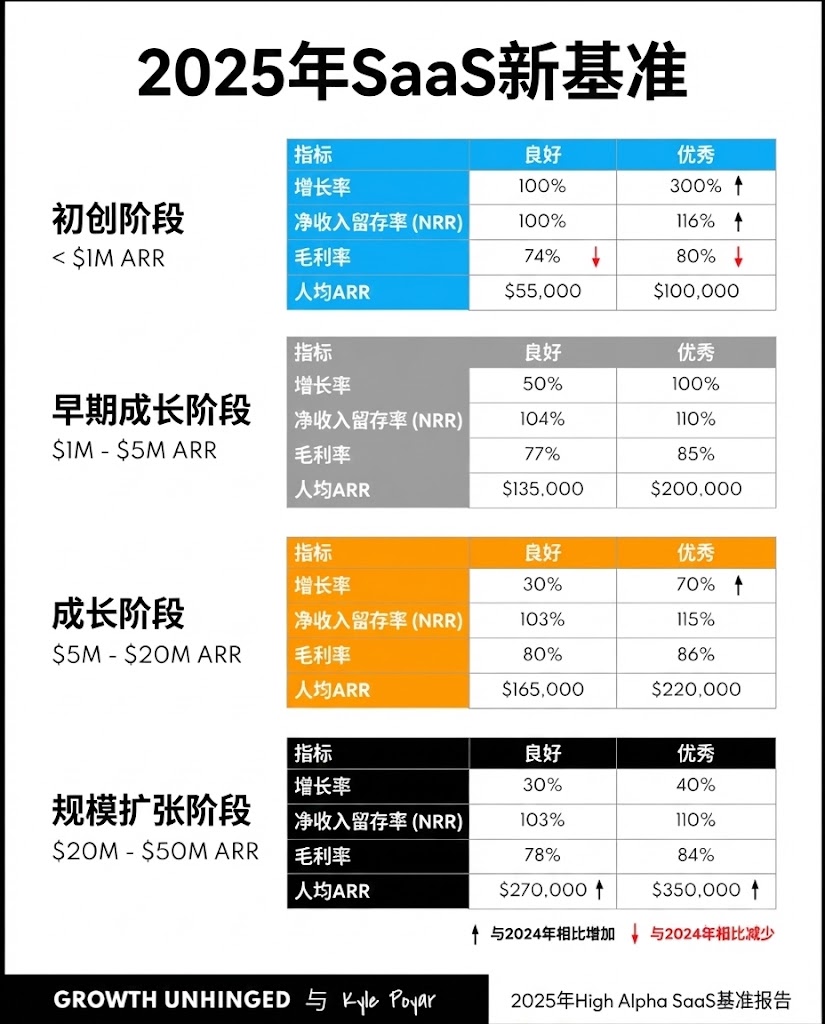
SaaS不再相信“烧钱换增长”:一份2025年的存活指南
3 6 Ke· 2025-12-16 06:13
Group 1 - The core viewpoint of the article highlights that while the market appears stable, AI-native companies are experiencing a threefold increase in growth, which is impacting margins and R&D positions. The traditional SaaS logic is failing, leading to a brutal efficiency war [1][6][7]. Group 2 - The 2025 SaaS Benchmark Report is based on a survey of over 800 B2B SaaS companies, aiming to provide insights into growth rates, personnel size, pricing strategies, and operational efficiency [2][3]. - The report identifies key performance indicators for SaaS companies, including growth rates, net revenue retention (NRR), gross margins, and revenue per full-time employee (FTE) [3][5]. Group 3 - The efficient growth matrix suggests that traditional metrics like LTV:CAC should be reconsidered, emphasizing the importance of combining CAC payback period and NRR for clearer insights into long-term profitability [6][10]. - AI-native startups are growing at a significantly faster rate than traditional B2B SaaS companies, with a notable difference in growth rates across various annual recurring revenue (ARR) brackets [11][19]. Group 4 - AI is reshaping technology roles, particularly in engineering, with significant reductions in workforce due to AI integration. The most affected roles include engineering, customer success, and marketing [17][21]. - The report indicates that companies with higher productivity, measured by revenue per employee, are achieving substantial gains, with top companies exceeding $580,000 in revenue per employee [18]. Group 5 - Pricing sweet spots have been identified, with optimal transaction sizes for growth and retention being between $10,000-$25,000 and $50,000-$100,000. Companies in these ranges tend to experience the best growth rates and retention [22][25][26].





Temu Enables Shopify Merchants to List Products on Its Marketplace
PYMNTS.com· 2025-12-15 21:59
Core Insights - Temu has launched an app that allows Shopify merchants to list products directly on Temu's marketplace, enhancing accessibility for merchants [1][2] - The app supports Temu's Local Seller Program across more than 30 markets, enabling merchants to manage listings, inventory, and fulfillment efficiently [2] - Temu's parent company, PDD Holdings, reported a 9% year-over-year revenue increase for the quarter ending September 30 [3] Temu's App Features - The app provides one-click product synchronization for fast and accurate listings, real-time inventory updates to prevent overselling, and automated order and shipping coordination [2] - The official app is available on the Shopify App Store, with additional selling information accessible at the Temu Seller Center [3] Market Context - PDD Holdings emphasizes a long-term focus on merchant support and sustainable platform development in a competitive environment [4] - Shopify reported a 32% increase in revenue to $2.84 billion and a gross merchandise value increase of 32% to $92 billion for the third quarter [4] - Shopify supports millions of businesses across over 175 countries, highlighting its growth and the frequency of new entrepreneurs making sales [5] New Features from Shopify - Shopify introduced a feature called Agentic Storefronts, allowing merchants to publish catalogs to AI platforms for enhanced customer interaction and purchasing [6]


Shopify Shares Rise 42% in a Year: Will the Rally Continue in 2026?
ZACKS· 2025-12-15 16:51
Core Insights - Shopify (SHOP) shares have returned 41.6% over the past 12 months, significantly outperforming the Zacks Computer and Technology sector's 20.4% rise, attributed to consistent results and strong execution [1] - Gross Merchandise Value (GMV) and revenues both grew by 32% in Q3 2025, with GMV growth accelerating from 31% in the previous quarter and revenue growth from 31% in the previous quarter [1][2] Performance Metrics - The acceleration in GMV and revenues is driven by an expanding merchant base, expected to continue into 2026, supported by Shopify's merchant-friendly platform and AI-powered tools [2] - Free cash flow margin has shown steady growth, reported at 15% in Q1 2025, 16% in Q2 2025, and 18% in Q3 2025, with Q4 2025 expected to slightly exceed Q3 figures [2] Competitive Positioning - Shopify has outperformed peers such as Amazon (AMZN), Wix.com (WIX), and Commerce.com (CMRC), which saw share declines of 2.9%, 53%, and 37.9% respectively over the same period [3] - The company is leveraging a vast amount of data from its expanding merchant base to enhance shopping experiences, utilizing AI tools for improved product discovery and checkout processes [7][9] International Expansion - International GMV grew by 41% year-over-year in Q3 2025, with Europe contributing 21% of revenues, and Shopify Capital now available in several European countries [10] - Shopify has expanded its payment solutions and partnerships to enhance fulfillment flexibility, including collaborations with major logistics providers [12] Earnings Estimates - The Zacks Consensus Estimate for Shopify's 2025 earnings is $1.45 per share, indicating an 11.54% year-over-year growth, with revenues projected at $11.45 billion, reflecting a 29% increase [13] - Merchant Solutions revenues are estimated at $8.70 billion for 2025, suggesting a 33.3% growth from 2024, while Subscription solutions revenues are expected to reach $2.75 billion, indicating a 17.1% growth [14] Valuation Concerns - Shopify's shares are currently considered overvalued, trading at a forward price/sales (P/S) ratio of 15.43X, significantly higher than the sector averages [15][16] - The company is facing potential gross margin pressures due to a higher mix of low-margin Merchant Solutions revenues and rapid Payments penetration [20]

Citizens Keeps Market Outperform on Shopify (SHOP) After Winter ’26 Edition
Yahoo Finance· 2025-12-14 04:13
Core Insights - Shopify Inc. is recognized as one of the 14 most promising fintech stocks to invest in, with a reaffirmed Market Outperform rating and a price target of $185 by Citizens following the release of its Winter '26 Editions update [1][3]. Group 1: Product Updates - The Winter '26 product update includes over 150 new features and enhancements aimed at improving efficiency, personalization, and innovation for merchants [2]. - Notable updates feature artificial intelligence integration, enhancing the merchant experience through smarter tools, automation, and easier platform use [3]. Group 2: Market Position and Growth Potential - Citizens expresses confidence in Shopify's growth due to its leading positions in online, offline, and B2B commerce, with expectations of continued market share gains in the e-commerce sector valued at over $6 trillion [4]. - International expansion is identified as an additional growth opportunity for Shopify [4]. Group 3: Company Overview - Shopify Inc. is a Canadian multinational commerce and financial technology company that provides an all-in-one e-commerce platform and a range of financial tools for merchants to start, run, and grow their businesses [5].
Kevin O'Leary Says Social Media Can Make Side Hustles Easier, Help Entrepreneurs Earn $1,000/Month - Shopify (NASDAQ:SHOP)
Benzinga· 2025-12-14 03:47
Core Insights - Modern technology has significantly simplified and enhanced the profitability of side hustles, enabling entrepreneurs to potentially earn an additional $1,000 per month through content creation and online sales [1][2] - Social media literacy is essential for successfully operating a side hustle, as it serves as a primary tool for marketing and sales [3][5] Industry Trends - The side hustle economy is growing, with nearly one-third of American workers engaging in gig work alongside their main jobs, according to a LinkedIn Workforce Confidence survey [4] - Younger generations, particularly Gen Z, are more inclined to have side hustles, with 57% participating compared to only 21% of Baby Boomers [5] Recommended Strategies - Entrepreneurs are advised to establish accounts on multiple platforms, post content across all channels, and understand algorithms before launching their side hustles [5] - Successful examples, such as Steven Schwartz, who co-founded a tech marketplace generating $354,000 per month after trying 23 ventures, illustrate the potential of the side hustle economy [6]

Shopify Inc. (SHOP) Presents at 53rd Annual Nasdaq Investor Conference Transcript
Seeking Alpha· 2025-12-12 20:42
Core Insights - Shopify is experiencing a dynamic period with significant developments in its offerings, particularly in the realm of Agentic Commerce, which represents a new potential channel for the company [2] Group 1: Innovations and Technologies - Shopify is at the forefront of technological advancements aimed at supporting its merchants, showcasing its leadership in the marketplace [2] - The company is developing new frameworks to facilitate Agentic Commerce providers, enhancing their ability to execute within this emerging space [2]

Husqvarna AB (publ) (HSQVY) Analyst/Investor Day Transcript
Seeking Alpha· 2025-12-12 20:42
Core Points - The event is Husqvarna Group's Capital Markets Day 2025 aimed at increasing transparency and understanding of the company while sharing a roadmap for transformation to profitable growth [1][2] Group 1 - The schedule includes presentations from the CEO Glen Instone and CFO Terry Burke, followed by a Q&A session and a product exhibition [2] - After the product exhibition, there will be strategic deep dives with divisional Presidents and another Q&A session [2]

The ETF year in review – Investment Executive
Investmentexecutive· 2025-12-12 18:24
Core Insights - The ETF market is experiencing significant innovation with a surge in single-stock ETFs, particularly from Harvest Portfolios Group Inc. and Purpose Investments Inc. [1][2] - LongPoint Asset Management Inc. has introduced highly leveraged ETFs, including those that provide inverse exposure to major stocks like Nvidia and Tesla [2][3] - The fixed-income ETF segment is also expanding, with multiple firms launching target-date bond ETFs [6][7] - The cryptocurrency ETF market is growing, with several new products offering leveraged exposure [5] - Despite the growth in new products, some niche ETFs have been terminated, indicating a shift in market focus [13][14] Single-Stock ETFs - Harvest Portfolios Group Inc. launched 27 new single-stock ETFs, while Purpose Investments Inc. added 17 [1] - LongPoint Asset Management Inc. introduced 15 ETFs that offer twice the daily movement of single stocks, focusing on major U.S. and Canadian companies [2] Leveraged and Inverse ETFs - LongPoint's offerings include triple-leveraged and inverse-leveraged ETFs, branded as MegaLong and MegaShort, linked to various indexes [3] - Global X Investments Canada Inc. expanded its BetaPro suite with new products tied to three times daily gains or losses of market indices [4] Fixed-Income ETFs - RBC Global Asset Management Inc. added three new target-date bond ETFs, facing competition from other firms like National Bank Investments Inc. and BMO Investments Inc. [6][7] - The total number of target-date bond ETFs launched this year reached 22 across various providers [7] Cryptocurrency ETFs - A total of 19 new cryptocurrency ETFs were launched by seven companies, including BlackRock and 3iQ Corp., with some offering leveraged exposure [5] Market Dynamics - The Canadian ETF market saw significant product launches, with BMO Investments leading with 24 new ETFs, while BlackRock's market share increased slightly to 25.7% [16] - Vanguard Investments Canada Inc. maintained its market share at 14.4% without introducing new products [17] Terminations and Market Shifts - Several niche ETFs, including carbon-credit and metaverse ETFs, were terminated, reflecting changing investor preferences [13][14] - Invesco Canada Ltd. cut back on its ESG-themed ETFs, eliminating seven from its lineup [14]

Analyst Says Shopify Has A Secret AI Advantage — Here's What It Is
Benzinga· 2025-12-11 16:43
Core Insights - Shopify Inc's Winter 2026 Edition emphasizes advancements in artificial intelligence, checkout, marketing, and merchant tools, showcasing the company's commitment to enhancing its platform [1][2] AI and Sidekick Integration - The integration of the AI assistant, Sidekick, into Shopify Admin allows merchants to automate tasks such as content creation and data analysis, providing significant value for small teams [3] - The launch of Sidekick Pulse transforms the tool into a proactive partner, offering personalized growth recommendations, which is seen as a key competitive advantage for Shopify in the SMB market [4] Expanding Commerce Reach - Shopify's partnerships with OpenAI, Perplexity, and Microsoft Copilot enable consumers to complete checkouts within AI chat interfaces, positioning the company favorably in the evolving landscape of online shopping [5] - The Shopify Product Network allows merchants to showcase complementary products from other sellers, creating a new passive revenue stream without the need for inventory management [6] Upgrades Across Checkout and Merchant Tools - Notable upgrades in checkout include the rollout of Shop Pay Installments in the U.K. and the addition of Apple Pay within Shop Pay, expanding funding options for merchants [7] - The introduction of the POS Hub, a USB-based hardware accessory, is expected to enhance Shopify's presence in physical retail by stabilizing connections among various devices [8] Additional Updates - Shopify Capital has expanded into the Netherlands, Spain, and Ireland, and new features such as USDC-based credits and a deals feed in the Shop App have been introduced to enhance customer engagement [9]

智能代理时代- 它将如何改变商业与支付方式-The Age of Agents How does it change commerce and how we pay
2025-12-11 02:24
Summary of Key Points from the Conference Call on Agentic Commerce Industry Overview - The discussion centers around the evolution of commerce driven by AI agents, termed "Agentic Commerce," which is expected to transform payment and retail sectors significantly [2][24]. Core Insights and Arguments - **Historical Context**: The evolution of retail from department stores to eCommerce and now to AI-driven commerce is highlighted, indicating a significant shift in how consumers interact with products and services [2]. - **Current State of AI in Commerce**: While a growing number of consumers are using AI tools for product searches, the impact on actual commerce remains minimal, with AI chatbots contributing to only a small fraction of total web traffic [3][30]. - **Future of AI Agents**: The potential for AI agents to autonomously plan and execute tasks on behalf of consumers is discussed, which could lead to a more personalized shopping experience [4][5][44]. - **Impact on Payments**: The rise of AI agents is expected to change payment methods, with traditional card networks likely emerging as winners due to their established trust and governance frameworks [9][10][68]. - **Consumer Behavior**: The shift in consumer behavior towards AI-driven shopping experiences is anticipated to take time, with incremental changes being observed in the near term [7][16]. Important Data and Statistics - **Consumer Usage of AI**: Approximately 47% of consumers in the U.S. have used AI for shopping-related tasks, with the most common use cases being finding gift ideas (21%) and conducting product research (16%) [26][30]. - **Market Potential**: McKinsey estimates that orchestrated revenue from Agentic Commerce within B2C retail could reach $1 trillion by 2030 in the U.S., with a global potential of $3 to $5 trillion [28][29]. Risks and Challenges - **Trust and Governance**: The need for robust governance frameworks and trust in AI agents is emphasized, as these agents will handle sensitive transactions and consumer data [9][68]. - **Disintermediation Risks**: Concerns about disintermediation in eCommerce marketplaces are raised, particularly if consumers begin their shopping journeys on third-party AI platforms [16][60]. - **Fragmentation of Protocols**: The current landscape is characterized by fragmentation and experimentation with various protocols for agent communication and payments, which could complicate the adoption of Agentic Commerce [48][69]. Merchant Responses and Developments - **Cautious Adoption**: Merchants are approaching the integration of AI agents with caution, balancing the potential for increased traffic against risks related to brand recognition and data control [60]. - **Innovative Integrations**: Companies like Etsy and eBay are actively integrating AI capabilities to enhance consumer experiences, while Amazon is taking a more protective stance against external AI agents [61][66]. Conclusion - The transition to Agentic Commerce represents a significant paradigm shift in how consumers shop and how payments are processed, with implications for both traditional and new-age payment networks. The evolution of AI agents will require careful navigation of trust, governance, and consumer behavior dynamics as the industry adapts to these changes [46][70].



