Vale(VALE)

Search documents
X @Bloomberg
Bloomberg· 2025-10-15 20:57
Company Actions - Vale SA 提议回购 30 亿美元的永久本地债券 [1] - 一群持有 Vale SA 永久本地债券的投资者正在寻求更好的条款 [1]

华夏、易方达首批上报巴西ETF,指数成分股包含淡水河谷等
Sou Hu Cai Jing· 2025-10-13 12:20
Core Viewpoint - The report highlights that Huaxia, E Fund, and Huitianfu are submitting ETFs to Brazil, marking a significant step in the interconnection of capital markets between China and Brazil [1] Group 1: ETF Submissions - Huaxia's Brazil Ibovespa ETF and E Fund's Itaú Brazil IBOVESPA ETF have been submitted, both designed to track products issued by Brazilian asset management institutions [1] - The Ibovespa index is noted as the most representative stock index in Brazil and Latin America, primarily composed of major global commodity giants like Vale and Petrobras [1] Group 2: Market Connectivity - The submission of these ETFs is a result of the ongoing efforts to enhance connectivity between Chinese and Brazilian capital markets [1] - This year, Huaxia, E Fund, and Huitianfu have collaborated with Brazilian asset management institutions to launch products tracking China's ChiNext ETF, A50 ETF, and CSI 300 ETF, facilitating Brazilian investors' access to Chinese markets [1]

助力国际企业在沪发展壮大 龚正会见出席市咨会国际企业家
Jie Fang Ri Bao· 2025-10-11 01:41
Core Insights - The Shanghai Mayor, Gong Zheng, welcomed the participation of Vale S.A., Mizuho Financial Group, and Sumitomo Mitsui Trust Holdings in the 37th Shanghai Mayor's International Entrepreneurs Consultation Meeting, emphasizing the importance of international enterprises in Shanghai's development goals [1][2] - The meeting serves as a platform for enhancing cooperation, sharing advanced ideas, and promoting international collaboration, particularly in the context of the complex global landscape [2] Group 1 - Shanghai is accelerating its development towards becoming a world-class socialist modern metropolis, guided by the "Five Centers" strategy as per President Xi Jinping's directives [1] - The city aims to create a market-oriented, law-based, and international business environment to support the growth of various enterprises, including international ones [1] - The annual consultation meeting is viewed as a significant event for fostering friendship and collaboration among international business leaders [1] Group 2 - Vale's Chairman, Stone Shi, Mizuho's Chairman, Seiji Imai, and Sumitomo Mitsui's CEO, Takashi Nakajima, expressed optimism about the opportunities in China's market and Shanghai's bright development prospects [2] - They emphasized the need for international enterprises to find the right direction and develop smarter strategies amidst the complex global situation [2] - The leaders expressed a desire to deepen cooperation, implement more collaborative projects, and support both foreign enterprises entering China and Chinese enterprises expanding abroad [2]
巴西:资源沃土存潜力,铜矿产量续新章
Guo Tai Jun An Qi Huo· 2025-10-10 11:13
Report Industry Investment Rating No information provided. Core Viewpoints of the Report - Brazil has abundant copper resources with diverse deposit types, mainly distributed in the south and northeast, and has great potential for growth in copper reserves and production [1][53]. - Brazil's relatively complete mineral resource law attracts foreign investment in the mining industry, but there are also restrictions on foreign capital inflows that may affect mining investment [1][17]. - The continuous improvement of Brazil's mining law system and policies support the development of key minerals for energy transition, promoting the rational and efficient development of Brazil's mineral resources [25]. - Brazil's copper mine production is on the rise, and its copper concentrate exports are also increasing, with China being the largest export destination [2][46]. Summary by Relevant Catalogs 1. Overview of Brazilian Copper Resources - **Geological Conditions and Deposit Types**: Brazil is located in the Brazilian Basin with ancient and complex geology, characterized by "Three Shields and Three Basins," and has rich copper resources. Different from other regions, Brazil has more composite - type copper deposits, with the top four types accounting for 85% of the total [7][8]. - **Distribution of Copper Mines**: Brazilian copper mines are mainly distributed in the south and northeast, such as the Carajás region, Amazon Basin, and some states like Pará, Bahia, etc. These areas are important bases for the Brazilian copper mining industry [8]. - **Growth Potential of Reserves and Production**: As of 2022, Brazil's copper reserves were 11.2 million tons, accounting for 1.30% of the global total. The estimated copper resource volume is 32.93 million tons. In 2024, the copper production was 425,000 tons, accounting for 1.86% of the global total. With the attraction of international investment, there is great potential for growth in copper reserves and production [12]. 2. Optimization of Brazilian Mineral Resource Law and its Impact on the Copper Industry - **Attraction of Foreign Investment through Laws**: Brazil's mining management has a sound legal system. The current Mining Code was revised in 2022. The law encourages and protects exploration and mining activities, especially foreign investment. It also provides preferential tax policies and relaxed foreign - ownership restrictions for new copper projects [17][20][21]. - **Restrictions on Foreign Capital Inflows**: Brazil has strict foreign exchange control policies, and transferring profits out of the country may face challenges and high taxes. Additionally, political, policy, and force - majeure risks may make foreign investors cautious [23][24]. 3. Release of Brazilian Copper Mine Production Capacity - **Overall Production Trend**: In 2024, Brazil's copper mine production was 388,000 tons, and it is expected to reach 473,200 tons in 2027, showing an upward trend [26]. - **Production of Major Mines**: - **Vale**: Salobo copper mine's production is expected to increase steadily from 199,900 tons in 2024 to 250,000 tons from 2025 - 2027, and continue to rise after 2028. Sossego copper mine's average production from 2025 - 2027 is expected to be 60,000 - 70,000 tons per year, and about 50,000 tons per year after 2028 [2][29]. - **Lundin Mining**: Chapada copper mine's average production from 2025 - 2030 is expected to be about 42,000 tons [37]. - **Ero Copper**: Caraíba's production is expected to be 37,500 - 42,500 tons in 2025, 40,000 - 45,000 tons in 2026, and 45,000 - 50,000 tons in 2027. Tucumã's production is expected to be 37,500 - 42,500 tons in 2025, 45,000 - 50,000 tons in 2026, and decline to 40,000 - 45,000 tons in 2027 [2][42][43]. - **Silver - colored**: Serrote copper mine's copper concentrate production is stable at about 25,000 tons [2][54]. 4. Increase in Brazilian Copper Exports - **Export Trend**: Brazilian copper exports are on the rise, slightly higher than domestic production, indicating limited or no copper - smelting capacity in Brazil, and most of the copper concentrates are for export [3][46]. - **Export Destinations**: Brazil mainly exports copper to China and some European countries, with China being the largest export destination, accounting for 26% of total exports. From 2025 - 2027, Brazil's copper concentrate exports to China are estimated to increase by 6,500 tons, 10,400 tons, and 5,200 tons respectively [3][47].
中国不想再当“卑微甲方”
Hu Xiu· 2025-10-10 04:13
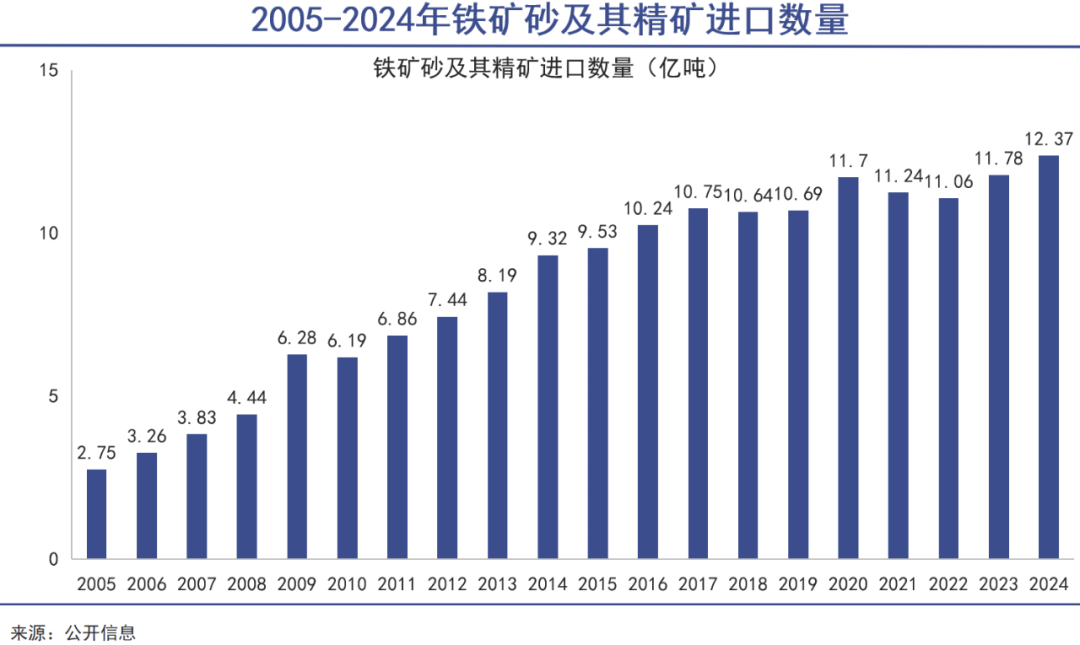
Core Viewpoint - Recent actions by China regarding strategic mineral resource management have garnered significant attention, indicating a potential shift in its pricing strategy in the global commodities market [1][7]. Group 1: China's Actions in Mineral Resource Management - On September 30, 2023, it was reported that China Mineral Resources Group requested domestic buyers to suspend purchases of BHP's iron ore cargo priced in USD, causing a stir in international raw material markets [2][4]. - On October 9, 2023, China's Ministry of Commerce announced export controls on rare earth-related technologies and items, further emphasizing its strategic approach to resource management [5]. Group 2: China's Position in the Global Market - China is the largest consumer of iron ore globally, importing 1.237 billion tons in the previous year, which is nearly five times the amount imported two decades ago, accounting for approximately 75% of global seaborne iron ore imports [8][9]. - Despite being a major buyer, China has historically lacked pricing power, often forced to accept prices set by suppliers, particularly Australian mining giants [9][11]. Group 3: Historical Context of Pricing Power - From 2003 onwards, China has been the largest buyer of Australian iron ore but has been subjected to unfavorable pricing mechanisms, such as the "first-mover-follow" pricing strategy employed by major mining companies [11][12]. - Significant price increases have been imposed on China, with instances of price hikes reaching as high as 96.5% in 2008, reflecting the lack of negotiation power [13][16]. Group 4: Industry Consolidation Efforts - The fragmentation of Chinese enterprises in the commodities market has contributed to its weak pricing power, prompting the establishment of the China Mineral Resources Group in 2022 to consolidate procurement efforts [21][24]. - The group has initiated centralized procurement for iron ore, representing a significant shift from the previously fragmented purchasing approach of over 600 steel companies [25][26]. Group 5: Future Outlook and Global Infrastructure - China's pursuit of global pricing power in commodities is not aimed at economic hegemony but rather to secure fair benefits for its economic development, especially in light of a new global infrastructure cycle [34][40]. - The anticipated infrastructure investments in the Middle East and emerging economies present opportunities for China to leverage its position in the iron ore and rare earth markets, which are critical for construction and new energy projects [35][39].



X @Bloomberg
Bloomberg· 2025-10-06 14:50
Vale is repurchasing its costly perpetual bonds, dating back to its 1990s privatization https://t.co/iqW9Ur0XBc ...
全球钢铁行业变天?中国暂停购买澳洲铁矿,背后是怎样的布局?
Sou Hu Cai Jing· 2025-10-06 12:37
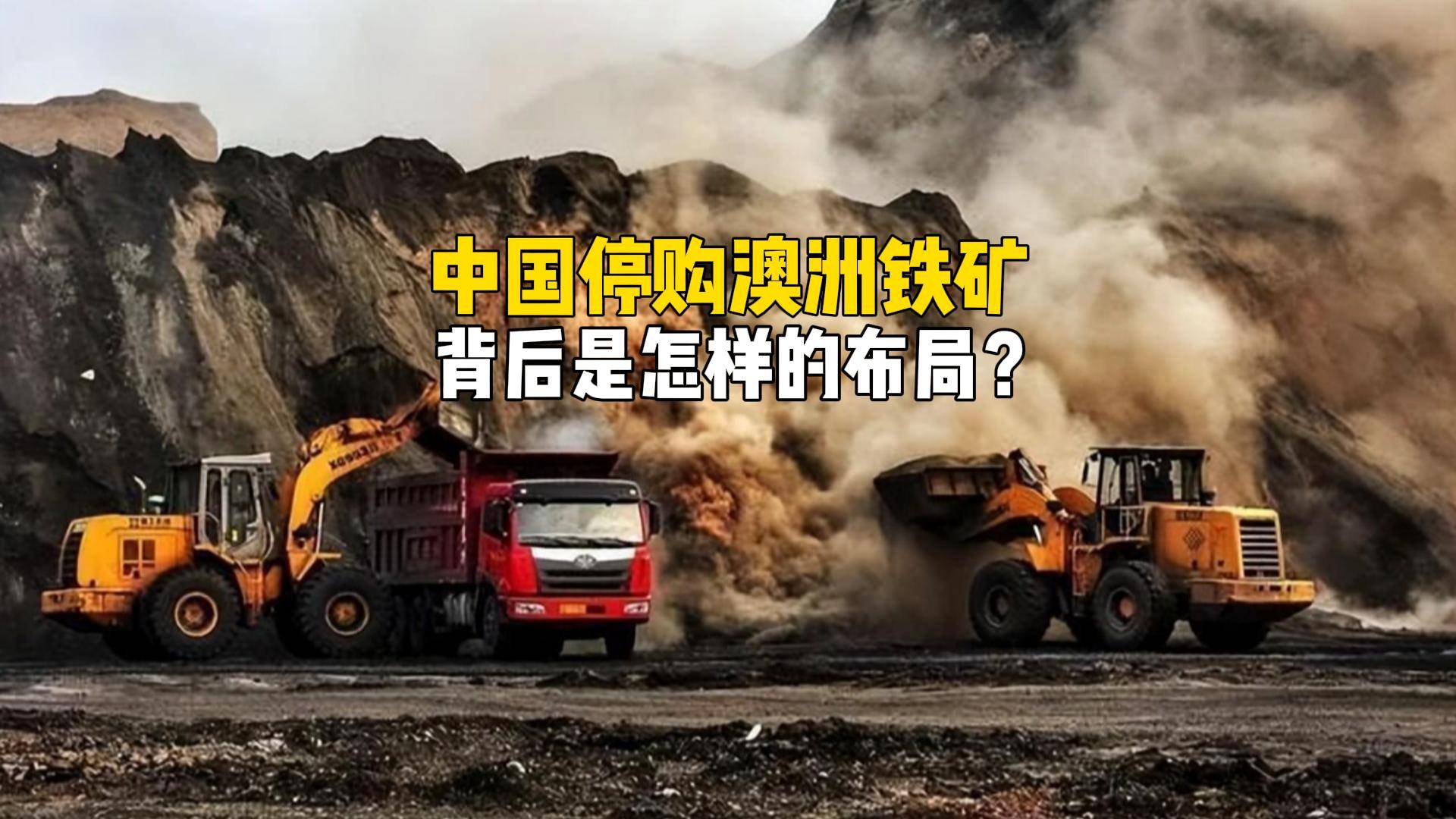
Core Viewpoint - China has suspended the purchase of Australian iron ore from BHP due to a decline in ore quality and a failure to negotiate lower prices, signaling a shift in global iron ore pricing power and China's ability to reshape the steel industry [2][4][6]. Group 1: Industry Dynamics - The global iron ore market is dominated by three major players: BHP (Australia), Rio Tinto (UK), and Vale (Brazil), which have historically controlled pricing [4]. - During the Morrison administration, Australia attempted to leverage its position against China's steel industry, leading to inflated iron ore prices that reached $267 per ton, significantly impacting China's steel profits [4][6]. - In 2024, these three companies are projected to earn a net profit of 184 billion yuan, while China's entire steel industry is expected to generate only 29 billion yuan, highlighting the disparity in profit distribution [4][6]. Group 2: China's Strategic Moves - China established the China Mineral Resources Group to consolidate negotiations and enhance its bargaining power in the iron ore market, moving away from fragmented negotiations by individual steel mills [6][8]. - China's recent decision to halt Australian iron ore imports reflects the culmination of years of strategic planning and positioning in the global iron ore market [6][10]. Group 3: Alternative Supply Sources - China is strengthening its relationship with Brazil's Vale, which is the only competitor capable of challenging Australian iron ore dominance, with Brazil's iron ore production reaching 328 million tons last year and expected to hit 400 million tons this year [9]. - The Simandou iron ore project in Guinea, with reserves of 5 billion tons and high-grade ore, represents a significant asset for China, with initial production capacity projected at 12 million tons per year [10][12]. - The timing of the suspension of Australian iron ore imports coincides with the arrival of the first shipment from the Simandou project, indicating a strategic shift in sourcing [10][12]. Group 4: Future Outlook - China's steel industry, despite its technological advancements, has been hampered by reliance on imported iron ore, but recent developments suggest a move towards greater control over the supply chain [14]. - The restructuring of the steel industry could mirror the successful consolidation seen in China's rare earth industry, potentially leading to improved profitability and market stability [14].
Wall Street Analysts See VALE (VALE) as a Buy: Should You Invest?
ZACKS· 2025-10-03 14:31
Core Viewpoint - The article discusses the reliability of brokerage recommendations, particularly focusing on VALE S.A. (VALE), and emphasizes the importance of using these recommendations in conjunction with other analytical tools like the Zacks Rank to make informed investment decisions [1][5][14]. Brokerage Recommendations for VALE - VALE has an average brokerage recommendation (ABR) of 2.00, indicating a Buy, based on recommendations from 14 brokerage firms, with 57.1% (eight out of fourteen) classified as Strong Buy [2][5]. - Despite the positive ABR, the article cautions against making investment decisions solely based on this metric due to the historical ineffectiveness of brokerage recommendations in predicting stock price increases [5][10]. Analysis of Brokerage Recommendations - Brokerage analysts tend to exhibit a strong positive bias in their ratings, often issuing five Strong Buy recommendations for every Strong Sell, which may mislead investors [6][10]. - The article suggests that the best use of brokerage recommendations is to validate personal research or as an indicator alongside more reliable metrics [7][11]. Zacks Rank Comparison - Zacks Rank categorizes stocks into five groups based on earnings estimate revisions, with a strong correlation to near-term stock price movements, contrasting with the ABR which is based solely on brokerage recommendations [8][9]. - The Zacks Rank for VALE is currently 3 (Hold), indicating a cautious approach despite the Buy-equivalent ABR, as the consensus estimate for the current year remains unchanged at $1.69 [14][15].

Steelworkers ratify new four-year agreement with Vale
Globenewswire· 2025-10-02 19:41
Core Points - The United Steelworkers (USW) Local 2020-05 has ratified a new four-year collective agreement with Vale, effective until October 26, 2029, which includes significant wage increases and bonuses [2][3]. Wage and Compensation - The contract provides a five-percent wage increase in the first year, followed by three-percent increases in each of the subsequent three years [3]. - Members will receive a $3,500 signing bonus within four weeks of ratification [3]. Benefits and Protections - The agreement includes substantial pension improvements, enhanced health and safety provisions, and new workplace fairness protections [4]. - It recognizes the National Day for Truth and Reconciliation as a statutory holiday, increases shift premiums and meal allowances, and strengthens job posting and vacation rights [4]. Union Leadership Statements - USW District 6 Director Kevon Stewart emphasized the solidarity and determination of members in achieving real improvements in wages, pensions, and protections [5]. - USW Area Co-ordinator Pascal Boucher noted that the agreement lays a strong foundation for future negotiations with unprecedented wage increases and stronger protections [5]. - Local 2020-05 President Sherri Hawkes highlighted the success as a result of thorough planning, member engagement, and solidarity throughout the negotiation process [5]. Union Overview - The United Steelworkers union represents 225,000 members across various economic sectors in Canada and is the largest private-sector union in North America, with a total of 850,000 members in Canada, the United States, and the Caribbean [6]. - The union is recognized for its strong track record in improving workplace conditions and negotiating better compensation, including wages, benefits, and pensions [7].

VALE S.A. (VALE) Beats Stock Market Upswing: What Investors Need to Know
ZACKS· 2025-09-30 23:01
Core Insights - VALE S.A. stock performance has outpaced the S&P 500 and the Basic Materials sector over the past month, gaining 4.57% compared to 3.15% and 4.37% respectively [1] - Upcoming earnings report is projected to show a decline in earnings per share (EPS) by 21.43% year-over-year, with an expected EPS of $0.44 and revenue of $10.28 billion, reflecting a 7.63% increase from the previous year [2] - For the entire fiscal year, earnings are estimated at $1.69 per share and revenue at $37.79 billion, indicating a decline of 7.14% and 0.71% respectively from the prior year [3] Analyst Forecasts - Recent revisions to analyst forecasts for VALE S.A. are crucial as they reflect changes in short-term business dynamics, with positive revisions indicating analyst optimism [4] - The Zacks Rank system, which assesses estimate changes, is designed to provide actionable investment ratings, with stocks rated 1 historically delivering an average annual return of +25% since 1988 [5][6] Valuation Metrics - VALE S.A. currently has a Forward P/E ratio of 6.36, which aligns with the industry average, indicating no significant deviation [7] - The Mining - Iron industry, part of the Basic Materials sector, holds a Zacks Industry Rank of 89, placing it in the top 37% of over 250 industries [7][8]