
Visteon(VC)

Search documents
Visteon CEO Sells 49K Shares for $4.6 Million -- Here's What Investors Should Know
Yahoo Finance· 2026-03-25 13:31
Visteon is a Michigan-based automotive electronics supplier focused on digital cockpit technologies, including instrument clusters, infotainment platforms, battery management systems, and domain controllers. The company serves major global vehicle manufacturers (OEMs) and has positioned itself to capitalize on the auto industry's ongoing shift toward software-defined, digitally connected vehicles.What happened to Lawande's ownership stake? Combined direct and indirect holdings were reduced by approximately ...

汽车行业_一切都在正确的位置?-Automobiles Sector_ Everything In The Right Place_
2026-03-22 14:35
Global Research ab 15 March 2026 Road & Spak Everything In The Right Place? As we had documented in this weekly space, we grew more cautious particularly on suppliers as the group had rallied through 4Q25 earnings season. Our thinking was that most of the gains had been driven by multiple expansion, multiples looked stretched, and we saw a low probability that positive earnings revisions could backfill multiples. This meant that continued outperformance had to be driven by further multiple expansion – histo ...





Visteon Launches Edge-to-Cloud AI Platform for Intelligent Vehicles Powered by NVIDIA Technologies
Prnewswire· 2026-03-16 20:00
Visteon Launches Edge-to-Cloud AI Platform for Intelligent Vehicles Powered by NVIDIA Technologies Accessibility StatementSkip NavigationNew collaboration enables production-ready, regionally governed AI deployment across global automaker platformsVAN BUREN TOWNSHIP, Mich., March 16, 2026 /PRNewswire/ -- Visteon Corporation (NASDAQ: VC), a global leader in automotive technology, today announced they will develop and deploy an edge-to-cloud AI arbitration architecture for software-defined vehicles with NVIDI ...



AI Startup Myelin Foundry Raises ₹48 Cr From ASM Technologies
Inc42 Media· 2026-02-20 12:58
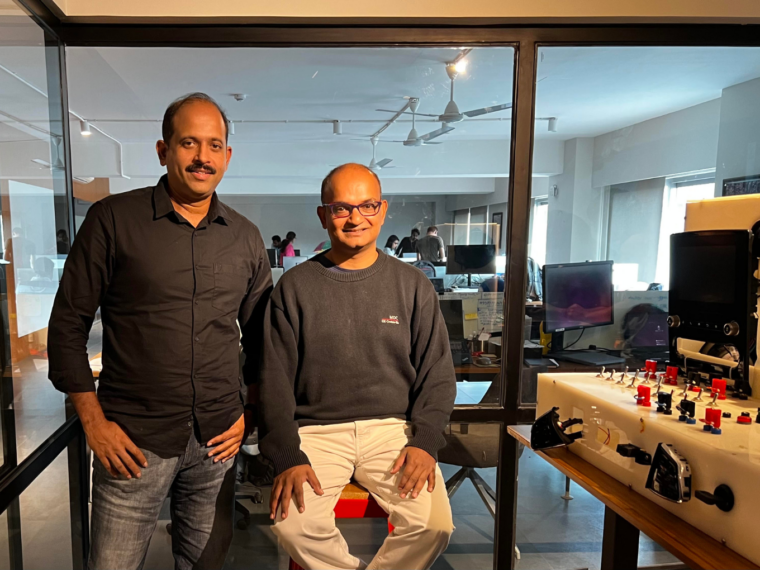
Core Insights - ASM Technologies has approved an investment proposal to acquire a 20% stake in AI startup Myelin Foundry for ₹48 Cr (approximately $5.3 million) [1][2] - The partnership aims to integrate Myelin's edge-first AI stack into ASM's engineering design-led manufacturing portfolio, enhancing real-time operational intelligence in various sectors [1][3] Company Overview - Myelin Foundry, founded in 2019 by Dr. Gopichand Katragadda and Ganesh Suryanarayanan, specializes in AI solutions for edge devices, particularly in the media, entertainment, and automotive sectors [2] - The startup's solutions provide real-time analytics based on diverse data types, including audio, video, and sensor data [2] Product Offerings - Myelin Foundry's core products include: - XAIRA: An agentic AI assistant for conversations [6] - P.I.E.: An AI suite for in-car protection, information, and entertainment [6] - INSPECT AI: A system for detecting surface defects in products [6] - Upscaler AI: Enhances SD to HD/FHD in real-time, reducing streaming costs by 40% [6] - LIP-SYNC AI: Uses generative AI to sync lip movements to audio in multiple languages [6] Industry Context - The investment comes amid the 'India AI Impact Summit 2026', which has seen significant investment commitments for Indian AI startups [5] - The partnership is expected to address the growing need for real-time operational intelligence and equipment reliability in sectors such as semiconductor, electronics, solar, and engineering [4]
Visteon Corporation Q4 2025 Earnings Call Summary
Yahoo Finance· 2026-02-19 17:33
Core Insights - The company delivered a record 2025 Adjusted EBITDA of $492 million with a margin of 13.1% despite facing significant challenges from softer US EV demand and market share shifts in China [1] - New business wins reached a record $7.4 billion, marking a 20% year-over-year increase, driven by high demand for SmartCore and advanced display systems [1] - Strategic diversification efforts are reducing reliance on legacy OEMs, with $500 million in new business from Toyota and nearly 15% of wins coming from two-wheeler and commercial segments [1] - Vertical integration initiatives were accelerated in 2025, including in-house molding of metal brackets and optical bonding to simplify supply chains and capture incremental value [1] - Global growth over the market was limited to 2% due to a seven percentage point drag from Battery Management Systems (BMS) and global OEM share loss in China [1] - The company reinforced its advanced technology leadership through significant OLED display wins with luxury OEMs and the expansion of the Cognito AI smart assistant [1]
Visteon(VC) - 2025 Q4 - Earnings Call Transcript
2026-02-19 15:02
Financial Performance - In 2025, the company reported net sales of $3,768 million, a decrease of $98 million or 3% year-over-year, with adjusted EBITDA reaching a record $492 million, representing 13.1% of sales, the highest in the company's history [3][4][27] - Adjusted free cash flow for the year was strong at $292 million, reflecting continued strength in the underlying earnings profile [30] - The company maintained a strong net cash position of $472 million at the end of the fourth quarter [27] Business Line Performance - Displays were a standout product line, with sales growing approximately 20% year-over-year, while battery management systems (BMS) faced headwinds due to softer EV demand in the U.S. [3][4] - Nearly 50% of new business wins in 2025 were for displays, indicating a strong market position in this segment [9] - The company secured significant OLED display wins with luxury OEMs, establishing leadership in this segment [9] Market Performance - Sales in the Americas were impacted by lower customer vehicle production and a steep drop in EV production at GM and Stellantis, resulting in an 8% headwind to sales [11] - Europe showed strong performance with an 11% growth over market, driven by new product launches with Audi, Ford, and Renault [12] - Sales in China declined year-over-year due to market share losses among global OEMs, but there was sequential sales growth in Q4 supported by new product launches [13] Strategic Direction - The company is diversifying its customer base by expanding its presence with specification automakers, securing $500 million of new business with Toyota [5][6] - There is a focus on software-defined vehicles and adjacent markets, with nearly 15% of new business wins coming from two-wheeler and commercial vehicle manufacturers [7] - The company is increasing vertical integration in manufacturing to simplify the supply chain and capture incremental value [8] Management Commentary - Management acknowledged challenges in the operating environment, particularly in the U.S. EV market and ongoing shifts in China [3][4] - The outlook for 2026 anticipates sales in the range of $3.65 billion to $3.85 billion, with headwinds from lower BMS volumes and discontinued Ford models [19][20] - Management expressed confidence in the company's ability to navigate market volatility and drive growth through strategic initiatives [14] Other Important Information - The company deployed approximately $275 million of capital in 2025, including investments in vertical integration and shareholder returns [31] - S&P upgraded the company to BA1, reflecting expanded margins and strong free cash flow generation [32] - The company plans to increase its quarterly dividend by 36% to $0.375 per share, reflecting confidence in cash flow durability [40] Q&A Session Summary Question: Can you elaborate on DRAM exposure and its impact on guidance? - Management indicated that memory chips are used in virtually all products, with an anticipated increase in memory costs representing about 2% of sales [43][49] Question: What is the revenue weighting for the first half versus the second half of 2026? - Management expects the second half of 2026 to be better than the first half due to backloaded launches, particularly with Toyota [51] Question: What is the M&A pipeline looking like? - The company is considering small, bolt-on acquisitions that enhance technology capabilities and are margin accretive from day one [65][66]
Visteon(VC) - 2025 Q4 - Earnings Call Transcript
2026-02-19 15:02
Financial Data and Key Metrics Changes - Net sales for 2025 were $3.768 billion, a decrease of $98 million or 3% year-over-year, with customer production down 1% and pricing representing a 4% headwind [27][28] - Adjusted EBITDA reached $492 million, or 13.1% of sales, marking the highest level in the company's history [4][24] - Adjusted free cash flow for the year was $292 million, reflecting strong underlying earnings [30] Business Line Data and Key Metrics Changes - Displays were a standout product line, with sales growing approximately 20% year-over-year, driven by strong customer demand for larger and advanced displays [3][9] - Battery management systems (BMS) faced headwinds due to softer EV demand in the U.S. and impacted overall growth by about 7 percentage points [3][19] - Nearly 50% of new business wins in 2025 were for displays, indicating a strong position in this segment [9][17] Market Data and Key Metrics Changes - Sales in the Americas were impacted by lower customer vehicle production and a steep drop in EV production at GM and Stellantis, resulting in an 8% headwind to sales [11][12] - Europe showed strong performance with an 11% growth over market, driven by new product launches and the ramp-up of engineering services [12][14] - Sales in China declined year-over-year due to market share losses among global OEMs, although there was sequential growth in Q4 supported by new product launches [13][19] Company Strategy and Development Direction - The company is diversifying its customer base by expanding its presence with specification automakers, securing $500 million of new business with Toyota [5][6] - Strategic initiatives include increasing vertical integration in manufacturing and investing in technology development, particularly in AI and software-defined vehicles [8][10] - The company aims to leverage emerging trends in advanced displays and AI technology to drive future growth [9][10] Management's Comments on Operating Environment and Future Outlook - Management acknowledged challenges in the operating environment, including lower EV production and market dynamics in China, but expressed confidence in the company's strategic initiatives for future growth [19][20] - For 2026, the company expects sales in the range of $3.625 billion to $3.825 billion, with anticipated headwinds from BMS and discontinued vehicle models at Ford [32][33] - Management highlighted the potential for growth in 2027 as headwinds subside and new product launches ramp up [55] Other Important Information - The company returned capital to shareholders through $50 million in share repurchases and initiated a quarterly dividend of $0.375 per share, reflecting confidence in cash flow durability [27][40] - S&P upgraded the company to BA1, citing expanded margins and strong free cash flow generation [32] Q&A Session Summary Question: Can you elaborate on DRAM exposure and its impact on guidance? - Management indicated that memory chips are used in virtually all products, with an anticipated increase in memory costs representing about 2% of sales [44][49] Question: What is the revenue weighting for the first half versus the second half of 2026? - Management expects the second half of 2026 to be better than the first half due to backloaded launches, with Q1 anticipated to be the lowest quarter of the year [51][52] Question: What is the M&A pipeline looking like? - Management mentioned a pipeline that could be up to twice the amount of capital expenditures for 2026, focusing on small, bolt-on acquisitions that enhance technology capabilities [65][66]
Visteon(VC) - 2025 Q4 - Earnings Call Transcript
2026-02-19 15:00
Financial Data and Key Metrics Changes - Net sales for 2025 were $3,768 million, a decrease of $98 million or 3% year-over-year, with customer production down 1% and pricing representing a 4% headwind [29][30] - Adjusted EBITDA reached a record $492 million, or 13.1% of sales, marking the highest level in the company's history [4] - Adjusted free cash flow for the year was $292 million, reflecting strong underlying earnings [32] Business Line Data and Key Metrics Changes - Displays were a standout product line, with sales growing approximately 20% year-over-year, driven by strong customer demand for larger and advanced displays [3] - Battery management systems (BMS) faced headwinds due to softer EV demand in the U.S. and impacted overall growth by about 7 percentage points [3] - Nearly 50% of new business wins in 2025 were for displays, surpassing previous records and positioning the product for sustainable revenue growth [9] Market Data and Key Metrics Changes - In the Americas, sales were impacted by lower customer vehicle production and a significant drop in EV production at GM and Stellantis, resulting in an 8% headwind to sales [11] - Europe showed strong performance with an 11% growth over market, driven by new product launches with Audi, Ford, and Renault [12] - Sales in China declined year-over-year due to market share losses among global OEMs, but there was sequential sales growth in Q4 supported by new product launches [13] Company Strategy and Development Direction - The company is diversifying its customer base by expanding its presence with specification automakers, securing $500 million of new business with Toyota [5] - Strategic initiatives include increasing vertical integration in manufacturing to simplify the supply chain and capture incremental value [7] - The focus remains on investing in technology development and aligning closely with market trends, particularly in software-defined vehicles and AI [8] Management's Comments on Operating Environment and Future Outlook - Management expects sales for 2026 to be in the range of $3.65 billion to $3.85 billion, with headwinds from lower BMS volume and discontinued Ford vehicle models [20][21] - Despite anticipated challenges, management is optimistic about new product launches and strategic initiatives contributing to growth in 2026 and beyond [22][23] - The company is addressing supply chain challenges, particularly in memory chips, and is working closely with suppliers to mitigate gaps [24] Other Important Information - The company returned capital to shareholders through $50 million in share repurchases and $7 million in dividends [28] - S&P upgraded the company to BA1, reflecting expanded margins and strong free cash flow generation [34] - The company plans to increase its quarterly dividend by 36% to $0.375 per share, reflecting confidence in cash flow durability [42] Q&A Session Summary Question: Can you elaborate on DRAM exposure and its impact on guidance? - Management indicated that memory chips are used in virtually all products, with an anticipated increase in memory costs representing about 2% of sales [48][52] Question: What is the revenue weighting for the first half versus the second half of 2026? - Management expects the second half of 2026 to be slightly better than the first half due to backloaded product launches, particularly with Toyota [55][56] Question: Can you provide details on the M&A pipeline? - The company is looking at small, bolt-on acquisitions that enhance technology capabilities and are margin accretive from day one [71][74]
Visteon (VC) Surpasses Q4 Earnings and Revenue Estimates
ZACKS· 2026-02-19 14:06
分组1 - Visteon reported quarterly earnings of $2.96 per share, exceeding the Zacks Consensus Estimate of $2.08 per share, but down from $4.44 per share a year ago, representing an earnings surprise of +42.36% [1] - The company achieved revenues of $948 million for the quarter ended December 2025, surpassing the Zacks Consensus Estimate by 1.87% and showing an increase from $939 million year-over-year [2] - Visteon has consistently surpassed consensus EPS estimates over the last four quarters, achieving this four times [2] 分组2 - The stock has gained approximately 11.6% since the beginning of the year, outperforming the S&P 500, which gained 0.5% [3] - The current consensus EPS estimate for the upcoming quarter is $2.26, with expected revenues of $938.01 million, while for the current fiscal year, the EPS estimate is $9.63 on revenues of $3.88 billion [7] - The Zacks Industry Rank indicates that the Automotive - Original Equipment sector is currently in the bottom 45% of over 250 Zacks industries, suggesting potential challenges for stock performance [8]

Visteon(VC) - 2025 Q4 - Earnings Call Presentation
2026-02-19 14:00
Visteon Q4 & Full-Year 2025 Earnings February 19, 2026 Cost Leadership and Capital Allocation Full-Year 2025 in Review Strong performance despite various industry challenges $3,768 Million Net Sales $492 Million Adjusted EBITDA $292 Million Adjusted FCF +2% Growth-over-Market* 13.1% Margin $472 Million Net Cash DELIVERED ON CAPITAL ALLOCATION PRIORITIES STRONG MARGIN EXPANSION AND CASH GENERATION Record adjusted EBITDA and margin RECORD LEVEL OF NEW BUSINESS WINS $7.4 billion of new business wins Global GoM ...