
座舱域控制器

Search documents
智能座舱产业量价齐升 博泰车联跨界布局合作
Zhong Zheng Wang· 2026-02-13 11:42
Core Viewpoint - The collaboration between Botai Che Lian and Ping An Insurance aims to innovate the insurance ecosystem for smart travel through the integration of AI and connected vehicle technologies [1] Company Summary - Botai Che Lian plans to be listed on the Hong Kong Stock Exchange by September 30, 2025, with its core business focused on smart cockpits, providing domain controllers, integrated hardware and software products, and engineering delivery services to OEM manufacturers [1] - The company has secured a total of 10 billion yuan in high-end intelligent projects both domestically and internationally, leveraging its capabilities in Qualcomm's 8295 and 8397 high-performance platforms and the Kirin 9610A + HarmonyOS solution [1] Industry Summary - According to Guohai Securities, the growth in the smart cockpit industry is driven by the domestic market's shift towards vehicles priced below 100,000 yuan and the demand expansion from overseas automakers transitioning to electric and intelligent vehicles [1] - The increase in value within the industry is attributed to high-performance chips like Qualcomm's 8295 and 8397, which are driving upgrades in domain control product structures [1] - The hardware value in this industry is primarily driven by domain controllers and display subsystems, with costs varying significantly based on vehicle positioning [1] - Multiple institutional reports suggest that as the penetration rate of smart vehicles continues to rise, companies in the smart cockpit industry with technological capabilities and project implementation abilities are likely to benefit from industry development dividends [1]
利润率跌破2%:博世中国挥刀裁员
Xin Lang Cai Jing· 2026-02-04 12:07
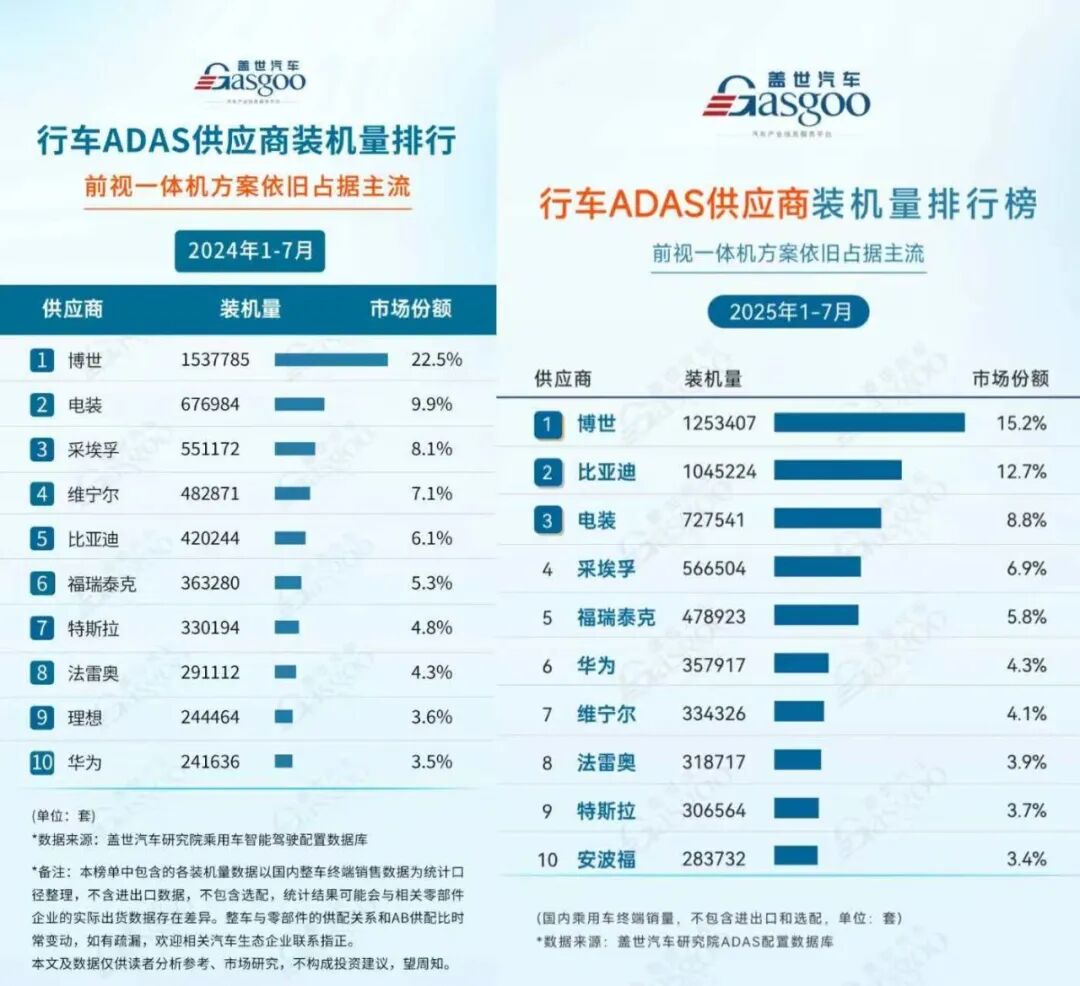
Core Insights - Bosch is facing unprecedented transformation challenges in the Chinese market, including layoffs and restructuring efforts to adapt to the declining demand for traditional fuel vehicles and the rise of new energy vehicles [1][2][7] Group 1: Layoffs and Restructuring - Bosch has initiated layoffs affecting nearly 200 employees, particularly in its Wuxi base, which focuses on fuel vehicle and hydrogen fuel cell projects [1][8] - The company has announced a global layoff plan of 22,000 employees, with 9,000 in Germany in 2024 and an additional 13,000 in 2025, indicating a significant workforce reduction [2][8] - Bosch's employee count in China is projected to decrease from approximately 58,000 at the end of 2023 to 56,000 by the end of 2024, reflecting a steady decline [8] Group 2: Financial Performance - Bosch's sales are expected to slightly increase to €91 billion in 2025, but the EBIT margin is projected to drop to about 2%, down from 3.5% in 2024, indicating a significant decline in profitability [2][9] - The company has set aside €3.1 billion for restructuring costs, which is about 3.5% of the projected sales for 2025, highlighting the financial strain from ongoing adjustments [9] Group 3: Market Position and Competition - Bosch's competitive position in the Chinese market is deteriorating due to the rapid rise of local companies like Huawei and BYD, which are gaining market share through faster technology iterations and better cost performance [4][11] - In the ADAS sector, Bosch's market share dropped from 22.5% in the first half of 2024 to 15.2% in the same period of 2025, while Huawei's share increased from 3.5% to 4.3% [11] - Bosch's position in the cockpit domain is particularly weak, ranking ninth with only 3.6% market share, while local competitors like BYD Electronics lead the market [11][12] Group 4: Strategic Responses - In response to declining profits and local competition, Bosch is increasing its R&D investment in China, targeting 11.9 billion yuan in 2024, which is about 8% of its sales, focusing on local development projects [12][13] - Bosch is also leveraging its global presence to assist Chinese automakers in expanding internationally, having supported over 200 models in their overseas ventures [13]
补偿N+4,德国巨头博世在华启动人员优化,燃油汽车项目成「重灾区」
36氪· 2026-02-03 09:18
Core Viewpoint - Bosch is facing significant challenges in its traditional fuel vehicle business, leading to layoffs and a decline in market competitiveness against emerging Chinese companies like Huawei and BYD [5][6][11]. Group 1: Layoffs and Business Performance - Bosch China has initiated layoffs affecting nearly 200 employees, primarily in its fuel vehicle and hydrogen fuel cell projects, with compensation packages reported to be generous [5][8]. - The company has acknowledged a decline in its workforce in China, with employee numbers dropping from approximately 58,000 in 2023 to 56,000 in 2024 [6]. - Bosch's sales in China showed a growth of 5.2% in 2023, reaching about 139 billion RMB, but this growth is expected to slow to 2.7% in 2024, with projected sales of 142.7 billion RMB [10]. Group 2: Market Competition and Challenges - Bosch's market share in the ADAS (Advanced Driver Assistance Systems) segment has been declining, with its installation volume dropping from 22.5% in the first half of 2024 to 15.2% in the first half of 2025 [12][15]. - Competitors like BYD have significantly increased their market share, with BYD's ADAS installation volume rising from 6.1% to 12.7% within a year [15]. - The company is struggling with a profit margin of approximately 2%, which is below expectations, and is facing pressures from rising costs and a challenging economic environment [9][10]. Group 3: Strategic Adjustments and Future Outlook - Bosch's leadership has indicated the need for organizational restructuring to enhance long-term competitiveness and investment capacity, citing the necessity to adapt to a rapidly changing market [9][17]. - The company is focusing on local investments and innovation in China, despite the competitive landscape becoming increasingly challenging due to the rise of domestic players [10][17]. - Analysts suggest that Bosch's reliance on traditional fuel vehicle technologies is hindering its ability to compete effectively in the electric vehicle market, leading to a potential further decline in market share [17].


补偿N+4,德国巨头博世在华启动人员优化,燃油汽车项目成「重灾区」
3 6 Ke· 2026-02-03 04:14
Group 1 - Bosch China has initiated layoffs affecting nearly 200 employees, primarily in its fuel vehicle and hydrogen fuel cell projects in Wuxi [1][2] - The layoffs are described as economic layoffs, with compensation packages reportedly generous, offering N+4 [1] - Bosch's overall employee count in China has shown a slight decline, from approximately 58,000 at the end of 2023 to 56,000 a year later [1] Group 2 - Bosch's sales in China have been declining, with a reported revenue of approximately 139 billion RMB in the 2023 fiscal year, a 5.2% increase year-on-year, and an estimated 142.7 billion RMB in 2024, reflecting a slower growth rate of 2.7% [4] - The company's EBIT margin is projected to be around 2% for 2025, below expectations, indicating pressure on profitability [2][3] Group 3 - Bosch's market position is weakening due to increased competition from Chinese companies like Huawei and BYD, which are capturing market share in advanced driver-assistance systems (ADAS) [5][10] - In the first seven months of 2025, Bosch's ADAS installation volume was 1,253,407 units, with a market share of 15.2%, while BYD followed closely with 1,045,224 units and a 12.7% market share [5][8] Group 4 - Bosch's chairman emphasized the need to optimize labor costs and streamline organizational structures to maintain long-term competitiveness [3] - The company is facing challenges from a sluggish economic environment and rising costs, which have pressured its performance [3][10] Group 5 - The shift in market dynamics indicates a transfer of automotive industry influence, with Chinese suppliers increasingly able to provide high-quality products and core technologies [10] - Bosch's reliance on traditional fuel vehicle technologies is becoming a liability as the industry transitions to electric vehicles [10]
补偿N+4! 德国巨头博世在华启动人员优化,燃油汽车项目成“重灾区”
Xin Lang Cai Jing· 2026-02-03 00:20
Core Viewpoint - Bosch is undergoing significant layoffs, particularly in its fuel vehicle and hydrogen fuel cell projects in China, amidst declining sales and profitability in the automotive sector, facing increasing competition from local companies like Huawei and BYD [3][4][6][12]. Group 1: Layoffs and Company Response - Bosch has initiated layoffs affecting nearly 200 employees in China, with a focus on its fuel vehicle and hydrogen fuel cell projects [3][4]. - The company denies the layoffs, claiming they are part of normal operational management [3][4]. - Bosch has previously announced substantial layoffs in Germany, totaling 22,000 by 2030, indicating a broader trend of workforce reduction [3][4][12]. Group 2: Financial Performance - Bosch's sales in China showed a growth of 5.2% in FY2023, reaching approximately 139 billion RMB, but the growth rate slowed to 2.7% in FY2024 with sales around 142.7 billion RMB [6][18]. - The company's projected sales for 2025 are expected to be 91 billion euros, a slight increase from 90.3 billion euros in 2024, but the EBIT margin is only about 2%, below expectations [4][16]. - Bosch's profitability is under pressure due to declining sales, rising tariff costs, and necessary structural adjustments [5][16]. Group 3: Market Position and Competition - Bosch's market share in the ADAS sector has decreased significantly, with a drop from 22.5% in the first half of 2024 to 15.2% in the first half of 2025, while competitors like BYD and Huawei are gaining ground [10][19][22]. - The competitive landscape is shifting, with local companies like BYD and Huawei rapidly advancing in technology and market share, particularly in areas like autonomous driving and smart vehicle technologies [12][22][24]. - Industry analysts note that Bosch is facing challenges from traditional business decline, slow electric transition, and high costs, which are exacerbated by talent loss to startups focusing on niche products [12][24].
2026年汽车投资策略
2026-01-28 03:01
Summary of the Conference Call Industry Overview - The conference focused on the automotive industry, specifically strategies and forecasts for 2026, with a review of the automotive market from 2005 to 2025 [1][2]. Key Insights and Arguments 1. **Sales Growth and Valuation**: - Sales growth is a sufficient but not necessary condition for the valuation of the automotive sector to increase. Historical data shows that years with sales growth corresponded with rising valuations, but there were exceptions in years like 2012 and post-2020 [3]. - The automotive sector's valuation tends to respond approximately three months ahead of sales growth before 2020, and this response time has shortened to about one month post-2020 [3]. 2. **Comparison with 2018**: - The year 2026 is expected to mirror 2018, which also faced declining sales due to policy changes. In 2018, the automotive sector began to decline three months before sales dropped significantly [4][5]. 3. **Impact of Policy Changes**: - The introduction of a 5% purchase tax on new energy vehicles in 2026 and changes in subsidy structures are expected to impact demand negatively [1][2]. 4. **Investment Opportunities**: - The focus for 2026 is on new growth areas, particularly in smart driving technologies. Companies in this sector are seen as undervalued, with many trading below 30x P/E ratios while maintaining decent growth rates [7][8]. 5. **Low Valuation and High Growth Stocks**: - Several companies were highlighted as having strong growth potential while being undervalued, including: - **Mastec**: Estimated 20% growth in 2026 with a P/E of 15-16x [10]. - **Yatong**: Expected 30% growth with a P/E of around 20x [10]. - **Fuyou Glass**: Anticipated 15% growth with a P/E of about 15x [11]. - **Weichai Power**: Projected 15% growth with a similar P/E [11]. 6. **Sector-Specific Insights**: - Companies like **Desay SV** and **Kobota** are expected to see significant revenue growth due to their involvement with major clients like Li Auto and NIO, with projected revenues of 90 billion and 21 billion respectively for Q4 [17][21]. - **Huayang Group** is expected to maintain a growth rate of over 20% in 2026, driven by high-margin products [24]. Other Important but Overlooked Content - The conference also discussed the potential risks associated with rising raw material costs, particularly for companies in the forging sector, which could impact earnings realization [13]. - The importance of technological cycles, including the shift towards electric and smart vehicles, was emphasized as a key driver for future growth in the automotive sector [6][7]. - The discussion included a focus on the competitive landscape, with companies like Fuyou Glass expected to benefit from a more favorable market position as competitors exit [30][31]. Conclusion - The automotive industry is facing challenges due to policy changes and market dynamics, but there are significant investment opportunities in undervalued companies with strong growth potential, particularly in the smart driving and electric vehicle segments. The insights from the conference provide a comprehensive overview of the current state and future outlook of the automotive sector.


全球汽车零部件百强企业 伟世通锁定武汉投建技术中心
Chang Jiang Ri Bao· 2025-11-18 00:27
Core Insights - Wuhan Economic Development Zone has signed an agreement with Visteon Corporation to establish a new independent foreign-funded company with a registered capital of $20 million, aimed at building the Visteon Asia-Pacific Wuhan Technology Center, which is expected to be operational by 2026 [1][2] Group 1: Company Overview - Visteon is a top global automotive parts supplier headquartered in the United States, specializing in designing, developing, and manufacturing cockpit electronics and smart connected vehicle solutions for major automotive manufacturers [1] - The new technology center will focus on the application of next-generation AI technology in smart vehicles, with a research team of 200 people [1] Group 2: Industry Impact - The establishment of the Visteon Asia-Pacific Wuhan Technology Center is expected to enhance the technological strength of the automotive electronics sector in the Wuhan Economic Development Zone, contributing to the region's transition from "China's Auto Valley" to "World's Auto Valley" [2] - The investment reflects a broader trend of strengthening foreign investment in the automotive industry and key components in the Wuhan area, which is a significant hub for foreign enterprises in Hubei Province [2]

国泰海通:首予博泰车联 “买入”评级 目标价280港元
Zhi Tong Cai Jing· 2025-11-14 01:49
Core Viewpoint - Cathay Securities has initiated coverage on Botai Carlink (02889) with a "Buy" rating and a target price of HKD 280.20, highlighting the company's growth potential driven by the acceleration of automotive intelligence and the expansion of smart cockpit as a core interaction entry point [1] Group 1: Market Position and Growth - The penetration rate of smart cockpit domain controllers in China reached 41.1% in August 2025, a year-on-year increase of 12%, indicating a critical transition from optional to standard features [1] - Botai Carlink has become the second-largest supplier of pre-installed cockpit domain controllers in the Chinese market for new energy passenger vehicles, holding a 10.87% market share from January to September 2025 [1] - Major clients include Huawei, Li Auto, Xpeng, Avita, Lantu, and Seres, with revenue from core clients Huawei and Li Auto expected to account for approximately 50% of total revenue in 2024 [1] Group 2: Product Pricing and International Expansion - The average selling price of domain controllers has increased from RMB 990 in 2023 to RMB 2,141 in 2024, further rising to RMB 2,257 in the first five months of 2025, supporting the company's profitability improvement [2] - A strategic partnership with Porsche was established in September 2025 to develop next-generation in-car entertainment systems for the Chinese market, marking Botai's entry into the global luxury car supply chain [2] - The company has also entered the supply chains of international brands such as Hyundai and Kia, supporting Chinese brands' international expansion through a dual-track model of "serving global automakers + supporting Chinese brands abroad" [2] Group 3: Financial Performance and Projections - The company's gross margin fluctuated between 14.1% and 11.8% from 2022 to 2024 due to chip costs and R&D investments, but is expected to improve with business scale expansion [3] - Gross margin is projected to gradually recover from 12.9% in 2025 to 13.8% in 2027, while R&D expenses are expected to stabilize between RMB 1.9 billion and RMB 2.4 billion annually over the next three years [3] - Revenue is anticipated to grow at a compound annual growth rate of 40.5% from 2024 to 2027, with smart cockpit solutions being the primary contributor, leading to a forecasted net profit of approximately RMB 45 million in 2026 and RMB 175 million in 2027 [3] Group 4: Valuation - Cathay Securities has set a valuation multiple of 7.0x for Botai Carlink for the fiscal year 2026, reflecting a premium compared to peers, based on the company's advantages in customer structure, technological accumulation, and global cooperation [4] - The acceleration of industry consolidation in the smart cockpit sector and the gradual realization of partnerships with high-end brands like Porsche are expected to enhance the company's growth certainty [4]

华阳集团(002906):汽车电子及精密压铸双轮驱动,盈利实现较快增长
Orient Securities· 2025-08-23 08:34
Investment Rating - The report maintains a "Buy" rating for the company with a target price of 46.69 CNY, based on a comparable company PE average valuation of 29 times for 2025 [2][5]. Core Views - The company is expected to achieve rapid growth in profitability driven by its automotive electronics and precision die-casting businesses, with projected net profits of 848 million CNY, 1.087 billion CNY, and 1.345 billion CNY for 2025, 2026, and 2027 respectively [2][9]. - The automotive electronics segment is anticipated to continue its strong performance, with a revenue increase of 23.4% year-on-year in the first half of 2025, despite a slight decrease in gross margin due to intensified competition [9]. - The precision die-casting business is also experiencing significant growth, with a revenue increase of 41.3% year-on-year in the first half of 2025, supported by a robust order book and expansion projects [9]. Financial Information Summary - The company's projected revenues for 2025, 2026, and 2027 are 12.645 billion CNY, 15.093 billion CNY, and 17.789 billion CNY respectively, reflecting year-on-year growth rates of 24.5%, 19.4%, and 17.9% [4][10]. - The projected gross profit margins for the same years are 20.8%, 21.3%, and 21.6%, indicating a stable profitability outlook [4][10]. - The net profit attributable to the parent company is expected to grow from 848 million CNY in 2025 to 1.345 billion CNY in 2027, with corresponding net profit margins of 6.7%, 7.2%, and 7.6% [4][10].
华阳集团:上半年营收净利双增 核心产品市占率领先
Zhong Zheng Wang· 2025-08-20 07:09
Core Insights - Huayang Group reported a revenue of 5.311 billion yuan for the first half of 2025, representing a year-on-year growth of 26.65% [1] - The net profit attributable to shareholders reached 341 million yuan, an increase of 18.98% compared to the previous year [1] - The basic earnings per share were 0.65 yuan, reflecting an 18.18% year-on-year growth [1] Revenue Breakdown - The automotive electronics segment generated 3.788 billion yuan in revenue, up 23.37% year-on-year, driven by strong sales of electronic rearview mirrors, cockpit domain controllers, and in-vehicle cameras [1] - The precision die-casting business achieved revenue of 1.292 billion yuan, a significant increase of 41.32% year-on-year, primarily due to rising demand for precision die-cast parts used in automotive intelligence components and new energy vehicle power systems [1] Market Position and R&D - The company maintains a leading market position in core products, with its HUD (Head-Up Display) holding the top market share domestically and second globally for in-vehicle wireless charging products [2] - Customer structure has improved, with significant revenue contributions from clients such as Changan, BAIC, Xiaomi, and Stellantis Group [2] - R&D investment totaled 440 million yuan, accounting for 8.29% of revenue, with notable achievements including the domestic mass production of virtual panoramic display products [2] Capacity Expansion - The company is expanding its automotive electronics business with new facilities in Huizhou and Shanghai, while also advancing projects for precision die-casting in Changxing and Jiangsu [2] - Overseas business development is ongoing with subsidiaries in Thailand and Mexico [2]