ExxonMobil(XOM)

Search documents
ExxonMobil Is Growing Quickly For Its Size
Seeking Alpha· 2025-08-04 22:15
Company Overview - ExxonMobil is one of the largest publicly traded oil companies with a market capitalization exceeding $470 billion [2] Investment Strategy - The Value Portfolio focuses on building retirement portfolios using a fact-based research strategy, which includes thorough analysis of 10Ks, analyst commentary, market reports, and investor presentations [2] Analyst Position - The analyst has a beneficial long position in ExxonMobil shares through stock ownership, options, or other derivatives, indicating a personal investment in the company [3]


Exxon (XOM) Q2 Earnings: Taking a Look at Key Metrics Versus Estimates
ZACKS· 2025-08-04 20:31
Core Insights - Exxon Mobil reported revenue of $81.51 billion for the quarter ended June 2025, a decrease of 12.4% year-over-year, and EPS of $1.64, down from $2.14 in the same quarter last year [1] - The revenue fell short of the Zacks Consensus Estimate of $82.82 billion by 1.59%, while the EPS exceeded the consensus estimate of $1.49 by 10.07% [1] Financial Performance Metrics - Oil-equivalent production per day was 4,630.00 KBOE/D, surpassing the six-analyst average estimate of 4,547.03 KBOE/D [4] - Natural gas production available for sale per day in Europe was 312.00 Mcf/D, exceeding the four-analyst average estimate of 284.92 Mcf/D [4] - Natural gas production available for sale per day in Africa was 106.00 Mcf/D, below the four-analyst average estimate of 146.63 Mcf/D [4] - Natural gas production available for sale per day in Asia was 3,206.00 Mcf/D, slightly below the four-analyst average estimate of 3,328.36 Mcf/D [4] Revenue Breakdown - Sales and other operating revenue from Energy Products in the United States was $25.07 billion, exceeding the two-analyst average estimate of $24.24 billion, but representing a year-over-year decline of 5.1% [4] - Sales and other operating revenue from Energy Products outside the U.S. was $34.92 billion, below the average estimate of $36.94 billion, reflecting an 18.8% year-over-year decline [4] - Sales and other operating revenue from Chemical Products in the United States was $1.97 billion, matching the two-analyst average estimate, with an 11% year-over-year decline [4] - Upstream revenue in the United States was $5.94 billion, slightly below the average estimate of $6.04 billion, marking an 11.7% year-over-year decline [4] - Other income was reported at $567 million, below the three-analyst average estimate of $618.89 million, with a significant year-over-year decline of 57.4% [4] - Total sales and other operating revenue was $79.48 billion, slightly below the average estimate of $80.11 billion, representing an 11.7% year-over-year decline [4] - Income from equity affiliates was $1.46 billion, below the two-analyst average estimate of $1.56 billion, reflecting a year-over-year decline of 16.2% [4] - Sales and other operating revenue from Energy Products totaled $59.99 billion, below the average estimate of $61.18 billion, with a year-over-year decline of 13.6% [4]
ExxonMobil Q2 EPS Beat but Stock Fell
The Motley Fool· 2025-08-04 18:33
Core Insights - ExxonMobil reported second-quarter 2025 GAAP earnings per share of $1.64, surpassing analyst expectations of $1.57, but both GAAP earnings and revenue declined year over year, with net income at $7.1 billion and revenue at $79.5 billion, reflecting an 11.7% decrease compared to Q2 2024 [1][2][3] Financial Performance - GAAP earnings per share decreased by 23.4% from $2.14 in Q2 2024 to $1.64 in Q2 2025 [3] - Revenue fell from $89.99 billion in Q2 2024 to $79.5 billion in Q2 2025, marking an 11.7% decline [3] - Cash flow from operating activities was reported at $11.5 billion, with free cash flow at $5.4 billion [11] Production and Operations - Upstream production reached a record average of 4.6 million oil-equivalent barrels per day, a 13% increase year over year, driven by the integration of Pioneer and production ramp-up in Guyana [6] - Despite production growth, upstream earnings fell from $6.8 billion in Q1 2025 to $5.4 billion due to lower crude oil and natural gas prices [7] - The refining segment reported earnings of $1.37 billion, up $539 million from the previous quarter, attributed to stronger industry margins and improved reliability [8] Strategic Initiatives - The company has focused on expanding its upstream portfolio, notably through the acquisition of Pioneer Natural Resources in May 2024 [5] - ExxonMobil aims to bring 10 new projects online by the end of 2025, expected to add $3 billion in annual earnings by 2026 [15] - The company continues to target $1 billion in annual earnings from its low-carbon businesses by 2030 [16] Shareholder Returns - Total shareholder returns amounted to $9.2 billion, including $5.0 billion in share repurchases and approximately $4.3 billion in dividends [10] - The quarterly dividend was maintained at $0.99 per share [10][16] Financial Position - The company's debt-to-capital ratio was 13%, with net debt to capital at 8%, indicating a strong balance sheet [12] - Capital spending reached $6.3 billion, with year-to-date investment close to $12.3 billion, and full-year capital-expenditure plans confirmed at $27 to $29 billion [11]
ExxonMobil(XOM) - 2025 Q2 - Quarterly Report
2025-08-04 16:47
Financial Performance - ExxonMobil's Q2 2025 earnings were $7.1 billion, down from $9.2 billion in Q2 2024, primarily due to weaker crude prices and higher expenses[66]. - For the first six months of 2025, earnings totaled $14.8 billion, compared to $17.5 billion in the same period last year[67]. - Upstream earnings for Q2 2025 were $5.4 billion, down from $7.1 billion in Q2 2024, with U.S. earnings at $1.2 billion and non-U.S. earnings at $4.2 billion[68]. - Energy Products total earnings for Q2 2025 were $1,366 million, compared to $946 million in Q2 2024[84]. - Chemical Products earnings decreased to $293 million in Q2 2025 from $779 million in Q2 2024, impacted by weaker margins[95]. - Specialty Products earnings increased to $780 million in Q2 2025, compared to $751 million in Q2 2024[103]. - Corporate and Financing expenses were $759 million for Q2 2025, an increase of $449 million compared to Q2 2024, primarily due to lower interest income and increased pension-related expenses[112]. - Total taxes for the first six months of 2025 were $21.2 billion, a decrease of $1.4 billion from 2024, with an effective income tax rate of 34%[122]. Capital Expenditures and Cash Flow - Cash capital expenditures in Q2 2025 were $6.3 billion, a decrease of $0.2 billion from Q2 2024[66]. - Cash capital expenditures for the first six months of 2025 were $12.3 billion, an increase from $11.8 billion in 2024, with plans to invest between $27 billion and $29 billion in 2025[125]. - Net cash provided by operating activities totaled $24.5 billion for the first six months of 2025, a decrease of $0.7 billion from 2024[116]. - Cash flow from operations and asset sales in Q2 2025 was $11.7 billion, an increase of $0.2 billion from the comparable 2024 period[115]. - Net cash used in financing activities was $22.3 billion in the first six months of 2025, including $9.8 billion for share repurchases[118]. Cost Management and Structural Savings - Structural Cost Savings amounted to $13.5 billion since 2019, with an additional $1.4 billion achieved in the first half of 2025[64]. - Structural cost savings contributed an increase of $620 million to earnings in the upstream segment[74]. - The company is focused on maintaining structural cost reductions and efficiency gains to offset inflationary pressures[1]. Market and Operational Insights - Advantaged Volume Growth contributed an increase of $160 million in earnings, mainly from Permian growth[70]. - Price impacts decreased earnings by $2.02 billion, primarily due to lower liquids realizations[70]. - Base Volume decreased earnings by $110 million as a result of divestments[70]. - Volumes from advantaged assets increased earnings by $1,080 million, driven by the Permian and Guyana[74]. - Industry refining margins increased earnings by $270 million in Q2 2025 due to higher fuel demand and supply outages[87]. - Worldwide refinery throughput reached 3,936 thousand barrels daily in Q2 2025, up from 3,740 thousand barrels daily in Q2 2024[94]. - Specialty Products sales in the U.S. decreased slightly to 504,000 metric tons, while Non-U.S. sales increased to 1,500,000 metric tons, resulting in total worldwide sales of 2,004,000 metric tons for the three months ended June 30, 2025[111]. Strategic Initiatives and Future Outlook - The Corporation continues to evaluate opportunities for acquisitions to enhance its business portfolio, focusing on strategic fit and cost synergies[119]. - ExxonMobil aims to achieve Scope 1 and Scope 2 net zero emissions from operated assets by 2050, with specific targets for the Permian Basin by 2030 and Pioneer Permian assets by 2035[1]. - The company plans to eliminate routine flaring in line with the World Bank's Zero Routine Flaring initiative and aims for near-zero methane emissions from operated assets[1]. - ExxonMobil's capital investment guidance for lower-emission investments is based on its Corporate plan, with actual investment levels dependent on available opportunities and public policy support[1]. - The company acknowledges that current trends for policy stringency and lower-emission solutions are not on track to achieve net-zero by 2050[1]. - Future financial performance, including earnings and cash flow, may be impacted by various market factors, including supply and demand imbalances and regulatory changes[1]. - ExxonMobil's medium-term business plans incorporate actions needed to advance its 2030 greenhouse gas emission-reduction goals, updated annually[1]. - The company emphasizes the importance of stable policy support and technological advancements for the success of its emission reduction plans[1]. - Future projects and opportunities will depend on factors such as permitting, technological advancements, and alignment with stakeholders[1]. - Market risks for the six months ended June 30, 2025, remain consistent with those discussed in the 2024 Annual Report[1].
Strongest Q2 Production Yet: Continue to Hold ExxonMobil Stock
ZACKS· 2025-08-04 15:06
Core Insights - Exxon Mobil Corporation (XOM) reported second-quarter 2025 earnings that exceeded expectations, driven by record production levels and strong performance in high-return assets like Permian and offshore Guyana [1][9] Financial Performance - Earnings per share (EPS) for Q2 2025 were $1.64, surpassing the Zacks Consensus Estimate of $1.49, although it declined from $2.14 in the previous year [2] - Total revenues for the quarter were $81.5 billion, falling short of the Zacks Consensus Estimate of $82.8 billion and down from $93.06 billion year-over-year [2] Production and Assets - ExxonMobil achieved its highest second-quarter production since the merger of Exxon and Mobil over 25 years ago, with significant contributions from offshore Guyana and the Permian Basin [1][9] - The company discovered nearly 11 billion barrels of oil off the coast of Guyana, marking the largest oil discovery globally in the last 15 years, with current production at approximately 650,000 barrels per day [6] - ExxonMobil expects to ramp up production in Guyana to 1.7 million barrels of oil equivalent per day by 2030, with eight projects planned [6] - In the Permian Basin, ExxonMobil aims to increase production from 1.6 million barrels of oil equivalent per day to 2.3 million by the end of the decade through advanced recovery technologies [7] Strategic Acquisitions - The acquisition of Pioneer Natural Resources Company has been pivotal, with ExxonMobil revising its annual synergy estimates from this deal upward to over $3 billion, enhancing its outlook for the Permian Basin [8][10] Industry Context - Other integrated energy companies like Chevron and BP have also reported their earnings, with Chevron posting adjusted EPS of $1.77, while BP is set to report soon [4][11] - The overall market sentiment remains cautious due to trade tensions, which may impact stock performance despite positive developments in ExxonMobil [13]
Exxon Mobil Q2: A Great Company, But Not The Best Investment For Everyone
Seeking Alpha· 2025-08-04 12:45
Group 1 - Exxon Mobil reported a net income of $7.1 billion for the quarter [1] - The company generated $11.5 billion in operating cash flow [1] - Exxon Mobil has an 8% net debt-to-capital ratio, indicating a strong financial position [1]
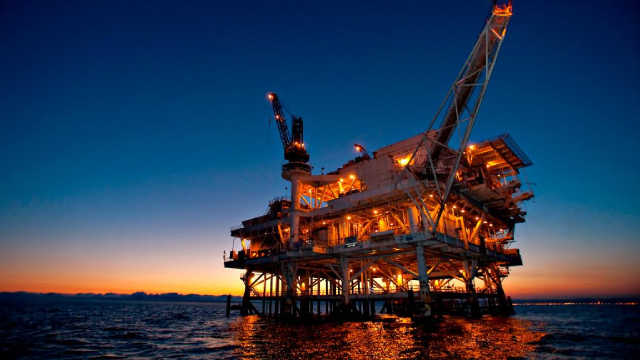
ExxonMobil Continues to Show That It's the Best Oil Stock
The Motley Fool· 2025-08-04 01:13
Core Insights - ExxonMobil reported second-quarter earnings of $7.1 billion and cash flow from operations of $11.5 billion, leading the international oil companies (IOCs) significantly [3][6] - The company achieved its highest second-quarter production total since the merger of Exxon and Mobil, reaching 4.6 million barrels of oil equivalent (BOE) per day [4] - Exxon's output increased by 13%, primarily due to the acquisition of Pioneer Natural Resources [5] Financial Performance - Exxon's earnings were more than double that of Chevron ($3.1 billion) and significantly ahead of Shell ($4.3 billion) [3] - The company returned $9.2 billion to shareholders through dividends and share repurchases, leading the oil sector [6] - Exxon has a sector-leading balance sheet with the lowest leverage ratio at 8% net debt to capital [7] Strategic Initiatives - The company has initiated operations on six key projects this year and plans to start four more by year-end, expected to enhance earnings power by over $3 billion by 2026 [8] - Exxon plans to invest $140 billion in major capital projects and its Permian Basin development program over the next five years [9] - The company aims for $18 billion in structural cost savings by the end of 2030 [9] Growth Projections - The investment plan is projected to yield an additional $20 billion in earnings and $30 billion in cash flow by 2030, with compound annual growth rates of 10% for earnings and 8% for cash flow [10] - Exxon anticipates generating $165 billion in cumulative surplus cash over the next five years, allowing for continued dividend increases and stock repurchases [11] Market Position - ExxonMobil is recognized as the leader in the oil sector, evidenced by its strong financial results and ability to return more cash to investors than its peers [11] - The company's strategic plan up to 2030 is expected to sustain meaningful earnings and cash flow growth, reinforcing its leadership position [12]
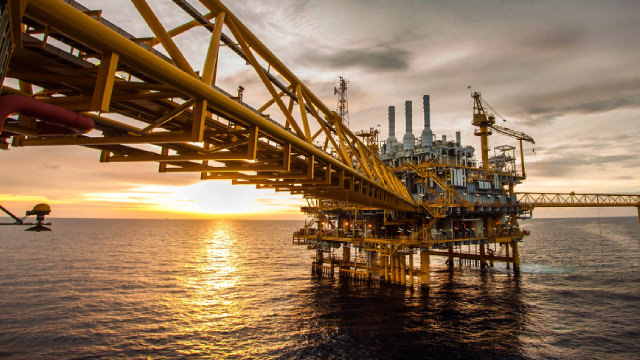
Exxon Mobil: Plans To Grow Earnings In Place
Seeking Alpha· 2025-08-03 14:41
Group 1 - The article discusses the analysis of oil and gas companies, specifically focusing on identifying undervalued companies in the sector [1] - The author emphasizes the importance of understanding the balance sheet, competitive position, and development prospects of these companies [1] - The oil and gas industry is characterized as a boom-bust, cyclical industry that requires patience and experience for successful investment [2] Group 2 - The author has a beneficial long position in Exxon Mobil (XOM) through various financial instruments [3] - The article expresses the author's personal opinions and is not influenced by compensation from any company mentioned [3] - There is a call to action for readers to sign up for a free two-week trial of the Oil & Gas Value Research service for more in-depth analysis [1]
Chevron Aims To Cut Costs With Increased Production
Seeking Alpha· 2025-08-03 13:00
Group 1 - Chevron Corporation (CVX) has successfully closed the acquisition of Hess Corporation, marking a significant milestone for the company [1] - The acquisition follows an arbitration victory against Exxon Mobil (XOM) concerning the Stabroek assets, which is expected to enhance production volumes and generate cost synergies [1] Group 2 - The article highlights the importance of considering the entire investment ecosystem rather than evaluating a company in isolation, emphasizing a comprehensive approach to investment recommendations [1]