
HDFC Bank

Search documents
Indian banks seen churning stronger Q3 profits after a weak first half. Brokers pick 10 stocks to buy
The Economic Times· 2026-01-07 05:17
Core Insights - The banking sector is experiencing robust loan growth, with RBI data indicating a nearly 12% year-on-year increase and a 4.5% quarter-on-quarter rise in banking system advances as of mid-December 2025 [1][21] - Key segments driving this growth include micro and small enterprises, services, and retail loans, with industrial credit also picking up significantly [2][21] - Despite steady loan growth, deposit growth is lagging, with system-level deposits increasing by 9.7% year-on-year, resulting in a credit-deposit ratio exceeding 81% [6][21] Loan Growth - Loan growth is expected to be around 11.6% year-on-year for the coverage universe in Q3, with banks like HDFC Bank, Axis Bank, and ICICI Bank anticipated to outperform the sector average [21] - Retail, MSME, and services loans are expected to lead the credit growth momentum, particularly among mid-sized and small finance banks [5][21] Deposit Trends - Deposit growth remains a pressure point for the sector, with banks increasingly relying on certificates of deposit and selective rate hikes to mobilize deposits [6][7] - Elara Capital notes that slower growth in low-cost deposits and higher credit-deposit ratios may limit the benefits of liability repricing in FY27 [7][21] Margin Stability - Net interest margins (NIMs) are projected to remain stable in Q3, aided by CRR cuts and deposit repricing, with most banks expected to see only marginal movements [9][10] - YES Securities anticipates a mild sequential decline in NIMs, clustering around a 5-basis-point drop, although loan spreads have improved due to sharper cuts in deposit rates [11][21] Fee Income and Operating Expenses - Fee income is expected to improve sequentially in Q3, driven by higher loan disbursements and stable business momentum, which should help offset weaker treasury income [12][21] - Operating expenses are likely to remain flat sequentially, as previous wage revisions and seasonal cost increases have been absorbed [12][21] Asset Quality - Asset quality is stabilizing, with a reduction in stress in unsecured lending, particularly in microfinance, and slippages expected to remain stable [13][21] - Provisions are expected to decline for several banks, reflecting better collections and lower incremental stress [14][21] Profitability Outlook - Q3 is anticipated to mark a turning point for earnings, with year-on-year profitability expected to improve for most banks, reversing the contraction seen in Q2 [15][21] - JM Financial estimates a net interest income growth of about 4.7% year-on-year, with large banks like HDFC Bank and ICICI Bank expected to deliver strong return ratios [16][21] Key Trends - Three clear themes for Q3 include sustained growth led by retail and MSME loans, stabilizing margins with repricing benefits, and improving asset quality reducing downside risks to earnings [18][21] - Investor focus is likely to remain on banks with strong balance sheets and diversified loan books as Q3 results are released [19][21]


Stock markets decline in morning trade on geopolitical concerns, renewed tariff hike threats
The Hindu· 2026-01-07 05:07
Benchmark indices Sensex and Nifty drifted lower in early trade on Wednesday (January 7, 2026) as geopolitical tensions and renewed concerns about potential U.S. tariff hikes weighed on investor sentiments. Sustained foreign fund outflows also dragged markets lower during the initial trade. The 30-share BSE Sensex declined 169.64 points to 84,909.30 in early trade. The 50-share NSE Nifty went down 42.35 points to 26,128.90. From the 30-Sensex firms, Tata Motors Passenger Vehicles, Bharti Airtel, HDFC Bank, ...
Asian Banks Surge as Investors Reprice Financial Powerhouses
Finews.Asia· 2026-01-07 04:26
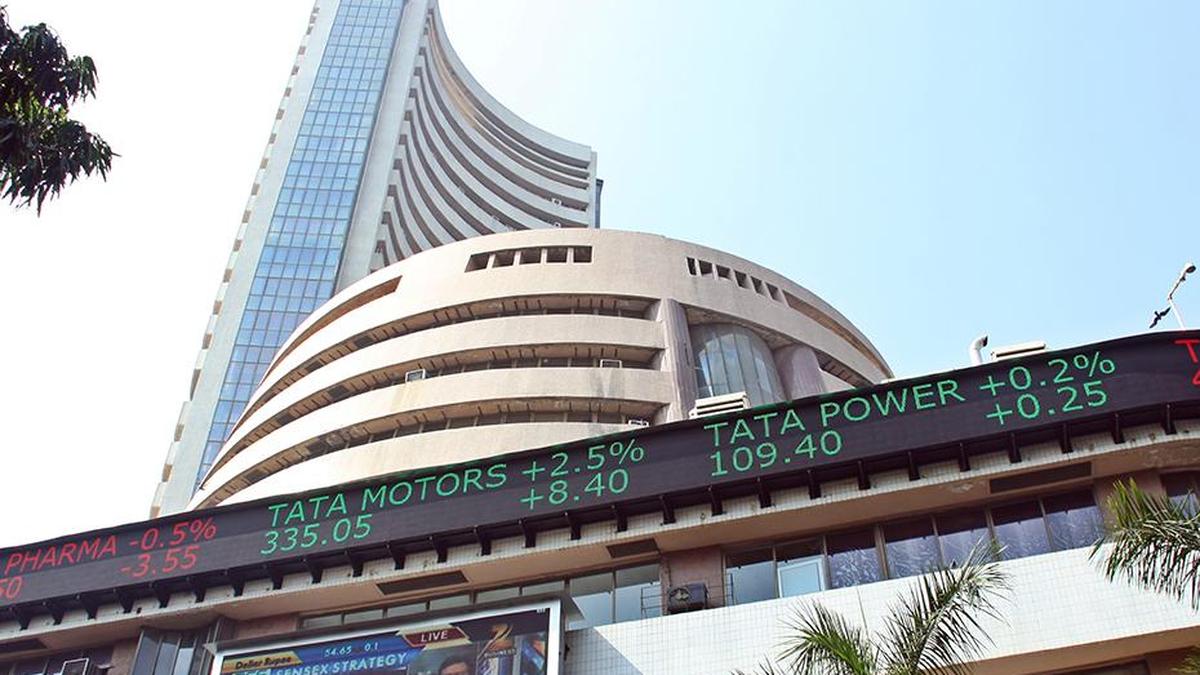
Asian Banks Surge as Investors Reprice Financial PowerhousesA sharp re-rating lifts the world’s largest banks into 2026 with renewed momentum.The world’s 25 largest banks closed 2025 with a powerful surge in market value, as aggregate market capitalization climbed 35.8 percent year on year to $6.1 trillion in the fourth quarter, according to newly released data from GlobalData.China’s largest lenders maintained their presence at the top of the global table, buoyed by vast domestic franchises and cautiously ...

Stock markets fall for second day as selling in Reliance Industries, HDFC Bank dents sentiment
The Hindu· 2026-01-06 12:04
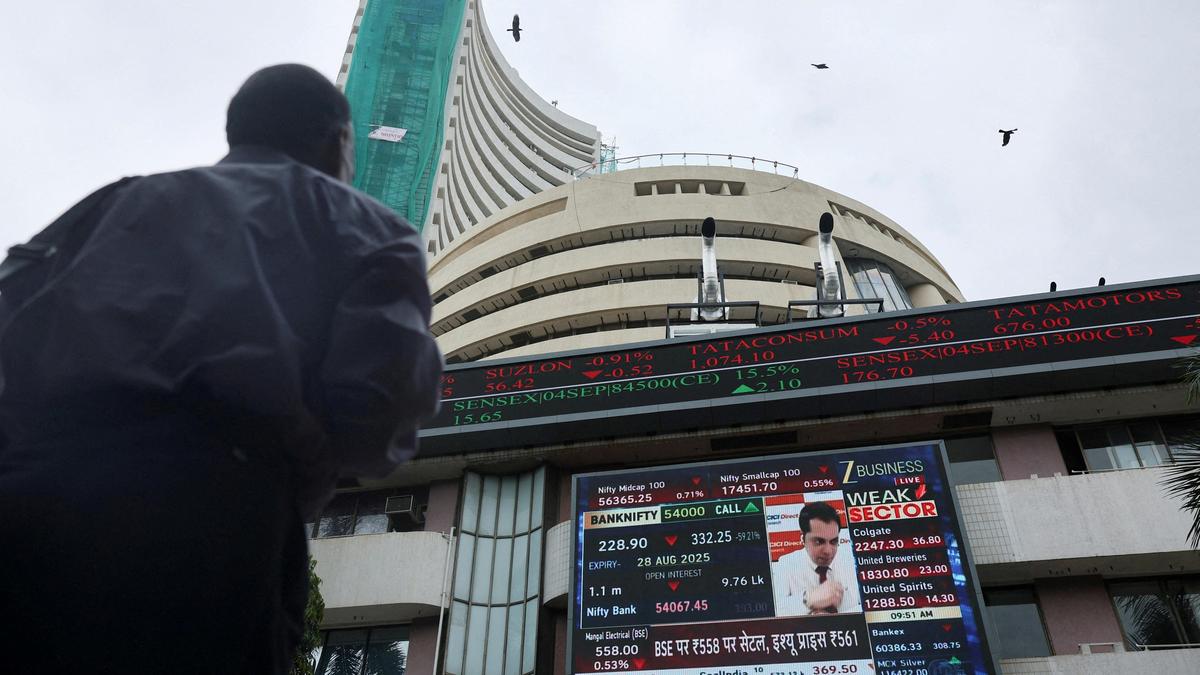
Market Performance - Benchmark indices Sensex and Nifty ended lower for the second consecutive day, with Sensex dropping 376.28 points (0.445%) to settle at 85,063.34 and Nifty declining 71.60 points (0.275%) to end at 26,178.70 [1][2] - Heavy selling was observed in blue-chip stocks such as Reliance Industries, which fell 4.42%, and HDFC Bank, contributing to the overall market decline [1][2] Sector Performance - The services sector growth in India moderated in December, with the HSBC India Services PMI Business Activity Index falling from 59.8 in November to 58.0 in December, indicating the slowest rate of expansion since January [4][5] - Despite the slowdown, firms remained optimistic about growth prospects, although overall sentiment reached its lowest level in nearly three-and-a-half years [5] Institutional Activity - Foreign institutional investors sold equities worth ₹36.25 crore on January 5, 2026, while domestic institutional investors purchased stocks worth ₹1,764.07 crore [3] Global Context - U.S. President Donald Trump indicated potential tariff increases on India due to dissatisfaction with India's purchases of Russian oil, which may impact market sentiment [3][4] - In contrast, Asian markets showed positive performance, with indices such as South Korea's Kospi and Japan's Nikkei 225 ending significantly higher [6]
Sensex down 376 points on selling in RIL, HDFC Bank
Rediff· 2026-01-06 10:56
Market Performance - Benchmark indices Sensex and Nifty ended lower for the second consecutive day, influenced by heavy selling in blue-chip stocks such as Reliance Industries and HDFC Bank, alongside concerns over potential tariff increases from the US against India [1][4] - The 30-share BSE Sensex dropped by 376.28 points, or 0.44%, closing at 85,063.34, with an intraday low of 84,900.10, down 539.52 points or 0.63% [3] - The 50-share NSE Nifty declined by 71.60 points, or 0.27%, ending at 26,178.70 [3] Company-Specific Movements - Trent's shares fell by 8.62% after disappointing revenue growth in the December quarter [3] - Reliance Industries saw a decline of 4.42%, with other laggards including ITC, Kotak Mahindra Bank, InterGlobe Aviation, and HDFC Bank [4] - In contrast, ICICI Bank, Sun Pharma, Hindustan Unilever, and State Bank of India were among the gainers [4] Institutional Investment Trends - Foreign institutional investors sold equities worth ₹36.25 crore on Monday, following a brief pause in selling [4] - Domestic institutional investors, however, purchased stocks worth ₹1,764.07 crore [4] Economic Indicators - India's services sector growth moderated in December, with the HSBC India Services PMI Business Activity Index falling from 59.8 in November to 58.0 in December, marking the slowest expansion rate in 11 months [6] - Despite the slowdown, firms remained optimistic about growth prospects, although overall sentiment reached its lowest level in nearly three-and-a-half years [7]
Top banks offer these interest rates on long term fixed deposits. See details
MINT· 2026-01-06 10:17
FD interest rates: Before you lock your savings into a fixed deposit (FD) account, you must compare the interest rates offered by different banks. Typically, long-term FDs deliver a relatively higher return over their shorter counterparts. For instance, most banks generally give a higher interest rate on their 3-year FDs vis-à-vis 1-year FDs. But this is not a rule of thumb.Here, we list out interest rates offered by all the top banks – private as well as state banks on their 3-year fixed deposits so that o ...

Stock markets decline in early trade dragged by IT firms
The Hindu· 2026-01-05 04:35
Market Performance - The equity benchmark indices Sensex and Nifty experienced declines in early trade on January 5, 2026, with Sensex dropping 125.96 points to 85,636.05 and Nifty dipping 30.95 points to 26,297.60 [1] - Major blue-chip IT stocks such as HCL Tech, Infosys, Tech Mahindra, HDFC Bank, Tata Consultancy Services, and NTPC were among the biggest laggards [1] - Conversely, Bharat Electronics, Tata Steel, Axis Bank, and Reliance Industries were noted as gainers during the same period [1] Institutional Investment - Foreign Institutional Investors (FIIs) purchased equities worth ₹289.80 crore on January 2, 2026, while Domestic Institutional Investors (DIIs) bought stocks worth ₹677.38 crore [2] Geopolitical Context - The year 2026 has commenced with significant geopolitical developments, particularly U.S. actions in Venezuela, which may have far-reaching implications for global geopolitics, as noted by V.K. Vijayakumar, chief investment strategist at Geojit Investments Ltd [2] Asian Market Trends - In Asian markets, South Korea's Kospi, Japan's Nikkei 225, and Shanghai's SSE Composite indices were trading significantly higher, while Hong Kong's Hang Seng index was marginally lower [3] - U.S. markets concluded mostly in positive territory on the preceding Friday [3] Oil Prices - Brent crude, the global oil benchmark, saw a slight decrease of 0.08% to $60.70 per barrel [3] Previous Market Performance - On the preceding Friday, January 2, 2026, the Sensex increased by 573.41 points, or 0.67%, closing at 85,762.01, while the Nifty rose by 182 points, or 0.70%, to settle at 26,328.55 [3]
Sensex falls over 200 pts, Nifty below 26,300 as Venezuela risk tempers earnings optimism
The Economic Times· 2026-01-05 04:06
The On the 30-stock Sensex, losses were led by heavyweight technology and banking stocks. Shares of Infosys, Tech Mahindra, In contrast, broader markets showed resilience, with the small-cap index up 0.5% and mid-caps gaining 0.1%.State-owned lenders outperformed, rising 1.3%, driven by gains in Live EventsIT stocks, which derive a substantial portion of revenue from the U.S., declined about 1% amid lingering global uncertainty.Expert viewsThe year 2026 has begun with major geopolitical developments which ...
RBI likely to retain core components of FIT framework, say sources
BusinessLine· 2026-01-04 23:30
Core Viewpoint - The Reserve Bank of India (RBI) is expected to maintain the core components of the flexible inflation targeting (FIT) framework, as most economists believe that targeting headline inflation against core inflation with a 2-6 percent retail inflation target has been beneficial for the economy [1] Inflation Tolerance Band - The 2-6 percent inflation tolerance band, introduced in 2016, was already considered low, and it may be reassessed in the next 5-10 years as inflation forecasts improve [2] Policy Clarity - Economists recommend continuing with headline CPI inflation, emphasizing that food inflation, despite being supply-side driven, cannot be ignored due to its correlation with inflation expectations. A 4 percent inflation target is deemed optimal, and narrowing the 2-6 percent band could lead to unnecessarily restrictive monetary policy [3] - The headline target should be retained as it reflects the combined impact of food and core inflation on consumers, particularly for low and middle-income households, where food spending constitutes a significant portion of expenses [4] Continuation of Existing FIT - Continuing with the existing FIT is seen as a logical choice, as it has helped anchor inflation expectations, stabilize core inflation, and guide the policy rate trajectory towards its lower bound [5] Focus on Headline Inflation - The RBI should focus on the headline inflation number rather than sub-components, as controlling overall inflation is essential for central banks. The concept of core inflation should primarily serve to understand inflation dynamics [6] - The current FIT has effectively served India, with inflation generally conforming to the target band and reduced volatility historically. Inflation expectations have remained anchored to the 4 percent target, contributing to lower capital costs in the economy [6]

印度股票策略-2025 年回顾与 2026 年开年新投资者调研速览-India_Equity_Strategy_Quick_Look_Back_at_2025__New_Investor_Poll_to_Kick_Off_2026
2026-01-04 11:35
Vi e w p o i n t | 01 Jan 2026 18:32:56 ET │ 15 pages CITI'S TAKE Indian equities underperformed both EM and DM in 2025 (~27%/13%). In 2026, we think earnings growth trajectory is likely improving, aided by Financials (bottom-up estimates reflect recovery across Consumer & Industrials as well). Further, decent risk-reward should support NIFTY/MSCI India returns (relative valuations, potential US trade deal, global equity broadening beyond AI enablers etc). In 2025, FII outflows reached US$18bn; DII inflows ...