Huawei

Search documents
China’s Next DeepSeek Moment Is In AI Hardware
CNBC· 2026-01-28 15:01
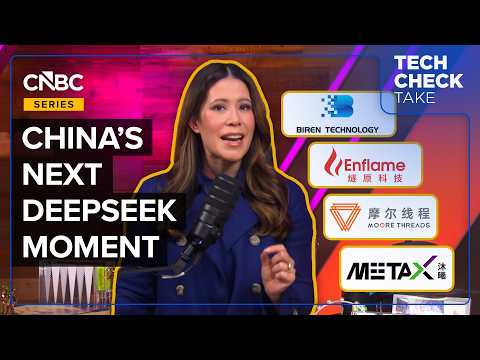
China's next DeepSeek moment. It won't be another AI model. The >> United States doesn't want to partake participate in China.Um, Huawei's got China covered and Huawei's got everybody else covered. >> Instead, [music] it's their AI hardware that's catching up. And that may matter more.[music] >> Some of these new Chinese models are really like surprising everyone as well. Further ahead, much lower cost, [music] trained without the super expensive chips. >> They're nanconds behind us.>> Nanc. Now they're nan ...

Nvidia's Unspoken Problem: 40% of Revenue Comes From Companies Developing Their Own AI Chips
247Wallst· 2026-01-26 14:40
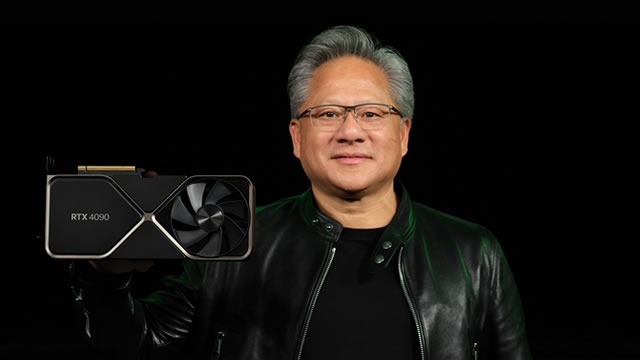
Core Viewpoint - Jensen Huang has established a $4.6 trillion empire through Nvidia, focusing on AI infrastructure, but there are three significant threats to the company's future that are not addressed in earnings calls [1] Group 1: Threats to Nvidia - **Threat 1: Major Customers Developing In-House Chips** Microsoft, Meta, Amazon, and Alphabet account for 40-50% of Nvidia's revenue and are all creating custom AI chips, which could replace Nvidia's offerings. Inference workloads, which represent 80% of long-term AI compute, are at risk if these companies build their own chips [2][3] - **Threat 2: AMD as a Competitive Alternative** AMD's MI300X chips have gained traction, offering competitive performance at 20-30% lower costs compared to Nvidia. Microsoft Azure and Oracle Cloud are adopting AMD technology, and OpenAI is reportedly testing AMD chips to reduce dependency on Nvidia [4][5][6] - **Threat 3: Geopolitical Risks from China** China's approval of H200 chips may seem positive, but it poses a risk as the country has a history of extracting technology and then developing domestic alternatives. If Nvidia becomes too reliant on the Chinese market, future bans could severely impact revenue [7][8] Group 2: Nvidia's Strategic Omissions - **Lack of Discussion on Customer Developments** Jensen Huang focuses on AI demand and partnerships in earnings calls but avoids discussing customer chip development, AMD's market share, and the implications of inference versus training margins [9][10] - **Market Realities Ignored** The optimistic view assumes AI growth benefits all players, while the pessimistic view recognizes that customers are building their own solutions, AMD is providing cheaper options, and geopolitical tensions could threaten Nvidia's market position [10]

'HUGE BREAKTHROUGHS': NVIDIA CEO reveals future of AI
Youtube· 2026-01-26 01:00
Core Insights - The demand for Nvidia's chips is surging, with a backlog exceeding $500 billion, indicating strong market interest and growth potential for the company [1][2] - Nvidia is making significant advancements in AI technology, particularly in areas like physical AI, which enhances understanding of the world and has applications in self-driving cars and robotics [3][4] - The company is focused on improving energy efficiency and reducing costs, with new chips being ten times more energy efficient and lower in cost compared to previous generations [4][5] Industry Trends - The AI sector is expanding into various fields, including healthcare and drug discovery, which is driving demand for advanced semiconductor solutions [2] - The competition in the AI chip market is intensifying, with numerous companies, including Chinese firms, entering the space and raising substantial capital [5][6] - The overall infrastructure investment in AI is projected to reach $85 trillion over the next 15 years, marking it as potentially the largest infrastructure buildout in history [8][9] Market Dynamics - Nvidia's GPUs are in high demand, with all available units currently rented out across major cloud platforms, indicating robust market conditions [11][12] - The rising spot prices for GPUs suggest a strong demand trajectory, further supporting the notion that the market is not in a bubble despite concerns about excessive borrowing for AI investments [10][11] - The company aims to maintain a competitive edge in the AI race by excelling across all layers of the AI stack, from energy to applications [6][7]

Huawei Cloud, Yapay Zeka Çağında Ortak Başarıyı Hedefleyen 2026 Küresel Satış Ortağı Politikalarını Açıkladı
Prnewswire· 2026-01-24 20:09
Core Insights - Huawei Cloud launched its global partner policy on January 22, 2026, focusing on promoting trust, increasing profitability, simplifying collaboration, and supporting partner growth under the theme "Shared Intelligence, Shared Prosperity" [1][2] Group 1: Partner Policies - The policies aim to strengthen partner trust by clearly defining business limits and market strategies, ensuring no competition for profits among partners, and will remain unchanged for the next three years [2][3] - Huawei Cloud offers competitive discounts and incentives to increase partner profitability, strengthen project collaborations, and attract new customers [2][5] Group 2: Ecosystem Development - Huawei Cloud is committed to creating a healthy, growing, and self-sustaining partner ecosystem, having seen over 50% growth in the number of partners in 2025 [4][8] - The ecosystem includes over 40 global distributors and more than 50 key/premier cloud solution partners outside of China, with over 4,000 global partners and hundreds of thousands of paying customers [4][8] Group 3: Support and Training - Huawei Cloud provides comprehensive support for partner growth, including gradual support and practical incentives, and plans to enhance the partner incentive framework this year [5][6] - The company will strengthen partner capabilities through a specialized system designed for various roles, offering executive-level insights on industry trends, digital transformation, and AI strategy [7] Group 4: Regional Growth - In the Asia Pacific region, Huawei Cloud has become the fastest-growing mainstream public cloud provider, with an annual compound growth rate of 40% over the past five years, with more than half of its revenue coming from partners [8][9] - The focus in the APAC region includes migrating core financial systems to the cloud and assisting operators with AI transformation and operational efficiency [9]

Alibaba Reportedly Planning T-Head Spinoff — Eyeing High China Chip Valuations?
Benzinga· 2026-01-23 14:58
Core Viewpoint - Alibaba Group is reportedly considering a spinoff and separate listing for its chip-making unit, T-Head, in response to high valuations in the Chinese AI chip market, following a similar move by Baidu [4][21]. Group 1: Spinoff Plans - The potential spinoff of T-Head would occur nearly three years after Alibaba's initial plan to split into six divisions was scrapped [5]. - T-Head is closely linked to Alibaba's Cloud Intelligence Unit, which had previously abandoned its own spinoff due to U.S. restrictions on advanced AI chips [6]. - Alibaba aims to restructure T-Head as a business partly owned by its employees before exploring an IPO, potentially within the next three to four months [12]. Group 2: Market Context - Chinese chip startups, including T-Head, are developing their own AI chips to fill the gap left by U.S. restrictions, with companies like Moore Threads and Biren seeing significant stock price increases [7][8]. - The high valuations of these Chinese companies are driven by expectations of state support as China seeks to reduce reliance on Western technology [9]. - Alibaba's stock rose 5% following the spinoff news, with its market cap reaching $423 billion, narrowing the gap with Tencent [15]. Group 3: Financial Performance - Alibaba's revenue rose 5% to 248 billion yuan ($35.6 billion) in the quarter through September, with a notable 34% growth in its cloud unit [18][19]. - The instant commerce segment, which includes the merger of Ele.me and Taobao Instant Commerce, reported a 60% year-on-year growth [19]. - The spinoff plan is seen as opportunistic, capitalizing on the inflated valuations of AI chip makers and the strong growth in Alibaba's cloud and instant commerce sectors [20].

Apple’s Huge Surge in China
Yahoo Finance· 2026-01-22 14:15
Core Insights - Apple Inc. led the smartphone market in China during Q4 2025, achieving a market share of 21.8%, which represents a 28% increase from the same quarter the previous year [3][7] - The growth in Apple's market share was primarily driven by strong demand for the iPhone 17 series and an accelerated supply ramp, particularly for the Pro series and base variants [3][4] - Apple's success came at the expense of local competitors, with Huawei's market share declining by 13.7% to 14.6% and Vivo's dropping by 12.9% to 15.7% [4] Shipment and Revenue Performance - Apple's shipment growth in China is notable given that the company does not currently offer an artificial intelligence product, which has been a significant driver of industry shipments [4][7] - Despite the strong performance in shipments, Apple's revenue from Greater China fell to $14.5 billion from $15 billion year-over-year, while global iPhone sales increased from $46.2 billion to $49.0 billion [5] Future Outlook - The introduction of an AI product later this year, specifically a version of Google's Gemini in the iPhone, could further enhance Apple's market position in China [5][6] - If Apple can maintain its market share without an AI product, it may solidify its lead once the feature is integrated into its offerings [6]

2025 年中国手机:激活量 vs 出货量
程序员的那些事· 2026-01-22 05:15
Core Viewpoint - The article discusses the shipment data released by IDC, highlighting the performance of various smartphone manufacturers in terms of shipment volume and market share for 2024 and 2025, along with year-on-year growth rates [2][3]. Group 1: Shipment Data Overview - Huawei is projected to ship 46.7 million units in 2025, holding a market share of 16.4%, down from 47.6 million units and 16.6% market share in 2024, reflecting a year-on-year decline of 1.9% [3]. - Apple is expected to ship 46.2 million units in 2025, with a market share of 16.2%, an increase from 44.4 million units and 15.5% market share in 2024, showing a growth of 4.0% [3]. - Vivo's shipment is forecasted at 46.1 million units in 2025, maintaining a market share of 16.2%, down from 49.3 million units and 17.2% market share in 2024, indicating a decline of 6.6% [3]. - Xiaomi is anticipated to ship 43.8 million units in 2025, with a market share of 15.4%, up from 42.0 million units and 14.7% market share in 2024, reflecting a growth of 4.3% [3]. - OPPO is projected to ship 43.4 million units in 2025, holding a market share of 15.2%, slightly increasing from 42.5 million units and 14.8% market share in 2024, with a growth of 2.1% [3]. - The total shipment for all manufacturers is expected to be 284.6 million units in 2025, a slight decrease from 286.2 million units in 2024, resulting in a year-on-year decline of 0.6% [3].


Apple Just Claimed the Top Spot in the Chinese Smartphone Market. What Does That Mean for AAPL Stock in 2026?
Yahoo Finance· 2026-01-21 21:50
Core Viewpoint - Apple has regained its position as the market leader in China, achieving a 28% year-over-year increase in shipments in the fourth quarter, following a period of decline due to competition from Huawei [1]. Group 1: Market Performance - Apple experienced strong sales from its iPhone 17 series in the fourth quarter, while the iPhone Air had a delayed launch and only captured a low single-digit market share [2]. - In the fourth quarter, Apple held a 21.8% share of the Chinese smartphone market, with Oppo at 15.8%, Vivo at 15.7%, and Huawei at 14.6% [3]. - For the full year, Huawei maintained the top position with a 16.9% market share, while Apple closely followed with 16.7%. However, Apple saw a year-over-year growth of 7.5%, compared to Huawei's 1.7% growth [4]. Group 2: Product Insights - The iPhone Air's slow start was attributed to its late launch and design trade-offs, but it is considered significant for the future of ultra-thin eSIM smartphones in the domestic market [3]. - Apple's product lineup includes not only the iPhone but also Mac computers, iPad tablets, wearable devices like the Apple Watch, and a profitable Services segment encompassing the App Store, iCloud, Apple Pay, and Apple TV [5].
Nvidia CEO says AI boom is fueling the 'largest' infrastructure buildout in history
Fox Business· 2026-01-21 15:51
Core Insights - The rapid expansion of artificial intelligence is leading to the largest infrastructure buildout in human history, with trillions of dollars being invested in computing power for AI systems [1][3][6] - Nvidia has established itself as a leading provider of AI hardware, becoming the first publicly traded company to achieve a $5 trillion market valuation due to the global AI boom [4] Group 1: Infrastructure Buildout - The infrastructure buildout will encompass data centers, chip factories, and AI factories, indicating that the shift towards AI is still in its early stages [2] - The global ecosystem of industries is projected to see significant R&D and operating expenses augmented by AI, with estimates suggesting an $85 trillion investment in infrastructure over the next 15 years [6] Group 2: Job Creation and Economic Impact - The AI expansion is seen as an opportunity for the U.S. to re-industrialize, potentially creating numerous jobs across various sectors such as construction, design, and technology [3] - Nvidia's advancements in energy efficiency and cost reduction for its H200 chips aim to make AI more accessible and affordable for a broader audience [7] Group 3: Trade and Competition - The Trump administration has approved Nvidia's exports of AI chips to China and other countries, with Nvidia's CEO downplaying concerns about military dependencies on U.S. hardware [7][8] - The focus remains on competing globally and bringing jobs back to the U.S., emphasizing the importance of maintaining technological leadership [9]
德赛西威:管理层调研:传统车企智能驾驶业务驱动未来增长;灵活响应各类需求
2026-01-20 03:19
Summary of Desay SV Conference Call Company Overview - **Company**: Desay SV (002920.SZ) - **Industry**: Automotive technology, focusing on smart driving and automotive software Key Points Business Growth and Market Trends - Management remains optimistic about business growth despite challenges in the end market due to rising memory costs [1] - Catalysts for growth include: - Increasing adoption of smart driving technologies - Rising penetration rates of Level 3 (L3) autonomous driving in China - Traditional car OEMs in China adopting smart driving solutions - Expansion of customer base towards joint venture (JV) car OEMs and global-tier car OEMs [1][2] - Development of next-generation domain controllers that integrate smart cockpit and smart driving functionalities [1] Customer Insights - Li Auto is projected to remain the largest customer in 2025, with Chery showing strong growth [2] - Xiaomi and Xpeng are identified as significant revenue contributors [2] - In 2026, management anticipates more opportunities with traditional car OEMs like Great Wall and Changan Automobile, focusing on smart driving adoption [2] Competitive Landscape - Desay SV is positioned as a leading supplier in smart driving and smart cockpit technologies, competing against in-house solutions from companies like BYD, Tesla, and Huawei [2] - The company offers flexible solutions tailored to various customer needs, including manufacturing, design, and algorithm development [2] Financial Outlook - Despite rising memory costs, management believes their inventory can mitigate impacts, although effects may start to be seen in the second quarter of the year [2] - The company is rated Neutral with a 12-month target price of Rmb137, based on a 20.8x target P/E multiple applied to 2026E EPS [3] - Revenue projections for the next few years are as follows: - 2025: Rmb32.23 billion - 2026: Rmb43.15 billion - 2027: Rmb55.55 billion [7] Risks and Considerations - Potential risks include: - Variability in competition intensity among Chinese car OEMs affecting supply chain pricing and gross margins [3] - Uncertainty regarding the pace of product line expansion, particularly in domain controllers and automotive software [3][6] Long-term Drivers - Expansion into global-tier car OEMs and overseas markets, as well as ventures into robotics, are seen as long-term growth drivers for Desay SV [2] Additional Insights - The company’s valuation is considered fairly priced despite ongoing competition and pricing pressures in the supply chain [1] - Management's focus on product expansion from smart cockpit to smart driving and automotive software aligns with the growing trend of smart driving in China [1]