
Unilever

Search documents
The Magnum Ice Cream Company taps NotCo AI for product innovation
Yahoo Finance· 2025-09-23 10:00
Core Insights - The partnership between Magnum Ice Cream Company and NotCo aims to leverage AI for product innovation and address complex formulation challenges in response to changing consumer preferences [3][4][9] - Unilever's Magnum division generated $9.3 billion in revenue last year and is set to become the largest ice cream company globally following its planned spin-off [9] Group 1: Consumer Preferences and Challenges - Consumer preferences regarding portion sizes, sustainability, nutrition, flavors, and ingredients present complex challenges for food companies [3] - The collaboration with NotCo is intended to unlock smarter ways to innovate while maintaining product quality and consumer experience [4] Group 2: AI Integration in Product Development - Magnum will utilize NotCo's Giuseppe AI platform to enhance product innovation and tackle formulation challenges [5] - Other companies in the food and beverage sector, such as Kraft Heinz and Coca-Cola, are also integrating AI into their operations for product development and operational efficiency [7] Group 3: Strategic Partnerships - The partnership with NotCo is part of a broader trend, as NotCo has previously collaborated with Kraft Heinz to create plant-based versions of popular products [8] - The collaboration aims to combine Magnum's consumer insights and ice cream expertise with NotCo's advanced AI capabilities for faster product development [9]
Magnum ice cream company to use NotCo AI for new products
Reuters· 2025-09-22 16:15
Group 1 - Unilever's Magnum ice cream business is planning to go public in November [1] - The company intends to utilize artificial intelligence from Chilean start-up NotCo to reformulate existing products and develop new ones [1]



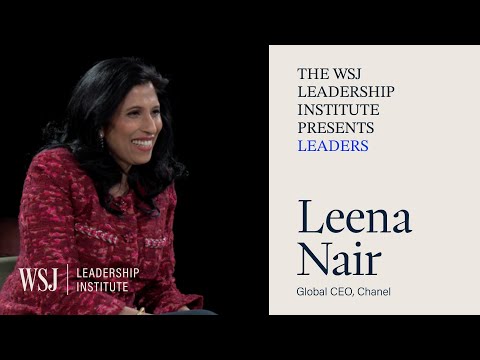
Chanel CEO Leena Nair: Lessons in Leading an Icon | WSJ Leadership Institute
WSJ News· 2025-09-22 09:00
Strategy & Transformation - The biggest challenge is making the pace of change coherent for everyone in the company, ensuring they can take change in digestible ways [1][21][22] - Chanel emphasizes a long-term mindset, focusing on sustainability and inclusion, viewing it as integral to the company's values for the last 100 years [27][30] - The company is committed to being an "island of coherence," leading with integrity and standing for the right things in the world [25][26] Business Performance & Investment - Chanel doubled its business to almost $20 billion in the three years before 2024, experiencing unprecedented growth [39] - Despite a 4% revenue decrease last year, Chanel continues to invest record amounts in retail expansion and client experience, with similar investments planned for this year and 2025 [34][35] - In 2024, Chanel invested $1.8 billion in retail expansion [34] Market Dynamics & Expansion - The personal goods luxury market is a huge sector, greater than $400 billion today, and tripled in size in the last 20 years [35] - Luxury sector experienced explosive growth between 2019 and 2023, growing more than 30% [36] - China is a very important market for Chanel, with over 127 boutiques and continued investment in new openings and client engagement [41][42][43] Sustainability & Social Impact - Chanel is one of the luxury brands that have set a commitment for net zero by 2040 [29] - The company is setting up a B2P hub to encourage recycling and upcycling of leather, Kashmir, wool, and silk for the entire sector [29] - Chanel's corporate foundation dedicates $125 million a year to 267 partners in 50 countries, impacting 9 to 10 million women and girls annually [28] Diversity & Inclusion - Women make up 76% of Chanel's workforce and 96% of its clients, with 60% of the top team being women [28]
The Economist-20.09.2025
2025-09-22 01:00
Summary of Key Points from the Conference Call Industry or Company Involved - The discussion primarily revolves around the **gig economy in China**, highlighting the transformation of the workforce and its implications for the economy and society [132]. Core Points and Arguments 1. **Growth of Gig Workers**: China's gig economy has expanded significantly, with **200 million** temporary workers, representing **40%** of the urban labor force, relying on flexible work arrangements [133]. 2. **Impact of Technology**: The rise of "superapps" has facilitated the growth of gig work, with **84 million** people engaged in platform-based employment, including ride-hailing and food delivery [134]. 3. **Manufacturing Sector Changes**: Gig work has infiltrated the manufacturing sector, with **40 million** casual workers filling jobs on-demand, indicating a shift from traditional employment models [135]. 4. **Flexibility and Earnings**: Many gig workers can earn more through job-hopping compared to traditional employment, with dedicated delivery drivers earning nearly **20%** more than migrant workers [135]. 5. **Challenges Faced by Gig Workers**: Despite the benefits, gig workers encounter difficulties such as lack of stable employment, limited access to public services, and challenges in settling in urban areas [136]. 6. **Lessons for Other Countries**: China's experience with gig work offers valuable lessons for other developing nations, emphasizing the need to rethink the social contract and provide better support for gig workers [137][142]. Other Important but Possibly Overlooked Content 1. **Youth Unemployment Concerns**: The youth unemployment rate in India stands at **16%**, raising concerns about the long-term implications of gig work and automation on job security [125]. 2. **Government Initiatives**: Both China and India are exploring ways to provide social security benefits to gig workers, indicating a shift towards recognizing the importance of this workforce [142]. 3. **Global Context**: The gig economy's growth in China reflects broader trends in emerging markets, where flexible work arrangements are becoming increasingly common [134]. This summary encapsulates the key insights from the conference call regarding the gig economy in China, its implications, and the lessons that can be drawn for other countries.
PepsiCo, Unilever, and other Major Retail, Food, and Beverage Companies Launch "STEP up for Agriculture" Initiative
Prnewswire· 2025-09-18 13:00
Core Insights - The launch of the Supporting Trusted Engagement and Partnership (STEP) up for Agriculture initiative aims to enhance the capacity and sustainability of farmer-facing support organizations across North America, involving major companies like PepsiCo and Unilever [1][5][12] - The initiative focuses on promoting regenerative agriculture practices to improve soil health, reduce emissions, and enhance biodiversity, with PepsiCo targeting the adoption of these practices across 10 million acres by 2030 [2][5][6] Group 1: Initiative Overview - STEP up for Agriculture is a collaboration among leading retail and food companies to scale regenerative agriculture through locally tailored support systems [5][8] - The initiative aims to strengthen farmer-facing organizations by providing tools, training, and funding to accelerate the adoption of sustainable practices [5][12] - A pilot program is already underway in Spain, marking a global push towards regenerative agriculture [5][11] Group 2: Goals and Commitments - PepsiCo sources approximately 50 key agricultural crops from over 60 countries and aims to drive regenerative agriculture practices across 10 million acres by 2030 [2][5] - Unilever is committed to implementing regenerative agriculture principles across 1 million hectares globally by 2030 [6][12] - The initiative seeks to create a shared ecosystem of support that empowers farmers and drives lasting change at scale [8][12] Group 3: Importance of Local Support - The success of regenerative agriculture relies on trusted relationships and local expertise, with farmer-led support groups being critical for adoption [3][4] - The initiative emphasizes the need for an ecosystem of learning, where experienced farmers mentor others to adopt new conservation practices [7][9] - By investing in local organizations, the initiative aims to unlock scale and foster innovation throughout the supply chain [4][5] Group 4: Future Plans - Over the next two years, STEP up for Agriculture will facilitate peer learning, host workshops, and develop shared tools to scale impact [10][11] - The initiative will establish measurement, reporting, and verification systems to track sustainable progress against goals [11][12] - The partnership model includes contributions from corporate, philanthropic, and farmer-facing support organizations to enhance advisory capacity [12][14]

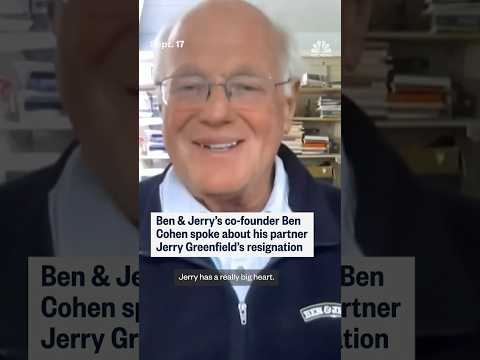
Ben & Jerry’s co-founder explains partner’s resignation
NBC News· 2025-09-18 01:29
Company Values & Leadership Change - Jerry's resignation is driven by concerns that Unilever and Magnum are stifling Ben & Jerry's values [1] - Jerry's personal well-being and adherence to Ben & Jerry's values are paramount in his decision to resign [1] - The remaining leadership intends to fight to preserve the values and the heart and soul of Ben & Jerry's [1] Strategic Objectives - The company aims to create consumer demand to pressure Magnum to adhere to the acquisition agreement [1] - The ultimate goal is for Ben & Jerry's to be owned by a group of socially aligned investors [1]
StubHub's debut on Wall Street sends shares to more than $25
UPI· 2025-09-17 18:59
Company Overview - StubHub made its debut on the New York Stock Exchange with shares opening at $25.35, generating approximately $800 million in revenue for the company [2][4] - The company primarily generates revenue by connecting ticket resellers with online buyers, competing with Ticketmaster's Live Nation Entertainment, Vivid Seats, and SeatGeek [3] Historical Context - StubHub was acquired by eBay in 2007 for about $310 million and was later sold to Viagogo in 2019 in a multi-billion dollar cash deal [4] - In the previous year, over one million sellers sold more than 40 million tickets on StubHub's platform [4] Regulatory Challenges - The District of Columbia's attorney general filed a lawsuit against StubHub, alleging deceptive practices regarding mandatory fees [5] - The Federal Trade Commission issued a warning letter to StubHub, emphasizing compliance with its "junk fee" rule and alleging that some listed tickets did not meet federal standards [5]


Ben & Jerry's co-founder resigns in protest of parent company
NBC News· 2025-09-17 15:55
Ben & Jerry's co-founder Jerry Greenfield is quitting the company after nearly 50 years ahead of parent company Unilver spin-off of its ice cream business. In post on Instagram and X, Greenfield says he's leaving the brand because it no longer stands behind social justice issues that were core to its business. Ben & Jerry's has had several disputes with Unilver since it was bought in 2000, especially regarding stances on Israel, the West Bank, and Gaza.A spokesman for the ice cream business saying in a stat ...

Ben & Jerry's cofounder leaves business after 47 years, claiming he's been 'silenced' by Unilever
Fox Business· 2025-09-17 11:58
Core Viewpoint - Jerry Greenfield, co-founder of Ben & Jerry's, has resigned due to growing tensions with parent company Unilever over its stance on the Israel-Hamas conflict in Gaza [1][4]. Group 1: Company Background - Ben & Jerry's was founded in 1978 by Jerry Greenfield and Ben Cohen in a renovated gas station and has maintained a socially conscious mission since its acquisition by Unilever in 2000 [8]. - The company has been involved in a legal dispute with Unilever, alleging efforts to silence its political activism, particularly regarding its stance on the Gaza conflict, which it described as "genocide" [6]. Group 2: Leadership and Values - Greenfield expressed that he could no longer work for a company that he believes has been "silenced" by Unilever, emphasizing the importance of pursuing values and social justice [4][6]. - He highlighted that Unilever had previously guaranteed Ben & Jerry's independence to uphold its values when it acquired the company over 20 years ago [2]. Group 3: Current Developments - The resignation of Greenfield marks a significant moment in the ongoing conflict between Ben & Jerry's and Unilever, which has been escalating since 2021 when the ice cream maker announced it would cease sales in the West Bank [4]. - Unilever's ice cream unit, Magnum, has publicly disagreed with Greenfield's perspective and has sought constructive dialogue with the co-founders to strengthen the brand's values-based position [6].
X @Bloomberg
Bloomberg· 2025-09-17 11:55
“I can no longer, in good conscience, and after 47 years, remain an employee of Ben & Jerry’s,” Jerry Greenfield said.The Ben & Jerry’s co-founder is resigning from the ice cream company he started in 1978, saying the brand’s freedom to speak out on social issues has been stifled by parent company Unilever. Read more: https://t.co/Q18gQnD6dt📷: Lisa Lake/Getty Images ...