ICICI Bank

Search documents
印度股票策略-2025 年回顾与 2026 年开年新投资者调研速览-India_Equity_Strategy_Quick_Look_Back_at_2025__New_Investor_Poll_to_Kick_Off_2026
2026-01-04 11:35
Vi e w p o i n t | 01 Jan 2026 18:32:56 ET │ 15 pages CITI'S TAKE Indian equities underperformed both EM and DM in 2025 (~27%/13%). In 2026, we think earnings growth trajectory is likely improving, aided by Financials (bottom-up estimates reflect recovery across Consumer & Industrials as well). Further, decent risk-reward should support NIFTY/MSCI India returns (relative valuations, potential US trade deal, global equity broadening beyond AI enablers etc). In 2025, FII outflows reached US$18bn; DII inflows ...
Market recap of the week: Seven of top 10 firms add Rs 1.23 lakh crore in mcap; Reliance leads gains
The Times Of India· 2026-01-04 10:13
Market Performance - The Indian equity markets ended positively, with the BSE Sensex rising by 720.56 points, or 0.84%, over the week [2][4] - The combined market value of seven of the country's ten most-valued companies increased by Rs 1,23,724.19 crore [4] Top Gainers - Reliance Industries led the gains, with its market capitalisation increasing by Rs 45,266.12 crore to Rs 21,54,978.60 crore [2][4] - State Bank of India saw a rise of Rs 30,414.89 crore, reaching a valuation of Rs 9,22,461.77 crore [2][4] - Larsen & Toubro's market value increased by Rs 16,204.34 crore to Rs 5,72,640.56 crore [2][4] - Hindustan Unilever's valuation climbed by Rs 14,626.21 crore to Rs 5,51,637.04 crore [2][4] - HDFC Bank recorded an increase of Rs 13,538.43 crore, bringing its market capitalisation to Rs 15,40,303.87 crore [3][4] - ICICI Bank's valuation rose by Rs 3,103.99 crore to Rs 9,68,773.14 crore [3][4] - Bharti Airtel added Rs 570.21 crore, reaching Rs 12,01,262.53 crore [3][4] Decliners - Tata Consultancy Services (TCS) experienced a decline of Rs 10,745.72 crore, ending with a market value of Rs 11,75,914.62 crore [3][4] - Infosys lost Rs 6,183.25 crore, concluding the week at Rs 6,81,635.59 crore [3][4] - Bajaj Finance saw a drop of Rs 5,693.58 crore, with its valuation falling to Rs 6,16,430.43 crore [3][4] Company Rankings - At the end of the week, Reliance Industries remained the most valuable company in India, followed by HDFC Bank, Bharti Airtel, TCS, ICICI Bank, State Bank of India, Infosys, Bajaj Finance, Larsen & Toubro, and Hindustan Unilever [3][4]

Nifty may hit 29,500 by Q1 2027 on earnings rebound; Antique’s top picks include ICICI Bank and SBI
The Economic Times· 2026-01-04 08:14
Core Viewpoint - Antique projects CY26 as a potential turning point for Indian equities, anticipating a recovery in corporate profits and foreign portfolio investor (FPI) flows, with a target of 29,500 for the Nifty index, implying a 13% upside from current levels [1][13] Earnings Outlook - Nifty earnings are expected to grow at a compound annual rate of approximately 16% over FY26–28, significantly higher than the 7% CAGR recorded over FY24–26 [1][13] - The brokerage emphasizes an earnings-led market recovery rather than relying on multiple expansions, with corporate earnings positively correlated with wholesale price inflation and nominal GDP growth, both expected to normalize in FY27 [3][13] - A broad-based recovery in profits is anticipated, particularly in sectors such as electronics manufacturing services, telecom, industrials, and retail, while oil and gas, IT services, power utilities, FMCG, and automobiles are expected to lag [3][13] Capital Expenditure and Financials - The capital expenditure theme is expected to rebound after two years of slowdown, with favorable conditions across global monetary policies and domestic support [7][13] - Financials are a core focus, with expectations for banks to enter an earnings upcycle in CY26, supported by a strong domestic macro backdrop and the nearing end of the rate-cut cycle [8][13] - Public sector banks are favored due to comparable growth metrics to private lenders while trading at a 45% discount [8][13] Consumption Sector and Mid/Small-Cap Stocks - The broader consumption sector is viewed with caution due to high valuations and competitive pressures, although select discretionary segments like alcoholic beverages and hotels are seen positively [9][13] - Mid- and small-cap stocks are expected to show earnings growth that outpaces the Nifty over the next two to three years, driven by domestic cyclicals and increased capex activity [10][13] Stock Picks and Market Flows - Top large-cap stock picks include ICICI Bank, State Bank of India, and Hindustan Aeronautics, while mid-cap and small-cap preferences include Siemens Energy India and Chalet Hotels, respectively [11][13] - After a significant outflow of $17.5 billion from Indian equities in CY25, Antique anticipates stabilization and potential revival of FPI flows in CY26, supported by low FPI ownership and reasonable valuations [11][13] - Despite trading at a premium to historical averages, valuations are expected to be sustained due to lower bond yields and sectoral divergence, with many Nifty 500 stocks having corrected over 20% from their highs [12][13]

Mcap of 7 of top-10 most valued firms surges ₹1.23 lakh crore; Reliance biggest winner
BusinessLine· 2026-01-04 06:26
Market Overview - The combined market capitalisation of seven of the top-10 most-valued firms increased by ₹1,23,724.19 crore last week, reflecting a positive trend in equities, with Reliance Industries experiencing the largest valuation increase [1] - The BSE benchmark rose by 720.56 points, or 0.84 percent [1] Gainers - Reliance Industries saw its market valuation rise by ₹45,266.12 crore, reaching ₹21,54,978.60 crore [2] - State Bank of India added ₹30,414.89 crore to its valuation, totaling ₹9,22,461.77 crore [2] - Larsen & Toubro's valuation increased by ₹16,204.34 crore to ₹5,72,640.56 crore [3] - Hindustan Unilever's market capitalisation climbed by ₹14,626.21 crore to ₹5,51,637.04 crore [3] - HDFC Bank's valuation edged up by ₹13,538.43 crore to ₹15,40,303.87 crore [3] - ICICI Bank advanced by ₹3,103.99 crore to ₹9,68,773.14 crore [3] - Bharti Airtel's market capitalisation rose by ₹570.21 crore to ₹12,01,262.53 crore [3] Decliners - Tata Consultancy Services (TCS) experienced a decline in market valuation by ₹10,745.72 crore, bringing it down to ₹11,75,914.62 crore [2][4] - Infosys saw a decrease of ₹6,183.25 crore in its valuation, now at ₹6,81,635.59 crore [4] - Bajaj Finance's market capitalisation dropped by ₹5,693.58 crore to ₹6,16,430.43 crore [4] Rankings - Reliance Industries remains the most valued firm, followed by HDFC Bank, Bharti Airtel, TCS, ICICI Bank, State Bank of India, Infosys, Bajaj Finance, Larsen & Toubro, and Hindustan Unilever [4]

Mcap of 7 of top-10 most valued firms surges Rs 1.23 lakh cr; Reliance biggest winner
The Economic Times· 2026-01-04 05:51
Market Overview - The BSE benchmark increased by 720.56 points, or 0.84 percent last week [1] Company Valuations - Reliance Industries saw its market valuation rise by Rs 45,266.12 crore, reaching Rs 21,54,978.60 crore, maintaining its position as the most valued firm [6] - The market valuation of State Bank of India increased by Rs 30,414.89 crore, bringing its total to Rs 9,22,461.77 crore [6] - Larsen & Toubro's valuation surged by Rs 16,204.34 crore to Rs 5,72,640.56 crore [4] - Hindustan Unilever's market valuation climbed by Rs 14,626.21 crore to Rs 5,51,637.04 crore [4] - HDFC Bank's market capitalisation edged higher by Rs 13,538.43 crore to Rs 15,40,303.87 crore [5] - ICICI Bank's valuation advanced by Rs 3,103.99 crore to Rs 9,68,773.14 crore [5] - Bharti Airtel's market capitalisation increased by Rs 570.21 crore to Rs 12,01,262.53 crore [6] Valuation Erosion - Tata Consultancy Services (TCS) experienced a decline in market valuation by Rs 10,745.72 crore, reducing its total to Rs 11,75,914.62 crore [6] - Infosys saw a decrease in market capitalisation by Rs 6,183.25 crore to Rs 6,81,635.59 crore [6] - Bajaj Finance's market valuation dropped by Rs 5,693.58 crore to Rs 6,16,430.43 crore [6] Overall Market Capitalisation - The combined market capitalisation of seven of the top-10 most-valued firms surged by Rs 1,23,724.19 crore, reflecting an optimistic trend in equities [6]
Nifty hits record intra-day high; Sensex jumps 573 points
Rediff· 2026-01-02 11:14
Market Performance - The Nifty equity benchmark index reached its all-time high before closing 182 points higher, while the BSE Sensex increased by 573 points, driven by strong buying in power, banking, and metal stocks [1][3] - The BSE Sensex climbed 573.41 points or 0.67% to settle at 85,762.01, with an intraday high of 85,812.27, marking a jump of 623.67 points or 0.73% [3][4] - The NSE Nifty rose by 182 points or 0.70% to 26,328.55, with a peak of 26,340 during the day, reflecting a surge of 193.45 points or 0.73% [4] Sector Performance - Major gainers among the 30-Sensex firms included NTPC, Trent, Bajaj Finance, Power Grid, Maruti, State Bank of India, ICICI Bank, and Bharat Electronics [4] - Conversely, laggards in the market included ITC, Kotak Mahindra Bank, Titan Company, Axis Bank, and Bharti Airtel [4] Investor Activity - Domestic Institutional Investors (DIIs) purchased stocks worth ₹1,525.89 crore, while Foreign Institutional Investors (FIIs) sold equities worth ₹3,268.60 crore [5] - The strong capital infusion by domestic institutional investors contributed to the positive trend in the domestic stock market [3] Global Market Influence - Asian markets showed a positive trend, with South Korea's Kospi index and Hong Kong's Hang Seng index ending significantly higher, while China's Shanghai index and Japan's Nikkei were closed for a holiday [5] - Brent crude oil prices decreased by 0.36% to $60.63 per barrel, which may influence market sentiment [5]
Markets need a rally first; Samir Arora on DIIs, FIIs and what to buy next
The Economic Times· 2026-01-02 04:29
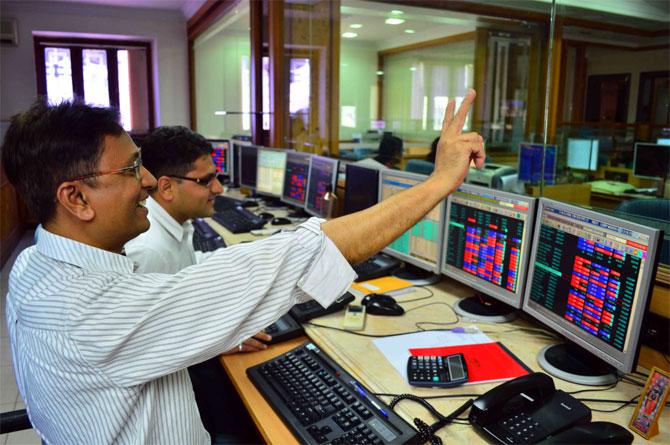
Market Outlook - Strong domestic institutional investor (DII) flows are welcomed, and concerns about "too much money chasing too few stocks" are considered premature ahead of a broader market rally in 2026 [10] - Equity investing is cyclical, with phases of inflows and pauses repeating over time, and investors should only worry after markets have delivered meaningful gains [10][2] Investment Strategy - Preference for businesses with year-to-year earnings visibility rather than those dependent on long-duration government programmes, particularly in sectors like railways and defence [3][4] - Avoidance of original equipment manufacturers in the automobile sector, with a focus on auto ancillary plays instead [8] Sector Insights - Consumption growth is best captured through new-age platform companies rather than traditional consumer staples, with growth driven by channel shifts [7][10] - Digital payment platforms such as PhonePe and Paytm exemplify the trend of rapid penetration-led growth due to consumer migration from offline to digital channels [10] Financial Sector Performance - Non-bank lenders have delivered strong returns in 2025, with companies like Bajaj Finance, Cholamandalam Investment, and Shriram Finance significantly outperforming [10] - Among banks, State Bank of India, HDFC Bank, and Axis Bank have performed reasonably well, while ICICI Bank has seen relative underperformance due to management succession concerns [10]
With an aim to boost NPS, regulator allows banks to set up own pension funds
MINT· 2026-01-01 15:52
Group 1 - The Pension Fund Regulatory and Development Authority (PFRDA) has approved a framework allowing scheduled commercial banks to directly establish pension funds for managing the National Pension System (NPS), which is expected to enhance distribution and competition among fund managers [1][4] - The new framework aims to eliminate regulatory constraints that previously limited bank participation in the pension sector, introducing eligibility criteria based on net worth, market capitalization, and prudential soundness in accordance with Reserve Bank of India's standards [2][3] - The PFRDA anticipates that these reforms will lead to a more competitive and well-governed pension ecosystem, improving long-term retirement outcomes and enhancing old-age income security for subscribers [5] Group 2 - The investment management fee (IMF) structure for pension funds will be revised to better align with public aspirations and international benchmarks, effective from April 1, 2026, to protect subscriber interests [6] - The revised fee structure will introduce differentiated rates for government and non-government sector subscribers, applicable to schemes under the multiple scheme framework (MSF) [7] Group 3 - The finance ministry has appointed three new trustees to the NPS Trust board, including Dinesh Kumar Khara as chairperson, which reflects a strategic move to strengthen governance within the pension sector [8]

Will FD rates bounce back in 2026 after big fall in 2025? Here’s how you can make the best of FD investment
The Economic Times· 2025-12-31 11:42
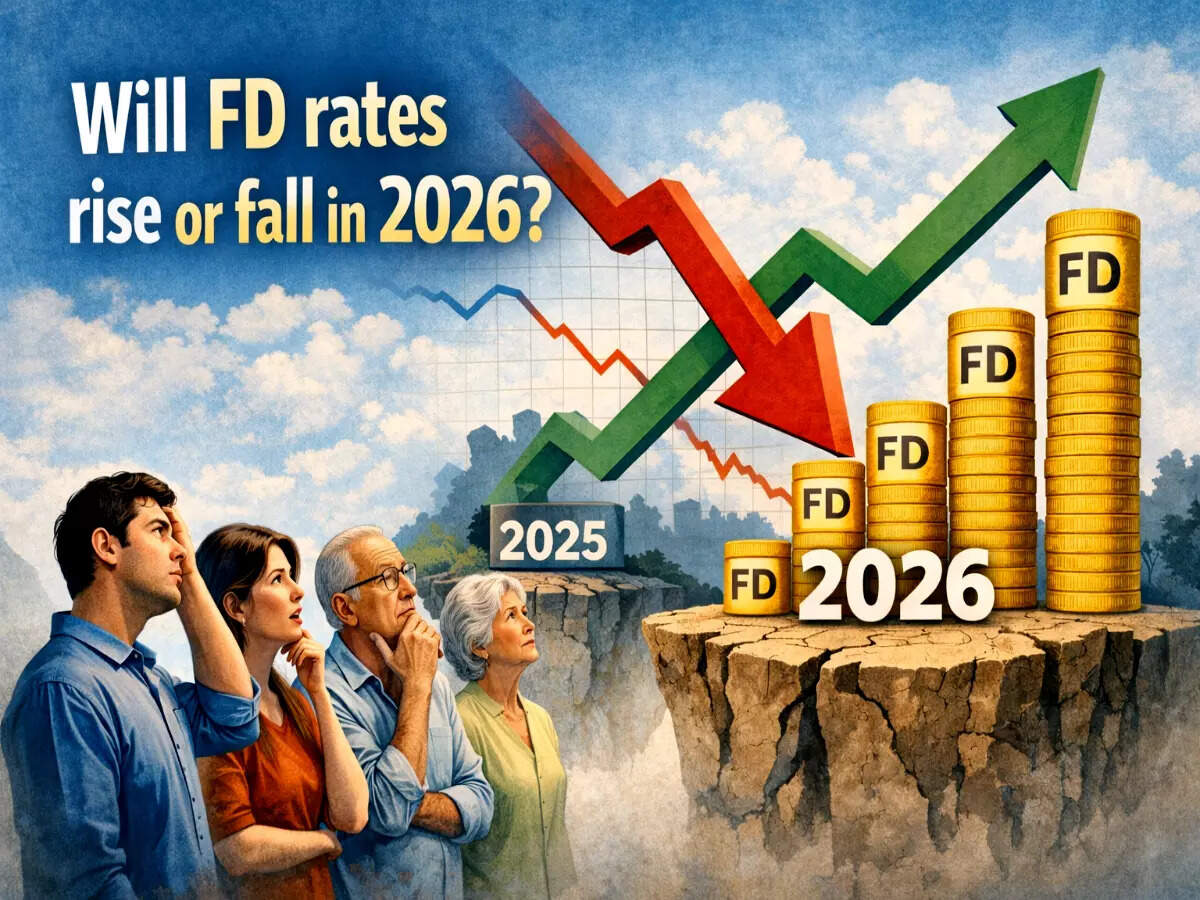
Core Viewpoint - The fixed deposit (FD) rates have been reduced significantly due to the Reserve Bank of India's (RBI) repo rate cuts, and the outlook for 2026 suggests that rates may remain stable or trend slightly lower rather than increase sharply [1][5][10] Group 1: FD Rate Changes and Influences - In 2025, banks and small finance banks (SFBs) cut FD interest rates multiple times following a total repo rate cut of 125 basis points by the RBI [9][10] - The last repo rate cut occurred in December 2025, when the RBI reduced the rate by 25 basis points [1][10] - The transmission of these rate cuts into FD rates takes time, and the full impact of previous cuts is still unfolding, which may take months to years [2][10] Group 2: Future Expectations for FD Rates - Swapnil Aggarwal, Director at VSRK Capital, anticipates that FD rates in 2026 are more likely to remain stable or trend slightly lower, contingent on controlled inflation and a more accommodative monetary policy [5][6] - A significant resurgence in inflation or unexpected economic stress is deemed unlikely to lead to a sharp increase in FD rates, suggesting a stable-to-soft outlook for deposit rates [6][10] Group 3: Investment Strategies Amidst Rate Changes - Investors may consider reallocating a portion of their savings to high-quality debt funds if FD rates decline, as these funds can benefit from falling yields [7][8] - Conversely, during rising rate periods, it is advisable to maintain short-term FDs to allow gradual reinvestment at higher rates as they become available [8][9] - Diversification across FDs, debt funds, and hybrid funds is recommended to manage risk while optimizing returns [9][10] Group 4: Current FD Rates at Major Banks - The highest FD rates at major banks include Bandhan Bank at 7.2%, RBL Bank at 7.2%, and IDFC FIRST Bank at 7% for specific tenures [3][4]
PSBs' staff count rises for 1st time in 5 years
Rediff· 2025-12-31 07:17
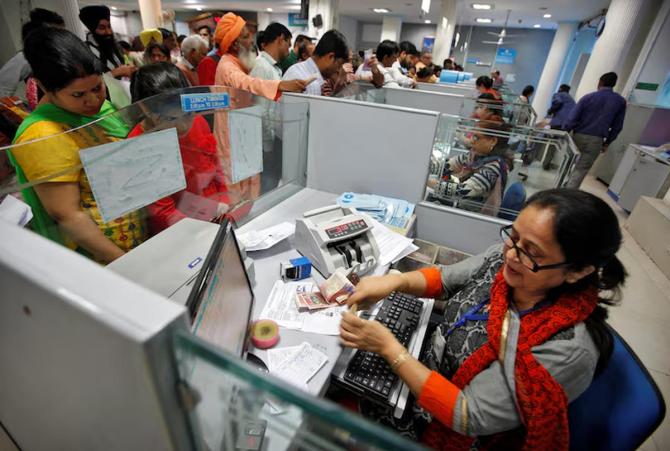
Public sector banks’ (PSBs’) employee count grew for the first time in five years while private sector banks’ staff strength saw a decline in 2024-25 (FY25), according to latest data released by the Reserve Bank of India (RBI).Image used for representational purpose only. Photograph: Ajay Verma/ReutersThe employee count of state-owned lenders rose 0.22 per cent year-on-year (Y-o-Y) to 757,641 at the end of March 31, 2025 from 756,015 in FY24.On the other hand, private banks recorded a 0.86 per cent drop in ...