Ford Motor

Search documents
Why Fast-paced Mover Ford Motor (F) Is a Great Choice for Value Investors
ZACKS· 2026-01-13 14:56
Core Viewpoint - Momentum investing focuses on "buying high and selling higher," contrasting with traditional strategies of "buying low and selling high" [1] Group 1: Momentum Investing Strategy - Momentum investing can be risky as stocks may lose momentum if future growth does not justify high valuations [1] - A safer approach is to invest in bargain stocks that exhibit recent price momentum, identified through the Zacks Momentum Style Score [2] Group 2: Ford Motor Company (F) Analysis - Ford Motor Company is highlighted as a strong candidate for momentum investing, with a recent price increase of 2.8% over the past four weeks [3] - The stock has gained 17% over the past 12 weeks, indicating strong long-term momentum, with a beta of 1.62, suggesting it moves 62% more than the market [4] - Ford has a Momentum Score of B, indicating a favorable time to invest based on momentum [5] - The stock has a Zacks Rank 1 (Strong Buy) due to upward revisions in earnings estimates, which attract more investor interest [6] - Ford is trading at a low Price-to-Sales ratio of 0.29, suggesting it is undervalued at 29 cents for each dollar of sales [6] Group 3: Additional Investment Opportunities - Besides Ford, there are other stocks that meet the criteria of the 'Fast-Paced Momentum at a Bargain' screen, which may also present investment opportunities [7] - Investors can explore over 45 Zacks Premium Screens tailored to different investing styles to identify potential winning stocks [8]



Best Income Stocks to Buy for Jan. 13
ZACKS· 2026-01-13 09:30
Group 1 - Gladstone Land Corporation (LAND) is a real estate investment trust with a Zacks Rank 1 and has seen its current year earnings estimate increase by 28% over the last 60 days, with a dividend yield of 5.9%, surpassing the industry average of 4.8% [1] - National Australia Bank Limited (NABZY) is a financial services company also holding a Zacks Rank 1, with a current year earnings estimate increase of 2.6% over the last 60 days and a dividend yield of 3.8%, compared to the industry average of 2.6% [2] - Ford Motor Company (F) has experienced a 2.2% increase in its next year earnings estimate over the last 60 days, maintaining a strong position in the automobile industry [2] Group 2 - Another Zacks Rank 1 company has a dividend yield of 4.2%, significantly higher than the industry average of 0.0% [3]

Should You Buy Ford Stock While It's Under $15?
The Motley Fool· 2026-01-13 08:30
Core Insights - Investors are showing increased optimism, with Ford's shares achieving a total return of 42% in 2025, outperforming the S&P 500 [1] - Ford's F-Series remains the best-selling truck line in America for the 44th consecutive year, with unit sales reaching 829,000 [1] - The company's pro division is experiencing notable success, contributing to higher margins and growth compared to the overall business [2] Financial Performance - Ford's current stock price is approximately $14.03, with a market capitalization of $56 billion [4] - The stock trades at a forward price-to-earnings ratio of 10, which may attract value investors [8] - Over the past decade, Ford's total return has been only 96%, significantly lagging behind the S&P 500's 331% return [4][5] Growth Prospects - Revenue is projected to decrease by 0.5% in 2026 and increase by only 1.1% in 2027, indicating minimal growth [6] - Profit margins are described as "razor-thin," and the automotive industry is characterized as mature with high capital expenditures and intense competition [6] Market Conditions - The Federal Reserve's potential interest rate cuts could positively impact demand for Ford vehicles, as lower financing costs may encourage purchases [2] - Economic downturns pose a risk to Ford's sales and profitability, as consumer sensitivity to macro trends can lead to declines in demand [7]

GM Vs Ford: Which Automaker is the Better Investment for 2026?
ZACKS· 2026-01-13 00:15
Core Insights - General Motors (GM) and Ford (F) have shown strong stock performance in 2025, outperforming the broader market and most auto peers, including Tesla (TSLA) [1] - Both companies have reported better-than-expected financial results despite concerns over EV growth and tariffs [1] Group 1: Stock Performance - GM stock has increased by 65% over the past year, reaching all-time highs of over $80 per share, while Ford shares have risen more than 40%, nearing a 52-week peak of $14 [2] - GM's strong cash generation and stock repurchase program have excited investors, while Ford's operational execution is gaining optimism amid restructuring and cost-cutting initiatives [2] Group 2: EV Sales Performance - GM sold a record 169,887 EVs in 2025, a 48% increase from 2024, despite a decline in Q4 EV sales to 25,219 from 43,982 in Q4 2024 [5] - Ford sold 84,113 EVs in 2025, a 14% decrease from 2024, with Q4 EV sales dropping over 50% to 14,500 [6] - GM finished 2025 as the second-best-selling EV maker in the U.S., while Ford ranked third, selling half as many EVs as GM [5][6] Group 3: Financial Outlook - GM's FY25 earnings per share (EPS) is estimated to dip 2% to $10.33, but FY26 EPS is projected to rise 14% to $11.81 [8] - Ford's FY25 EPS is expected to drop significantly to $1.08 from $1.84 in 2024, primarily due to a $2.5 billion impact from tariffs, with FY26 EPS projected to rebound to $1.42 [10] Group 4: Return on Invested Capital (ROIC) - GM has a higher ROIC of 4.6% compared to Ford's 2.7%, with both companies operating in a low-margin environment [13] - The transition to EVs is capital-intensive, impacting ROIC as investments are made before generating significant profits [13] Group 5: Valuation and Dividends - Both GM and Ford are trading under 11X forward earnings, with GM having a cheaper P/E multiple of 7X compared to Ford's 10X [14][15] - Ford offers a higher annual dividend yield of 4.23% compared to GM's 0.72%, but GM's annual dividend has increased by 20.46% over the last five years, while Ford's has grown by 8.71% [16] Group 6: Investment Ratings - GM's earnings momentum has led to a Zacks Rank 1 (Strong Buy), while Ford currently holds a Zacks Rank 3 (Hold) [20]


Will Ford Motor (F) Beat Estimates Again in Its Next Earnings Report?
ZACKS· 2026-01-12 18:10
Core Viewpoint - Ford Motor Company is positioned well to potentially beat earnings estimates in its upcoming quarterly report, supported by a strong history of exceeding expectations [1]. Earnings Performance - In the last reported quarter, Ford Motor achieved earnings of $0.45 per share, surpassing the Zacks Consensus Estimate of $0.38 per share, resulting in a surprise of 18.42% [2]. - In the previous quarter, the company was expected to report earnings of $0.34 per share but delivered $0.37 per share, leading to a surprise of 8.82% [2]. Earnings Estimates - There has been a favorable change in earnings estimates for Ford Motor, with a positive Zacks Earnings ESP (Expected Surprise Prediction), indicating a strong likelihood of an earnings beat [5]. - The current Earnings ESP for Ford Motor is +112.88%, suggesting that analysts have recently become more optimistic about the company's earnings prospects [8]. Predictive Metrics - Stocks with a positive Earnings ESP and a Zacks Rank of 3 (Hold) or better have a nearly 70% chance of producing a positive surprise [6]. - The Zacks Earnings ESP compares the Most Accurate Estimate to the Zacks Consensus Estimate, with the Most Accurate Estimate reflecting the latest analyst revisions [7].
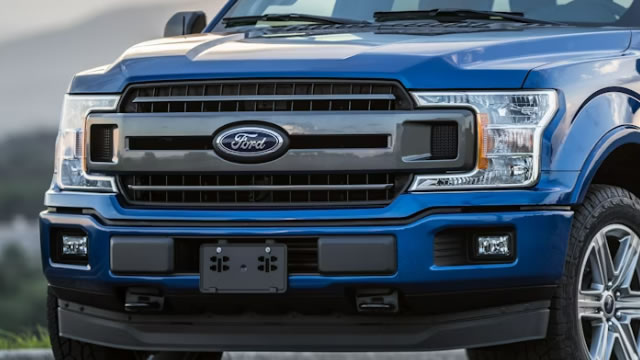
As EV Dream Fades, Ford — Not GM — Is the Auto Stock to Buy
247Wallst· 2026-01-09 17:26
Core Viewpoint - General Motors announced a $6 billion charge due to the scaling back of several electric vehicle initiatives, which includes contract cancellations with suppliers and reduced production plans [1] Group 1: Financial Impact - The company is taking a significant $6 billion charge related to its electric vehicle initiatives [1] Group 2: Strategic Changes - The charge is associated with scaling back on electric vehicle projects, indicating a shift in strategy [1] - The company is canceling contracts with suppliers as part of this strategic adjustment [1] - There are also plans to reduce production levels for electric vehicles [1]

Ford Bets Big on Level 3 Autonomy With $30,000 UEV Platform Push
ZACKS· 2026-01-09 15:20
Core Insights - Ford Motor Company announced a significant upgrade to its BlueCruise highway driving system, introducing an eyes-off version set to launch in 2028 at a cost of $30,000 on its new Universal Electric Vehicle (UEV) platform [1][4]. Group 1: Technology and Features - The upgraded BlueCruise system will provide Level 3 driver-assistance capabilities, allowing drivers to take their hands and eyes off the road on certain highways, utilizing lidar technology for support [2]. - The new UEV platform integrates infotainment, automated driving, audio, and connected networking into a compact unit, enhancing vehicle consistency and reliability over time [3]. - The UEV platform is designed to offer higher performance, lower production costs, and a smaller size, enabling the $30,000 truck to feature more powerful computing capabilities than current Ford models [4]. Group 2: Competitive Landscape - Ford is entering a competitive market for advanced driving automation, where other automakers like General Motors and Mercedes-Benz are also developing Level 3 systems, with GM's Cadillac Escalade IQ set to debut in 2028 at a price exceeding $125,000 [5][9]. - Ford's Level 2 BlueCruise system is currently available on models such as the Mustang Mach-E and Ford F-150 Lightning, with subscription pricing options [6]. Group 3: Future Developments - Ford plans to launch a new AI assistant through its Ford and Lincoln phone apps, with an in-vehicle experience expected to start in 2027, enhancing vehicle functionality [7]. - The overall strategy aims to advance vehicle autonomy, improve EV platforms, and incorporate AI-driven features, making vehicles more capable and affordable [8].

Stock Market Today, Jan. 8: Ford Rises After Analyst Upgrade Boosts Confidence in Turnaround
The Motley Fool· 2026-01-08 22:16
Core Viewpoint - Ford Motor Company's stock performance and future prospects are being closely analyzed following an analyst upgrade and a presentation at CES, highlighting its ambitions in electric vehicles (EV) and autonomous driving technology [1][3][6]. Company Performance - Ford's stock closed at $14.40, reflecting a 4.80% increase, with a market capitalization of $55 billion. The trading volume was 145.2 million shares, significantly above the three-month average of 84.6 million shares [2][6]. - The stock has appreciated 563% since its IPO in 1972, and it reached a new 52-week high following the analyst upgrade [2][6]. Analyst Upgrade - Piper Sandler upgraded Ford to a buy rating, raising the price target from $11 to $16, which contributed to the stock surge [6][7]. - The upgrade was influenced by Ford's presentation of its autonomous driving technology plan, aiming for a Level 3 "eyes-off" system by 2028, which is expected to enhance future revenue and profit streams [6][7]. Financial Outlook - Ford has increased its earnings outlook for 2025, despite incurring nearly $20 billion in charges related to its electric vehicle business plan, indicating a focus on profitability that has positively impacted investor sentiment [7].

Ford Motor Company (NYSE:F) Targets Innovation with New AI Assistant
Financial Modeling Prep· 2026-01-08 16:03
Group 1 - Ford Motor Company is a prominent American automaker known for manufacturing cars, trucks, and SUVs, competing with General Motors and Tesla [1] - The company is focusing on integrating advanced technologies, such as a new AI assistant, to enhance user experience [1][2] - Ford's stock price is currently $13.73, reflecting a slight decrease of 0.51% [3] Group 2 - Piper Sandler has set a price target of $16 for Ford, indicating a potential increase of 16.53% from the current stock price [2][5] - The company's market capitalization is approximately $53.73 billion, indicating its significant presence in the automotive industry [4][5] - Today's trading volume for Ford is 45.8 million shares on the NYSE, showing active investor interest [4][5]
Ford's Best Sales Since 2019: Trucks, SUVs and Hybrids Lead On
ZACKS· 2026-01-08 15:45
Core Insights - Ford Motor Company achieved solid sales growth in 2025, with U.S. vehicle sales increasing by 6% year over year, marking the best annual sales and fourth-quarter performance since 2019 [1][10] - The company outperformed the industry for the 10th consecutive month in December 2025 [1] Sales Performance - Total sales for Ford in 2025 reached 2.2 million vehicles, with a market share of 13.2% [2] - In Q4 2025, Ford's sales rose by 2.7% to over 545,200 vehicles, with a market share increase of 0.9% [2] Truck Segment - The Ford F-Series remained the best-selling truck in America, with sales exceeding 828,832 units, an increase of 8.3% [3] - The Ford Maverick had its strongest sales year on record, selling 155,051 vehicles, with Q4 sales up 54.2% to 34,147 pickups [3] - Total truck sales, including pickups and vans, reached 1,268,749 vehicles in 2025 [3] SUV Segment - The Ford Explorer was the best-selling SUV in America, with sales jumping 14.7% to 222,706 units in 2025, and Q4 sales increased by 30.6% to 61,777 units [4] - The Ford Bronco also had a record year with 146,007 vehicles sold, up 33.7%, and Q4 sales increased by 12% to 36,086 units [4] - Overall SUV sales for Ford in 2025 totaled 783,174 vehicles, reflecting a 1.6% year-over-year increase [4] Electric and Hybrid Vehicles - Ford's electric vehicle sales totaled 84,113 vehicles in 2025, including 51,620 Mustang Mach-E [5] - The company sold a record 228,072 hybrid vehicles in 2025, marking a 21.7% increase, with Q4 hybrid sales reaching 55,374 vehicles [6] - Ford's strong performance in 2025 highlights the effectiveness of its balanced product strategy, with trucks, SUVs, and hybrids driving growth [6] Competitive Context - General Motors (GM) experienced a 7% decline in deliveries year over year, totaling 703,001 vehicles in Q4 2025, with EV deliveries dropping about 43% [7] - Stellantis reported Q4 2025 deliveries of 332,321 vehicles, reflecting a 4% year-over-year increase, while total sales for 2025 were down 3% [8] Stock Performance - Ford shares have gained 16.2% in the past six months, compared to the industry's growth of 44.4% [9] - The company trades at a forward price-to-sales ratio of 0.33, above the industry average and its own five-year average, carrying a Value Score of A [11]