Bharti Airtel

Search documents
Mcap: 7 of top-10 most valued firms jumps by ₹1.18 lakh cr; SBI, Airtel biggest winners
BusinessLine· 2025-09-21 05:00
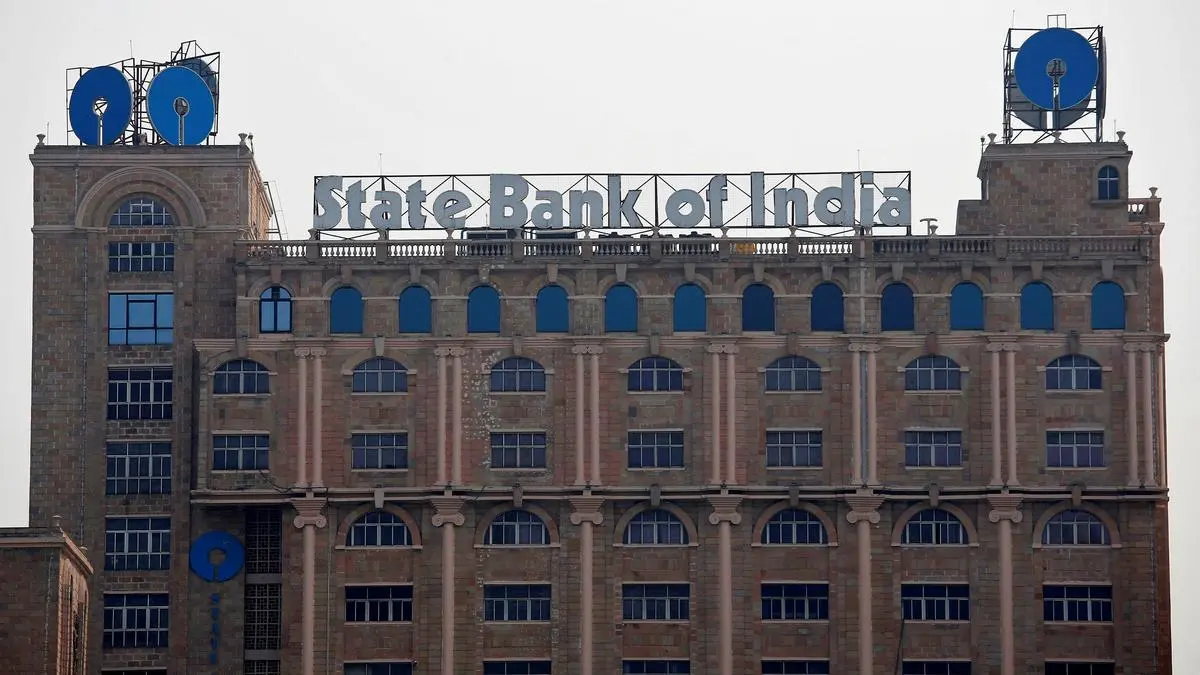
Market Overview - The combined market valuation of seven of the top-10 most valued firms increased by ₹1,18,328.29 crore last week, driven by an optimistic trend in equities [1] - The BSE benchmark rose by 721.53 points or 0.88 percent during the same period [1] Gainers - State Bank of India saw its market valuation increase by ₹35,953.25 crore, reaching ₹7,95,910 crore [2] - Bharti Airtel's valuation rose by ₹33,214.77 crore, bringing its total to ₹11,18,952.64 crore [2] - Reliance Industries' market capitalisation surged by ₹17,389.23 crore to ₹19,04,898.51 crore [3] - Tata Consultancy Services (TCS) experienced a valuation increase of ₹12,952.75 crore, reaching ₹11,46,879.47 crore [3] - Life Insurance Corporation of India (LIC) saw its valuation rise by ₹12,460.25 crore to ₹5,65,612.92 crore [3] - Infosys' market capitalisation climbed by ₹6,127.73 crore to ₹6,39,901.03 crore [3] Laggards - ICICI Bank's market valuation decreased by ₹10,707.87 crore, resulting in a total of ₹10,01,654.46 crore [5] - Bajaj Finance's market capitalisation fell by ₹6,346.93 crore to ₹6,17,892.72 crore [5] - Hindustan Unilever's valuation dipped by ₹5,039.87 crore, bringing it down to ₹6,01,225.16 crore [5] Market Ranking - Reliance Industries remains the top firm in market valuation, followed by HDFC Bank, TCS, Bharti Airtel, ICICI Bank, State Bank of India, Infosys, Bajaj Finance, Hindustan Unilever, and LIC [5]

Indian billionaire tightens grip on BT by taking board seat
Yahoo Finance· 2025-09-15 08:49
Sunil Bharti Mittal became BT’s largest shareholder after taking a 24.5pc stake a year ago - Stefan Wermuth/Bloomberg Indian telecoms billionaire Sunil Bharti Mittal has ramped up pressure on BT by taking a seat on the company’s board. Mr Mittal, who became BT’s largest shareholder after taking a 24.5pc stake just over a year ago, has joined the board as a non-independent, non-executive director. Gopal Vittal, vice chairman and managing director of Mr Mittal’s company Bharti Airtel, will also take a sea ...
Markets upbeat as SEBI eases IPO, foreign investor rules
BusinessLine· 2025-09-15 04:36
Group 1: Market Overview - Nifty futures indicate a calm start to the week after Indian benchmarks recorded two consecutive weeks of gains [1] - The US Federal Reserve's upcoming policy meeting is a focal point, with speculation about potential rate cuts [1] - Indian markets are anticipating WPI data to be released later in the day [1] Group 2: Inflation and Interest Rates - Despite a rise in inflation in India for the first time in 10 months, traders are still pricing in further interest rate cuts [2] - Expectations of reduced consumption taxes are believed to contribute to easing inflation, allowing the Reserve Bank of India to lower rates [2] - Capital Economics predicts an additional 50 basis points of cuts by year-end, which is more dovish than the market consensus [2] Group 3: Data Center Industry - The data center market in India is projected to expand fivefold within five years, with major players like Bharti Airtel, Reliance Industries, and Adani Enterprises expected to control 35%-40% of capacity by 2030 [3] - This growth in data infrastructure is seen as a significant opportunity for long-term investors, not only in technology but also in construction, electrical equipment, and cooling systems [3] Group 4: Regulatory Changes - The Securities and Exchange Board of India (SEBI) has relaxed IPO and foreign investor regulations to enhance capital flows [4] - Major companies like Reliance Jio and the National Stock Exchange can now list with smaller public stakes and have up to 10 years to comply with minimum public shareholding rules [4] - SEBI's changes also include widening anchor investor limits and lowering barriers for large-value alternative investment funds, aimed at deepening capital markets [4] Group 5: Market Sentiment - The Nifty 50 index has been affected by tariff headlines and consumption-boosting measures, leading to low volatility in the derivatives market [5] - Traders are divided on the implications of low volatility, which may indicate either fatigue with tariff discussions or a lack of strong conviction for significant market movements [5] - The potential for future market jolts remains uncertain, influenced by new tariff developments or unexpected events [5]


M-cap weekly gains: Eight of top-10 firms add Rs 1.69 lakh cr; Bajaj Finance leads rally as LIC, HUL lose value
The Times Of India· 2025-09-14 09:26
Group 1 - The BSE benchmark surged by 1,193.94 points or 1.47%, boosting the wealth of blue-chip companies [4][6] - The combined market valuation of eight of the ten most valued domestic firms increased by Rs 1,69,506.83 crore last week [6] - Bajaj Finance was the standout performer, with its valuation climbing by Rs 40,788.38 crore to Rs 6,24,239.65 crore [4][6] Group 2 - Infosys gained Rs 33,736.83 crore, bringing its market capitalization to Rs 6,33,773.30 crore [4][6] - Tata Consultancy Services added Rs 30,970.83 crore, pushing its valuation to Rs 11,33,926.72 crore [4][6] - Reliance Industries' market capitalization advanced by Rs 27,741.57 crore to Rs 18,87,509.28 crore, maintaining its position as the most valued firm [5][6] Group 3 - State Bank of India gained Rs 15,092.06 crore, reaching Rs 7,59,956.75 crore [4][6] - ICICI Bank rose by Rs 10,644.91 crore to Rs 10,12,362.33 crore [4][6] - HDFC Bank added Rs 6,141.63 crore to reach Rs 14,84,585.95 crore [4][6] Group 4 - Bharti Airtel's market capitalization rose by Rs 4,390.62 crore to Rs 10,85,737.87 crore [4][6] - Hindustan Unilever's valuation fell by Rs 12,429.34 crore to Rs 6,06,265.03 crore, making it one of the laggards [5][6] - LIC's valuation decreased by Rs 1,454.75 crore, slipping to Rs 5,53,152.67 crore [5][6]
Mcap of eight of top-10 most valued firms jumps by Rs 1.69 lakh cr; Bajaj Finance biggest gainer
BusinessLine· 2025-09-14 05:12
Group 1 - The combined market valuation of eight of the top-10 most valued firms increased by ₹169,506.83 million last week, driven by a positive trend at the Dalal Street, with Bajaj Finance being the largest gainer [1] - The BSE benchmark rose by 1,193.94 points or 1.47 percent during the same period [1] Group 2 - Bajaj Finance's market valuation increased by ₹40,788.38 million, reaching ₹624,239.65 million [2] - Infosys added ₹33,736.83 million to its valuation, totaling ₹633,773.30 million [2] - Tata Consultancy Services (TCS) saw a surge of ₹30,970.83 million, bringing its market capitalization to ₹1,133,926.72 million [2] - Reliance Industries' valuation rose by ₹27,741.57 million, reaching ₹1,887,509.28 million [2] - State Bank of India's market capitalization climbed by ₹15,092.06 million to ₹759,956.75 million [2] - ICICI Bank's valuation increased by ₹10,644.91 million, totaling ₹1,012,362.33 million [2] Group 3 - HDFC Bank's market capitalization edged higher by ₹6,141.63 million, reaching ₹1,484,585.95 million [3] - Bharti Airtel's valuation increased by ₹4,390.62 million, totaling ₹1,085,737.87 million [3] - Hindustan Unilever's valuation decreased by ₹12,429.34 million, bringing it down to ₹606,265.03 million [3] - Life Insurance Corporation of India's (LIC) market capitalization declined by ₹1,454.75 million, totaling ₹553,152.67 million [3] Group 4 - Reliance Industries remains the most valued firm, followed by HDFC Bank, TCS, Bharti Airtel, ICICI Bank, State Bank of India, Infosys, Bajaj Finance, Hindustan Unilever, and LIC [4]

Sensex climbs 123.58 points; Nifty takes winning run to seventh day
The Hindu· 2025-09-11 11:02
Group 1 - The Benchmark BSE Sensex increased by 123.58 points or 0.15% to close at 81,548.73, while the NSE Nifty rose by 32.40 points or 0.13% to settle at 25,005.50, marking its seventh consecutive day of gains [1][2] - Major gainers among Sensex firms included NTPC, Axis Bank, Power Grid, Bharti Airtel, Eternal, and Sun Pharma, while Infosys, Titan, UltraTech Cement, and Hindustan Unilever were among the laggards [2] - Positive signals from the U.S. regarding the resumption of trade discussions with India contributed to the market's upward movement, with expectations of the index entering a new range [3] Group 2 - Foreign institutional investors (FIIs) sold equities worth ₹115.69 crore, while domestic institutional investors (DIIs) purchased stocks worth ₹5,004.29 crore [4] - Global oil benchmark Brent crude decreased by 0.24% to $67.28 a barrel [4]
印度想让三大运营商用“国产设备”,但尴尬的是......
Guan Cha Zhe Wang· 2025-08-13 07:13
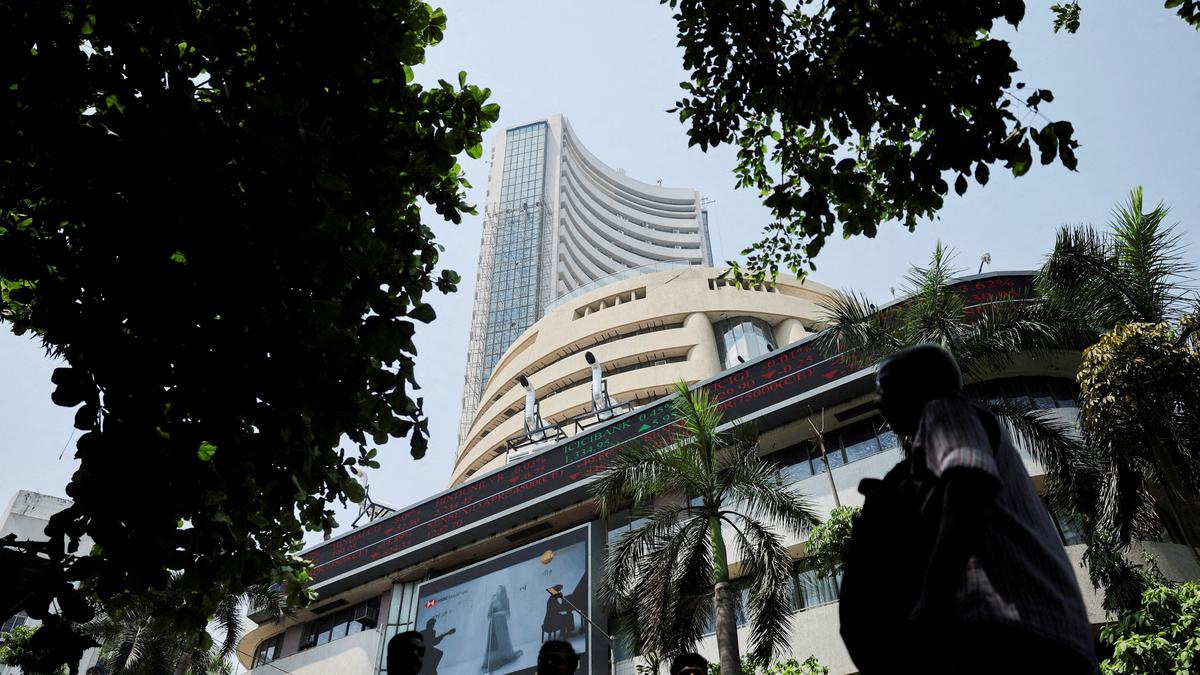
Core Viewpoint - The Indian government is emphasizing the urgency of achieving self-sufficiency in the telecommunications sector amid deteriorating relations with the U.S. [1][5] Group 1: Government Policy - The Indian Ministry of Telecommunications (DoT) has requested major private operators Reliance Jio, Bharti Airtel, and Vodafone Idea to submit a roadmap for increasing the use of domestically manufactured equipment [1] - If the operators do not comply voluntarily, the government may issue mandatory directives to enforce compliance within a specified timeframe [1] - The policy aims to impact foreign telecom equipment manufacturers such as Cisco, Nokia, Ericsson, and Samsung [1] Group 2: Industry Response - The three major operators have tentatively agreed to the DoT's request but have stipulated that domestic products must be competitively priced and of comparable quality to foreign products [1][2] - Currently, the use of domestic products by these operators is very limited, primarily due to insufficient production capacity from local manufacturers [6] - Vodafone Idea and Bharti Airtel have been sourcing equipment from Indian companies like Sterlite Technologies and HFCL, but face challenges due to low production volumes [6] Group 3: Geopolitical Context - The new policy comes at a time of heightened geopolitical risks, particularly following the U.S. imposing a 25% tariff on Indian goods, raising the total tariff rate on Indian exports to the U.S. to 50% [5] - There is a growing sentiment in India against U.S. products, with calls for a boycott gaining traction among the public [5] Group 4: Historical Context - This is not the first time the Indian government has pushed for "Make in India" initiatives in the telecom sector, having previously mandated state-owned BSNL to use only domestic equipment, which has led to ongoing difficulties for the company [6] - Experts warn that if private operators are held to the same standards as state-owned BSNL, the entire telecom industry could face significant challenges [6]
印度想让三大运营商用“国产设备”,但尴尬的是
Guan Cha Zhe Wang· 2025-08-13 07:03
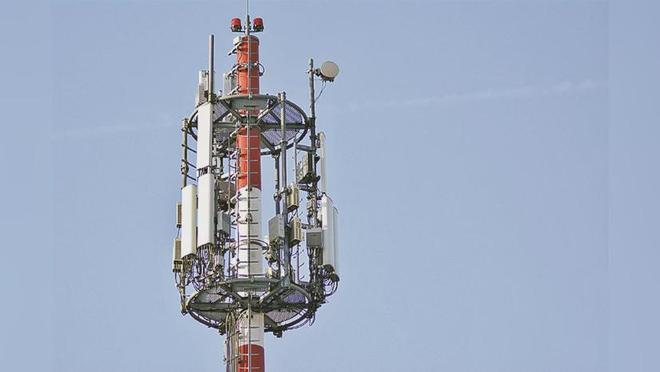
Group 1 - The Indian government is pushing for self-sufficiency in the telecommunications sector amid deteriorating relations with the US, highlighting the urgency of the situation [1][3] - The Indian Ministry of Telecommunications (DoT) has requested major private operators, including Reliance Jio, Bharti Airtel, and Vodafone Idea, to submit a roadmap for increasing the use of domestically manufactured equipment [1][3] - If the operators do not comply, the government may issue mandatory directives, which could impact foreign telecom equipment manufacturers such as Cisco, Nokia, Ericsson, and Samsung [1][3] Group 2 - The three major operators have agreed in principle to increase the use of domestic equipment but have stipulated that these products must be competitively priced and of comparable quality to foreign alternatives [1][4] - The Indian government is considering applying the new regulations only to new orders, avoiding additional financial burdens on already strained telecom operators [1][4] - The current use of domestic products by the major operators is minimal, primarily due to the insufficient production capacity of local manufacturers [4] Group 3 - The Indian government has previously attempted to promote the use of domestic products in the telecom sector but faced challenges, particularly with state-owned operator BSNL, which struggled under similar requirements [4] - Industry experts warn that if private operators are held to the same standards as state-owned companies, the entire telecom sector could face significant challenges [4]
X @Bloomberg
Bloomberg· 2025-08-05 11:52
Billionaire Sunil Mittal led-Bharti Airtel reports a larger-than-expected quarterly profit helped by a jump in 5G subscribers in India and higher mobile-phone charges in Nigeria https://t.co/kq00FrAldu ...
Mobius Sees Promise in Japan, India, Taiwan Markets
Bloomberg Television· 2025-08-04 16:23
Investment Strategy & Market Outlook - Initially holding 95% in cash, the portfolio is now 50% cash due to high market valuations [1][3] - Cash is considered "king" currently, with plans for aggressive buying during market corrections [2] - Holding cash provides a 4-5% interest rate from U S Treasuries, making it a safe and attractive option [3] - Emerging markets are showing promise, keeping pace with the US market in the last year [3][4] - Trade negotiations are expected to conclude in the next 4-5 months, potentially boosting emerging markets [4] Regional Investment Opportunities - Japan presents opportunities with good earnings, low price-earnings ratios, and growth, despite the Bank of Japan's policy rate of about 0 5% and inflation around 2 7% [5] - India and Taiwan are also promising markets, despite facing high tariffs from the US administration [6] - India's self-contained market and trade restrictions mitigate the impact of tariffs [7][8] - Consumer companies, airlines, and telecoms (e g Bharti Airtel) in India are attractive investment sectors [9] Risks & Uncertainties - Tariffs have negatively impacted market sentiment, raising concerns about higher inflation and poor earnings for import/export-dependent companies [14] - The ultimate impact of tariffs remains uncertain, with potential legal challenges in US federal courts [15] - Competition in the tech sector, particularly in AI, poses a significant risk to tech investments [25][26]