天玛智控

Search documents
天玛智控(688570) - 中信建投证券股份有限公司关于北京天玛智控科技股份有限公司部分募投项目调整内部投资结构并延期的核查意见
2025-06-30 08:00
中信建投证券股份有限公司 关于北京天玛智控科技股份有限公司 部分募投项目调整内部投资结构并延期的核查意见 中信建投证券股份有限公司(以下简称"保荐人")作为北京天玛智控科技 股份有限公司(以下简称"天玛智控""公司")首次公开发行股票并在科创板上 市的保荐人,根据《证券发行上市保荐业务管理办法》《上海证券交易所科创板 股票上市规则》《上市公司募集资金监管规则》和《上海证券交易所科创板上市 公司自律监管指引第 1 号——规范运作》等相关规定,对天玛智控部分募投项目 调整内部投资结构并延期进行了核查,具体情况如下: 一、募集资金基本情况 中国证券监督管理委员会于 2023 年 3 月 21 日出具了《关于同意北京天玛智 控科技股份有限公司首次公开发行股票注册的批复》(证监许可〔2023〕614 号), 同意公司首次公开发行股票的注册申请。公司首次向社会公众发行人民币普通股 7,300 万股,每股发行价格为人民币 30.26 元,募集资金总额为 220,898.00 万元, 扣除发行费用 8,037.89 万元(不含增值税)后,募集资金净额为 212,860.11 万元。 上述资金已于 2023 年 5 月 31 ...

天玛智控(688570) - 天玛智控关于部分募投项目调整内部投资结构并延期的公告
2025-06-30 08:00
一、募集资金基本情况 中国证券监督管理委员会于 2023 年 3 月 21 日出具了《关于同意北京天玛智 控科技股份有限公司首次公开发行股票注册的批复》(证监许可〔2023〕614 号), 同意公司首次公开发行股票的注册申请。公司首次向社会公众发行人民币普通股 7,300 万股,每股发行价格为人民币 30.26 元,募集资金总额为 220,898.00 万 元,扣除发行费用 8,037.89 万元(不含增值税)后,募集资金净额为 212,860.11 万元。上述资金已于 2023 年 5 月 31 日全部到位,天职国际会计师事务所(特殊 普通合伙)出具了《北京天玛智控科技股份有限公司验资报告》(天职业字 [2023]38233 号)。公司已对募集资金进行专户存储,公司、保荐人及存放募集 资金的商业银行签订了募集资金专户存储三方监管协议。具体情况详见 2023 年 6 月 2 日披露于上海证券交易所网站(www.sse.com.cn)的《北京天玛智控科技 股份有限公司首次公开发行股票科创板上市公告书》。 证券代码:688570 证券简称:天玛智控 公告编号:2025-019 北京天玛智控科技股份有限公司 关于部 ...
天玛智控(688570) - 天玛智控关于使用部分暂时闲置募集资金进行现金管理及以协定存款方式存放募集资金的公告
2025-06-30 08:00
证券代码:688570 证券简称:天玛智控 公告编号:2025-017 北京天玛智控科技股份有限公司 关于使用部分暂时闲置募集资金进行现金管理及 以协定存款方式存放募集资金的公告 本公司董事会及全体董事保证本公告内容不存在任何虚假记载、误导性陈述 或者重大遗漏,并对其内容的真实性、准确性和完整性依法承担法律责任。 北京天玛智控科技股份有限公司(以下简称"公司")于 2025 年 6 月 30 日召开公司第二届董事会第四次会议、第二届监事会第四次会议,审议通过了《关 于提请审议公司使用部分暂时闲置募集资金进行现金管理及以协定存款方式存 放募集资金的议案》,同意公司使用最高不超过 12 亿元人民币的暂时闲置募集 资金进行现金管理,并以协定存款方式存放募集资金,有效期自董事会审议通过 之日起 12 个月。该事项无需提交公司股东大会审议,保荐人中信建投证券股份 有限公司(以下简称"保荐人")出具了无异议的核查意见。现将相关情况公告 如下: 一、募集资金基本情况 中国证券监督管理委员会于 2023 年 3 月 21 日出具了《关于同意北京天玛智 控科技股份有限公司首次公开发行股票注册的批复》(证监许可〔2023〕614 ...
天玛智控(688570) - 天玛智控关于部分募投项目结项并将节余募集资金永久补充流动资金的公告
2025-06-30 08:00
证券代码:688570 证券简称:天玛智控 公告编号:2025-018 北京天玛智控科技股份有限公司 关于部分募投项目结项并将节余募集资金 永久补充流动资金的公告 本公司董事会及全体董事保证本公告内容不存在任何虚假记载、误导性陈述 或者重大遗漏,并对其内容的真实性、准确性和完整性依法承担法律责任。 北京天玛智控科技股份有限公司(以下简称"公司")于 2025 年 6 月 30 日召开公司第二届董事会第四次会议、第二届监事会第四次会议,审议通过了《关 于提请审议部分募投项目结项并将节余募集资金永久补充流动资金的议案》,同 意将募投项目"智能化无人采煤控制装备智能工厂建设项目"(以下简称"本项 目")予以结项,并将本项目的节余募集资金永久补充流动资金。该事项无需提 交公司股东大会审议,保荐人中信建投证券股份有限公司(以下简称"保荐人") 出具了无异议的核查意见。现将相关情况公告如下: 一、募集资金基本情况 中国证券监督管理委员会于 2023 年 3 月 21 日出具了《关于同意北京天玛智 控科技股份有限公司首次公开发行股票注册的批复》(证监许可〔2023〕614 号), 同意公司首次公开发行股票的注册申请。公司首 ...
天玛智控(688570) - 天玛智控关于新增认定核心技术人员的公告
2025-06-30 08:00
证券代码:688570 证券简称:天玛智控 公告编号:2025-020 北京天玛智控科技股份有限公司 关于新增认定核心技术人员的公告 本公司董事会及全体董事保证本公告内容不存在任何虚假记载、误导性陈述 或者重大遗漏,并对其内容的真实性、准确性和完整性依法承担法律责任。 北京天玛智控科技股份有限公司(以下简称"公司")于 2025 年 6 月 30 日召开第二届董事会第四次会议,审议通过了《关于提请审议新增认定黄曾华为 公司核心技术人员的议案》,为进一步提升公司创新能力和技术水平,加强研发 管理,确保各项技术升级和产品研发目标的实现,综合考虑教育背景、任职经历、 技术经验、研发成果,以及未来对公司研发项目与业务发展的领导及参与情况等 因素,新增认定黄曾华先生为公司核心技术人员,具体情况如下: | | 核心技术人员名单 | | --- | --- | | 本次变动前 | 韦文术、冯银辉、李然、王国法、李明忠 | | 本次变动后 | 韦文术、冯银辉、李然、王国法、李明忠、黄曾华 | 注:核心技术人员按认定时间先后排序(同批认定的,按入职时间先后排序)。 1 二、其他说明 截至本公告披露日,黄曾华先生未直接持有公司股 ...
天玛智控(688570) - 天玛智控第二届监事会第四次会议决议公告
2025-06-30 08:00
证券代码:688570 证券简称:天玛智控 公告编号:2025-021 北京天玛智控科技股份有限公司 第二届监事会第四次会议决议公告 本公司监事会及全体监事保证本公告内容不存在任何虚假记载、误导性陈述 或者重大遗漏,并对其内容的真实性、准确性和完整性依法承担法律责任。 一、监事会会议召开情况 北京天玛智控科技股份有限公司(以下简称"公司")第二届监事会第四次 会议(以下简称"本次会议")通知以电子邮件方式于 2025 年 6 月 24 日向全体 监事发出。本次会议于 2025 年 6 月 30 日在天玛智控顺义创新产业基地五层 1506 会议室以现场及通讯相结合方式召开。本次会议应出席监事 3 人,亲自出席监事 3 人,监事会主席罗劼主持本次会议。本次会议的召集、召开符合《中华人民共 和国公司法》和《北京天玛智控科技股份有限公司章程》(以下简称"《公司章程》") 的规定,表决形成的决议合法、有效。 二、监事会会议审议情况 经与会监事充分审议和表决,会议形成决议如下: 2、审议通过《关于提请审议部分募投项目结项并将节余募集资金永久补充 流动资金的议案》 监事会认为:本次将"智能化无人采煤控制装备智能工厂建设项目 ...
研判2025!中国智慧煤矿行业相关政策、建设现状及未来趋势分析:智能煤矿建设稳步推进,赋能行业高质量发展[图]
Chan Ye Xin Xi Wang· 2025-06-24 01:13
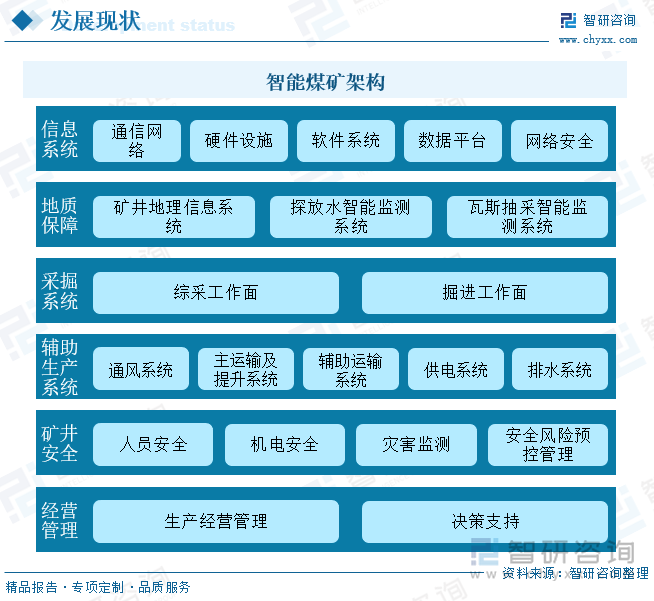
Core Viewpoint - The development of intelligent coal mines in China is accelerating, integrating advanced technologies such as artificial intelligence, IoT, cloud computing, and big data to enhance efficiency, safety, and environmental sustainability in coal mining operations [1][8][10]. Group 1: Industry Overview - Intelligent coal mining combines various technologies to create a system that enables real-time monitoring, decision-making, and autonomous operations in coal mining processes [2][3]. - As of the end of Q1 2025, there are 907 intelligent coal mines and 1,806 operational intelligent mining faces in China, with intelligent mining capacity exceeding 50% [1][20]. - The market for intelligent coal mining is projected to reach approximately 53.73 billion yuan in 2024, indicating a growing trend in the sector [18]. Group 2: Policy Support - The Chinese government has issued numerous policies to promote the integration of digital technologies in coal mining, with a goal for large and disaster-prone mines to achieve basic automation by 2025 [12][14]. - Specific regional policies have been implemented in provinces like Guizhou and Henan to enhance safety and efficiency in coal mining through intelligent systems [15][17]. Group 3: Current Development Status - Major coal-producing provinces are actively promoting intelligent coal mining, with significant achievements reported, such as Shanxi reaching an advanced capacity ratio of 83% and Inner Mongolia completing intelligent upgrades in 70% of its operational mines [22][24]. - The mechanization level in coal mining has surpassed 99% in some regions, showcasing the effectiveness of intelligent mining technologies [22]. Group 4: Future Prospects - The transition from mechanical to intelligent operations in coal mining is expected to accelerate, with advancements in digital infrastructure and the application of new technologies like AI and big data [27][28]. - The establishment of a comprehensive standard system for intelligent coal mining is anticipated by 2030, which will guide the industry's development and align with international standards [29].

重磅!2025年中国及31省市矿用机器人行业政策汇总及解读(全)政策鼓励矿用机器人进行安全生产
Qian Zhan Wang· 2025-06-23 06:48
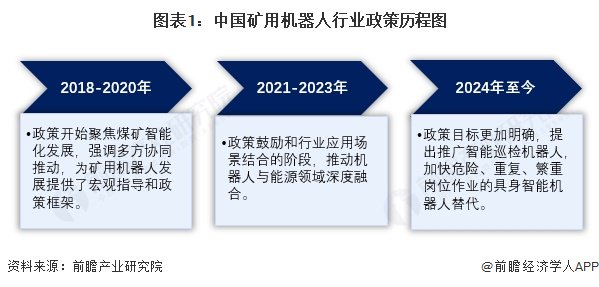
Core Insights - The article discusses the development and policy framework of the mining robot industry in China, highlighting the government's focus on promoting intelligent mining solutions to enhance safety and efficiency in coal mining operations [1][3]. Policy Development Timeline - The policy development for mining robots began with the integration of 5G, big data, and AI technologies, with a significant focus on coal mine automation from 2018 to 2020. This period emphasized collaboration among various stakeholders to establish a macro guidance framework for the industry [1]. - From 2021 to 2023, policies encouraged the combination of industry applications with technological frameworks, leading to the issuance of guidelines for intelligent coal mine construction [1][3]. - Starting in 2024, the policies aim to promote research and technological breakthroughs in large mining enterprises, with local governments introducing policies to accelerate the adoption of intelligent inspection robots [1]. National Policy Summary - The national government has prioritized the research and application of mining robots to ensure safe and efficient production in the mining sector. Key policies include the 2019 focus on coal mine robot development and the 2022 "14th Five-Year" plan promoting robot application scenarios [3][4]. - By 2025, large coal mines are expected to achieve full system automation, with a target of 40% unmanned transport equipment in open-pit mines [3][4]. Provincial Policies - Various provinces have tailored their mining robot policies to local conditions, with Inner Mongolia and Xinjiang focusing on intelligent mining construction from 2022 to 2025. These policies aim to establish a comprehensive standard system for mining automation and enhance data integration capabilities [10][11]. - Financial support and tax incentives are being offered to encourage the development and application of mining robots, aiming to reduce human labor in hazardous mining operations [10][12]. Key Development Goals - Specific provincial plans include achieving a basic level of intelligent mining by 2025 in regions like Xinjiang and Ningxia, with significant advancements in technology and automation expected by 2026 [13][12]. - The overall goal is to enhance safety and operational efficiency in mining through the widespread adoption of intelligent technologies and robots [10][12].


2025年中国矿用机器人行业技术现状 未来将突破关键技术瓶颈,以提升矿山安全水平和功效【组图】
Qian Zhan Wang· 2025-06-19 09:23
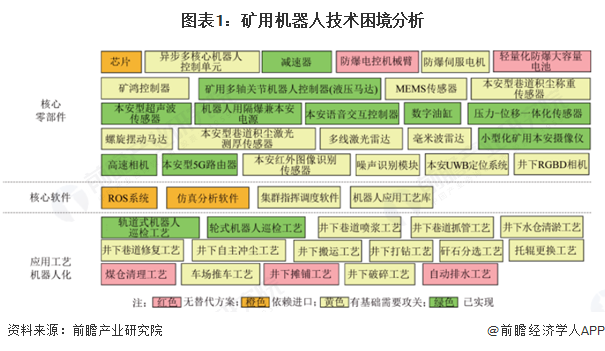
Core Insights - The article discusses the current state and technological challenges of the mining robot industry, emphasizing the need for clearer application scenarios and advancements in core technologies to meet user demands [1][2]. Industry Overview - Major listed companies in the mining robot sector include CITIC Heavy Industries, China Railway Construction Heavy Industry, Keda Control, and others [1]. - The mining robot industry aims to enhance safety and efficiency by automating tasks such as inspection, extraction, transportation, and rescue [1]. Technological Challenges - The main bottlenecks in the development of mining robots include insufficient human-machine interaction, intelligent perception, and decision-making capabilities [1]. - There is a lack of investment in core algorithms and intellectual property, which hinders sustainable development in the mining robot industry [1]. Key Technological Directions - Future advancements will focus on FPGA chip technology, machine learning, neural networks, and digital twin technology [2]. - The development of lightweight, explosion-proof batteries and enhanced robotic arms for better maneuverability and fault detection is also highlighted [2][5]. Development Process - The development process for mining robots consists of six steps, starting from demand analysis to mass production after sample testing [6]. Key Technologies - Navigation technology is crucial for autonomous movement in mining robots, with various methods including magnetic, inertial, GPS, and visual navigation [7][9]. - Path planning involves searching for optimal paths based on environmental information, which remains an active area of research [10]. - Multi-sensor fusion technology integrates data from various sensors to provide a comprehensive understanding of the environment, enhancing decision-making capabilities [11][13].
2025年中国矿用机器人行业需求分析 矿用机器人满足矿山生产需求【组图】
Qian Zhan Wang· 2025-06-09 05:10
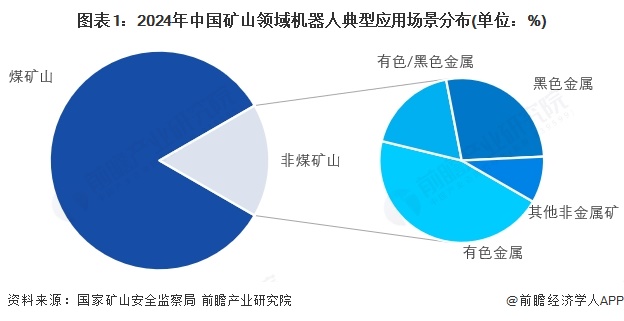
Core Insights - The article discusses the growth and application of mining robots in China, particularly in coal mining, highlighting the government's initiative to promote robot usage for safety and efficiency in the mining sector [1][10]. Coal Production and Robot Demand - In 2023, China's coal production reached 4.71 billion tons, a historical high with a year-on-year growth of 3.4% [3]. - The output from large-scale coal enterprises was 4.66 billion tons, an increase of 1.6 million tons or 2.9% compared to the previous year [3]. - For 2024, the projected coal production is 4.78 billion tons, reflecting a year-on-year increase of 1.2% [3]. - The focus of coal production is shifting towards the central and western regions of China, with expectations of continued growth in production and consumption through 2025 [3]. Mining Robot Applications - The National Mine Safety Administration and the Ministry of Industry and Information Technology have selected 66 typical application scenarios for mining robots, with 55 scenarios in coal mining and 11 in non-coal mining [1]. - Various companies are involved in the production and application of mining robots across different scenarios, including autonomous operations in tunneling, support, and transportation [5][7][9]. Metal Production and Robot Demand - The article outlines the increase in metal ore production in China, with a focus on the demand for robots in metal mining activities such as drilling and transportation [13]. - The growth in metal production is driven by emerging market demand, government policies, and increased construction activities, which are expected to boost the demand for mining robots in this sector [13]. Non-Metal Resource and Robot Demand - As of the end of 2023, China has identified 173 types of minerals, with non-metallic minerals accounting for 95 types [14]. - The article notes significant growth in the reserves of various non-metallic minerals, indicating potential future demand for mining robots in this sector [14]. - Currently, the application of robots in non-metallic mining is still in its early stages, with a lack of specialized products and clear application scenarios [15]. Conclusion - The mining robot industry in China is poised for growth, driven by increasing coal and metal production, government initiatives, and the need for enhanced safety and efficiency in mining operations [1][10][3][13].