蒂洛薇

Search documents
抖音又杀出一个次抛黑马?
3 6 Ke· 2025-07-12 01:34
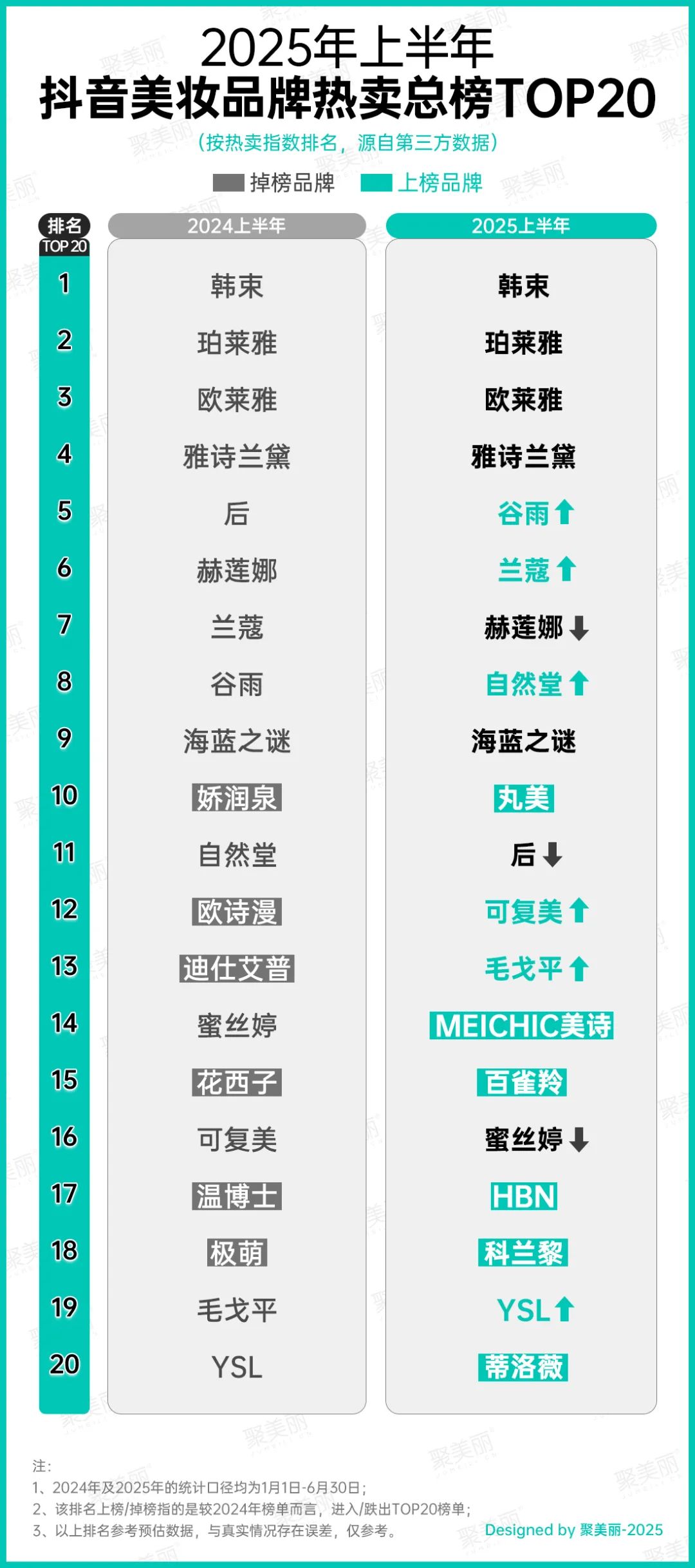
Core Insights - The beauty industry is experiencing significant shifts, with a competitive landscape characterized by the rise of domestic brands and the stability of international brands [1][2][4] - The top beauty brands on Douyin are dominated by domestic players, with 韩束, 珀莱雅, and 欧莱雅 leading the rankings [2][9] - New entrants like 百雀羚 and 丸美 have made their way into the top 20, indicating a resurgence of domestic brands [9][11] Brand Performance - 韩束 has maintained its position as the top brand, followed by 珀莱雅 and 欧莱雅, while international brands like YSL and 兰蔻 have shown mixed results [2][9] - The emergence of brands like MEICHIC美诗 and 蒂洛薇 highlights the competitive nature of the market, with 蒂洛薇 recently achieving the top spot in the color cosmetics category [9][27] - The performance of brands such as 花西子 and 极萌 has declined, indicating a shift in consumer preferences [7][9] Influencer Ecosystem - The influencer landscape is shifting towards entertainment-oriented and comprehensive content creators, with traditional beauty influencers losing ground [1][44] - Influencers like 韦雪 have gained prominence, showcasing the changing dynamics in the beauty influencer market [44][48] - Brands are increasingly relying on a mix of influencer marketing and self-operated accounts to drive sales [41][42] Market Trends - The beauty market is seeing a trend towards self-operated models and direct-to-consumer strategies, with brands like 林清轩 and 百雀羚 successfully leveraging these approaches [14][20] - The reliance on heavy investment in advertising and low pricing strategies by brands like ELL and 三资堂 raises questions about long-term sustainability [37][39] - The competitive landscape is expected to evolve as brands focus on product development and brand strength to navigate market fluctuations [49]



刚刚过去的618,抖音美妆大洗牌
Xin Lang Cai Jing· 2025-07-02 03:59
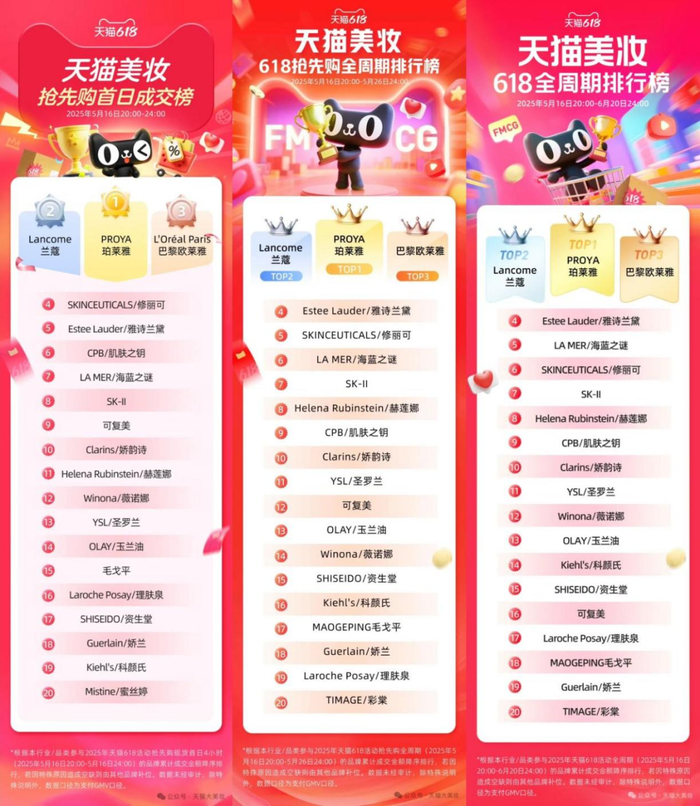
Core Insights - The beauty and skincare sales during the 618 shopping festival reached 57.5 billion yuan, marking a year-on-year growth of over 60%, setting a new record [1] - Tmall and Douyin exhibited contrasting strategies in the beauty sector, with Tmall focusing on brand strength and supply chain management, while Douyin emphasized content-driven marketing and rapid product launches [1][9] Tmall Insights - Proya emerged as the standout winner, securing the top position in Tmall's beauty rankings for three consecutive periods [4] - L'Oréal and Lancôme consistently held the second and third positions, indicating a stable top-tier brand concentration [6] - The top 10 brands on Tmall are dominated by Proya and L'Oréal's brands, reflecting a trend towards brand group consolidation [6][8] - Skincare brands dominate the Tmall beauty rankings, with consumers showing a higher preference for essential products like serums and sunscreens over color cosmetics [6] Douyin Insights - Douyin's beauty rankings are characterized by rapid changes, driven by content and marketing strategies rather than traditional brand loyalty [9] - The skincare and makeup categories on Douyin have seen significant shifts, with brands like HBN and Colanri rising rapidly in the rankings [12][14] - The emergence of new brands like Tilo Wei, which topped the Douyin makeup rankings, highlights the importance of content and visual appeal in driving consumer interest [14][16] - The competition among domestic brands is intensifying, with established players like Huaxizi and AKF struggling to maintain their positions [16] Comparative Analysis - The comparison between Tmall and Douyin reveals a dual dynamic in the beauty retail ecosystem, where Tmall emphasizes supply stability and brand accumulation, while Douyin prioritizes rapid content updates and explosive marketing strategies [17] - The structural differences in brand representation on both platforms indicate that international brands still dominate Tmall, while Douyin sees a more diverse mix of domestic brands [8][13]