Air India

Search documents
X @Bloomberg
Bloomberg· 2026-02-02 15:05
Air India grounded a Boeing 787-8 aircraft after the pilot flagged a possible defect related to its fuel control switch, the airline said in a statement https://t.co/v7LMFM8Bd7 ...
Air India Orders 30 Boeing 737 MAX Jets to Expand Single-Aisle Fleet
Prnewswire· 2026-01-29 16:58
Core Insights - Air India has placed an order for 30 additional fuel-efficient 737 MAX jets, which brings its total Boeing order book to nearly 200 airplanes, including both single-aisle and widebody aircraft [1][4]. Group 1: Order Details - The recent order includes 20 737-8 jets and 10 previously unreported 737-10 airplanes, both of which are part of Air India's strategy to expand its route network in response to increasing travel demand [2][5]. - The new 737-8s will be utilized for high-frequency domestic and short-haul regional routes, while the larger 737-10 will allow for operational commonality and increased passenger capacity at a lower cost per seat [6][7]. Group 2: Market Context - Boeing's Commercial Market Outlook indicates that the Indian and South Asian region will require nearly 3,300 new airplanes over the next two decades, with 90% of these being single-aisle jets like the 737 MAX [7]. - The strong performance of Air India's existing 737-8 fleet has contributed to the decision to expand their fleet with more 737 MAX jets, highlighting the airline's growth strategy in enhancing connectivity across India and the South Asia region [7].



X @Bloomberg
Bloomberg· 2026-01-29 09:08
Air India is engaged in an aggressive fleet expansion as air travel demand surges in the world’s most populous country https://t.co/3Zyp8kBe3i ...
3 Singapore Blue-Chip Dividend Stocks That Could Benefit from Rising Tourism
The Smart Investor· 2026-01-29 06:00
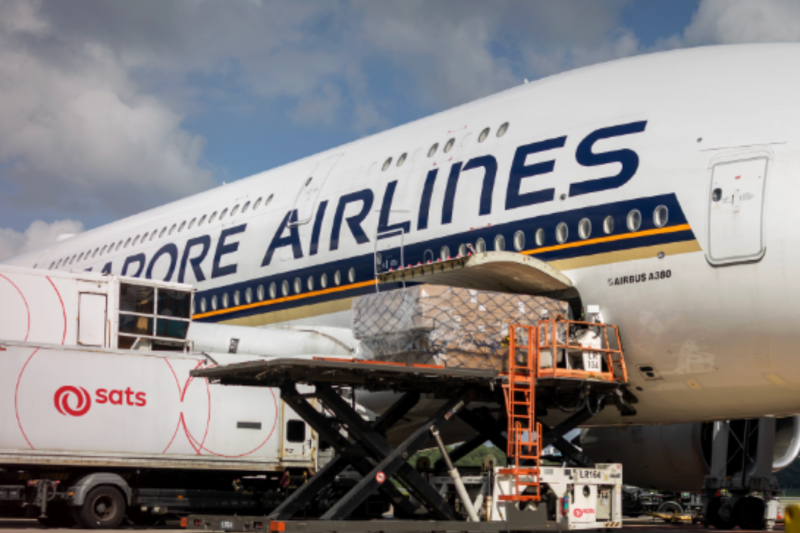
Industry Overview - Tourism in Singapore has rebounded strongly, with hotels and airlines experiencing increased demand and profitability surpassing pre-pandemic levels [1] - The recovery is part of a broader trend across Asia's tourism markets, indicating sustained growth in travel demand [1] Singapore Airlines (SGX: C6L) - Singapore Airlines reported revenue of S$9.7 billion for the first half of the fiscal year ending 31 March 2026, reflecting a year-on-year increase of 1.9% [3] - Profit attributable to shareholders fell nearly 68% year-on-year to S$238.5 million, primarily due to losses from Air India, which resulted in a S$417 million reduction in share of results from associated companies [4] - Passenger demand remained strong, with 20.8 million passengers carried, an 8% increase year-on-year, and a load factor improvement of 1.3 percentage points to 87.7% [4] - The airline declared an interim dividend of S$0.05 per share and a special dividend of S$0.03 per share, totaling S$0.08 compared to S$0.10 a year ago, with shares offering a trailing dividend yield of around 6% at S$6.36 [5] SATS Ltd (SGX: S58) - SATS reported revenue of S$3.1 billion for the first half of the fiscal year ending 31 March 2026, up 9.1% year-on-year [6] - Profit attributable to shareholders increased by 11.2% year-on-year to nearly S$150 million, with free cash flow surging 79.4% to around S$233 million [7] - The operating profit margin expanded from 8.5% to 9.2%, driven by volume growth and operational efficiency [7] - SATS secured new customer contracts with Emirates SkyCargo and Turkish Airlines, and declared an interim dividend of S$0.02 per share, up 33.3% from S$0.015 a year ago, with shares offering a trailing dividend yield of around 1.4% at S$3.82 [8] ComfortDelGro Corporation (SGX: C52) - ComfortDelGro reported revenue of S$3.75 billion for the nine months ended 30 September 2025, a 13.9% year-on-year increase [9] - Profit attributable to shareholders rose 15.4% year-on-year to S$176.4 million, driven by UK bus contract renewals and contributions from acquisitions [9] - Overseas revenue now exceeds 55% of group revenue, with new operations in Stockholm and prequalification for Copenhagen Metro operations [10] - Shares offer a trailing dividend yield of around 5.6% at S$1.47 [10] Investment Insights - The tourism recovery offers various investment opportunities based on risk appetite, with Singapore Airlines providing direct exposure to air travel but facing challenges from Air India losses [11] - SATS presents a steadier investment option, benefiting from rising travel volumes without the volatility of airline operations [11] - ComfortDelGro, with diversified operations and the highest yield among the three, offers defensive exposure to tourism-related spending [12]
MakeMyTrip(MMYT) - 2026 Q3 - Earnings Call Transcript
2026-01-21 13:32
Financial Data and Key Metrics Changes - The company reported a strong performance in Q3, with adjusted operating profit exceeding $50 million for the first time, standing at $50.7 million, and adjusted net profit at approximately $51.4 million, reflecting a year-on-year growth of 33% in adjusted diluted EPS [20][21] - The adjusted margin for air ticketing was $107.9 million, showing a year-on-year growth of 20.4% in constant currency, with international air ticketing now accounting for about 43% of the adjusted margin [17][18] - The hotels and packages segment recorded a volume growth of 20.3% year-on-year, while gross booking value growth was more moderate at about 15.9% due to a reduction in GST rates impacting pricing [18][10] Business Line Data and Key Metrics Changes - The air ticketing business experienced a mixed performance, with domestic daily departures growing by 2% and 5% year-on-year in October and November, but declining by 5% in December due to new flight duty rules [8][17] - The accommodation business, including hotels and holiday packages, saw a strong demand driven by leisure travel, with the highest-ever check-ins recorded on December 25 [9][10] - The bus ticketing business witnessed strong growth, aided by festive travel, with inventory addition buoyant throughout Q3, crossing 45,000 daily schedules [13] Market Data and Key Metrics Changes - The company noted that over 45% of Myra users are from tier-two cities and beyond, indicating a growing penetration into smaller markets [5] - The corporate travel business is also witnessing strong growth, with active corporate customers on MyBiz increasing to over 77,500, compared to 64,000 in the same quarter last year [14] Company Strategy and Development Direction - The company is focusing on leveraging AI to enhance customer experience across all aspects of the travel journey, from planning to post-sales support [4][6] - A one-stop-shop strategy is being implemented to meet all travel-related needs, with the recent launch of tours and activities, providing access to over 200,000 bookable activities [7] - The company aims to improve its product relevance and effectiveness through proprietary data and AI-driven insights [5] Management Comments on Operating Environment and Future Outlook - Management expressed confidence in the Indian travel market's expansion, driven by economic, social, and technological factors, despite temporary disruptions [3][4] - The company anticipates that the disruption in flight operations will stabilize, with a return to positive growth in domestic air traffic expected in the upcoming quarters [16][46] - Management highlighted the importance of maintaining direct traffic to the company's platforms amidst emerging competition from AI tools in travel planning [56] Other Important Information - The company has repurchased approximately $41.5 million worth of shares during the quarter as part of its capital allocation strategy [21] - The integration of the travel expense management platform Happay has been completed, enhancing the company's corporate travel offerings [14] Q&A Session Summary Question: Can you break down the hotel segment growth by premium and budget segments? - The standalone hotel room nights grew by 20.6%, with the non-premium segment growing at about 23% year-on-year, while margins remained stable at about 17.7% [24][25] Question: What is the underlying margin for the growth in ancillary services? - The growth in ancillary services has been strong, with various new services being added, contributing to overall growth, but specific margins were not disclosed [30] Question: How should we think about normalized growth in the hotel business? - The GST rationalization has impacted growth, but the company expects growth to normalize and potentially return to previous levels over the next four quarters [39][43] Question: What is the outlook for domestic air traffic growth given the capacity cuts by IndiGo? - The company expects domestic air traffic to stabilize and return to positive growth, albeit at a modest rate, as supply issues are resolved [46][47] Question: How is Myra performing since its launch? - Myra has seen significant growth in interactions, with 50,000 daily interactions and a quality score of 3.9, indicating positive user engagement [50][51] Question: What are the implications of AI tools like Google and ChatGPT for the company? - The company views AI as an opportunity rather than a threat, focusing on enhancing its own AI tools while maintaining direct traffic to its platforms [56][57]

Air India, Singapore Airlines to deepen ties with 'cooperation framework'
Reuters· 2026-01-16 11:25
Group 1 - Air India and Singapore Airlines have announced an agreement to enhance cooperation between the two airlines [1] - The agreement aims to offer more routes, coordinate schedules, and broaden the service offerings [1]


SIA’s Share Price Is Flat — But Is There More Upside Ahead?
The Smart Investor· 2026-01-15 23:30
Core Viewpoint - Singapore Airlines Limited (SIA) has experienced stagnant share prices despite overall market gains, primarily due to significant declines in profitability driven by losses from its stake in Air India [1][3][17]. Financial Performance - For the six months ending September 30, 2025, SIA's revenue increased by 1.9% year-on-year to S$9.7 billion, but profitability plummeted by 67.9% year-on-year to S$238.5 million, largely due to losses from associated companies [3][17]. - Free cash flow (FCF) decreased significantly to S$817.6 million from S$1.17 billion in the previous year, indicating weaker operating leverage [4][14]. Impact of Air India - SIA's 25.1% stake in Air India has been a major factor in its profitability decline, with Air India reporting a net loss of US$1.15 billion for fiscal year 2025 [5][6]. - The integration of Vistara has further complicated Air India's financial situation, leading to a negative contribution of S$375.4 million to SIA's results from share losses [6][7]. - Management remains committed to the Air India stake, citing potential growth in the Indian air travel market, but challenges persist due to competition and operational issues [7][8]. Passenger Demand and Yields - Passenger numbers for SIA rose by 6.2% year-on-year to 13.7 million, with a load factor improvement to 86.7% [10]. - However, passenger yields decreased by 1.8% year-on-year to S$0.11 per km, and cargo revenue fell by 2.8% year-on-year to S$1.07 billion, indicating pressure on yields despite volume growth [11]. Balance Sheet Strength - As of September 30, 2025, SIA maintained a strong balance sheet with cash and equivalents totaling S$8.5 billion, although borrowings were elevated at S$7.8 billion [12]. - The debt-to-equity ratio remains healthy at 0.70 times, providing a buffer against weaker operating profits [12]. Dividend Policy - SIA declared an interim dividend of S$0.05 per share, a 50% reduction compared to previous years, reflecting a cautious approach in light of the uncertain operating environment [13][14]. - The decline in free cash flow has contributed to the lower dividend payout, indicating management's prudence rather than distress [14]. Future Outlook - SIA's share price may rally if there is clarity regarding Air India's earnings trajectory and if the airline can improve passenger and cargo yields [15][17]. - The company's future performance will depend on its ability to manage costs and navigate the competitive landscape, with Air India's performance being a significant factor [17][18].

Air India looks for new CEO to replace Campbell Wilson, sources say
Reuters· 2026-01-05 04:22
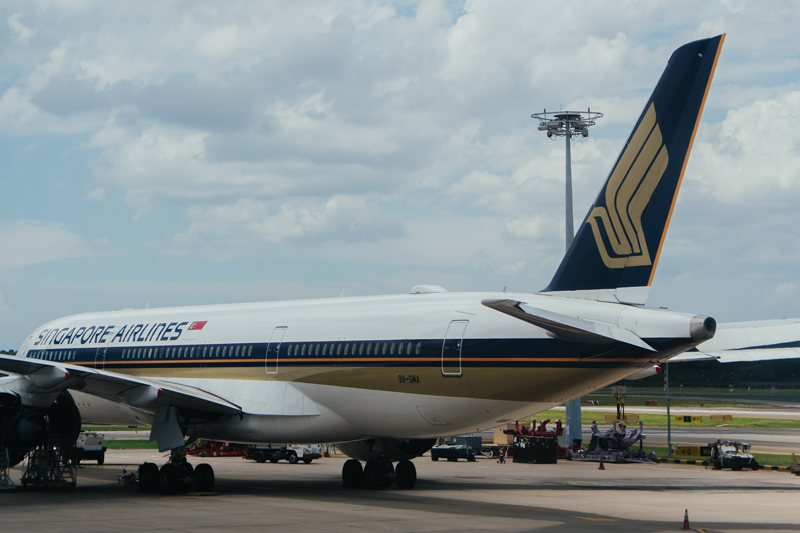
Core Viewpoint - Air India is in the process of searching for a new chief executive to succeed Campbell Wilson amid ongoing scrutiny following a fatal crash in June [1] Company Summary - The airline is facing intense scrutiny due to the implications of the deadly crash that occurred in June [1] - The search for a new CEO indicates potential leadership changes as the company navigates through this challenging period [1]


Dense fog cripples flight operations at Delhi airport
BusinessLine· 2025-12-15 15:18
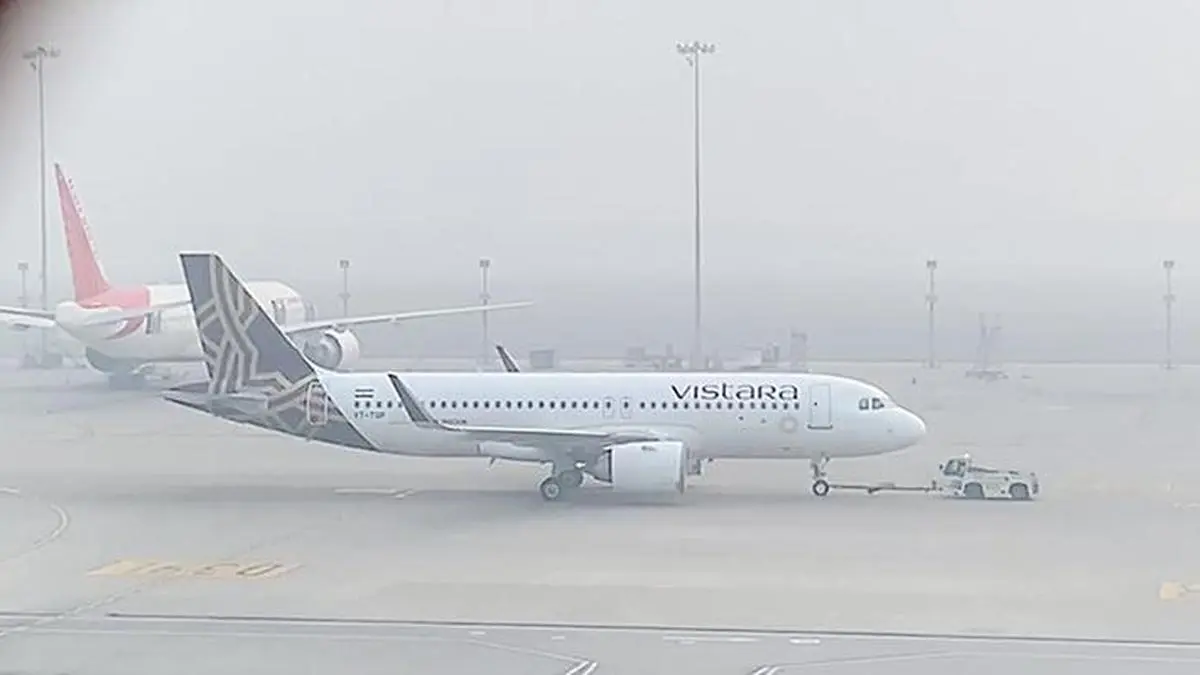
Core Insights - The unexpected dense fog at Delhi airport led to significant disruptions in flight operations, with 68 flights cancelled and five diverted, causing widespread delays across the network [1][2]. Group 1: Flight Operations - Low visibility operational procedures were initiated at Delhi airport on Sunday night, leading to a suspension of operations around 3.30 am [2]. - Only four planes managed to take off between 3.30 am and 9 am, highlighting the severity of the situation [3]. - Passengers on a Lufthansa flight to Frankfurt experienced a total wait time of 12 hours, including 9 hours inside the aircraft [3]. Group 2: Airport Management - As parking bays filled up, all incoming flights were put on hold, and arrivals from other airports were allowed only with delays [4]. - The fog was denser than initially forecasted, complicating the deboarding process for passengers after a wait time exceeding 90 minutes [5]. - Senior officials from the civil aviation ministry visited the airport to review operations and ensure coordination among stakeholders for improved passenger convenience [6].
Diving Into Indian Tech's Agentic AI Moment In 2025
Inc42 Media· 2025-12-11 00:30
Core Insights - The transition from informational AI to actionable AI is evident as India approaches 2026, with agentic models leading this shift [1][28] - The BFSI sector has emerged as the primary beneficiary of agentic AI, with significant applications in collections, underwriting, fraud detection, and customer automation [1][17] Group 1: Adoption and Impact of Agentic AI - Enterprises are increasingly adopting multi-purpose AI agents to enhance customer interactions and streamline operational workflows [2] - The focus has shifted from experimentation to measurable ROI and outcomes in the deployment of agentic AI [3][28] - Companies like Gnani.ai are entering the agentic AI space, recognizing the potential for multi-purpose AI automation [4] Group 2: Transformation of Customer Interactions - Agentic AI has significantly improved customer-facing processes, enabling systems to understand context and solve complex problems [7] - Voice-based agents have seen a surge in adoption due to their improved latency and accuracy, particularly among large enterprises [8] - Notable implementations include Air India's partnership with Salesforce and State Bank of India's integration of autonomous workflows [9] Group 3: Enhancing Employee Productivity - The deployment of internal AI co-pilots is transforming how employees access information and perform tasks across various sectors [11] - Axis Bank reported a 30% increase in product conversions and a 10-point rise in net promoter score due to its GenAI-powered assistant [12] - Tata Steel's use of GenAI for predictive maintenance has led to reduced equipment downtime and cost savings [13] Group 4: BFSI Sector Dynamics - The BFSI sector is experiencing nuanced impacts from agentic AI, particularly in debt collection and fraud detection [17][19] - Companies are deploying specialized agents for various functions, enhancing operational efficiency [18] Group 5: Build vs Buy Strategy - Many companies prefer adopting SaaS-based agentic solutions from AI startups rather than developing in-house capabilities [20][21] - When proprietary business intelligence is crucial, large enterprises are more inclined to build in-house solutions [25] Group 6: Future Outlook - The shift towards actionable AI is expected to continue, with AI agents becoming capable of independent reasoning and task execution [28] - Industries such as logistics and automotive are poised for significant advancements with the integration of AI agents [30] - While automation may lead to job displacement, new roles are anticipated to emerge, alongside challenges in data security and workforce adaptation [31]