
Anker

Search documents
Anker stuffed its awesome Nebula X1 projector into a party speaker.
The Verge· 2025-09-06 15:00
Product Overview - Anker's Soundcore Nebula X1 Pro is a portable Dolby Atmos audio projector with 4K laser projection and 7.1%.4 spatial sound [1] - The device features wireless speakers with 8 hours of battery life and built-in microphones for karaoke [1] Pricing and Availability - It will launch on Kickstarter later this month for $3,000, with a retail price of $5,000 [2]

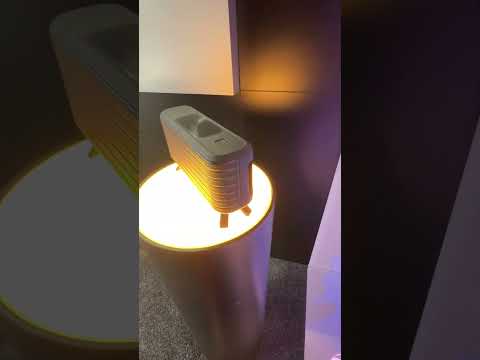
One of the coolest-looking USB-C charging solutions ever — till you turn it sideways! #TITW
The Verge· 2025-08-22 14:00
Product Comparison - The Charge 3in-1 features a 26-inch retractable cable, a spinning turntable, a hidden LED display, and fold-out prongs for charging, inspired by a Braraw turntable [1] - Anker offers a three-in-one charger with the same 36Wh capacity and 30W output for $45, providing similar functionality [2] - Both chargers can be charged via prongs, cables, or a USBC port [2] - Both chargers have enough battery to fully charge a Nintendo Switch and about 33% of a Galaxy S25, or charge a phone 150% [3] Performance Evaluation - The Charge 3in-1 is noted to be thick, which may impact its portability [1] - Anker performs better in a loose outlet test [3]

X @Bloomberg
Bloomberg· 2025-08-18 06:27
Chinese electronics manufacturer Anker is considering listing shares in Hong Kong as soon as next year, sources say https://t.co/euEIkB4ODe ...
X @Bloomberg
Bloomberg· 2025-07-17 15:50
The $900 Anker Solix EverFrost2 electric cooler does way more than keep drinks cold—it's a freezer too https://t.co/XNPWIZ7TJr ...
X @Starlink
Starlink· 2025-07-03 00:01
Product Performance - Starlink Mini 在不同地区(威斯康星州、伊利诺伊州和爱荷华州)表现稳定 [1] - Starlink Mini 配合 Anker 电池,在 GameChanger 上直播了大约 20 场青少年棒球比赛,没有连接问题 [1] - 用户使用 50GB Roam 套餐的 Starlink Mini 约一个月 [1]
召回超过百万台,充电宝品牌的暴雷给我看懵了
虎嗅APP· 2025-06-29 09:04
Core Viewpoint - The article discusses the recent safety issues surrounding the power banks produced by Romoss and Anker, primarily linked to faulty battery cells supplied by Amperes, leading to recalls and safety concerns in the industry [3][7][9]. Group 1: Incident Overview - Romoss has recalled 490,000 power banks due to safety hazards, with nearly all of its 3C certifications revoked [7]. - Anker also announced a recall of 710,000 power banks, indicating a broader issue within the industry [9]. - The root cause of these recalls is traced back to Amperes, which outsourced battery cell production to a factory that violated material standards, resulting in a risk of thermal runaway and explosions [9][10]. Group 2: Industry Implications - The incident highlights systemic issues within the power bank industry, where intense competition leads to cost-cutting measures that compromise safety [40][42]. - The article emphasizes that brands like OPPO and Huawei can afford to prioritize safety over cost, unlike many power bank manufacturers [44]. - The quality of battery cells is critical, and the article suggests that lower-priced products often correlate with higher risks of failure [47]. Group 3: Regulatory Response - Following the incidents, the Civil Aviation Administration of China issued a notice banning nearly all power banks released before August 2024 that lack 3C certification from being taken on flights [29]. - The enforcement of this regulation has led to confusion and inconsistency in how different airports and transport systems handle power bank inspections [39][40]. Group 4: Consumer Awareness - Consumers are advised to check the models of their power banks and inquire about any recall announcements, as the risk extends beyond just Romoss products [14][15]. - The article suggests that the industry must adopt stricter oversight and ethical practices to prevent future incidents and protect consumer safety [48][50].

除了朱啸虎,有头有脸的机构都已经开始在日本布局了
Hu Xiu· 2025-05-29 07:57
Group 1 - The investment interest in Japan is rising, especially after notable investments like Zhu Xiaohu's in "Kagu E-commerce" [1][4] - Major institutions and investors are actively exploring opportunities in Japan, indicating a broader trend beyond individual investments [5][6] - The Japanese market is seen as a mature and complex environment, requiring careful consideration and understanding for successful investment [11][12] Group 2 - Four main sectors are attracting investment in Japan: consumer products, digital transformation services, smart manufacturing supply chains, and health and wellness [9][10][21] - Japanese consumer products have strong brand power and global pricing ability, making them attractive for partnerships with Chinese e-commerce [9] - The aging population in Japan creates significant opportunities in the health sector, particularly in cancer treatment and pharmaceutical development [10] Group 3 - The entry of foreign investors into Japan is subject to regulatory scrutiny, with state-owned enterprises facing longer approval processes compared to traditional dollar funds [12] - The current geopolitical landscape makes Japan a more appealing market compared to North America and Europe [13] - Successful examples of Chinese companies in Japan include Anker, which has effectively localized its offerings [14] Group 4 - Challenges for Chinese companies entering Japan include understanding local business practices, cultural differences, and the potential for registered business models to limit operational scope [30][32] - The Japanese market is characterized by a slower decision-making process, requiring patience and long-term commitment from foreign investors [33][34] - Mergers and acquisitions can provide a pathway for Chinese companies to navigate the complexities of the Japanese market [35] Group 5 - The Tokyo Stock Exchange is undergoing reforms that present new opportunities for foreign companies, particularly in acquiring undervalued firms [28] - The requirement for companies with market caps below 4 billion yen to submit management reform plans may lead to increased willingness for partnerships and acquisitions [28] Group 6 - Cultural barriers, including language and the need to "read the air," pose significant challenges for foreign companies in Japan [39][40] - The scarcity of talent familiar with both Chinese and Japanese cultures complicates the establishment of successful business operations [40][41] - Companies are advised to thoroughly prepare and understand the Japanese market before attempting to enter, as superficial motivations can lead to failure [41]
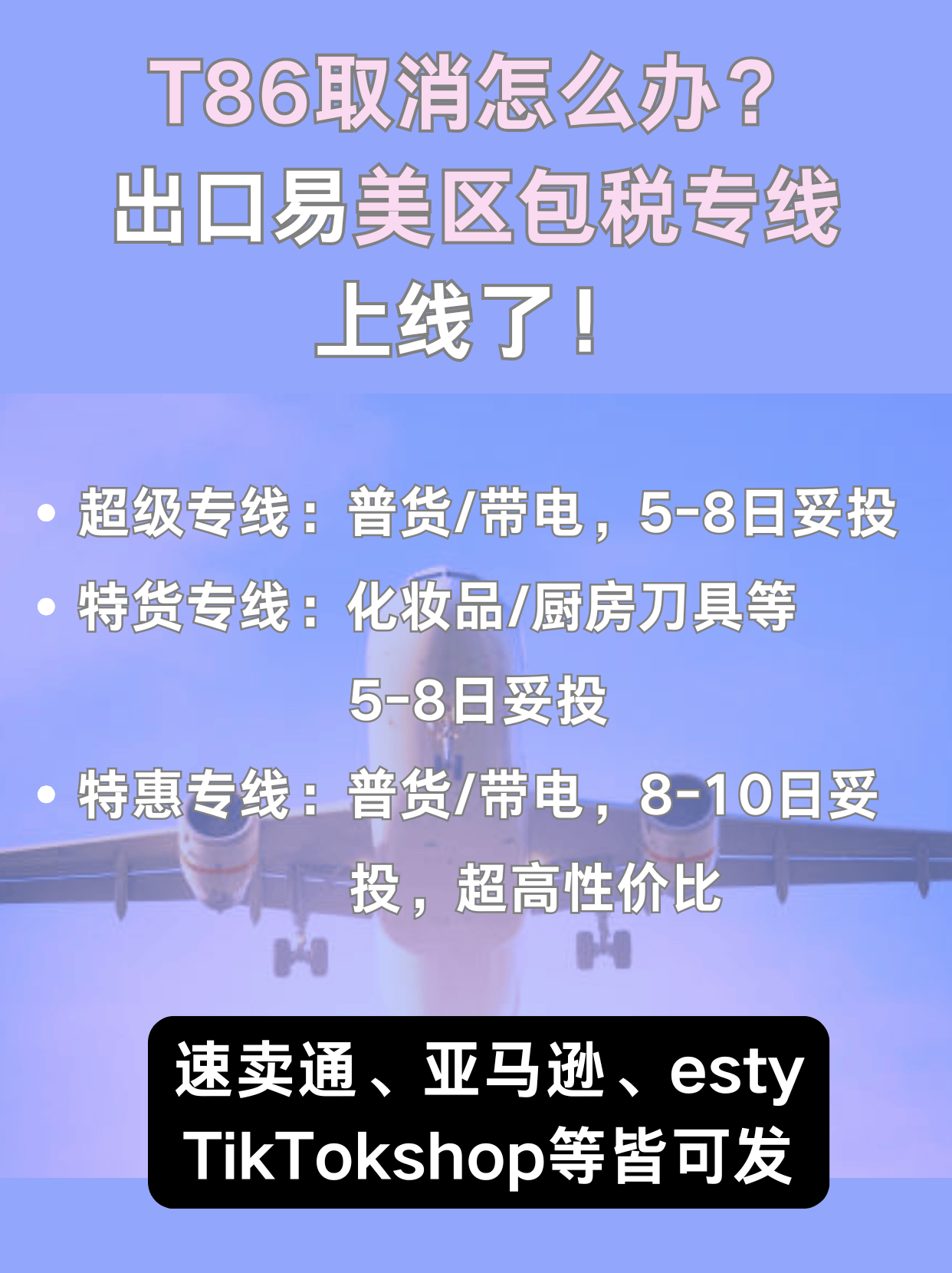
T86清关是什么?取消了对中国跨境卖家有何影响
Sou Hu Cai Jing· 2025-04-28 18:11
Core Viewpoint - The cancellation of the T86 customs clearance policy by the U.S. government marks a significant shift in global trade dynamics, particularly affecting Chinese cross-border sellers who previously benefited from this simplified customs process [1]. Group 1: T86 Customs Clearance Overview - T86 customs clearance, introduced in 2019, facilitated rapid growth in cross-border packages from China, with 1.36 billion packages processed in 2023, over 30% of which were Chinese goods [1]. - The policy allowed B2C e-commerce packages valued at ≤ $800 to be exempt from tariffs, simplifying the process through electronic declarations and reducing clearance time to 1-3 days [3]. Group 2: Impact of Policy Termination - The cancellation of T86 customs clearance presents multiple challenges for Chinese sellers, including increased customs costs and a significant decline in market competitiveness [5]. - The effective tax rate for Chinese goods will rise to 54% after May 2, with additional tariffs leading to a minimum charge of $25 for packages valued at $50, severely impacting profit margins [6]. Group 3: Strategic Responses - Chinese sellers are advised to build a "threefold moat" by localizing supply chains, enhancing product value, and diversifying market presence [5]. - Companies must adapt to the new regulatory environment by establishing compliance systems, leveraging digital tools for inventory management, and focusing on high-margin products [6]. Group 4: Industry Insights - The end of the T86 policy emphasizes the need for compliance-driven operations to avoid significant penalties and the importance of digital transformation to optimize supply chain efficiency [6]. - Companies should explore emerging markets and utilize multiple platforms to mitigate risks associated with over-reliance on a single market [6].
弘景光电(301479) - 2025年3月24日投资者关系活动记录表
2025-03-26 00:52
Group 1: Company Performance and Client Relationships - The company has experienced rapid growth in recent years, primarily driven by the increasing demand in the smart imaging device industry and the upgrade of the smart home sector [2] - The company has established long-term stable partnerships with numerous EMS and Tier 1 manufacturers, with products integrated into well-known brands such as Insta 360, Ring, Anker, Xiaomi, Daimler-Benz, Nissan, Chery, BYD, Great Wall, Aion, NIO, Xiaopeng, and Feifan [2] Group 2: Research and Development Advantages - The company has focused on independent research and development since its inception, specializing in optical lenses and camera module products [3] - As of June 30, 2024, the company has obtained 270 domestic patents, including 116 invention patents and 154 utility model patents, as well as 3 PCT patents [3] Group 3: Production Capacity and Future Planning - The company currently maintains a high capacity utilization rate and plans to expand its production capacity by adding over 35 million precision optical lenses and camera modules annually [4] - The future development strategy aims to strengthen core technological advantages, enhance brand building, and expand marketing networks, focusing on the smart automotive and emerging consumer sectors [5]
弘景光电:3+N战略领航 以多赛道优势开启资本市场新篇章
Zheng Quan Shi Bao Wang· 2025-03-17 23:15
Core Viewpoint - Hongjing Optoelectronics is set to be listed on the Shenzhen Stock Exchange's Growth Enterprise Market, showcasing its strong market competitiveness and growth potential in the optical lens and camera module sector [1] Financial Performance - The company has demonstrated impressive financial growth, with revenues of 252 million, 446 million, and 773 million yuan from 2021 to 2023, resulting in a compound annual growth rate (CAGR) of 75.24%. The gross profit margin increased from 26.40% in 2021 to 30.52% in 2023. Net profit surged from 15.26 million yuan in 2021 to 116 million yuan in 2023, achieving a CAGR of 176.24%. For 2024, the company anticipates revenues of 1.078 billion yuan, a year-on-year increase of 39.46%, and a net profit of 165 million yuan, up 41.88% [2] Multi-Track Strategy - The company's growth is attributed to its multi-track strategy, with products used in smart cars, smart homes, and panoramic/sports cameras. It has established solid partnerships with renowned brands like Daimler-Benz, Nissan, Honda, Xiaomi, and Anker. In the panoramic/sports camera sector, a strategic partnership with industry leader Yingshi Innovation has significantly supported its growth. The company holds a 3.70% market share in the global automotive optical lens market, ranking sixth in shipment volume, and a 9.95% share in the global home camera optical lens market. In the panoramic camera lens module market, its share exceeds 25% [3] R&D Innovation - Continuous investment in R&D has been a key driver of the company's rapid growth. R&D expenditures accounted for 6.29%, 6.47%, and 6.65% of revenues from 2022 to the first half of 2024. As of June 30, 2024, the company holds 270 domestic patents, including 116 invention patents and 154 utility model patents, along with 3 PCT patents. The company has developed differentiated core technologies in key product areas, including automotive lens automatic heating technology and ultra-thin lens design, which support its future growth [4] Future Outlook - The optical lens and camera module industry is poised for new growth opportunities driven by emerging markets such as artificial intelligence, robotics, and smart healthcare. With its strong foundation and technological innovation, Hongjing Optoelectronics is expected to maintain a leading position in future market competition. The funds raised from the IPO will be allocated to capacity expansion, R&D center construction, and working capital, enhancing production capabilities and R&D strength for sustainable high-quality development [5]
