Kia

Search documents
KIA ANNOUNCES PRICING FOR 2026 NIRO EV
Prnewswire· 2026-01-26 14:00
IRVINE, Calif., Jan. 26, 2026 /PRNewswire/ -- Kia America has announced pricing on the 2026 Niro EV, a fully electric compact crossover that delivers modern design, tech-savvy performance, and everyday functionality. With a blend of real-world range, advanced driver assistance systems, and thoughtful interior features, the Niro EV continues to redefine what drivers can expect from an accessible electric vehicle. Continue Reading Kia America has announced pricing on the 2026 Niro EV Available in two feature- ...


This ETF Almost Doubled Last Year and It's Nearly Twice as Cheap as the S&P 500. Is It a Buy?
The Motley Fool· 2026-01-24 04:55
Group 1: Market Performance - South Korean stocks have experienced significant growth, with the iShares MSCI South Korea ETF (EWY) up 19.3% year-to-date as of January 23, 2026, and having jumped 92% in the previous year [3][10] - The overall stock market performed well in 2025, but the EWY notably outperformed the broader market [2][10] Group 2: Drivers of Growth - The surge in South Korean stocks is attributed to the AI boom and the breakout performance of major memory chipmakers, SK Hynix and Samsung, due to increased demand and rising memory prices [5][6] - A weak Korean won has also favored exports, contributing to the positive market performance [6] Group 3: Valuation and Policies - As of January 23, the EWY trades at a price-to-earnings ratio of 17, significantly lower than the S&P 500's ratio of 28, indicating a potentially undervalued market [6] - Recent shareholder-friendly policies from President Lee Jae Myung, including improved corporate governance and reduced tax rates on dividends, are expected to enhance valuations further [6] Group 4: ETF Composition - The EWY is heavily weighted towards Samsung and SK Hynix, which together account for 45% of the fund, with Samsung at 26.8% and SK Hynix at 18.3% [8] - Other notable holdings include Hyundai Motor, Kia, Hanwha Aerospace, and Naver, indicating a diverse portfolio within the ETF [9] Group 5: Future Outlook - The EWY is positioned for continued success, particularly with strong trends in the memory chip sector, although it carries risks due to the volatility of that subsector [10][11] - The fund's low valuation and strong performance suggest it may be a smart investment choice for those looking to diversify internationally [10][11]

KIA WINS SEVEN 2026 BEST CARS FOR THE MONEY AWARDS FROM U.S. NEWS & WORLD REPORT
Prnewswire· 2026-01-22 11:00
Core Insights - Kia America has achieved recognition for seven models in the 2026 U.S. News & World Report Best Cars for the Money Awards, highlighting the brand's commitment to quality, value, and innovation across its vehicle lineup [1][2] Awards and Recognition - The following Kia vehicles received the 2026 Best Cars for the Money Awards: - Best Midsize Electric SUV: 2026 Kia EV9 - Best Midsize Three-Row SUV: 2026 Kia Sorento - Best Midsize Hybrid SUV: 2026 Kia Sorento Hybrid - Best Compact Hybrid SUV: 2026 Kia Sportage Hybrid - Best Compact Plug-in Hybrid: 2026 Kia Sportage Plug-in Hybrid - Best Subcompact Hybrid SUV: 2026 Kia Niro - Best Compact Car: 2026 Kia K4 [7] Customer Focus and Value Proposition - Kia emphasizes design, technology, and quality as key factors driving customer preference, with models like the Sportage and Sorento receiving multiple awards for their value and capability [2][3] - The awards are based on a combination of quality, assessed through overall scores in the U.S. News Best Car Rankings, and value, measured by transaction price data and projected five-year ownership costs [2] Company Overview - Kia America, headquartered in Irvine, California, is recognized for its automotive quality and sustainability, being listed among TIME's World's Most Sustainable Companies of 2024 [4] - The company offers a diverse range of vehicles, including gasoline, hybrid, plug-in hybrid, and electric models, through a network of nearly 800 dealers in the U.S. [4]

2026 中国新能源汽车与动力电池手册_从自动驾驶到人工智能-2026 China EV & EV Battery Handbook_ From Autonomous Driving to AI
2026-01-20 01:50
Summary of Key Points from the Conference Call Industry Overview: Greater China Auto, EV, and EV Battery Industry Forecasts - **China's Auto Industry**: Expected to face challenges in 2026 with a forecasted decline in auto wholesales by **1.6% YoY** compared to a **10% YoY** increase in 2025. This decline is attributed to front-loaded demand in 2025 [1] - **Domestic EV Sales**: Anticipated to grow only **7% YoY** in 2026 due to a **5% increase in purchase tax** and reduced trade-in subsidies [1] - **Export Sales**: Projected to increase by **12% YoY**, reaching **7.9 million units** in 2026, with EV exports expected to surge by **40% YoY** [1] - **Competition Dynamics**: Shift from price competition to configuration-based competition, necessitating more investment in autonomous driving (AD) and smart cabin technologies [1] Key Automotive/EV Themes for 2026 Theme 1: Export Growth - **Export Growth**: Companies like Chery and BYD are expected to benefit significantly from exports, especially with the EU's minimum EV price replacing tariffs [2] Theme 2: Autonomous Driving Development - **ADAS to AD Transition**: L3 permits issued to Changan and BAIC, with highway/city NOA penetration expected to exceed **40%** in 2026 and **85%** by 2030. L4/L5 penetration is projected to reach **8%** by 2030 [3] Theme 3: Cost Concerns - **Battery and Memory Costs**: Rising costs and supply stability of memory are key concerns for auto OEMs [3] Key Battery Themes for 2026 Theme 1: Energy Storage Systems (ESS) - **ESS Demand**: Global battery ESS installations expected to grow by **33% YoY** in 2026, with shipments increasing by **41% YoY** [4] Theme 2: Global Expansion - **Overseas Capacity Expansion**: Chinese battery manufacturers are accelerating their overseas capacity expansion, particularly in Europe and Southeast Asia, in response to rising tariffs and trade tensions [4] Theme 3: VAT Rebate Changes - **Export VAT Rebate Cut**: Anticipated to lead to a rush in battery production and shipment in Q1 2026, potentially increasing raw material prices and exerting cost pressure on battery makers and auto OEMs [5] Theme 4: Technological Innovation - **Sodium-Ion Battery**: Launch of Gen-2 sodium-ion battery expected, with ASSB (all-solid-state battery) small-batch production anticipated to start in 2027 and scale up significantly post-2029 [5] Investment Recommendations - **Top Picks**: - **XPeng**: Launch of Mona SUV and HR in 2H26, with a focus on AI-related businesses [6] - **CATL**: Growth driven by CEV, ESS, and overseas capacity despite short-term cost pressures [6] - **Tuopu**: Major supplier for humanoid robots with overseas expansion [6] - **Minth**: Resilient earnings growth supported by high overseas market exposure [6] - **Hesai**: Increased LiDAR adoption in China alongside L3 ADAS development [6] Additional Insights - **Market Dynamics**: The shift in competition and the focus on technological advancements highlight the evolving landscape of the automotive and EV sectors in China, emphasizing the need for companies to adapt to changing consumer preferences and regulatory environments [1][3][4][5]






South Korea reports record vehicle exports in 2025
Yahoo Finance· 2026-01-16 09:40
Group 1: Export Performance - The value of vehicles exported from South Korea increased by 2% to US$72.0 billion in 2025, up from US$70.8 billion in 2024, driven by strong overseas demand for hybrid vehicles [1] - Exports of eco-friendly vehicles, including hybrid and electric vehicles, rose by 11% to US$25.8 billion, with hybrid vehicle shipments increasing by 30% to US$14.8 billion [2] - Exports of used cars surged by 75% to a record high of US$8.9 billion, reflecting the improved reputation of South Korean vehicles in overseas markets and favorable exchange rates [2] Group 2: Production and Market Trends - New vehicle exports fell by 1.7% to 2.7 million units, accounting for 67% of vehicle production in the country, while domestic vehicle production decreased by 0.6% to 4.1 million units [3] - The GM Trax was the highest-volume model with an output of 308,000 units, followed by the Hyundai Kona with 270,000 units and other models [3] Group 3: Industry Challenges and Future Outlook - The Ministry of Trade, Industry and Energy noted that US tariff measures posed challenges for the automobile industry in 2025, but uncertainty was eased through policy measures aimed at strengthening competitiveness in eco-friendly vehicles [4] - In 2026, the automobile industry is expected to face challenges such as increased localization of production overseas and intensifying competition, with a projected 6% decline in light vehicle production to 3.809 million units [4]
跨界SUVs产业链分析报告(龙头企业及行业最新趋势)
QYResearch· 2026-01-14 09:48
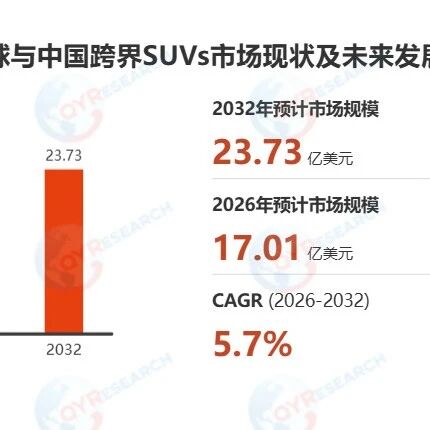
Core Viewpoint - Crossover SUVs combine the dynamic performance of traditional sports cars with the spacious practicality of typical SUVs, offering a harmonious blend of agile handling and ample interior space, making them versatile vehicles for both urban commuting and weekend adventures [1] Industry Chain Analysis Upstream - Structural materials such as steel and aluminum alloys are crucial in the crossover SUV industry chain, impacting vehicle lightweighting, strength, and safety, which in turn affects overall performance and driving experience [4] - High-strength steel and hot-formed steel are core materials for the body and chassis of crossover SUVs, providing high compressive strength while reducing weight to enhance fuel economy and performance [4] - The application of aluminum alloys is increasing in crossover SUVs, contributing to weight reduction and improved fuel efficiency, with collaborations between global aluminum giants and automakers driving this trend [4] - In the power system materials sector, battery materials like lithium, cobalt, and nickel are critical for the performance and market pricing of new energy crossover SUVs, with China dominating the global supply chain for these materials [5] - The price fluctuations of key materials, such as lithium carbonate, significantly impact the cost and pricing strategies of new energy crossover SUVs [5] - The battery production market is highly concentrated, with leading companies like CATL and BYD holding over 75% market share, driving vertical integration in the new energy industry chain [5] - Intelligent materials and components, including automotive-grade chips and sensors, are essential for the smart capabilities of crossover SUVs, enhancing features like autonomous driving and vehicle connectivity [6][7] Midstream - Large crossover SUVs are the largest segment, focusing on spaciousness and strong performance, suitable for family travel and high load capacity [9] - Mid-size crossover SUVs are the most representative and popular segment, balancing space, fuel economy, and handling, making them ideal for family use [10] - Compact crossover SUVs are the most widely accepted models, offering advantages in size, price, and usability, making them the mainstay of the SUV market [11] Downstream - Crossover SUVs are a major driver in the personal consumption market, combining the comfort of sedans with the practicality of SUVs, making them ideal for families and weekend trips [13] - In commercial use, crossover SUVs are increasingly adopted for executive vehicles and rental services, providing comfort and operational efficiency [14] Leading Companies in the Industry Subaru - Subaru focuses on passenger cars and SUVs, emphasizing technology innovation and user experience, with a diverse product lineup including compact, mid-size, and large SUVs [15][16] Kia - Kia offers a comprehensive range of crossover SUVs, emphasizing design, performance, and practicality, with models catering to various market needs [18][19] Hyundai - Hyundai has developed a diverse lineup of crossover SUVs, focusing on user needs and technological innovation, including electric and hybrid models [21][22] Toyota - Toyota's crossover SUV lineup is extensive, catering to various user needs with a focus on comfort, capability, and efficiency across different segments [24] Honda - Honda's crossover SUV range is designed to meet diverse user needs, balancing practicality, efficiency, and advanced safety features [27][28] Development Trends and Opportunities Development Trends - The crossover SUV industry is experiencing deepening technological integration, practical powertrain strategies, and innovative product forms, with a shift towards multi-functional vehicles [30][31] Development Opportunities - Structural changes in the crossover SUV industry present differentiated opportunities for both new and established companies, particularly in smart ecosystems and market segmentation [32][33] Challenges - The crossover SUV industry faces significant challenges, including intense competition from established players, high R&D costs, and the need for technological innovation [34][35] - Supply chain uncertainties and the need for brand trust in new entrants pose additional challenges [36]
Taxpayers could hit a dead end with car loan interest deduction
Yahoo Finance· 2026-01-08 21:13
Core Points - The new tax deduction for car loan interest applies only to new cars assembled in the United States, excluding leases and used car loans [10][12][14] - The deduction allows taxpayers to deduct up to $10,000 in car loan interest, potentially resulting in tax savings ranging from $300 to $900 for many new car buyers [12][13] - Higher-income households may face limitations on the deduction, with phase-out thresholds set at $150,000 for single filers and $250,000 for joint filers [17][18] Group 1: Tax Deduction Eligibility - The car loan interest deduction is only available for loans on new cars with final assembly in the U.S., and it does not apply to leases or used car loans [10][14] - Taxpayers must include the Vehicle Identification Number (VIN) on Schedule 1-A to claim the deduction, and the VIN must be accurate [27][29] - The deduction is available for tax years 2025 through 2028, but it may not cover the entire duration of a car loan [14][16] Group 2: Leasing and Financing Trends - Leasing is particularly popular in states like Michigan, where nearly 53% of new vehicles sold in Q3 2025 were leased, compared to 5% or fewer in states like Alaska and Arkansas [3][4] - Many consumers are trading in vehicles with negative equity, which complicates the deduction process as interest on negative equity rolled into new loans is not deductible [20][22] - The average amount owed on upside-down loans reached a record $6,905 in Q3 2025, indicating a growing trend of negative equity among new car buyers [23] Group 3: Documentation and Compliance - Taxpayers should prepare documentation early, including original loan agreements and interest statements, to facilitate claiming the deduction [26][34] - Lenders are expected to provide a vehicle loan interest statement (1098-VLI) starting in 2026, but for 2025, this is optional [32][33] - Proof of personal use of the vehicle is required to claim the deduction, with more than 50% of the expected use needing to be personal [36]
全球汽车 - 2026 年展望:应对分化格局-Global Automobiles_ 2026 Outlook_ Navigating Divergence
2026-01-08 02:43
Summary of Key Points from the Conference Call Industry Overview - The conference call focuses on the **global automotive industry**, particularly the dynamics surrounding **Battery Electric Vehicles (BEVs)** and **Navigation on Autopilot (NOA)** technologies as they evolve towards 2026 [1][3]. Core Insights - **Adaptability to BEVs and NOA**: 2026 will test automakers' adaptability to BEVs and NOA, with expectations of separate standards emerging for both technologies [1]. - **Regional Supply Chain Fragmentation**: Automakers are likely to diversify supply chains to avoid regional concentration, leading to fragmented BEV and NOA specifications [1]. - **Environmental Policy Disparities**: There will be increasing regional disparities in environmental policies, with Europe reducing BEV purchase subsidies and the US abolishing them at the national level [1]. - **China's Auto Sales Decline**: China's auto sales are projected to decline year-over-year in 2026, prompting an accelerated export drive, particularly for BEVs [2][13]. - **Cost Competitiveness of Chinese BEVs**: Chinese BEVs are structurally over 30% lower in cost due to advantages in battery and eAxle technologies, which is expected to enhance their penetration in low-tariff regions [2][13]. - **Geopolitical Risks**: Rising geopolitical risks in the semiconductor and rare earth sectors are prompting moves, especially in the US, to develop domestic BEV supply chains, potentially leading to higher costs for consumers [2][18]. Market Dynamics - **Consumer Preferences**: There is uncertainty regarding whether consumers will prioritize BEVs or NOA, with a noted slowdown in BEV sales in Europe and the US [3]. - **Valuation Risks for Automakers**: Traditional OEMs experienced a 50% decline in P/E ratios as BEV sales increased to 10% of total sales, indicating potential valuation risks for those slow to adapt to NOA technologies [3]. - **Regional Focus**: The report expresses a bullish outlook on **India** due to its growing automotive market and geographical diversification strategies, while maintaining a bearish stance on **Japan** [4][10]. Competitive Landscape - **Key Stocks by Region**: - **India**: Maruti Suzuki - **USA**: General Motors - **China**: BYD - **South Korea**: Kia - **Europe**: BMW - **Japan**: Toyota Motor [4][10]. Tariff and Trade Considerations - **Global Auto Tariff Barometer**: A new tool is introduced to track competitive advantages of Chinese BEVs, indicating that tariffs could significantly impact their export competitiveness [2][30]. - **Tariff Trends**: The global average tariff rate on Chinese BEVs is approximately 30%, which could neutralize their cost advantage if tariffs exceed this threshold [30][31]. Additional Insights - **Export Growth**: China's auto exports are expected to grow significantly, with projections of 7.4 million units in 2026, up from 6.7 million in 2025 [13]. - **Sales Network Weakness**: Chinese BEV manufacturers currently face challenges in their sales networks, which may hinder their expansion into overseas markets [40]. - **Price Discipline**: Maintaining price discipline in international markets like the UK and Australia will be crucial for Chinese BEV manufacturers amid stagnant domestic sales [47]. This summary encapsulates the key points discussed in the conference call, highlighting the evolving landscape of the global automotive industry, particularly in relation to BEVs and NOA technologies.
HERE Technologies and Hyundai AutoEver expand online navigation partnership to deliver intelligent, digital cockpit experiences
Globenewswire· 2026-01-05 16:00
Core Insights - HERE Technologies and Hyundai AutoEver have expanded their online navigation partnership, enhancing navigation services for Hyundai, Kia, and Genesis vehicles in North America and Australia [1][5][9] Group 1: Partnership and Collaboration - HERE Technologies is recognized as the leading mapping and location data company, having ranked No. 1 in the global location platform market for eight consecutive years [2] - The partnership allows Hyundai AutoEver to provide navigation map data for its infotainment platforms, significantly improving the map update cycle by more than fivefold [3][4] - This collaboration is built on a long-standing relationship focused on innovation and customer experience [10] Group 2: Technological Advancements - HERE's advanced mapping architecture and AI capabilities enable the creation of highly accurate digital maps by integrating data from over 44 million connected vehicles and various sources [7] - Hyundai AutoEver plans to evolve its navigation service into a streaming solution, incorporating features like lane-level guidance and ADAS integration [8] - The partnership aims to support future automated driving functions, enhancing driver convenience and experience in complex road environments [8] Group 3: Market Impact - The collaboration brings advanced connected vehicle services to over a million vehicles equipped with connected infotainment platforms [5] - The initiative aligns with the automotive industry's shift towards software-defined vehicles, enhancing in-car experiences through intelligent technologies [6][11] - The expansion into North America and Australia marks a significant milestone in redefining in-vehicle navigation [9]

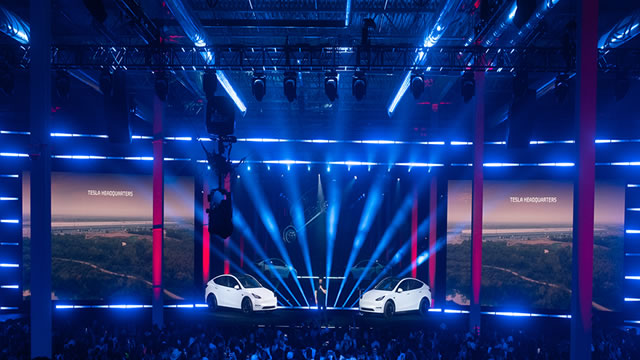
Tesla loses spot as world's top EV seller to Chinese rival after car deliveries plunge 9% in 2025
New York Post· 2026-01-02 15:54
Core Insights - Tesla's vehicle deliveries fell 9% in 2025, losing its position as the top EV seller globally to Chinese competitor BYD [1] - The company reported 418,227 deliveries in Q4 2025, a 16% decrease year-over-year [1][4] - Overall deliveries for 2025 totaled 1.64 million, down 8.6% from 1.79 million in 2024 [4] Delivery Performance - Analysts had anticipated a 15% drop to 422,850 vehicles, while Wall Street expected around 426,000 [2] - Tesla's Q4 deliveries were significantly lower than expected, contributing to a decline in investor confidence [2][5] Competitive Landscape - BYD's sales surged nearly 28% to 2.26 million units, highlighting the intense competition Tesla faces from other automakers like Kia, Hyundai, and Volkswagen [4][5] - Tesla's European registrations fell 39% in the first 11 months of 2025, while BYD's registrations in Europe increased by 240% [8] Brand and Market Challenges - Tesla's brand faced challenges due to Musk's political affiliations and controversial statements, leading to protests and vandalism of vehicles [6][7] - Despite these challenges, analysts expect a rebound in European sales once Tesla's Full Self-Driving technology gains regulatory approval [7] Financial Performance - Tesla shares experienced a slight decline of 0.4% to $447.77, but ended 2025 approximately 16% higher overall [4][10] - The company deployed 14.2 gigawatt hours of battery energy storage products in Q4, up from 12.5 gigawatt hours in the previous quarter [11] Future Outlook - A $1 trillion pay plan for Musk was approved, contingent on ambitious performance targets, including delivering 20 million vehicles and 1 million humanoid robots [12]