Porsche

Search documents
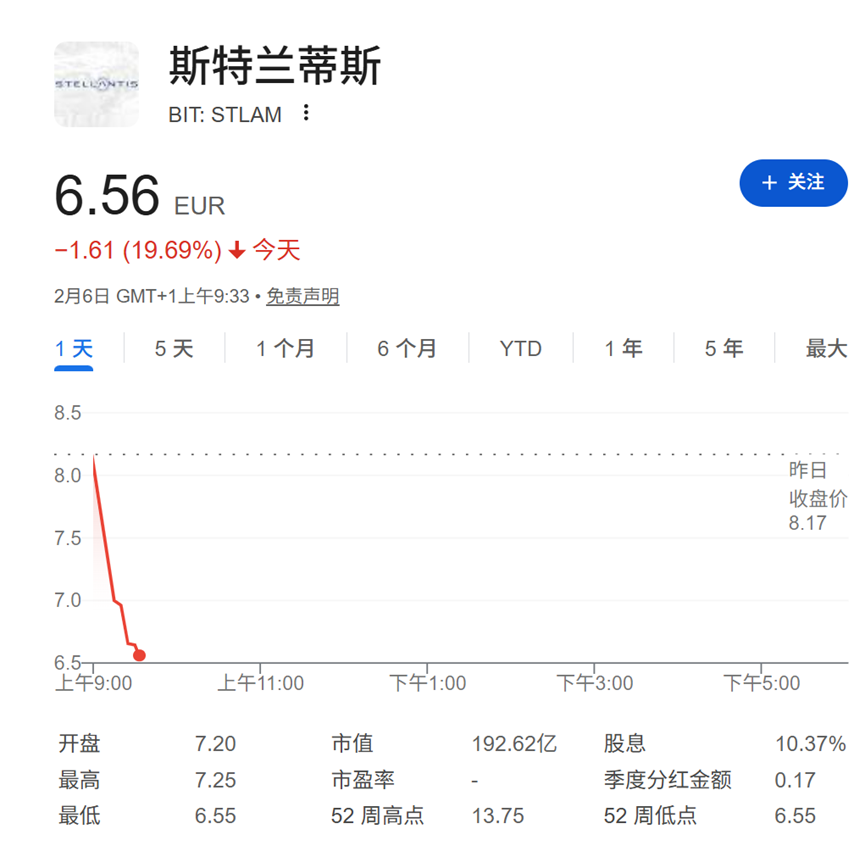
暴跌20%!Stellantis宣告“电车大撤退”,计提220亿巨额亏损
Hua Er Jie Jian Wen· 2026-02-06 08:40
Core Viewpoint - Stellantis, the world's fourth-largest automaker, is acknowledging a strategic miscalculation with a massive write-down of approximately €22 billion, leading to a comprehensive adjustment of its operational strategy, including exiting battery joint ventures and halting production of electric pickup trucks [1] Group 1: Strategic Adjustments - Stellantis is systematically reducing its electric vehicle (EV) business footprint, including exiting a joint venture with LG Energy Solution in Canada, where it had planned to invest over CAD 5 billion (USD 3.7 billion) in a large EV battery plant [3] - The company has discontinued several electric vehicle models, including the RAM 1500 electric pickup in the U.S. market, and postponed Alfa Romeo's EV projects in Europe, contrasting sharply with the aggressive targets set by former CEO Carlos Tavares [4] - As part of the strategic overhaul, Stellantis has also decided to abandon certain investment projects, including a planned hydrogen joint venture [5] Group 2: Financial Outlook - Stellantis anticipates a net loss of up to €21 billion in the second half of 2025, with an expected full-year operating profit margin in the low single digits, which includes approximately €1.6 billion in tariff-related expenses [6] - To strengthen its balance sheet, Stellantis plans to issue up to €5 billion in bonds as a financial self-rescue measure following significant market share losses [6] - The company is set to release detailed annual financial results on February 26 and plans to present its strategic plan to investors in May [7] Group 3: Leadership and Market Strategy - Since taking over in June last year, CEO Antonio Filosa has been implementing comprehensive reforms aimed at regaining market share while scaling back EV ambitions and addressing U.S. tariff costs [7] - Filosa has committed to investing $13 billion in the U.S. market, reintroducing V8 engines, and delaying EV projects, alongside significant price reductions to capture market share [7]


Taiwan vehicle sales flat in January
Yahoo Finance· 2026-02-04 09:49
Market Performance - Taiwan's new vehicle market remained stable at 35,073 units in January 2026, slightly up from 35,064 units in January 2025, despite having more working days this January due to the Lunar New Year holidays [1] - Compared to December 2025, when vehicle sales increased by 14% to 47,303 units, January's sales saw a significant decline of almost 26% [1] Vehicle Sales Breakdown - Sales of imported vehicles fell by 12% year-on-year to 14,561 units in January, attributed to shipment delays after a surge in deliveries at the end of the previous year [3] - In contrast, sales of domestically produced vehicles rose by 11% to 20,512 units, driven by popular models like the Honda HRV [3] - Sales of battery electric vehicles (BEVs) dropped sharply by 50% to 1,107 units, primarily due to the absence of Tesla deliveries, with Toyota's bZ4X leading the segment [3] Brand Performance - Toyota, the market leader, reported a 9% decline in sales to 11,614 units, while its luxury division Lexus saw a 12% drop to 3,173 units [4] - Honda experienced a significant increase of 90% in sales to 2,583 units, while Ford's sales surged by 115% to 1,761 units [4] - Other brands like Hyundai and CMC also saw positive growth, with Hyundai up by 33% to 1,645 units and CMC up by 6% to 2,216 units, whereas Mercedes-Benz faced a 49% decline [4] Market Forecast - GlobalData projects that the Taiwanese light vehicle market will grow by nearly 10% to 429,000 units in 2026, following a 10% decline to 390,000 units in 2025, driven by ongoing government incentives [5] - The market is expected to grow more moderately in 2027, with a forecasted increase of 3.1% to 443,000 units [5]
Porsche weighs scrapping electric models as costs climb
Yahoo Finance· 2026-02-03 12:18
Group 1 - Porsche is considering abandoning electric versions of its 718 Boxster and Cayman due to budget pressures and development delays [1][2] - The petrol-powered Boxster and Cayman, which will be discontinued in 2025, had entry prices around €70,000 ($82,754) and were among Porsche's lower-priced models [2][5] - The company is facing softer demand in China and financial burdens from reversing parts of its EV strategy, alongside technical challenges related to a potential plug-in hybrid alternative [2][4] Group 2 - A decision to scrap the electric models could lead to significant delays in relaunching, risking the introduction of outdated technology at a time when Porsche needs to generate interest in new models [3] - Porsche has lowered its outlook four times last year, shifting focus back to combustion engines and hybrids, which has also affected parent company Volkswagen [4] - The company has warned that its EV strategy correction could reduce operating profit by up to €1.8 billion in 2025, and it has highlighted the impact of US import tariffs in its largest market [4]
Porsche mulls cutting electric sports cars to rein in budget #shorts #porsche #evs
Bloomberg Television· 2026-02-02 18:15
Porsche was sort of already in the process of developing the the electric variant of the 718 line. Um, and that's sort of been ongoing while Porsche was facing a lot of these issues that have cropped up over the past year or two. So, you have the tariffs in the United States that are hitting them quite hard.And then you recently also had the collapse of the Chinese market. We're seeing that a lot of luxury consumers aren't really there for Porsche and they've lost something like 40% of their volumes there. ...

X @Bloomberg
Bloomberg· 2026-02-02 15:08
Porsche is considering shelving an electric sports car line to cut costs that have ballooned due its overly ambitious EV bet, according to people familiar with the matter. https://t.co/LjlLNgejbM ...
How the EV pullback is affecting factories and jobs in the South
CNBC· 2026-02-01 12:00
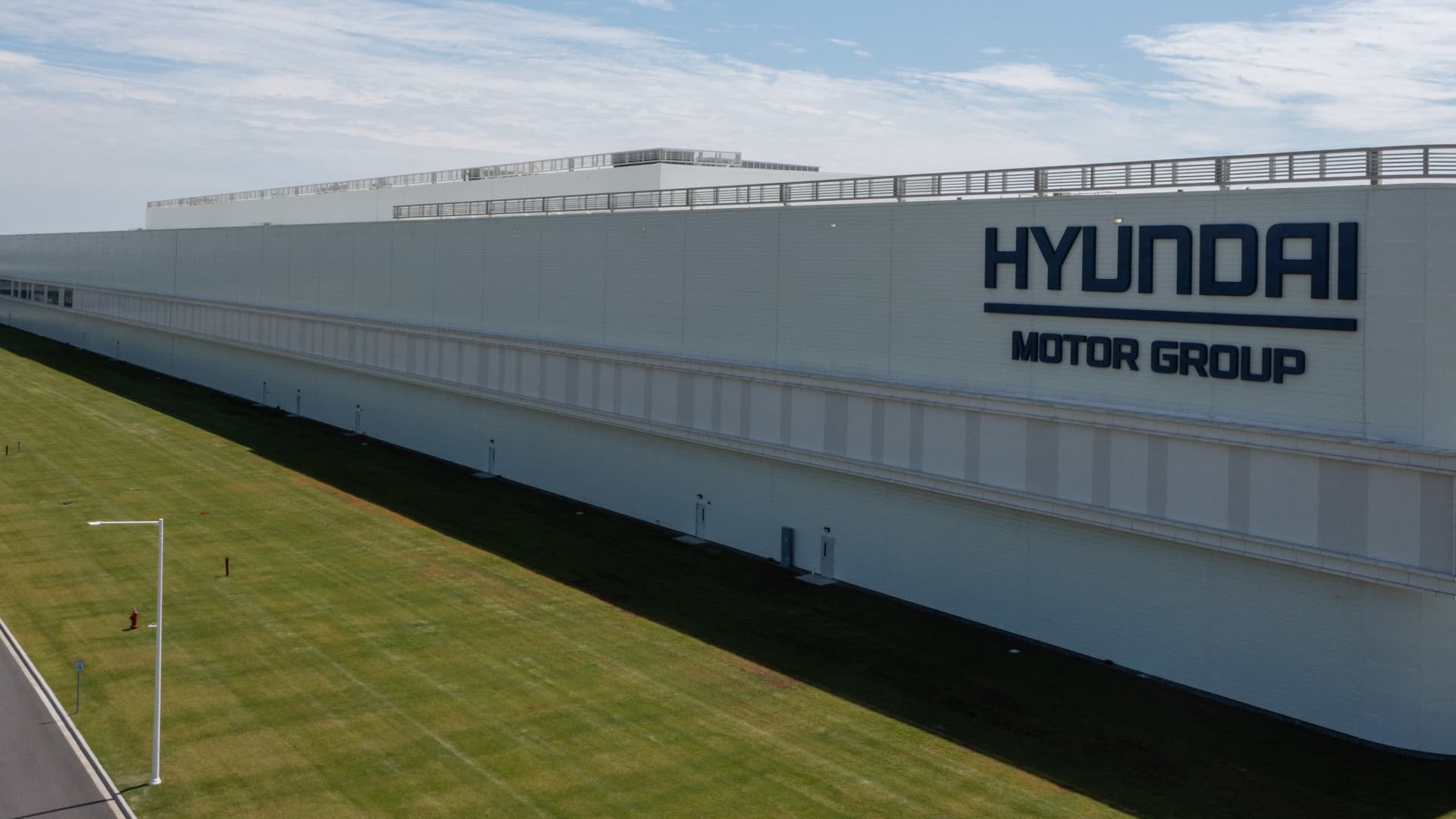
Core Insights - The majority of electric vehicle (EV) investments in the U.S. have historically favored Republican-led districts, particularly in the Southeast, raising questions about the future of these investments as the industry shifts focus away from EVs [1][2]. Investment Overview - Automakers and battery manufacturers have invested over $200 billion in EV and battery manufacturing in the U.S. from 2000 to 2024, with 84% of battery investments and 62% of EV manufacturing investments directed towards Republican-led districts [2]. - These investments were projected to create over 200,000 jobs, with 77% of these jobs located in Republican districts [2]. Regional Focus - Nearly 40% of the total investment in EVs and batteries has been allocated to the Southeastern U.S., which has been a manufacturing hub for the automotive industry for over 50 years [3]. Impact of Federal Policies - The removal of federal incentives for EVs under the Inflation Reduction Act has led to a significant decline in sales, prompting companies to pivot towards other vehicle types to mitigate losses [4][6]. Hyundai's Strategic Moves - Hyundai Motor Group, previously a leading EV seller in the U.S., has seen a 50% drop in EV sales by the fourth quarter following the end of federal incentives [6]. - The company has made a historic $12.6 billion investment in the Hyundai Metaplant in Georgia, which is expected to create approximately 8,500 jobs by 2031 [7][8]. - Hyundai plans to increase production capacity at the Metaplant by investing an additional $2.7 billion, targeting an annual output of 500,000 vehicles, with a mix of 30% EVs and 70% hybrids and gas vehicles [10]. Industry Challenges - Analysts estimate that U.S. automakers may face at least $100 billion in write-downs on EV investments, indicating that these investments may not yield the anticipated profits [11]. - Major automakers like Ford and General Motors have already announced significant financial charges related to their EV businesses, with Ford reporting a $19.5 billion charge and GM a $7.6 billion charge [12]. Market Projections - EV sales forecasts have drastically decreased from initial projections of 50% of new car sales by 2030 to a current estimate of only 17% [14][15]. - Bosch, a major automotive supplier, has had to adjust its investment strategies in light of these changing projections, moving employees from its EV motors division to other departments [16].
Volkswagen looks to overseas markets for China-built cars – report
Yahoo Finance· 2026-01-29 11:57
Group 1 - Volkswagen plans to increase exports of China-built vehicles to international markets, including the Middle East, Southeast Asia, Africa, and South America, to mitigate domestic pressures and leverage lower manufacturing costs [1][2] - The company is reorganizing its Chinese operations to enhance competitiveness against local electric vehicle manufacturers like BYD, which includes relocating R&D efforts and forming a software partnership with Xpeng [2][3] - Volkswagen aims to launch 20 new electrified models in China this year to recover from a significant decline in deliveries, which fell to approximately 2.7 million last year from over 4 million pre-pandemic [2] Group 2 - The downturn has particularly affected Porsche, with a notable decline in luxury car sales, while Volkswagen is focusing on a new electronics architecture developed with Xpeng to cater to local consumer preferences [3] - The company is undergoing a broader restructuring in response to weak demand in China, US tariffs, and inconsistent sales in Europe, which includes workforce reductions and an expansion of its hybrid vehicle range [4] - Volkswagen aims to maintain its position among the top three car manufacturers in China and increase its market share to 15% by 2030, up from around 11% [5]
Labour union IG Metall warns German carmakers ahead of wage talks
Yahoo Finance· 2026-01-28 12:13
Core Insights - IG Metall is preparing for wage negotiations with German carmakers, warning of potential escalation due to challenges in the automotive sector [1][5] - The German automotive industry is facing significant pressures, including competition from Chinese manufacturers, US tariffs, and lower-than-expected demand for electric vehicles [1][5] Group 1: Wage Negotiations and Union Influence - IG Metall represents a significant force in shaping strategic decisions within major German companies, holding half of the supervisory board seats [2] - The union has successfully negotiated to secure tens of thousands of jobs and investment commitments for German locations, despite employees foregoing billions of euros [3] Group 2: Industry Challenges and Job Cuts - The automotive sector has announced plans to cut nearly 100,000 jobs by 2030, with major companies like Robert Bosch, Volkswagen, and Ford leading the reductions [2][4] - Specific job cuts include Audi (7,500 roles), Continental (10,150 positions), Ford (1,000 jobs), Porsche (1,900 positions), Bosch (18,500 roles), Schaeffler (4,700 jobs), Volkswagen (35,000 positions), and ZF Friedrichshafen (14,000 roles) [4] Group 3: Market Conditions - German vehicle production has stagnated for three consecutive years, with output in 2025 projected to be approximately 11% below 2019 levels [5] - The rise of Chinese competitors, such as BYD, is increasing pressure on German car manufacturers both domestically and through imports [5]
Tesla lost $15 billion in brand value in 2025 as Musk stepped deeper into politics, research shows
CNBC· 2026-01-27 15:47
Core Insights - Tesla's brand value decreased by $15.4 billion, approximately 36%, in 2025, marking a third consecutive annual decline [1][2] - The current estimated brand value of Tesla is $27.61 billion, down from $43 billion at the beginning of 2025, $58.3 billion in 2024, and a peak of $66.2 billion in January 2023 [2] Brand Value Analysis - Factors contributing to the decline in brand value include a lack of innovative new models, high vehicle prices compared to competitors, and CEO Elon Musk's focus on geopolitics rather than the automotive business [2] - Tesla's scores in reputation, recommendation, trust, and coolness have significantly dropped, particularly in Europe and Canada [3] Consumer Sentiment - Tesla's recommendation score in the U.S. fell to a new low of 4.0 out of 10, indicating a decrease in consumer willingness to recommend the brand, down from a high of 8.2 in 2023 [4] - Despite the decline in recommendation scores, consumer familiarity with the Tesla brand improved in most markets, and loyalty among U.S. customers increased from 90% to 92% in 2025 [5] Competitive Landscape - BYD, Tesla's main competitor in China, saw its brand value rise by approximately 23%, reaching around $17.29 billion, up from $14.03 billion the previous year [6] - In the current ranking, five automakers, including Toyota, Mercedes-Benz, Volkswagen, and Porsche, surpassed Tesla, with Toyota leading the sector at an estimated brand value of $62.7 billion [6]