HDFC Bank

Search documents
Has RBI directed all banks to migrate to '.bank.in' domain? PIB Fact Check team clears confusion
The Economic Times· 2025-11-13 11:30
What did the The PIB Fact Check team confirmed that this claim is true and the RBI had directed all banks to migrate their existing web domains to the new ‘.bank.in’ domain by October 31, 2025.The Central Bank issued these instructions to all banks in a circular dated April 22, 2025..As per the PIB Fact Check’s social media post on X (formerly known as Twitter), “The Indian National Internet Exchange (NIXI), operating under the Ministry of Electronics and Information Technology (MeitY), has appointed the I ...

Top banks may witness re-rating, corporate loan growth likely to surprise: Gurmeet Chadha
The Economic Times· 2025-11-13 09:41
Core Insights - The reassessment of large banks in India indicates a positive outlook driven by macroeconomic tailwinds and improving financial metrics [1][7] - Analysts expect corporate loan book growth and retail loan expansion to significantly enhance the valuation outlook for top lenders [1][7] Banking Sector Performance - HDFC Bank's net interest margin (NIM) is believed to have bottomed out, with projections of a core pre-provision operating profit (PPOP) CAGR of approximately 19% from FY26 to FY28, compared to 9% for FY26 alone [4][8] - Morgan Stanley maintains an 'Overweight' rating on ICICI Bank with a target price of Rs 1,800, citing strong deposit growth and a 3% QoQ increase in loan growth, primarily from the retail segment [5][8] - Citi has re-initiated coverage on State Bank of India (SBI) with a 'Buy' rating and a target price of Rs 1,050, based on strong credit growth visibility and operational efficiencies [5][8] Loan Growth Projections - For FY26–FY27E, Citi projects SBI's loan growth to be between 13% and 14% annually, with NIMs expected to be in the range of 2.8% to 2.9% and credit costs at 40–45 basis points [6][8] - Analysts believe that the combination of favorable macroeconomic trends and improved earnings visibility will support a constructive stance on India's leading banks [7][8]

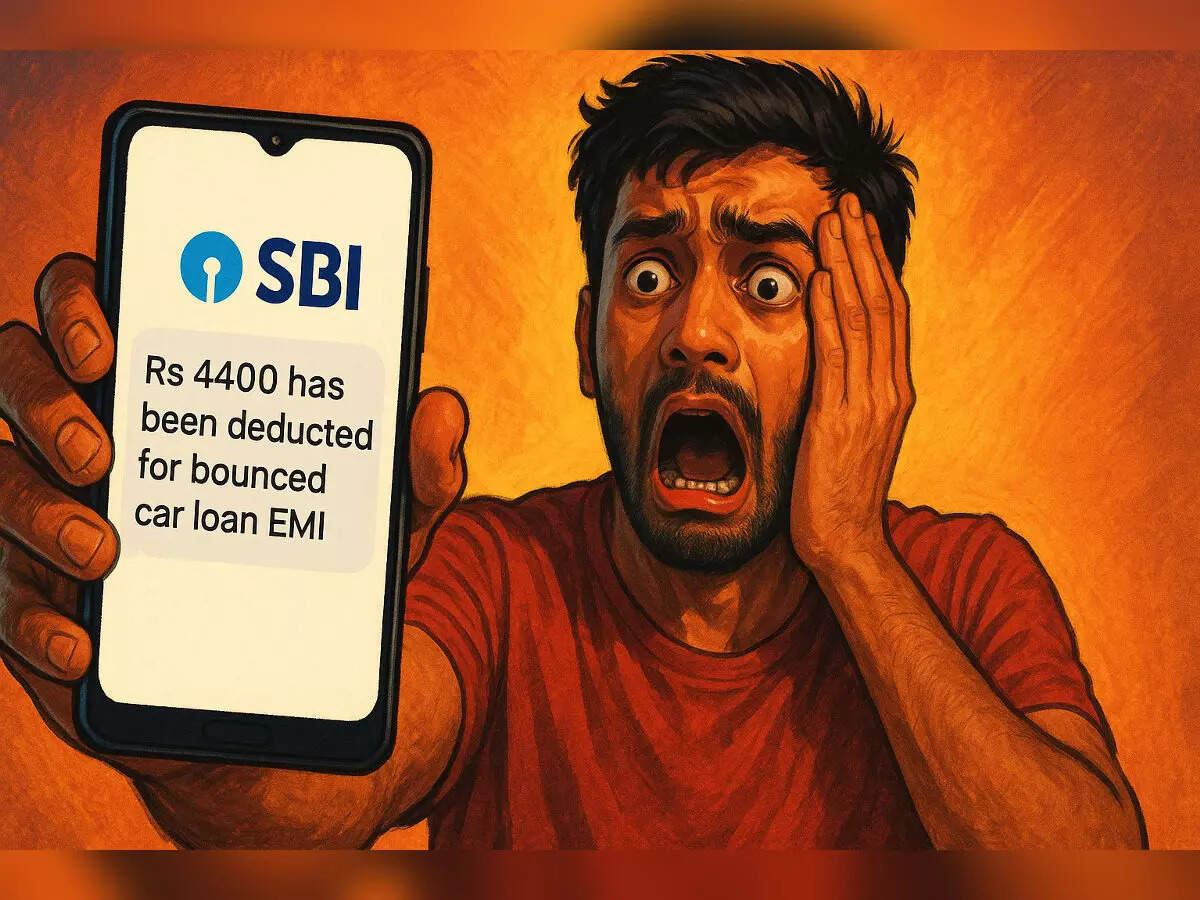
SBI charges Rs 4,400 for bounced EMIs; customer contests and wins Rs 1.7 lakh after 15 years
The Economic Times· 2025-11-13 05:32
Core Point - The case revolves around Smt Sharma, who faced unjust bounce charges from SBI despite maintaining sufficient funds in her account, leading to a ruling in her favor by the Delhi State Consumer Commission [18][19]. Group 1: Background of the Case - Smt Sharma took a car loan of Rs 2.6 lakh from HDFC Bank on April 15, 2008, and authorized SBI to deduct her monthly EMI of Rs 7,054 through ECS from her savings account [3][4]. - A total of 11 EMI payments bounced, resulting in charges of Rs 4,400, with three due to insufficient funds and eight labeled as "not valid" [5][18]. Group 2: Legal Proceedings - After SBI declined to refund the bounce charges, Sharma filed a complaint with the district consumer commission in 2010, which was dismissed, prompting her to escalate the matter to the National Consumer Disputes Redressal Commission (NCDRC) [2][7]. - The NCDRC remanded the case back to the Delhi State Consumer Commission, which ultimately ruled in favor of Sharma on October 9, 2025 [18][19]. Group 3: Findings of the Delhi State Consumer Commission - The Commission found that SBI's argument regarding incorrect ECS mandate details was implausible, as some EMIs were successfully cleared under the same mandate [12][16]. - SBI failed to provide evidence to support its claims of insufficient funds or incorrect ECS details, leading to a conclusion of deficiency in service on SBI's part [11][14][16]. Group 4: Compensation Awarded - The Delhi State Consumer Commission ordered SBI to pay Rs 1.7 lakh to Sharma, which includes Rs 1.5 lakh for mental agony and Rs 20,000 for litigation costs, to be paid within three months [19].
Goldman Sachs' Upgrade: A Signal to Invest in Indian ETFs?
ZACKS· 2025-11-12 13:15
Core Viewpoint - The Indian equity market has experienced significant underperformance in 2023, with the Nifty 50 index only increasing by approximately 5% year to date, contrasting sharply with a 22% gain in the previous year and lagging behind many Asian markets that have surged over 30% [1][2] Group 1: Causes of Underperformance - Disappointing corporate earnings growth, subdued domestic consumption, and adverse tariff disputes, including new U.S. tariffs, have negatively impacted export-sensitive sectors and contributed to rupee depreciation [4] - Domestic political uncertainty, a slowdown in capital expenditure (capex), and a shift of global capital to safer markets have pressured Indian equities, with foreign investors estimated to have sold over $30 billion in Indian equities over the past year [5] - The Indian equity market's valuation remains high, trading at approximately 22.3 times forward earnings, about 20% above its long-term norm, which has raised concerns [5][6] Group 2: Positive Outlook - Goldman Sachs has upgraded the Indian equity market to "overweight" after 13 months of a "neutral" rating, citing supportive policy changes such as anticipated RBI rate cuts, liquidity easing, and reductions in the Goods and Services Tax (GST) [7] - Record equity purchases by Domestic Institutional Investors (DIIs) and steady retail Systematic Investment Plan (SIP) inflows have stabilized the market amid foreign portfolio investor (FPI) selling [8] - The end of a year-long cycle of earnings downgrades suggests a clear earnings rebound is expected, contributing to a bullish outlook [9] Group 3: Investment Opportunities - Several Indian ETFs are highlighted as potential investment opportunities, including: - **iShares MSCI India ETF (INDA)**: Net assets of $9.57 billion, top holdings include HDFC Bank (8.12%), Reliance Industries (6.59%), and ICICI Bank (5.18%), with a year-to-date gain of 4% [11][12] - **WisdomTree India Earnings Fund (EPI)**: Total assets of $2.85 million, top holdings include Reliance Industries (7.49%), HDFC Bank (6.17%), and ICICI Bank (5.26%), with a year-to-date gain of 3.1% [13] - **iShares India 50 ETF (INDY)**: Total assets of $690.23 million, top holdings include HDFC Bank (12.73%), Reliance Industries (8.53%), and ICICI Bank (8.14%), with a year-to-date gain of 5.2% [14] - **Franklin FTSE India ETF (FLIN)**: Total assets of $2.59 billion, top holdings include HDFC Bank (7.13%), Reliance Industries (6.45%), and ICICI Bank (4.54%), with a year-to-date gain of 3.6% [15]

How to redeem HDFC credit card reward points for travel? A complete guide
MINT· 2025-11-12 07:22
Credit card reward points can be very versatile and put to various uses. They can be redeemed for statement credit, to pay for online transactions, purchase gift vouchers, direct redemption on the bank portal, purchase merchandise, transfer to airline/hotel loyalty partners, donation, etc. In this article, we will explore how HDFC Bank credit cardholders can redeem their reward points for travel.Travel redemption on SmartBuyHDFC Bank SmartBuy is a platform for the communication of various offers from mercha ...

Infosys, TCS tumble up to 27% as IT meltdown drags Nifty vs global peers. Where's the heartbeat index headed?
The Economic Times· 2025-11-12 04:22
Sector Performance - The IT sector accounts for 9.91% of the Nifty's total weight, with Infosys at 4.53% and TCS at 2.65% [1] - Over the past year, Infosys shares have fallen 18%, while TCS has declined 27% [1] - HCL Technologies, Wipro, and Tech Mahindra have also seen declines of 16%, 16%, and 17%, respectively [1] - The power sector, with a weight of 2.27% in the Nifty, has also underperformed, with constituents like Power Grid Corporation, NTPC, and Coal India declining 19%, 17%, and 9% respectively [1] Financial Sector - Financials hold the largest weight in the Nifty at 36.33%, yielding up to 48% returns [8] - Bajaj Finance leads the financial sector, followed by SBI Life Insurance Company at 28% [8] - HDFC Bank, with a weight of 12.78%, returned 12%, while ICICI Bank and State Bank of India outperformed the index with returns of 12% and 7% respectively [8] Auto and FMCG Sectors - Tata Motors has seen a significant decline of 49%, making it the worst-performing Nifty stock, while Bajaj Auto has dropped 10% [4] - In the FMCG sector, ITC has fallen 15% and Hindustan Unilever is down nearly 3% [5] Healthcare Sector - Healthcare stocks have had mixed performance, with Sun Pharmaceuticals, Dr Reddy's Laboratories, and Cipla slipping up to 6% [6] - Conversely, Max Healthcare and Apollo Hospitals have shown positive returns, with Max up 7% and Apollo up 5% [6] Metals and Capital Goods - In the metals sector, Tata Steel, JSW Steel, Hindalco Industries, and Grasim Industries have rallied between 25% and 10%, while Adani Enterprises has declined 18% [9] - Bharat Electronics from the capital goods space has delivered a notable 43% return [10] Market Outlook - A constructive outlook for the Nifty is expected, with a potential range of 5-7% movement [11][16] - The IT sector may benefit from improving global tech spending and margin stability, while the energy sector is supported by resilient demand and easing input costs [12][16] - Renewed foreign institutional investor interest is anticipated in fundamentally strong and reasonably valued companies [13][16]
India wants bigger banks to match global giants—But size alone doesn't assure better outcomes
MINT· 2025-11-12 02:00
Group 1 - The Indian government is considering increasing the size of public sector banks (PSBs) through consolidation, contrary to the idea that smaller banks may be more effective [1][4] - The aspiration for Indian banks to rank among the top global banks reflects a broader desire for India to ascend in the global economic hierarchy [2] - Size alone does not guarantee effective service delivery or financial inclusion, which are critical for both economic growth and banking efficiency [3] Group 2 - Currently, only two Indian banks, SBI and HDFC Bank, are in the top 100 global banks by total assets, with SBI ranked 43rd and needing to triple its size to enter the top 10 [5] - The argument for larger banks is that they can better fund infrastructure projects and meet the credit needs of large corporates, but this perspective is flawed [6] - Banks are not ideally suited for long-term infrastructure financing due to asset-liability mismatches, and the economy has diversified financing options beyond traditional bank loans [7][8] Group 3 - Large banks are not necessarily more stable; their failure could have systemic implications, making them "too big to fail" and potentially requiring government intervention [9] - Mergers in the banking sector should be based on commercial viability rather than government mandates [10]
Can your job tenure and work experience influence your personal loan eligibility?
MINT· 2025-11-11 08:35
Core Insights - The article discusses how work experience impacts personal loan applications, highlighting both positive and negative effects of job changes on loan approval [1][2]. Group 1: Positive Impact of Work Experience - A recent job change can positively influence a personal loan application if it involves a higher designation, reputable company, and increased salary, leading to improved cash flows [3][4]. - Higher cash flows reduce the debt-to-income (DTI) ratio, enhancing the borrower's repayment capacity, which is a critical factor for banks [4]. - Transitioning from a risky sector to a stable one, such as moving from a startup to a manufacturing company, increases the likelihood of loan approval [5]. Group 2: Negative Impact of Work Experience - Frequent job changes within a short period can raise red flags for banks, potentially leading to loan application rejection or unfavorable terms [7][8]. - A significant break between jobs may cause banks to process applications cautiously, especially if the gap is prolonged without valid reasons [9]. - Applications during a probation period of 6 to 12 months may face scrutiny, with banks preferring to wait for confirmation of employment [10]. Group 3: Work Experience Criteria by Banks - Banks typically require a minimum overall work experience, with specific tenure requirements for current employment. For example, HDFC Bank requires at least 2 years of total work experience, with 1 year at the current employer [12]. - ICICI Bank mandates a minimum of 2 years of total work experience for salaried individuals and 3 years for self-employed individuals [13]. - State Bank of India (SBI) requires a minimum of 6 months for government employees and 12 months for corporate sector employees [14]. Group 4: Overall Eligibility Criteria - Meeting work experience criteria alone is insufficient for loan approval; other factors such as credit score, DTI ratio, income, and age must also be considered [15][16]. - Maintaining a good credit score (750 and above) and a low DTI ratio (35% or lower) is essential for enhancing loan approval chances [18].

Fintech SaaS player Lentra aims to grow revenues 4x in three years, plans IPO on hitting target
MINT· 2025-11-10 11:03
Lentra, a software as a service (SaaS) company that helps digitize lending operations at banks and non-banking finance companies, plans to sell shares on public markets in three years time, a period during which it has set itself a target to expand revenues four times, a top company executive said. Backed by MUFG Bank and Bessemer Venture Partners, Lentra has set itself a steep revenue target of ₹1,000 crore by fiscal 2028 up from the current ₹220 crore. Valued at around $400 million, the Pune-based compan ...

Shocked by a loan rejection despite a 700+ credit score? Here’s what’s going on
MINT· 2025-11-10 06:57
Core Insights - A decent credit score alone does not guarantee approval for personal loans, as banks consider multiple eligibility criteria [1][21]. Eligibility Criteria - **Credit Score**: While a credit score of 700 or higher is often required, it is just one of several factors [2][21]. - **Debt-to-Income (DTI) Ratio**: The DTI ratio is crucial, measuring the percentage of monthly income used for debt servicing. A DTI ratio of 35% or lower is generally considered favorable for loan approval [4][5]. Ratios above 45% significantly decrease approval chances [6]. - **Minimum Monthly Income**: Banks set specific minimum income requirements based on employment type. For instance, SBI requires a minimum net monthly salary of Rs. 20,000 for Government employees and Rs. 25,000 for corporate employees [9][10]. - **Employment Stability**: Job stability is essential, with many banks requiring a minimum tenure in the current job. For example, HDFC Bank mandates at least 2 years of overall job experience, including 1 year with the current employer [12][13]. - **Age Requirements**: Banks have age criteria for applicants, often specifying a minimum and maximum age for loan eligibility. For instance, ICICI Bank requires salaried individuals to be between 20 and 58 years old [16][17]. - **Credit History**: A short credit history may lead to application rejection, as banks may require more data for proper assessment [18]. - **Other Requirements**: Additional criteria may include having an account with the bank, minimum educational qualifications, and a specified stay period in rented accommodation [19][20][21]. Conclusion - Banks evaluate a combination of these criteria to determine overall eligibility for personal loans, emphasizing that a good credit score is insufficient on its own for approval [22].