Roche

Search documents
Celcuity (NasdaqCM:CELC) 2025 Conference Transcript
2025-11-11 16:02
Summary of Celcuity Conference Call Company Overview - **Company**: Celcuity - **Focus**: Development of gedatolisib, a drug targeting the PI3K/AKT/mTOR pathway, primarily for breast and prostate cancer treatment [3][4] Key Points and Arguments Drug Development and Clinical Trials - **Gedatolisib**: Identified as a promising drug for the PI3K/AKT/mTOR pathway, previously owned by Pfizer and now being developed by Celcuity [4] - **Current Studies**: Two ongoing studies in breast cancer (second-line and first-line metastatic) and a new study in prostate cancer [5] - **Data Validation**: Preliminary data from early-phase studies in prostate cancer is encouraging, supporting the hypothesis that the PI3K pathway is relevant in hormonally driven cancers [5][8] Regulatory and Commercialization Strategy - **NDA Submission**: Preparing for an NDA submission under an accelerated review process, with groundwork laid for commercialization [6][30] - **Market Research**: Positive feedback from market research indicates potential for significant market share in the second-line setting for gedatolisib [10][11] - **Sales Strategy**: Targeting community settings where 80% of patients are treated, while also prioritizing academic centers [33][34] Competitive Landscape - **Comparison with Roche**: Roche's combination therapy is seen as a strategic move, but Celcuity believes gedatolisib offers better tolerability and efficacy [12][16][18] - **Market Positioning**: Gedatolisib is positioned as a safer option with lower toxicity compared to existing treatments like everolimus, which has a high discontinuation rate [15][17] Clinical Data Insights - **Patient Population**: Focus on a diverse patient population, including those with and without specific mutations, which is expected to enhance the drug's applicability [38][40] - **Duration of Response**: Data suggests a potential duration of response of 19 months in the US, which could positively impact market modeling [21][22] Financial Outlook - **Cash Runway**: Current cash reserves and access to additional funding are expected to sustain operations through 2027, with hopes of generating meaningful revenue by then [46][47] Other Important Insights - **Regulatory Interactions**: Ongoing discussions with Japanese health authorities to align on data package expectations for regulatory submissions [36][37] - **Trial Site Selection**: Leveraging previous trial site experiences to enhance enrollment efficiency in ongoing studies [42][44] This summary encapsulates the critical aspects of Celcuity's conference call, highlighting the company's strategic direction, competitive positioning, and financial health as it advances its drug development efforts.

Recursion Pharmaceuticals (NasdaqGS:RXRX) FY Conference Transcript
2025-11-11 14:02
Recursion Pharmaceuticals FY Conference Summary Company Overview - **Company**: Recursion Pharmaceuticals (NasdaqGS:RXRX) - **Event**: Second annual Guggenheim Healthcare Innovation Conference - **Date**: November 11, 2025 - **Key Speakers**: Najat Khan (incoming CEO), Ben Taylor (CFO) Key Points Leadership Transition - Najat Khan will take over as CEO starting January 1, 2026, marking a planned transition to enhance company leadership continuity [2][3] - Chris, the outgoing CEO, will remain on the board as chair and serve as an executive advisor [2] Strategic Focus and Evolution - The company is transitioning from exploring AI's potential in drug discovery to demonstrating proof of impact [2][4] - Emphasis on increasing shareholder value and patient impact through a strengthened pipeline and strategic partnerships [5][6] Partnerships and Collaborations - Significant partnerships with Roche and Sanofi, with milestones worth approximately $300 million per program [5][6] - Collaboration with MIT and use of advanced supercomputing capabilities to enhance data analysis [9][10] - Over $500 million in partnership inflows, indicating strong investor interest and validation of the platform [12][13] Pipeline and Therapeutic Areas - Focus on four therapeutic areas: oncology, rare diseases, neuroscience, and gastrointestinal oncology [24] - Intentional targeting of novel and challenging drug targets in oncology, including RBM39 and CDK7 [25][26] - Development of a comprehensive clinical development platform for patient selection and trial acceleration [27] CDK7 Inhibitor Development - CDK7 inhibitors show manageable gastrointestinal toxicity with a 7% discontinuation rate and no severe adverse events [29] - Early signs of efficacy observed in monotherapy, with ongoing combination studies in ovarian cancer [31] Financial Position and Future Outlook - Cash position reported at nearly $800 million, sufficient to fund operations through year-end 2027 without additional financing [41] - Anticipation of at least $100 million in partner inflows by year-end 2026, with multiple clinical milestones expected [42][43] Integration with Exscientia - Successful integration of technology platforms with a focus on operational efficiency, achieving a 35% reduction in expenses [17][18] - Retention of cultural and operational capabilities from both legacy companies [19][20] Upcoming Milestones - Key upcoming events include data readouts for the FAP program, which has shown significant polyp burden reduction in trials [36][43] - Continued focus on rapid decision-making regarding pipeline programs to optimize capital allocation [43] Conclusion Recursion Pharmaceuticals is positioned for growth with a strong leadership transition, strategic partnerships, and a robust pipeline focused on innovative therapeutic areas. The company aims to leverage its AI-driven platform to deliver differentiated therapeutics while maintaining a solid financial foundation.

Xilio Therapeutics (NasdaqGS:XLO) Update / Briefing Transcript
2025-11-10 22:32
Summary of Xilio Therapeutics Conference Call Company Overview - **Company**: Xilio Therapeutics (NasdaqGS:XLO) - **Focus**: Development of novel masked biologics using proprietary protein engineering technology - **Key Products**: Velastigard (anti-CTLA-4), efarindodekin alfa (IL-12), XTX501 (PD-1/IL-2) Industry Context - **Industry**: Oncology, specifically focusing on immunotherapy for colorectal cancer - **Target Condition**: Microsatellite stable colorectal cancer (MSSCRC), which constitutes 95% of all colon cancers Key Data Updates - **SITC Conference**: Presented new clinical data for Velastigard in combination with Tislelizumab for MSSCRC - **Clinical Data**: - Velastigard demonstrated a **26% overall response rate** in late-line metastatic MSSCRC without liver metastases, compared to a **2% response rate** for Tislelizumab as monotherapy [8][9][10] - In a biomarker-defined population with high plasma tumor mutational burden (TMB), the overall response rate was **40%** [14][15] Biomarker Insights - **Plasma TMB**: - Approximately **55%** of MSSCRC patients have high plasma TMB (greater than 10 mutations per megabase) [12][15] - High plasma TMB correlates with better response rates to Velastigard and Tislelizumab combination therapy [12][14] - Plasma-based TMB assays are more sensitive and provide a comprehensive assessment compared to traditional tissue-based assays [11][19] Safety Profile - **Safety Data**: - Velastigard showed a **7% incidence of colitis**, significantly lower than traditional anti-CTLA-4 therapies [16][17] - Discontinuation rate for the combination therapy was only **5%**, indicating a favorable safety profile [17] Future Development Plans - **Partnerships**: Actively seeking partnerships to develop Velastigard in combination with PD-1, PD-L1, or newer PD-1 bispecifics [43][44] - **Regulatory Path**: Plans to assess the regulatory pathway for future development using plasma TMB as a predictive biomarker [43][44] - **Upcoming Milestones**: Additional phase two data for Velastigard expected in the first half of 2026 [47] Additional Clinical Programs - **Efarindodekin alfa**: Phase one data showed deep monotherapy responses and a well-tolerated safety profile [45] - **Masked T-cell Engagers**: Preclinical data demonstrated broad applicability and potential for reduced systemic toxicity [46] Conclusion - Xilio Therapeutics is positioned to leverage its innovative masking technology to address significant unmet medical needs in oncology, particularly in MSSCRC, with promising clinical data supporting the efficacy and safety of its lead product, Velastigard. The identification of plasma TMB as a predictive biomarker enhances the potential for targeted therapies in this patient population.

Xilio Therapeutics (NasdaqGS:XLO) Earnings Call Presentation
2025-11-10 21:30
Vilastobart Clinical Data and Opportunity - Vilastobart, in combination with atezolizumab, showed a 40% Overall Response Rate (ORR) in MSS mCRC patients without liver metastases and with high plasma TMB[30, 42] - 63% of plasma TMB-evaluable patients had high plasma TMB (≥10 mutations/Mb) in the Phase 2 trial, including all TMB-evaluable responders[32, 33, 42] - A statistically significant correlation (p=0.05) was observed between plasma TMB status and response to vilastobart plus atezolizumab[33, 42] - The combination of vilastobart and atezolizumab demonstrated a differentiated safety profile, with a low discontinuation rate of 5% and only 7% of patients experiencing colitis of any grade[35, 36, 42] Market and Competitive Landscape - Approximately 95% of mCRC patients are MSS, and standard of care in 3L+ provides minimal benefit (1-6% ORR)[23] - Real-world data indicates that approximately 55% of patients with MSS CRC have high plasma TMB, which is substantially higher than historically reported with tissue-based TMB assays[28, 42] - Next-generation anti-CTLA-4 agents in development show promising clinical efficacy in MSS mCRC, with ORRs ranging from 8-29% and discontinuation rates due to AEs up to ~30%[21] Technology and Pipeline - Xilio's clinically-validated platform technology is being applied across diverse mechanisms and architectures, including antibodies, cytokines, bispecifics, and T cell engagers[13, 14] - Efarindodekin Alfa (tumor-activated IL-12) demonstrated promising clinical efficacy with a generally well-tolerated safety profile in Phase 1 in patients with advanced solid tumors[44] - Masked T cell engager programs demonstrated potent anti-tumor activity with favorable tolerability across a diverse range of targets in preclinical models[50, 51, 52] Financial Outlook and Milestones - The company anticipates a cash runway into Q1 2027, including a $175 million development milestone received under the Gilead license in Q4 2025[53] - Anticipated milestones include reporting updated Phase 2 data for vilastobart in combination with atezolizumab in metastatic MSS mCRC in 1H 2026 and IND submissions for at least two masked T cell engager programs in 2027[53]
Relay Therapeutics (NasdaqGM:RLAY) FY Conference Transcript
2025-11-10 17:00
Summary of Relay Therapeutics FY Conference Call Company Overview - **Company**: Relay Therapeutics (NasdaqGM: RLAY) - **Focus**: Development of targeted therapies, particularly in oncology and vascular malformations Key Points on Portfolio and Development Priorities - **RLY-2608**: First PI3K mutant selective inhibitor in clinical trials with three ongoing trials - Pivotal trial for hormone receptor positive, HER2 negative breast cancer initiated in summer 2025 - Trials include combinations with RIBO, PALBO, and abemaciclib [5][6] - **Financial Position**: Company has sufficient cash to operate until 2029 with multiple upcoming catalysts [5] Clinical Profile and Competitive Positioning - **Efficacy vs. Safety**: RLY-2608 shows improved safety and tolerability compared to capivasertib, leading to longer treatment durations and better progression-free survival (PFS) rates [6][7] - PFS for RLY-2608 in second line setting is in double digits, significantly higher than capivasertib's 5.5 months [7] - **Market Dynamics**: Capivasertib has captured significant market share despite lower PFS due to its safety profile, generating $800 million annually [9] - **Comparative Data**: RLY-2608 has a confirmed objective response rate of 39%, outperforming competitors like the Scorpion Lilly molecule, which reported a 20% response rate [11][12] Strategic Considerations - **Post-CDK4/6 Market**: The company emphasizes the importance of the post-CDK4/6 market, which is expected to grow as CDK4/6 inhibitors gain traction in earlier treatment settings [15][16] - **Triplet Combinations**: Ongoing research into triplet combinations with fulvestrant and CDK inhibitors, focusing on dose optimization and patient selection [19][20] Expansion into Vascular Malformations - **Rationale for Development**: Similar to oncology, targeting PI3K mutations in vascular malformations is expected to yield significant benefits [28] - **Market Opportunity**: Estimated 170,000 patients in the U.S. with PI3K mutant vascular malformations, with potential for a multi-billion dollar market [39][41] - **Regulatory Path**: Following alpelisib's unusual regulatory approval, Relay plans to use similar endpoints for their trials [44][45] Enrollment and Market Research - **Patient Enrollment**: Positive feedback on enrollment pace in clinical trials for vascular malformations, despite the nascent nature of the disease setting [36][37] - **Current Treatment Landscape**: Limited use of existing therapies like alpelisib and sirolimus, with many patients unable to tolerate long-term treatment [42][43] Conclusion - Relay Therapeutics is positioned to leverage its innovative RLY-2608 in both oncology and vascular malformations, with a strong focus on safety, efficacy, and market potential. The company is optimistic about its clinical trials and the commercial opportunities that lie ahead.
X @Bloomberg
Bloomberg· 2025-11-10 11:16
Roche said a multiple sclerosis drug showed it could work for most forms of the disease in two late-stage trials, cutting the number of relapses compared to another treatment over nearly two years https://t.co/csHitIZzSc ...
新产品、新投资、新合作罗氏制药八赴进博之约
Jing Ji Wang· 2025-11-10 09:31
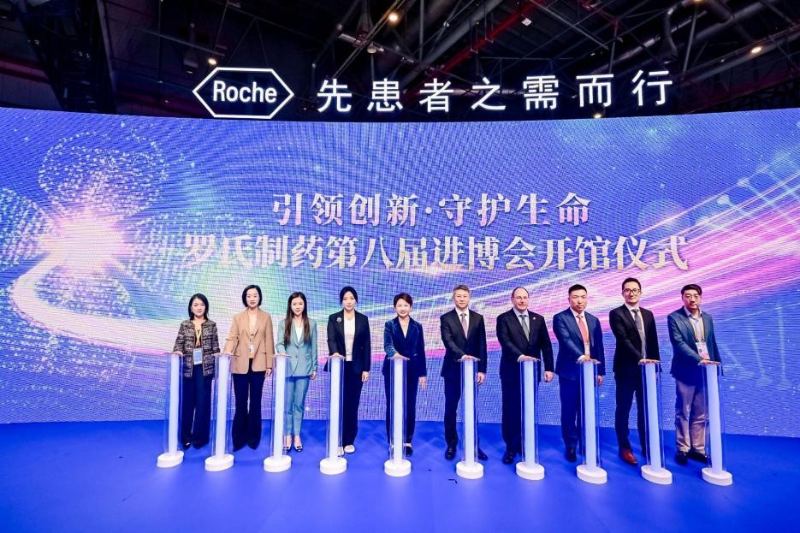
Core Insights - The 8th China International Import Expo (CIIE) opened on November 5, showcasing Roche's commitment to innovation and life protection with over 40 products and diverse innovative solutions [1][3] - Roche's participation highlights the importance of CIIE as a strategic platform for foreign enterprises to engage with the Chinese market and share global innovations [5] Group 1: Roche's Participation - Roche Pharmaceuticals held the "2025 Roche Pharmaceuticals 8th CIIE Opening Ceremony" and presented its complete pharmaceutical value chain in China for the first time [1] - The company showcased more than 10 products that will soon be launched in China, covering various disease areas including breast cancer, hematology, neuroscience, ophthalmology, immunology, cardiovascular, and metabolism [5] Group 2: CIIE's Role - The CIIE serves as a key platform for China to open its market and promote global cooperation, focusing on high-quality exhibitors and innovative products [3] - Over the past eight years, the CIIE has facilitated the transformation of nearly 15 Roche global innovative drugs from exhibits to market-ready products, benefiting Chinese patients [5] Group 3: Innovative Solutions - Roche's exhibition included immersive creative interactive installations to enhance public understanding of medical innovations and humanistic care [5] - The company also presented various AI solutions that span research, diagnosis, and patient management, aiming to empower the entire diagnostic and treatment process [5]


Roche Multiple Sclerosis Drug Meets Main Goals in Two Late-Stage Trials
WSJ· 2025-11-10 07:03
Core Insights - Fenebrutinib successfully met primary goals in two late-stage trials for treating two different forms of multiple sclerosis [1] Group 1 - The trials demonstrated efficacy in both relapsing and progressive forms of multiple sclerosis [1] - The positive results may enhance the company's position in the competitive multiple sclerosis treatment market [1] - These findings could lead to potential regulatory approvals and market entry [1]

Roche says MS drug candidate meets primary goal in late-stage trial
Reuters· 2025-11-10 06:18
Group 1 - Roche announced that its late-stage trial for the multiple sclerosis drug candidate fenebrutinib has achieved its primary goal [1]

[Ad hoc announcement pursuant to Art. 53 LR] Roche’s fenebrutinib shows unprecedented positive Phase III results as the potential first and only BTK inhibitor in both relapsing and primary progressive multiple sclerosis
Globenewswire· 2025-11-10 06:00
Core Insights - Roche announced that the Phase III study FENhance 2 met its primary endpoint, showing that fenebrutinib significantly reduced the annualised relapse rate (ARR) in patients with relapsing multiple sclerosis (RMS) compared to teriflunomide over at least 96 weeks of treatment [1][8] - The Phase III FENtrepid study demonstrated that fenebrutinib was non-inferior to OCREVUS in delaying disability progression in patients with primary progressive multiple sclerosis (PPMS) over at least 120 weeks [2][8] - Fenebrutinib's results indicate its potential as a leading treatment option for both RMS and PPMS, with a focus on its high efficacy and oral administration [3][11] Study Details - The FENhance studies (1 and 2) involved 1,497 adult patients with RMS, randomized to receive either oral fenebrutinib or teriflunomide for at least 96 weeks [5][6] - The primary endpoint for FENhance studies was the annualised relapse rate (ARR), with key secondary endpoints including various measures of confirmed disability progression [6][9] - The FENtrepid study included 985 adult patients with PPMS, comparing fenebrutinib to OCREVUS over a treatment period of at least 120 weeks [7][8] Mechanism of Action - Fenebrutinib targets B cells and microglia, addressing both acute inflammation and chronic damage associated with multiple sclerosis [4][11] - It is a non-covalent Bruton's tyrosine kinase (BTK) inhibitor, designed for high potency and selectivity, allowing it to penetrate the central nervous system [4][11] Future Outlook - Full data from both Phase III studies will be presented at upcoming medical meetings, with regulatory submissions planned following the results of the second RMS study (FENhance 1), expected in the first half of 2026 [3][8]