数字化医疗

Search documents
迈瑞医疗20230331
2026-04-01 09:59
Summary of Key Points from the Conference Call Company Overview - **Company**: Mindray Medical International Limited - **Industry**: Medical Devices Financial Performance - **2025 Revenue**: 332.7 billion RMB, a decrease of 18.4% year-on-year [2] - **Net Profit**: 81.35 billion RMB, down 38.54% year-on-year [2] - **Q4 Performance**: Revenue of 74.48 billion RMB, a 2.86% increase year-on-year; net profit of 6.38 billion RMB, down 38.54% year-on-year [4] - **Cash Flow**: Operating cash flow net amount of 101.45 billion RMB, down 18.4% year-on-year [4] Business Segments International Business - **Revenue**: 176.5 billion RMB, accounting for 53% of total revenue, with a growth of 7.4% year-on-year [2] - **European Market Growth**: 17% increase, with emerging business segments growing nearly 30% [5] - **Future Outlook**: Expected rapid growth in international business in 2026, driven by localization and high-end customer penetration [5] Domestic Business - **Revenue**: 156.32 billion RMB, down 22.97% year-on-year [2] - **IVD Business**: Accounts for nearly 50% of domestic revenue; aims to double market share in immunology, biochemistry, and coagulation within three years [2][5] - **Emerging Business**: Revenue of 53.78 billion RMB, up 38.85%, representing 16% of total revenue; identified as a key growth driver [2][8] Research and Development - **R&D Investment**: 39.29 billion RMB, 11.8% of revenue [9] - **New Products**: Launch of various diagnostic kits and automated systems across multiple medical fields [9] Shareholder Returns - **Dividends**: 53.1 billion RMB in total dividends for 2025, representing 65.27% of net profit [3][4] Strategic Initiatives - **Hong Kong IPO**: Planned to deepen international presence and enhance brand recognition [11][12] - **Collaboration with Medtronic**: Strengthening partnerships with international giants to enhance technology and market reach [13][14] Market Challenges and Opportunities - **Domestic Market**: Facing challenges due to budget cuts in hospital procurement and policy impacts on IVD business [5][19] - **International Market**: Slower growth in 2025 due to macroeconomic factors; however, potential for recovery in 2026, especially in Europe [22][23] Sustainability and Corporate Responsibility - **Sustainability Report**: Released eighth report, maintaining AA rating from MSCI ESG [10] - **Social Initiatives**: Ongoing projects to enhance healthcare access and training [10] Future Outlook - **Growth Strategy**: Focus on IVD business and emerging sectors to drive future growth; aiming for a return to rapid growth by 2027 [24] - **Market Positioning**: Targeting to enter the top ten global medical device companies within ten years [12] Conclusion - **Overall Assessment**: Despite facing significant challenges in both domestic and international markets, the company is strategically positioned for future growth through innovation, international expansion, and a focus on emerging business segments.

通策医疗20260310
2026-03-11 08:12
Summary of Tongce Medical Conference Call Company Overview - **Company**: Tongce Medical - **Industry**: Dental Medical Services Key Points and Arguments Business Model Transformation - Tongce Medical is transitioning from a high-ticket price model to a more efficient and inclusive healthcare model, achieving revenue of 2.29 billion and a net profit of 514 million in Q1-Q3 2025, indicating strong performance resilience [2][3] Market Dynamics - The company’s implant business has seen a significant increase in the proportion of collective procurement, reaching 75%-80%, with single implant costs in Zhejiang dropping to around 5,000 yuan, indicating a potential demand of 3-4 million implants in the province [2][3] Organizational Reform - The implementation of a "big department system" aims to break local management barriers, allowing for dynamic resource allocation among doctors, which is expected to enhance productivity and support platform expansion [2][7] Digital Infrastructure - Tongce Medical is building an AI platform to integrate its HIS system, managing 7 million existing customers with unique IDs for standardized services and cost reduction [2][8] Orthodontics Strategy - The orthodontics business, under the brand "Yinxiu," is adopting a "full refund for dissatisfaction" policy to lower decision-making barriers and capture price-sensitive markets, aiming to double its customer base [2][10] Financial Projections - The company anticipates a net profit of 670 million in 2026, with a growth rate close to 20%, and is assigned a target price of 67 yuan based on a 45x PE ratio for 2026 [2][11] Industry Insights Long-term Growth Potential - The dental healthcare industry remains a long-term growth sector, with significant potential due to low penetration rates compared to developed countries, particularly in Zhejiang [4][5] Fundamental Changes in the Industry - Recent shifts include a rational return in consumer behavior, with price sensitivity affecting demand, and the impact of collective procurement policies enhancing service accessibility [6] Competitive Landscape - The industry is moving from a high-margin, high-ticket model to one focused on scale and operational efficiency, with domestic brands gaining traction post-price reductions [6] Strategic Responses Market Penetration - Tongce Medical is focusing on grid marketing to penetrate lower-tier markets, targeting a population of approximately 30 million in Zhejiang with affordable product packages [8][9] International Benchmarking - The company aims to replicate the successful market strategies of South Korea, where implant penetration is high, leveraging competitive pricing and local brand strength [9] Risks to Consider - Potential risks include unexpected adjustments in medical service pricing, the effectiveness of ongoing reforms, the risk of medical accidents, and the impact of low-cost product packages on overall profitability [12]

2026年过敏性哮喘药物品牌推荐:精准控哮,长效无忧
Tou Bao Yan Jiu Yuan· 2026-03-06 12:03
Investment Rating - The report does not explicitly state an investment rating for the industry Core Insights - The Chinese allergic asthma drug market is transitioning from traditional treatments to precision medicine, with a focus on monoclonal antibodies targeting various pathways such as IL-5 and IL-4Rα, indicating a shift towards individualized treatment strategies [4][6] - The market size for allergic asthma drugs in China is projected to grow from CNY 11.2 billion in 2018 to CNY 19.6 billion by 2024, with a compound annual growth rate (CAGR) of 9.8%. By 2030, the market is expected to reach CNY 46.7 billion, driven by an expanding patient population and increasing demand for innovative therapies [7][8] - The competitive landscape is evolving, with multinational companies like GlaxoSmithKline and AstraZeneca facing challenges from local firms that are leveraging policy changes and technological advancements to capture market share [16][17] Market Background - The report outlines the definition of allergic asthma, emphasizing its association with Th2-mediated immune responses and its links to other allergic conditions [5] - The market is experiencing a profound transformation, moving from traditional inhaled corticosteroids (ICS) and long-acting beta-agonists (LABA) to targeted therapies that address specific inflammatory pathways [6] Market Status - The market is characterized by a strong demand for innovative treatments, with over 40 million patients in China and nearly one million new cases annually, leading to a significant increase in drug demand [7][8] - The supply side includes a variety of treatment options, including chemical drugs, allergen immunotherapy (AIT), and biologics, with a focus on improving patient adherence and treatment outcomes [9][10] Market Competition - The competitive assessment includes product innovation capability, market share, and strategic research and development (R&D) positioning as key dimensions for evaluating leading companies in the allergic asthma drug sector [13][14][15] - The report identifies ten recommended brands, highlighting their innovative products and market positions, such as Mabtech's CMAB007 and AstraZeneca's inhalation solutions [21][22][24] Development Trends - The report discusses several key trends shaping the future of the allergic asthma drug market, including the acceleration of precision medicine, advancements in inhalation device technology, and the impact of policy reforms on market dynamics [32][33][34][36][37] - Digitalization and the integration of healthcare services are expected to enhance patient management and treatment adherence, creating a more comprehensive ecosystem for asthma care [37]
【华创医药】通策医疗(600763)公司深度研究报告:沉舟侧畔千帆过,口腔医疗服务龙头再起航
华创医药组公众平台· 2026-03-02 14:46
Core Viewpoint - The article discusses the transformation of Tongce Medical, a leading player in the dental healthcare sector, as it shifts from a high-price, high-margin consumer upgrade model to a more efficient, scalable, and inclusive quality medical paradigm after enduring significant market pressures [2]. Industry Changes - Consumer demand in the dental industry has become more segmented and rational, with a trend towards selecting higher cost-performance products and services, particularly evident in the invisible orthodontics sector where prices have consistently decreased over the past three years [3]. - The collective procurement mechanism has led to a rapid decline in dental implant prices, making the mid-to-low-end market a competitive battleground. This price drop has significantly improved the accessibility of dental services and stimulated growth in the mid-to-low-end market [3]. Company Growth Strategy - Tongce Medical is restructuring its production relationships through a departmental reform that breaks traditional localized management, establishing a vertical organizational system based on specialized capabilities and digital systems for comprehensive scheduling, laying the groundwork for platform transformation and operational efficiency [4]. - The company is developing a market grid system that covers approximately 30 million consumers, reaching nearly 50% of the provincial population. The introduction of mid-to-low-end products in its implant and orthodontic businesses is expected to unleash growth potential, benefiting from an expanding customer base and business synergy [4]. - The integration of an AI platform as a central infrastructure is enhancing operational, clinical, and service upgrades by embedding AI deeply into the entire treatment process [4]. Investment Outlook - The company is expected to maintain its advantages in the mid-to-high-end market while penetrating the low-price market. Adjustments to the net profit forecasts for 2025-2027 indicate growth rates of xx%, xx%, and xx%, respectively. The current stock price corresponds to PE ratios of xx, xx, and xx for the same years. Given the strengthening brand power and strategic transformation, the company is anticipated to achieve clear and rapid growth, warranting a higher valuation level [5].


深耕中国市场的决心从未改变——德国企业高管看好中国机遇
Xin Hua She· 2026-02-27 03:10
Group 1 - The meeting held in Beijing with representatives from major German companies like Siemens, Volkswagen, and Bayer highlights the strong economic ties between Germany and China, emphasizing the importance of deepening bilateral trade relations in the current challenging global environment [1] - The high-level delegation, consisting of 30 representatives from key sectors such as automotive, chemicals, biopharmaceuticals, and machinery, reflects the significant interest of German companies in the Chinese market and their strong willingness to enhance practical cooperation [1] - The trade volume between China and Germany has consistently exceeded $200 billion, with bilateral investment stock surpassing $65 billion, indicating a robust and complementary economic partnership [1] Group 2 - Mercedes-Benz's involvement in the Chinese automotive market is highlighted as a key element of Sino-German cooperation, with a focus on local innovation networks that are crucial for maintaining competitiveness in the rapidly evolving electric and intelligent vehicle sectors [2] - The visit of the German Chancellor included a stop at Yushu Technology in Hangzhou, showcasing China's innovation capabilities and the potential for future market opportunities driven by technological advancements [3] - Henkel's CEO noted that China has become a global innovation hub, with significant potential in high-quality development and sustainable growth, leading to continued investment and collaboration with Chinese partners [3] Group 3 - German companies are actively investing in China, with Siemens Energy leading the way in Hainan Free Trade Port, and BMW collaborating with Alibaba to advance artificial intelligence technologies [4] - The presence of over 560 German companies in Taicang, known as the "hometown of German enterprises," underscores the strategic importance of this region for high-quality manufacturing and innovation [4] - The efficient supply chain and open innovation ecosystem in China are attracting more German firms, making investment in China a necessity rather than an option [5][6]
“阿联酋健康”平台展示数字化举措
Shang Wu Bu Wang Zhan· 2026-02-23 15:30
Core Insights - The "UAE Health" national platform launched the "Behavioral Insights AI Platform" at the 2026 World Health Expo in Dubai, aimed at integrating AI, behavioral science, and big data analytics to enhance public health [1] Group 1: Digital Health Initiatives - The platform is spearheaded by the UAE Ministry of Health and Prevention (MoHAP) [1] - It focuses on identifying public health risks, optimizing intervention measures, and improving preventive medicine [1] - The initiative reflects the UAE's strategic direction towards digitizing and precision medicine in healthcare services [1]
“十五五”口腔正畸产业深度研究及趋势前景预判报告
Xin Lang Cai Jing· 2026-02-03 12:52
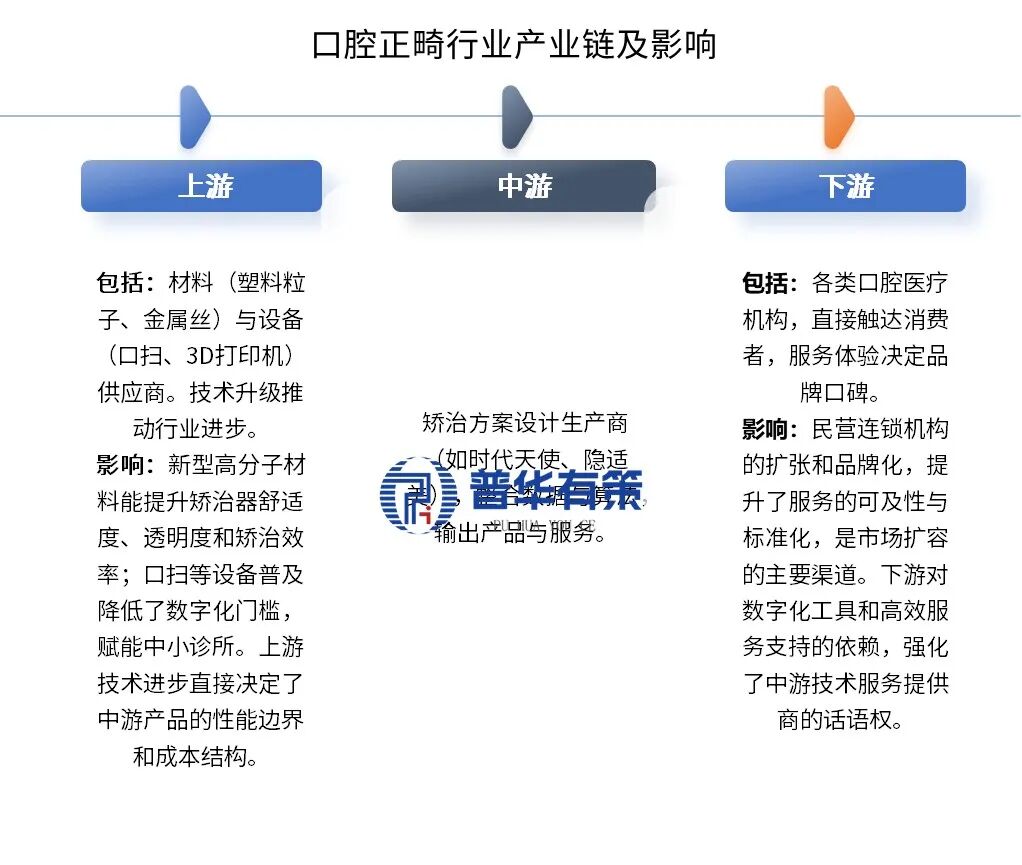
Core Insights - The orthodontic industry is experiencing a dual drive from aesthetic economy and health necessities, with significant advancements in AI and consumer engagement [1][21] - The industry has evolved into a cross-sector involving high-end medical device manufacturing, digital healthcare services, and personalized consumption [1][21] Industry Chain Summary and Impact - The orthodontic industry chain is clearly defined, with a "smile curve" distribution, where the midstream digital treatment solution design and service platform is the core of value creation and profit center [3][22] - The upstream includes medical polymer materials (e.g., TPU, PETG for invisible aligners), metal alloys (brackets, archwires), digital equipment (intraoral scanners, CBCT, 3D printers), and design software suppliers [3][22] - The downstream consists of various dental service institutions, which are the final value realization and customer touchpoints, with changes in the downstream landscape influencing the upstream and midstream [3][22] Competitive Landscape - The current competition in the industry shows a distinct characteristic of "high concentration in midstream, decentralized but accelerating integration in downstream" [4][23] - The midstream invisible aligner solution market has formed a solid "duopoly" with Align Technology (Invisalign) and Angelalign dominating the market, holding a significant share [4][23] - The private market is represented by chain institutions like Tongce Medical and Ruier Group, which are expanding market share through standardized management and brand building [5][23] Technology Level and Characteristics - The industry is at a stage of comprehensive digitalization and burgeoning intelligence [6][24] - Digital technology has become the industry infrastructure, with 3D scanning replacing traditional silicone impressions, and CBCT widely used for three-dimensional assessments [7][25] - AI is rapidly penetrating and deepening its application, significantly enhancing design efficiency and reducing communication costs between doctors and technicians [8][26] Development Trends - AI is expected to evolve from "assisting" to "empowering" core functions, enhancing predictive capabilities and treatment plan adjustments [10][28] - The integration of treatment scenarios is expanding from "orthodontics" to "overall oral health management," creating new treatment combinations [11][29] - The trend towards affordability and market penetration is expected to activate a large incremental population, especially in lower-tier cities [12][30] - Leading companies are shifting from merely selling products to providing comprehensive solutions that enhance customer engagement and data value [13][31] - Chinese companies are accelerating their global expansion, establishing competitiveness in the digital orthodontics field [14][32]
H@H(Hospital At Home):打破物理围墙,重塑全周期健康旅程
Ge Long Hui· 2026-01-30 00:29
Core Insights - The traditional healthcare system creates a "service gap" after patient discharge, particularly in oncology, where post-operative recovery and long-term support are often neglected [1] - As cancer is redefined as a manageable chronic disease, the industry is questioning whether healthcare services should remain confined within physical hospital walls [1] - Baize Medical (02609.HK) is implementing the H@H (Hospital At Home) model as a key strategy to extend healthcare services from "hospital-centric" to "continuous management" [1] Group 1: H@H Model - H@H is not merely an extension of traditional home care but represents a systematic upgrade in healthcare service models [3] - Unlike conventional home services focused on basic care, H@H enhances the "management, connection, and companionship" aspects of Baize's comprehensive service system [3] - The model shifts the responsibility of healthcare from just the hospitalization period to a more extended and continuous management of patient health [3] Group 2: Technological Infrastructure - The success of "medical at home" relies heavily on systematic, standardized, data-driven, and intelligent infrastructure [5] - Baize Medical's core advantage lies in its AI-ready digital infrastructure, which integrates real-world healthcare service needs [5] - The four-layer technology architecture allows for real-time data standardization and utilization, enabling proactive interventions in patient care [5] Group 3: Industry Shift - The emergence of H@H reflects a shift in the value orientation of oncology services, focusing on long-term quality of life and patient experience rather than just single treatment outcomes [7] - This transition is driven by changes in disease characteristics, demographic shifts, and evolving patient needs [7] - H@H signifies a profound paradigm shift in oncology care, where the boundaries of healthcare are redefined around the patient rather than physical structures [7]
中国远程医疗健康管理第一股登陆港交所,BFB HEALTH对标Hims本土化破局
3 6 Ke· 2026-01-23 02:41
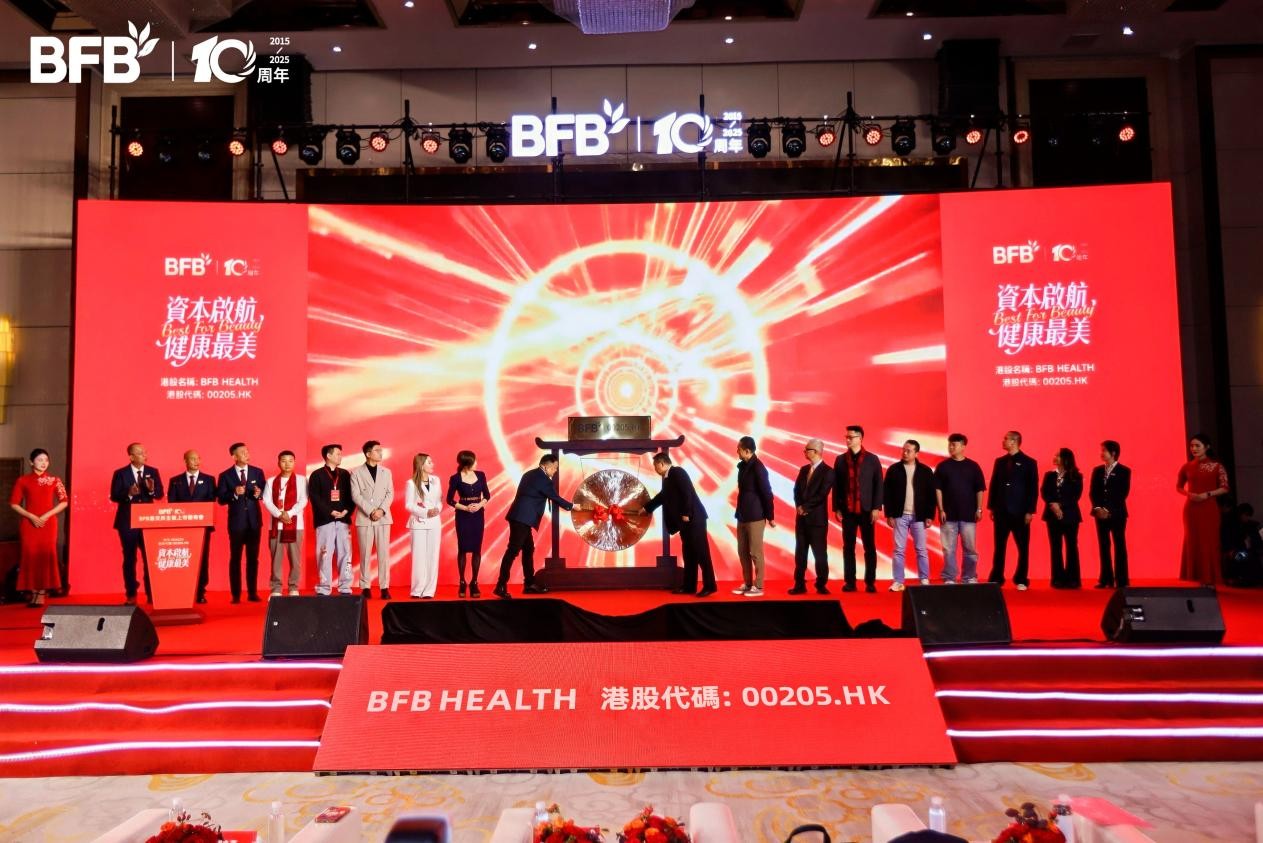
Core Viewpoint - BFB HEALTH, formerly known as 财讯传媒集团, has officially rebranded as "BFB HEALTH," marking its position as the first publicly listed company in China's remote medical health management sector, with a market capitalization exceeding 1.2 billion HKD [1][3] Group 1: Company Overview - The rebranding ceremony took place in Bozhou, Anhui, which is recognized as the "World Capital of Traditional Chinese Medicine" [1] - BFB HEALTH's stock closed at 0.99 HKD, indicating strong market interest and confidence in the company's future [1] - The company plans to allocate 50% of its secondary market financing towards AI upgrades and new drug development, while the other 50% will focus on product iteration, brand building, and upgrading intelligent production lines [1][5] Group 2: Market Context - The National Healthcare Security Administration issued guidelines for remote surgical assistance pricing, paving the way for the commercialization of remote medical services [3] - The remote medical market in China has surpassed 100 billion CNY, with a compound annual growth rate of over 25% [8] - BFB HEALTH fills a gap in the market as the first dedicated player in the remote medical sector on the Hong Kong stock exchange, leveraging its regional advantages in traditional Chinese medicine [3][4] Group 3: Business Model and Strategy - BFB HEALTH's business model mirrors that of U.S. telehealth giant Hims & Hers, focusing on a closed-loop system of online diagnosis, product services, and health management [4] - The company employs a "1+N" strategy, utilizing a cross-border drug purchasing platform to support multiple independent brands, thereby addressing diverse health needs and creating competitive advantages [5] - BFB HEALTH aims to enhance user engagement through a subscription model, similar to Hims, which locks in long-term users and stabilizes cash flow [4] Group 4: Industry Impact - BFB HEALTH is set to drive digital transformation in the healthcare industry by utilizing digital channels and AI technology, thus improving service efficiency and accessibility [6] - The company promotes personalized health services, shifting the industry focus from product-driven to user-centered approaches [6] - As the first private enterprise listed in Bozhou, BFB HEALTH is expected to stimulate local economic growth and attract related businesses, enhancing the regional healthcare ecosystem [7]
德生科技:助力医疗服务向数字化、智能化跃迁
Zheng Quan Ri Bao Zhi Sheng· 2026-01-08 13:43
Group 1 - The National Healthcare Security Administration has announced a plan to promote convenient payment methods such as facial recognition, QR code payments, mobile payments, and credit payments in medical settings, aiming to establish a convenient payment system for medical insurance within three years [1] - By 2026, the first pilot regions and designated medical institutions are expected to implement these payment methods, with full provincial coverage anticipated by 2027 and comprehensive promotion in eligible medical institutions by 2028 [1] - Desheng Technology Co., Ltd. claims that its "no-feeling payment" service aligns well with this policy, as the company accelerates the construction of an AI medical application ecosystem to support the digital and intelligent transformation of medical services [1] Group 2 - Desheng Technology's "no-feeling payment" project, developed in collaboration with Guangzhou Medical Insurance, won first prize in the 2025 National Smart Medical Insurance Competition [1]