First Bank

Search documents
The PNC Financial Services Group (NYSE:PNC) Conference Transcript
2025-11-07 16:35
Summary of PNC Financial Services Group Conference Call Company Overview - **Company**: PNC Financial Services Group (NYSE: PNC) - **Total Assets**: Approximately $569 billion - **Market Capitalization**: Over $70 billion - **Branches**: More than 2,200 across the United States - **Return on Tangible Common Equity**: Approximately 17% in the last quarter - **Business Segments**: Retail banking, corporate and investment banking, asset management [2][6][12] Key Points and Arguments Retail Banking Performance - **Deposits and Loans**: $243 billion in low-cost deposits and $97 billion in loans, serving over 15 million consumers and small businesses [6][12] - **Net Revenue**: Generated $15 billion in net revenue over the last 12 months, with a 14% compound annual growth rate in net revenue over the past three years [7][8] - **Expense Management**: Reduced direct expenses by nearly $300 million, maintaining a flat expense base and improving efficiency [8][20] Strategic Initiatives - **Branch Expansion**: Plans to expand branch builds to 300 by 2030, up from 200, reflecting strong business momentum [11][12] - **Market Presence**: Targeting to be at scale in 18 of the top 30 U.S. markets by the end of the decade, up from six today [12] - **Digital Growth**: Digital direct deposit switching and a new mobile app expected to roll out in the first half of 2026 [13][14] Customer Experience and Retention - **Client-Centric Strategy**: Focus on being the primary bank for customers, delivering outstanding service, and supporting clients' evolving financial needs [9][14] - **Net Promoter Scores**: Increased by 10 points over the last three years, indicating improved client retention [14] Investment Opportunities - **Affluent Client Base**: Managing close to $90 billion in investment assets with initiatives to unlock potential in the affluent segment [15] - **Credit Card Market**: Acknowledged underperformance in credit card offerings, with plans to enhance product offerings and grow market share [15][52] Financial Outlook - **Net Interest Income (NII)**: Expected growth of approximately $1 billion in 2026, driven by repricing of fixed-rate assets [31][32] - **Deposit Beta**: Anticipated cumulative deposit beta in the mid-40% range, with rates expected to continue decreasing [35] M&A Activity - **First Bank Acquisition**: Anticipated to close at the beginning of the year, expected to enhance PNC's position in Denver and Phoenix [57] - **Valuation Concerns**: Current stock valuation reflects investor caution regarding potential acquisitions, despite strong operating performance [58][59] Competitive Position - **Market Share**: PNC is positioned as a leading player in retail banking, competing effectively against larger banks [78][80] - **Client Selection**: Emphasis on maintaining high-quality loan portfolios with zero losses in key segments [82][85] Additional Important Insights - **Consumer Spending**: Current consumer spending remains robust, with a solid employment picture, despite economic turbulence [46] - **Branch Profitability**: New branches expected to break even within four years, contributing positively to profitability thereafter [68][70] This summary encapsulates the key insights and strategic directions discussed during the PNC Financial Services Group conference call, highlighting the company's performance, growth initiatives, and market positioning.

Wedding season boom set to drive Q3FY26 growth after festive spending spree
The Economic Times· 2025-11-07 00:00
Economic Growth and Consumer Demand - The economy is expected to grow at about 7% in the second quarter, supported by a spending surge following the implementation of lower GST rates on September 22 [2][10] - The third quarter is anticipated to be driven by consumer demand, particularly due to the festive and wedding season, with wedding-related expenditures estimated at ₹4.5-5 lakh crore [10][12] - Urban consumption has shown signs of recovery due to tax cuts, although it has been weak since last year [10][12] GST Impact and Economic Indicators - GST collections rose 4.6% year-on-year in October, reaching a five-month high of ₹1.96 lakh crore, indicating robust domestic demand [6][12] - The HSBC Manufacturing Purchasing Managers' Index (PMI) increased to 59.2 in October, reflecting strong domestic demand post-GST cuts [6][12] - Bank credit rose 11.5% year-on-year in mid-October, suggesting strong traction at the start of the festive season [12] Automotive and Consumer Durables Market - Approximately 470,000 cars, sedans, and SUVs were sold in October, marking a 17% increase from the previous year [7][12] - The waiting period for consumer durables has increased due to heightened demand, with estimates suggesting it may take 45 days for supply to normalize [7][12] Rural vs Urban Demand - Rural demand continues to support India's growth, with economists optimistic about its sustainability [9][12] - Urban demand remains a concern due to slower wage growth, which could impact overall consumption momentum [9][10] Global Economic Factors - US tariffs and a global growth slowdown may negatively affect services exports and hiring [11] - However, uncertainties related to tariffs and rising costs abroad could potentially benefit India's services sector through increased offshoring [11]



Best Value Stocks to Buy for Nov.5
ZACKS· 2025-11-05 09:56
Core Insights - Three stocks with strong value characteristics and a buy rank are highlighted for investors: SkyWest, Inc., Flex Ltd., and First Bank [1][2][3] Company Summaries - **SkyWest, Inc. (SKYW)**: - Zacks Rank: 1 - Current year earnings estimate increased by 3.8% over the last 60 days - Price-to-earnings ratio (P/E): 9.73, compared to 11.10 for the S&P 500 - Value Score: A [1][2] - **Flex Ltd. (FLEX)**: - Zacks Rank: 1 - Next year earnings estimate increased by 4% over the last 60 days - Price-to-earnings ratio (P/E): 20.61, compared to 25.17 for the industry - Value Score: A [2] - **First Bank (FRBA)**: - Zacks Rank: 1 - Current year earnings estimate increased by 2.3% over the last 60 days - Price-to-earnings ratio (P/E): 8.97, compared to 11.40 for the S&P 500 - Value Score: B [3]

Banking Pot: Is something hot brewing?
The Economic Times· 2025-11-03 03:30
Core Insights - There is a renewed global interest in India's private banking sector, driven by significant foreign direct investment (FDI) inflows, which have exceeded $6 billion recently [1][13] - The current environment presents both short-term tactical opportunities and a compelling long-term structural growth outlook for the banking sector [1][5] Short-Term Perspective - The private banking sector had been underperforming due to concerns over slippages and rising credit costs, particularly in unsecured and micro-lending segments, leading to a sharp de-rating [2][13] - Recent results from private banks indicate declining slippages, moderating credit costs, and accelerating loan growth, making current valuations attractive [2][13] Long-Term Perspective - Structural factors such as expected consumption revival from GST rationalization, income-tax relief, and anticipated RBI rate cuts suggest a stronger long-term growth trajectory for the banking sector [5][11] - Early signs of revival in private capital expenditure (capex) further enhance the long-term growth potential for banks [5][8] Market Dynamics - The Nifty Bank index is trading at record levels, indicating increased confidence in the banking sector, while the broader Nifty index struggles to reach its previous peak [6][7] - The divergence between the Bank Nifty and the benchmark Nifty suggests a strong recovery and potential leadership role for banking stocks in the next market rally [6][13] Factors Supporting Growth - Positive trends include the overall trajectory for Net Interest Margins (NIMs) due to deposit repricing, declining slippages, and expected acceleration in credit growth as rate-cut transmission nears completion [7][8] - The revival in private capex is seen as a critical factor for credit growth, although investor confidence remains cautious due to past experiences with private investment cycles [9][10] Macro Environment - The macroeconomic backdrop appears supportive, with recent GST cuts and a revival in rural demand expected to boost private investments [11][13] - The value of new private project announcements nearly doubled in the second quarter of FY26, indicating a potential turnaround in private investments [10][11]
ET Startup Awards 2025: There is a need to expand startups’ capital pool: IDFC First Bank CEO
The Economic Times· 2025-11-03 00:31
Core Insights - The low funding rate for new ventures in India is a significant concern, with only 40-50 out of approximately 1,000 startups receiving financing from venture capitalists, indicating a disturbing conversion rate and the likelihood of many viable ideas going unfunded [1][4]. Group 1: Funding Challenges - The current funding landscape is inadequate for the thriving startup ecosystem in India, necessitating an expansion of the capital base to support innovation and growth [2][4]. - There is a notable potential for disruption from startups emerging from campuses and tier-2 and -3 cities, highlighting the need for increased financial support [2][4]. Group 2: Recommendations for Capital Expansion - It is suggested that entities such as colleges, which are currently restricted from investing in venture capital funds due to their Section 8 (not-for-profit) status, should be allowed to invest to broaden the capital pool available for startups [3][4]. - The government has made progress in enhancing India's global image over the past decade, which could further support the startup ecosystem [3][4]. Group 3: Institutional Initiatives - IDFC First Bank is actively working on developing a technology stack aimed at catering to the needs of India's startups, indicating institutional efforts to bolster the startup ecosystem [4].
ET Startup Awards 2025: Maturing startups celebrate being the stock of the town
The Economic Times· 2025-11-03 00:30
Core Insights - Listing in India is now considered more profitable and exciting than in any other global market, driven by the demand from a population of 1.4 billion people [1][9] - The transition from private funding to public scrutiny is a significant milestone for startups, with IPOs being viewed as a pit stop in a longer journey [3][9] - The Indian startup ecosystem is characterized by constant disruption, with new entrants challenging established players [4][9] Industry Trends - The fashion market in India is valued at $120 billion, with a significant influence from 400 million Gen Z consumers [5][9] - Startups are increasingly focusing on large market opportunities rather than viewing competitors as duopolies [5][9] - The recognition of startups through awards like the ET Startup Awards is crucial for validation and support in a challenging entrepreneurial landscape [7][10] Company Highlights - Urban Company was awarded Startup of the Year, reflecting its significant customer satisfaction and innovative business model [6][9] - Lenskart's founder is actively involved in the IPO process, showcasing the growing trend of public listings among Indian startups [9] - Qure.ai and Minfy Technologies received awards for their innovative approaches in healthcare and revenue growth without external funding, respectively [10]

Microfinance is taking baby steps to recovery but there is a long walk ahead
MINT· 2025-11-03 00:20
Core Insights - The microfinance sector is slowly recovering from two years of stress, with improvements in bad loans and collections, but profitability remains challenging and growth is slow due to uneven recovery across states and lenders [15] Company-Specific Insights - Bandhan Bank is experiencing steady improvement in its microfinance portfolio, with a 30-day-plus delinquency ratio of 3.8%, below the industry average of 5.1%, and 90-day-plus delinquencies improved to 2.04% compared to 3% for the sector [2] - Bandhan Bank is cautious in expanding its microfinance portfolio, focusing on reducing concentration risk and increasing secured loans, with its emerging entrepreneurs business portfolio contracting 13% annually to ₹51,730 crore [2][3] - The secured loan book at Bandhan Bank currently makes up about 55% of total advances, expected to rise to 57-58% over the next 18 months [3] - IDFC First Bank anticipates stabilization of stress in its microfinance portfolio within the next six months, with gross slippages in the MFI book falling 9% sequentially in the September quarter [4] - IDFC First Bank's MFI business declined 42% annually to ₹7,306 crore, impacting income, but is expected to stabilize in the second half of the year [5] Industry Trends - The microfinance sector has seen most large players shrink their books by 25-50% over the past two years, primarily through write-offs, which has been termed cautious deleveraging [7] - CreditAccess Grameen reported accelerated write-offs of ₹554 crore related to overdue loans, indicating a need to clean up legacy stress [6] - Policy reforms have capped the number of lenders per borrower and restricted total indebtedness, which has reduced over-leverage but also slowed fresh lending [8][9] - Analysts expect collection efficiency to improve as disbursements rise, but near-term pressure is expected to persist due to erratic monsoon patterns affecting rural borrowers [10] - The upcoming state elections in Bihar raise concerns over potential political interference and debt waivers, although Bandhan Bank does not foresee a repeat of past disruptions [12][13] - Overall, analysts predict that larger banks and MFIs will recover first, with a slow and gradual journey towards normalcy expected for the sector [14]

Top gainers & losers today: Sensex, Nifty slip amid volatile session, PSU Bank stocks shine
BusinessLine· 2025-10-31 07:56
Market Overview - Equity benchmark indices experienced volatility with Sensex falling over 660 points intraday and Nifty 50 declining nearly 190 points, closing at 84,213.02 and 25,811.20 respectively [1] - The market breadth was slightly negative with 1,280 stocks advancing, 1,651 declining, and 104 remaining unchanged [4] Sector Performance - Most sectoral indices traded in negative territory, particularly metal, media, private banking, and IT stocks, while the PSU Bank index outperformed with a rise of over 2 percent [2] - Auto, FMCG, and oil & gas indices recorded modest gains [2] Stock Performance - Major gainers in the Nifty 50 pack included Eicher Motors, L&T, TCS, Bajaj Auto, Coal India, and SBI, while Cipla, Eternal, NTPC, Max Health, and IndiGo were among the major laggards [3] - Midcap stocks such as Union Bank, IDFC First Bank, Aurobindo Pharma, Yes Bank, and Bank of India gained between 3-6 percent, whereas Motilal OFS, Mphasis, Dabur, 360 ONE WAM, and Fortis fell by 2-6 percent [6] - Smallcap stocks like Navin Fluorine, IKS, MRPL, Welspun Corp, Star Health, and GE Ship surged by 3-14 percent, while Bandhan Bank, Devyani International, Sagility, Narayana Hrudayalaya, and Shyam Metalics dropped by 3-7 percent [6] 52-Week Highs and Lows - A total of 59 stocks reached their 52-week high, including Aditya Birla Capital, Canara Bank, IDBI First Bank, Indian Bank, and PB Fintech, while 35 stocks hit their 52-week low [4] Earnings Reactions - Shares of Swiggy, Dabur, Cipla, Navin Fluorine, and Canara Bank reacted to Q2 earnings numbers, with several companies including ACC, Bajaj Electricals, and Maruti Suzuki India set to announce Q2 results [7]

Shanghai Commercial Bank and HashKey Exchange Join Forces in Effort to Launch one of Asia’s First Bank and Licensed Digital Asset Exchange Co-Branded Visa Card
The Manila Times· 2025-10-31 04:45
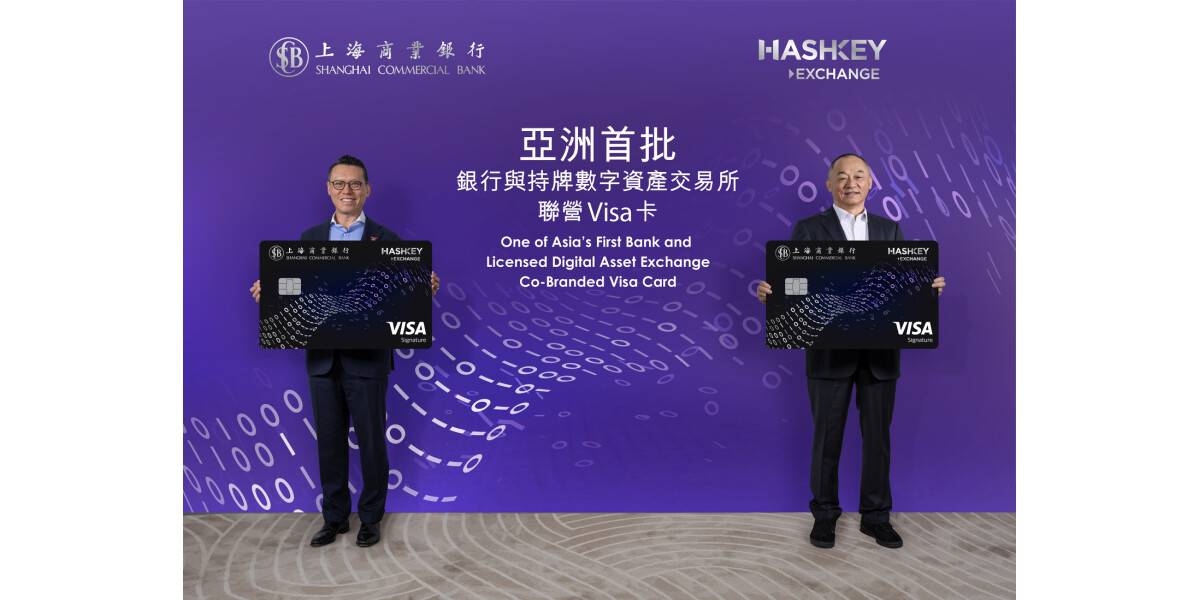
Core Insights - Shanghai Commercial Bank has partnered with HashKey Exchange to explore the integration of traditional finance with digital assets, marking a significant advancement in Hong Kong's fintech infrastructure [1][3][4] - The collaboration aims to launch one of Asia's first co-branded Visa credit cards that combines banking and digital asset services, featuring a dual rewards program [2][3][5] Company Overview - Shanghai Commercial Bank, established in 1950, is recognized as a prominent local Chinese bank in Hong Kong, serving corporations, SMEs, and high-net-worth individuals through a global network of 50 branches [8][9] - HashKey Exchange is a licensed virtual asset exchange in Hong Kong, compliant with regulatory standards, and aims to provide a secure trading platform for both professional and retail investors [12][13] Strategic Goals - The partnership will create a collaboration model between banks and virtual asset institutions under a robust regulatory framework, enhancing Hong Kong's status as an international financial hub [3][4] - Future cooperation will focus on market infrastructure, product innovation, and risk management to support the sustainable development of Hong Kong's digital finance ecosystem [4][6]
How First Interstate is responding to activist pressure
American Banker· 2025-10-30 21:31
Core Viewpoint - First Interstate BancSystem is under pressure from activist investor HoldCo Asset Management, which has made several demands regarding the bank's capital management and strategic direction, but the bank has not fully committed to these demands [1][5][10]. Company Strategy - First Interstate's management has stated that they are not focused on mergers and acquisitions, opting instead to use excess capital for share buybacks [2][3]. - The bank's President and CEO, Jim Reuter, emphasized the importance of executing their strategic plan and expressed confidence in the bank's future success [3][9]. - The bank is transitioning towards relationship banking and has exited non-core businesses, including indirect auto lending [9]. Financial Performance - For the third quarter, First Interstate reported a net income of $71.4 million, representing a 28.6% increase year-over-year, with earnings per share of $0.69, exceeding the consensus estimate of $0.62 [13]. - Average loans decreased to $16.4 billion, a 12% year-over-year decline, attributed to the run-off of non-core relationships and recent branch sales [14]. Capital Management - HoldCo has requested that First Interstate publicly declare a goal to reduce its Common Equity Tier 1 (CET1) ratio target to 10.3%, significantly lower than the current ratio of 13.9% [5]. - The bank's CFO indicated that they would align their CET1 ratio more closely with peers in the near term, but no specific commitments were made regarding HoldCo's demands [5][11]. Market Reaction - First Interstate's stock price fell by 0.73% on the day of the news, and it has seen a decline of approximately 3% year-to-date [15].