
Daimler Truck

Search documents
Daimler Truck's Adjusted Earnings, Revenue Drop on Challenging North America Market
WSJ· 2025-11-07 07:32
Group 1 - The company maintains its sales outlook for the year, expecting to sell between 410,000 to 440,000 units [1]

Aeva(AEVA) - 2025 Q3 - Earnings Call Transcript
2025-11-05 23:00
Financial Data and Key Metrics Changes - Revenue for Q3 2025 was $3.6 million, driven by ongoing sensor shipments and non-recurring engineering (NRE) contributions [16] - Non-GAAP operating loss decreased by 13% year-over-year to $27.2 million, reflecting a target to reduce full-year 2025 non-GAAP operating expenses by 10%-20% [16] - Gross cash use was $33.6 million in Q3, higher than the previous quarter due to timing of payments and working capital adjustments [16] - Total available liquidity at the end of September was $173.9 million, excluding a new $100 million investment from Apollo Global Management [16][17] Business Line Data and Key Metrics Changes - Aeva completed the development program with a top 10 global passenger OEM ahead of schedule and is in late-stage contract negotiations for a series production award [4][10] - Progress was made on the Daimler Truck production program, with initial vehicle builds completed and initial orders received for 2026 shipments [12] - The EVE 1D sensor has started shipping against initial orders of over 1,000 units, and the EVE 1V sensor was unveiled to expand the product line [5][13] Market Data and Key Metrics Changes - The precision sensing market is projected to be a multi-billion-dollar opportunity, with strong initial orders for the EVE 1V sensor from multiple customers [5][24] - The automotive market is seeing increased interest in Aeva's FMCW technology, particularly for Level 3 driving capabilities [10][54] Company Strategy and Development Direction - Aeva is focused on expanding its unified perception platform to meet growing demand across various applications, including automotive and precision sensing [6][18] - The company aims to leverage partnerships, such as with LG Innotek and Apollo Global Management, to enhance its market position and support scaling efforts [6][17] - Aeva's technology transition from Time-of-Flight to FMCW is expected to set a precedent for other OEMs, potentially accelerating interest in FMCW technology [10][54] Management's Comments on Operating Environment and Future Outlook - Management expressed confidence in closing the production program with the top 10 global passenger OEM and highlighted the potential for significant market validation [10][37] - The company anticipates strong momentum into 2026, supported by a robust balance sheet and ongoing commercial traction [6][18] - Management noted that the successful completion of the development program could serve as a blueprint for other OEMs, enhancing Aeva's competitive landscape [10][54] Other Important Information - Aeva announced a $100 million investment from Apollo Global Management in the form of convertible notes, which will provide additional capital for growth [6][17] - The company has established a strong liquidity position of approximately $270 million, enhancing its competitive advantage [18] Q&A Session Summary Question: Can you talk about the ramp in metrology sales? - Management noted strong market traction for the EVE 1D sensor and initial orders for the EVE 1V sensor, with a significant market opportunity projected in the multi-billion-dollar range [20][21][24] Question: Can you discuss the L2 ADAS opportunity in trucking? - Management highlighted the unique opportunity for Aeva's technology in Level 2+ applications, particularly through partnerships with key players like Bendix [26][30][31] Question: What is the timeline for the top 10 OEM program? - Management indicated that the timeline for the launch is on track for late 2027 to early 2028, with ongoing negotiations progressing positively [47][49] Question: What is the intended use of the $100 million investment from Apollo? - The investment is for general corporate purposes, aimed at supporting ongoing growth and capitalizing on market opportunities without significant increases in expenditure [44][45] Question: What factors are driving interest from other major OEMs? - Management cited the successful completion of the development program with the top 10 OEM as a catalyst for increased engagement from other automotive players [50][53]

Aeva(AEVA) - 2025 Q3 - Earnings Call Presentation
2025-11-05 22:00
Third Quarter 2025 Results © 2025 Aeva, Inc. Legal Disclaimer Forward-looking Statements This presentation contains certain forward-looking statements within the meaning of the federal securities laws. These forward-looking statements generally are identified by the words "believe," "project," "expect," "anticipate," "estimate," "intend," "strategy," "future," "opportunity," "plan," "may," "should," "will," "would," "will be," "will continue," "will likely result," and similar expressions. Forward-looking s ...
European earnings outlook brightens despite US-China tariff escalation
Yahoo Finance· 2025-10-14 13:38
Core Insights - Analysts have become more optimistic about European companies' third-quarter results, expecting a 0.5% year-on-year increase in earnings, an improvement from the previous week's forecast of a 0.2% decline [1] - Despite the positive revision, this performance is still projected to be the worst quarterly result since Q1 2024 [2] Earnings Expectations - The U.S. has announced a 100% tariff on imports from China and export controls on critical U.S.-made software, impacting earnings expectations for European companies [3] - Prior to the tariff announcements, analysts had anticipated a 12.5% growth in third-quarter earnings for European companies [3] Revenue Estimates - Approximately 72% of companies in Europe, the Middle East, and Africa have indicated price hikes due to increased global import taxes [4] - Third-quarter revenue estimates for European companies on the STOXX 600 have improved, now expected to rise by 0.4% year-on-year, compared to a previous forecast of a 0.3% decline [4] Company-Specific Developments - Investors are closely monitoring comments from companies regarding tariffs, with ASML and Volvo AB set to report earnings soon [5] - Michelin has reduced its full-year operating income guidance due to unfavorable business conditions in North America, affecting its stock and that of other European automotive suppliers [5]
Hino Motors and Mitsubishi Fuso to merge production operations in Japan
Yahoo Finance· 2025-10-10 15:42
Core Insights - Hino Motors and Mitsubishi Fuso Truck and Bus, subsidiaries of Toyota Motor and Daimler Truck respectively, are consolidating their production facilities in Japan as a preparatory step for their merger and the formation of a new holding company named Archion [1][2] Group 1: Production Consolidation - The consolidation will reduce the number of domestic truck production sites from five to three, focusing on the Kawasaki Plant, Koga Plant, and Nitta Plant [2] - Mitsubishi Fuso will close its Nakatsu plant, while Hino will transition its Hamura plant to Toyota [2] Group 2: Leadership and Structure - Archion's leadership includes Karl Deppen as CEO, Hetal Laligi as CFO, and Satoshi Ogiso as Chief Technology Officer [3] - Both Toyota and Daimler Truck hold a 25% stake in Archion, indicating strong backing for the new entity [3] Group 3: Strategic Goals - The merger aims to create synergies for more competitive products, cost-efficient operations, and faster time-to-market for new launches [5] - Savings from integration and improved efficiencies will be redirected towards investments in the CASE domain (Connected/Autonomous & Automated/Shared/Electric) [5] Group 4: Technological Development - Archion plans to develop a range of products across all zero-emission vehicle segments, leveraging the technological capabilities of Toyota and Daimler Truck [6] - The collaboration aims to accelerate the development of CASE technologies and enhance the future of commercial mobility [6]
The Trump Market: A Rollercoaster of Tweets, Tariffs, and “Just Kidding”
Stock Market News· 2025-10-08 18:01
Trade Policies and Market Reactions - The Trump administration announced a 25% tariff on imported heavy-duty trucks, effective November 1, 2025, causing a 2% drop in shares of Daimler Truck and a 2.4% drop in Traton [2] - Companies with significant domestic production, such as Volvo Group, saw a 3.5% increase in shares, while Stellantis, General Motors, and Ford experienced slight gains amid lobbying efforts [3] - A proposed 100% tariff on foreign-made films led to initial declines in shares of Netflix and Warner Bros. Discovery, but the market stabilized quickly, with Disney shares rising 1.1% [4][5] Healthcare Sector Impact - Trump's comments on the Affordable Care Act (ACA) subsidies lifted S&P 500 Health Care Stocks, with the Health Care Select Sector SPDR Fund and iShares U.S. Healthcare ETF up approximately 5.4% year-to-date [6] - Despite short-term gains for some pharmaceutical companies, a report warned that allowing ACA premium tax credits to expire could result in $32.1 billion in revenue losses for healthcare providers by 2026 [7] Agricultural Sector Developments - China halted purchases of U.S. soybeans, leading to a 51.29% drop in U.S. soybean exports to China, amounting to a $2.6 billion reduction [8] - Following Trump's mention of soybeans in upcoming U.S.-China negotiations, soybean prices rose 1.8%, reflecting market optimism despite ongoing trade tensions [9] Broader Market Trends - The S&P 500, Dow Jones Industrial Average, and Nasdaq Composite all experienced slight declines on October 7, 2025, with notable drops in stocks like Tesla and Oracle [10] - The market continues to adjust to unpredictable policy moves, with tariffs potentially raising prices for consumers while failing to improve the trade balance [11] - Overall, the market remains volatile, influenced by political rhetoric and policy changes, leading to a complex investment environment [12]

Daimler Truck's North America sales shrink in Q3
Yahoo Finance· 2025-10-08 09:07
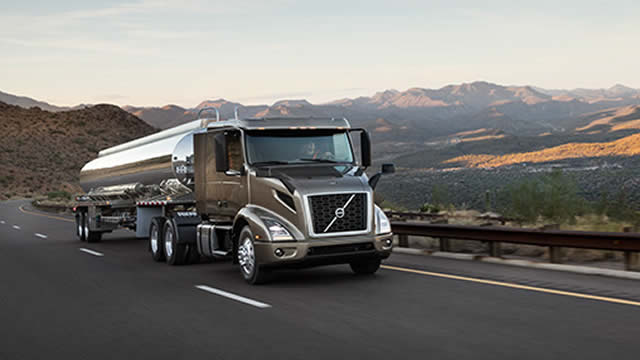
Group 1 - Daimler Truck's sales in the Trucks North America segment decreased by nearly 40% year-over-year, totaling 30,225 units in the third quarter [1] - Overall group sales for Daimler Truck fell to 98,009 trucks and buses from 114,917 in the same quarter last year [3] - Shares of Daimler Truck declined by 2% following the release of the sales results [1] Group 2 - The German automotive sector is currently facing challenges due to U.S. import tariffs, which are set to increase to 25% for medium- and heavy-duty trucks starting November 1 [2] - The initial announcement of the 25% tariffs, which was supposed to start on October 1, negatively impacted shares of Daimler Truck and its German competitor Traton [2] - Despite the tariffs, Daimler Truck has U.S. manufacturing capabilities and may benefit through its U.S.-based Freightliner division [3]
Trump’s Market Mayhem: A Daily Dose of Economic Whimsy
Stock Market News· 2025-10-03 06:00
Pharmaceutical Industry - President Trump's 100% tariff on branded pharmaceutical imports took effect on October 1st, causing initial declines in shares of European and Asian drugmakers, with Novo Nordisk experiencing the largest drop [2][3] - Pfizer announced a deal with the Trump administration to cut drug prices and invest $70 billion in U.S. research and manufacturing, receiving a three-year exemption from the tariffs, which led to a surge in its stock price [3][4] - Analysts suggest Pfizer's deal could serve as a model for other drugmakers, but caution that the financial impact may be more about optics than substantial change [4] Trucking Industry - A 25% tariff on heavy trucks imported from other countries began on October 1st, aimed at protecting U.S. manufacturers [5][6] - Shares of Daimler Truck and Traton fell by 2% and 2.4% respectively, with analysts estimating a potential €700-800 million impact on Daimler's earnings, though some losses could be offset by price increases [6] - Volvo Group, which produces all its U.S. trucks domestically, saw a 3.5% increase in shares, while analysts predict increased operational costs and reduced freight demand for trucking stocks like J.B. Hunt and UPS [6] Entertainment Industry - A 100% tariff on movies made outside the U.S. was announced, leading to declines in shares of Indian media stocks and major U.S. media companies, including Netflix and Amazon [9][10] - Analysts expressed concerns that the tariffs could lead to reduced content production and increased costs for consumers [10] Agriculture Sector - President Trump announced a meeting with Chinese President Xi Jinping to discuss agriculture, particularly soybeans, which led to a 1.3% increase in Chicago soybean futures [10][11] - Analysts noted that while the announcement provided support, the underlying issues caused by previous tariffs may not be resolved [11] Government Operations - The U.S. government shutdown began on October 1st, with a muted market reaction, as the S&P 500 saw a slight decline and the Nasdaq Composite managed a small gain [13][14] - Analysts viewed the shutdown as political theater with limited immediate impact, but some warned that the current economic conditions could make the situation more detrimental than in previous shutdowns [14]


Trump’s Market Mayhem: A Masterclass in Controlled Chaos
Stock Market News· 2025-09-28 18:00
Trade Policy Impact - President Trump announced new tariffs effective October 1, 2025, including 100% on imported branded pharmaceuticals, 25% on heavy-duty trucks, 50% on kitchen cabinets, and 30% on upholstered furniture, aimed at protecting domestic industries [2][3] - The pharmaceutical sector reacted variably, with domestic companies like Merck, Eli Lilly, and Johnson & Johnson seeing stock price increases due to exemptions for those investing in US manufacturing [3][4] - Asian pharmaceutical stocks, particularly Indian firms, faced declines, with Sun Pharma's shares dropping 5% and Biocon's by 3.3%, while the Nifty Pharma index fell 2.54% [4] Heavy-Duty Truck Industry - The 25% tariff on imported heavy-duty trucks negatively impacted European manufacturers like Daimler Truck, which could face a €700-800 million earnings hit, while American manufacturer Paccar Inc. saw stock gains of 5-7% [5] - Volvo Group, manufacturing all North American trucks domestically, also experienced stock price increases of nearly 3% [5] Kitchen Cabinets and Furniture - The 50% tariff on kitchen cabinets and 30% on upholstered furniture led to mixed market reactions, with domestic manufacturers like MasterBrand benefiting, while import-reliant retailers like RH and Williams-Sonoma suffered declines [6] Semiconductor Industry - A proposed policy requiring a 1-to-1 domestic-to-imported chip ratio boosted US chipmakers like Intel and GlobalFoundries, whose shares rose by 5.5% and 9% respectively, while Asian competitors saw declines of 2-6% [7] Market Reactions - The Dow Jones Industrial Average reached an all-time high of 42,313.00, while the S&P 500 and Nasdaq Composite experienced declines of 0.50% and 0.55% respectively [10] - Analysts noted that Trump's trade policy is seen as a tool for redistributing competitive advantage rather than a universal shock, leading to selective investment strategies [11]
Trump’s Tariff Tango: Markets Brace for Another Round of Economic ‘Surprises’
Stock Market News· 2025-09-26 18:00
Tariff Announcements - Former President Donald Trump announced new tariffs, including a 100% tariff on imported branded and patented pharmaceutical products, a 50% tariff on kitchen cabinets and bathroom vanities, a 30% tax on upholstered furniture, and a 25% levy on heavy trucks, effective October 1st [2][3][4] Pharmaceutical Sector Impact - Asian pharmaceutical stocks experienced declines, with Japan's Topix pharmaceutical index down 1% to 1.2%, and South Korea's SK Biopharmaceuticals shares falling 2.7% to 3.6% [3][4] - In India, the Nifty Pharma index plunged 1.81% to 2.45%, with Sun Pharma losing 2% to 2.55% and Wockhardt tumbling over 9% [4] - European pharmaceutical shares had a muted reaction, with Novo Nordisk slipping 1.9% to 3.49%, while Novartis stated the tariffs would have "no impact" due to a $23 billion investment in U.S. infrastructure [5] U.S. Pharmaceutical Companies - American pharmaceutical companies saw gains, with Eli Lilly rising 0.9% to 1.3% and Pfizer adding 0.2%, benefiting from the 100% tariff on imported drugs [6] Home Goods Sector Reaction - The home furnishings sector reacted negatively, with RH shares falling 2.6% to 5.4% and Wayfair initially slipping 3.5% to 6% but later recovering to a 0.9% gain [7][8] - American-based furniture manufacturers like La-Z-Boy and Ethan Allen Interiors saw gains due to the tariffs [8] Heavy Trucks Sector - The 25% tariff on heavy truck imports benefited American truck maker Paccar, whose shares surged 5% to 6%, while European counterparts like Daimler Truck and Traton saw declines [9] Broader Market Reaction - Despite the tariff news, the broader U.S. markets showed resilience, with the Dow Jones Industrial Average gaining 369 points (+0.8%) and the S&P 500 rising 36 points (+0.56%) [11] - The overall market reaction was described as "modest," indicating that markets have adapted to tariff announcements over time [11][12]
