Ford Motor

Search documents
How Quickly Can Ford Reverse This $16 Billion Problem?
The Motley Fool· 2026-02-19 04:15
Core Viewpoint - Investors are questioning when electric vehicle (EV) losses for Ford and General Motors will reverse, with Ford's significant losses since 2022 being a focal point [1][2]. Group 1: Financial Performance - Ford has incurred over $16 billion in losses on its EV business since 2022, with a reported loss of $4.8 billion in its Model-e division for the last quarter, showing a slight improvement from the previous year's loss of over $5 billion [2][3]. - The company anticipates further losses in its EV division, expecting to lose between $4 billion and $4.5 billion in 2026 [3]. - Ford's market capitalization stands at $56 billion, with a current stock price of $13.87 and a dividend yield of 5.31% [8]. Group 2: Strategic Outlook - Ford's next significant push in EVs is not expected until 2027, when a new production approach and Universal EV Platform will facilitate the launch of a midsize electric truck priced around $30,000 [7]. - The company does not expect to break even on its EV division until around 2029, as stated by the CFO during a conference call [7]. - The substantial losses in the EV sector highlight the importance of reversing these losses to allocate capital more effectively, potentially for high-return projects or shareholder returns [9]. Group 3: Competitive Landscape - Ford's early investment in EV strategies has been costly, with a $19.5 billion special charge taken to pivot its EV strategy, while General Motors has opted for share buybacks to enhance shareholder value [5][9]. - GM has initiated $10 billion in buybacks in 2023, with additional authorizations of $6 billion for 2024 and 2025, contrasting Ford's approach of returning value primarily through dividends [5].


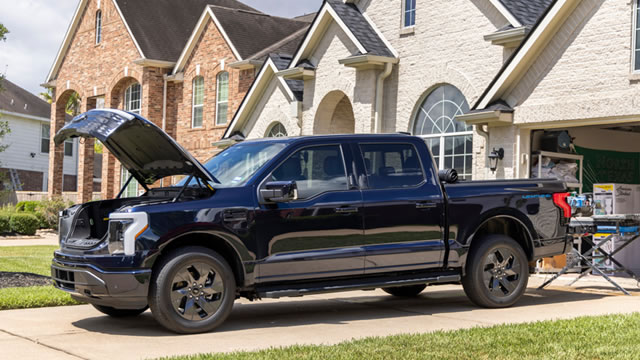
Ford turns to F1 and bounties to build a $30,000 electric truck
TechCrunch· 2026-02-17 23:43
Core Viewpoint - Ford aims to launch an affordable electric vehicle (EV) truck priced at $30,000 next year, leveraging innovative manufacturing techniques and a new production strategy to maintain profit margins while competing with Chinese automakers [1][4]. Group 1: Production Strategy - Ford's transition to affordable EVs began with a dedicated team led by a former Tesla employee, focusing on a new production system that will enhance manufacturing speed by 15% through a $2 billion investment in its Louisville factory [2]. - The company plans to utilize a universal EV platform (UEV) that will support various vehicle types, marking a strategic shift from previous models built on existing infrastructure [5]. - The UEV is designed for efficiency and affordability, aiming to make long-range electric travel accessible to a broader audience [6]. Group 2: Design and Engineering Innovations - The UEV will feature single-piece aluminum unicastings and lithium iron phosphate batteries, with technology licensed from China's CATL, to streamline production and reduce costs [3]. - Ford's design team, including ex-Formula 1 engineers, has developed a mid-sized EV truck that is 15% more aerodynamically efficient than current market offerings [11]. - The use of 3D-printed components allows for rapid prototyping and testing, significantly improving the design process and aerodynamics [12]. Group 3: Cost Efficiency and Features - The focus on efficiency has led to a design that allows for a smaller battery, reducing costs while providing an estimated 15% more range compared to gas-powered pickups [13]. - Ford's approach includes integrating multiple vehicle functions into five main electronic control units (ECUs), simplifying the architecture and reducing complexity and costs [15]. - The company has adopted a bounty program to incentivize engineers to prioritize efficiency in their designs, ensuring that cost reductions do not compromise value [9][10].

Ford Looks to Hit $30,000 EV Price Target by Shrinking Battery
Youtube· 2026-02-17 17:27
Core Insights - The company has developed a new Universal EV, focusing on cost engineering and efficiency improvements to remain competitive in the market [1][2] - The starting price of the new EV is set at $30,000, which is $20,000 lower than the average price of new cars in America, achieved through significant battery size reduction while extending the range by approximately 50 miles [2][3] - The timeline for the rollout includes a pickup truck launch in 2027, followed by the introduction of level three semi-autonomous features in 2028, which is unusual for a vehicle in this price range [4][5] Competitive Landscape - The company aims to counter the pricing and technological advantages of Chinese EV manufacturers, who offer vehicles at significantly lower prices, such as a $10,000 EV [6][7] - The strategy involves creating an affordable yet desirable vehicle with advanced features, positioning it against both price and technology competition from Chinese firms [8]

Ford's Stock Won't Stop Going Up
247Wallst· 2026-02-17 16:24
Core Viewpoint - Despite a significant $19.5 billion write-off related to electric vehicle (EV) challenges, Ford's stock continues to rise, indicating market resilience and potential investor confidence in the company's future strategies [1] Company Summary - Ford has incurred a substantial write-off of $19.5 billion due to mistakes in its EV strategy, highlighting the financial impact of its transition to electric vehicles [1] - The stock performance of Ford remains strong, suggesting that investors may be optimistic about the company's ability to recover and adapt in the evolving automotive market [1] Industry Summary - The electric vehicle market is facing challenges, as evidenced by Ford's financial write-off, which reflects broader industry struggles in transitioning to EVs [1] - Despite these challenges, the overall market sentiment towards Ford's stock indicates a potential turnaround in the EV sector, as investors may be looking for opportunities amidst the difficulties faced by traditional automakers [1]

Ford to follow Tesla Cybertruck with electrical tech in new EV pickup
CNBC· 2026-02-17 16:00
Core Viewpoint - Ford Motor is investing $5 billion in its next generation of all-electric vehicles, incorporating a 48-volt electrical architecture that was first commercialized by Tesla in 2023 [2][4]. Group 1: New Technology Implementation - The automotive industry has traditionally used a 12-volt system, which has led to issues and recalls for many electric vehicles (EVs). The new 48-volt architecture utilizes the EV's high-voltage battery to power accessories, improving efficiency and reducing wiring weight [3][4]. - The 48-volt system enhances electrical bandwidth and can be converted to 12 volts as needed through new electronic control units (ECUs) [4][14]. - Ford's new EVs will be based on a "Universal Electric Vehicle" (UEV) platform, aiming for cost parity with gas-powered vehicles through technological advancements [5][7]. Group 2: Competitive Strategy - Ford's CEO, Jim Farley, emphasized the company's commitment to competing against Tesla and expanding Chinese brands, referring to this initiative as a "Model T moment" for Ford [6]. - The new EVs are expected to reduce parts by 20%, fasteners by 25%, and assembly time by 15%, representing a significant shift in Ford's vehicle design and manufacturing processes [8][18]. Group 3: Market Context and Challenges - Despite a slowdown in U.S. EV sales, which peaked at 10.3% of the new vehicle market in September and dropped to an estimated 5.8% in the fourth quarter, Ford believes that its new pricing strategy will drive greater EV adoption [9][10]. - Ford announced $19.5 billion in write-downs related to a pullback in EV plans but remains committed to investing in its UEV platform through 2027 [12]. Group 4: Manufacturing Innovations - Ford is adopting gigacasting technology, which allows for the production of larger vehicle components, reducing the number of parts from 146 to just two for the new pickup [17][18]. - The new aluminum castings for the upcoming EV are reported to be over 27% lighter than those used in Tesla's Model Y, contributing to overall cost reductions in EV production [18].


Israel's ZIM workers ramp up strike in protest over Hapag-Lloyd takeover
Reuters· 2026-02-17 15:59
Core Viewpoint - Workers at ZIM Integrated Shipping Services have escalated their strike to demand job security guarantees following Hapag-Lloyd's announcement of its intention to acquire the Israeli shipping company [1] Group 1: Company Actions - ZIM Integrated Shipping Services workers halted all work on Tuesday as part of their strike efforts [1] - The strike is a response to Hapag-Lloyd's acquisition plans, indicating concerns over job security among ZIM employees [1] Group 2: Industry Context - The acquisition of ZIM by Hapag-Lloyd reflects ongoing consolidation trends within the shipping industry [1] - The strike highlights the potential impact of mergers and acquisitions on workforce stability in the shipping sector [1]

Why Ford Motor Company (F) is a Top Value Stock for the Long-Term
ZACKS· 2026-02-17 15:40
Core Insights - Zacks Premium offers tools for investors to enhance their stock market strategies, including daily updates, research reports, and stock screens [1][2] Zacks Style Scores - Zacks Style Scores provide a rating system for stocks based on value, growth, and momentum, helping investors identify securities likely to outperform the market in the short term [2][3] - Stocks are rated from A to F, with A indicating the highest potential for outperformance [3] Value Score - The Value Style Score focuses on identifying undervalued stocks using financial ratios such as P/E, PEG, and Price/Sales [3] Growth Score - The Growth Style Score assesses a company's financial health and future growth potential by analyzing earnings, sales, and cash flow [4] Momentum Score - The Momentum Style Score evaluates stocks based on price trends and earnings estimate changes, aiding investors in capitalizing on market momentum [5] VGM Score - The VGM Score combines Value, Growth, and Momentum scores, providing a comprehensive indicator for stock selection [6] Zacks Rank - The Zacks Rank is a proprietary model that uses earnings estimate revisions to identify stocks with high potential, with 1 (Strong Buy) stocks historically yielding an average annual return of +23.86% since 1988 [7][9] - There are over 800 stocks rated 1 or 2, making it essential for investors to utilize Style Scores to refine their selections [8] Stock Highlight: Ford Motor Company - Ford is rated 2 (Buy) on the Zacks Rank and has a VGM Score of A, indicating strong investment potential [11] - The company has a forward P/E ratio of 9.28, making it attractive to value investors [11] - Recent earnings estimates for fiscal 2026 have been revised upward, with the consensus estimate increasing by $0.10 to $1.52 per share, and an average earnings surprise of +1.2% [12]
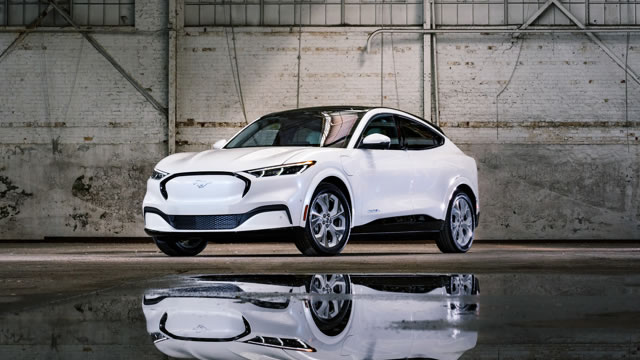
Detroit Automakers Take $50 Billion Hit as EV Bubble Bursts
WSJ· 2026-02-13 02:00
Core Insights - Companies are facing significant losses due to regulatory changes and a decline in demand for electric vehicles [1] Group 1: Industry Impact - Regulatory changes are prompting companies to reassess their electric vehicle production strategies [1] - There is a noticeable cooling in demand for electric vehicles, leading to adjustments in capacity [1] Group 2: Company Actions - Companies are taking substantial losses as they navigate the current market conditions [1] - In response to the changing landscape, companies are making moves to reduce electric vehicle capacity [1]

Ford Government passing the buck on university funding – students, workers and economy will pay the price
Businesswire· 2026-02-12 20:13
TORONTO--(BUSINESS WIRE)--The Ontario government made a funding announcement today that will continue deep staff cuts, rising tuition fees and increased student debt. "The minister was long on scapegoating, but short on funding. Ontario has the worst university funding in Canada, and he's passing the blame for his own cuts to other levels of government, and passing more and more of the costs onto the students, who are already graduating with record debt loads,†said Fred Hahn, president of CUPE. ...

Ford CEO Jim Farley knew the EV pain would be bad but the 'punch line' is a $4.8 billion loss
Fortune· 2026-02-12 16:40
Core Viewpoint - Ford Motor Company is experiencing significant challenges in its electric vehicle (EV) segment, with CEO Jim Farley predicting a substantial decline in EV market share due to the expiration of federal tax credits, which could reduce EV sales to 5% of the industry from the current 10% to 12% [1][2] Financial Performance - Ford reported a $4.8 billion operating loss for its Model E electric vehicle unit, with expectations of an additional loss of $4 billion to $4.5 billion in 2026, pushing the break-even target to 2029 [1] - The company anticipates approximately $7 billion in special charges over 2026 and 2027 related to the transition away from its previous EV strategy [5] Market Strategy - Ford is shifting its focus to the "high volume, affordable end of the market," specifically targeting the $30,000 to $35,000 price range for EVs, contrasting with the previous focus on higher-priced electric trucks and SUVs [4] - The company is moving away from building EVs solely to meet regulatory targets, emphasizing a more consumer-driven approach [3] Consumer Trends - There is a growing consumer preference for "partial electrification," with hybrids gaining popularity over pure EVs, now accounting for over 20% of Ford's U.S. sales mix [7] - JD Power reported that affordability remains a significant pressure in the car sales market, with average monthly finance payments reaching $760, contributing to depressed EV retail sales [6] Operational Strengths - Ford's commercial division, Ford Pro, generated $6.8 billion in EBIT for the year, helping to subsidize losses from the electric vehicle segment [6] Political and Economic Environment - The current political landscape is volatile, with Ford acknowledging a partnership with the administration and a reset in emission standards as key factors for 2026 [8] - The company faced an unexpected $1 billion hit in the fourth quarter due to late-year changes in tariff credits for auto parts, complicating its financial outlook [9]