Reliance Industries

Search documents
Stock markets rise for second day on gains in bank, IT stocks
The Hindu· 2026-02-17 11:18
Market Performance - Stock markets closed higher for the second consecutive session, with the BSE Sensex rising by 173.81 points, or 0.21%, to close at 83,450.96, and the NSE Nifty advancing by 42.65 points, or 0.17%, to settle at 25,725.40 [1][4] Sector Performance - Major gainers among the Sensex constituents included ITC, Bharat Electronics Ltd., Larsen & Toubro, Infosys, Asian Paints, Titan, Adani Ports, HCL Technologies, Sun Pharmaceuticals, Maruti Suzuki India, IndiGo, State Bank of India, and Tech Mahindra [2] - Conversely, stocks that ended with losses included Eternal, Tata Steel, Trent, Reliance Industries, Mahindra & Mahindra, Bajaj Finserv, Axis Bank, Bharti Airtel, Kotak Mahindra Bank, and Hindustan Unilever [2] Broader Market Indices - Broader indices also showed positive movement, with the BSE Smallcap Select Index rising by 0.49% and the Midcap Select Index gaining 0.26% [3] Foreign and Domestic Investment - Foreign institutional investors sold equities worth ₹972.13 crore, while domestic institutional investors purchased stocks worth ₹1,666.98 crore [4] Commodity Prices - Brent crude, the global oil benchmark, fell by 0.79% to $68.13 per barrel [4]

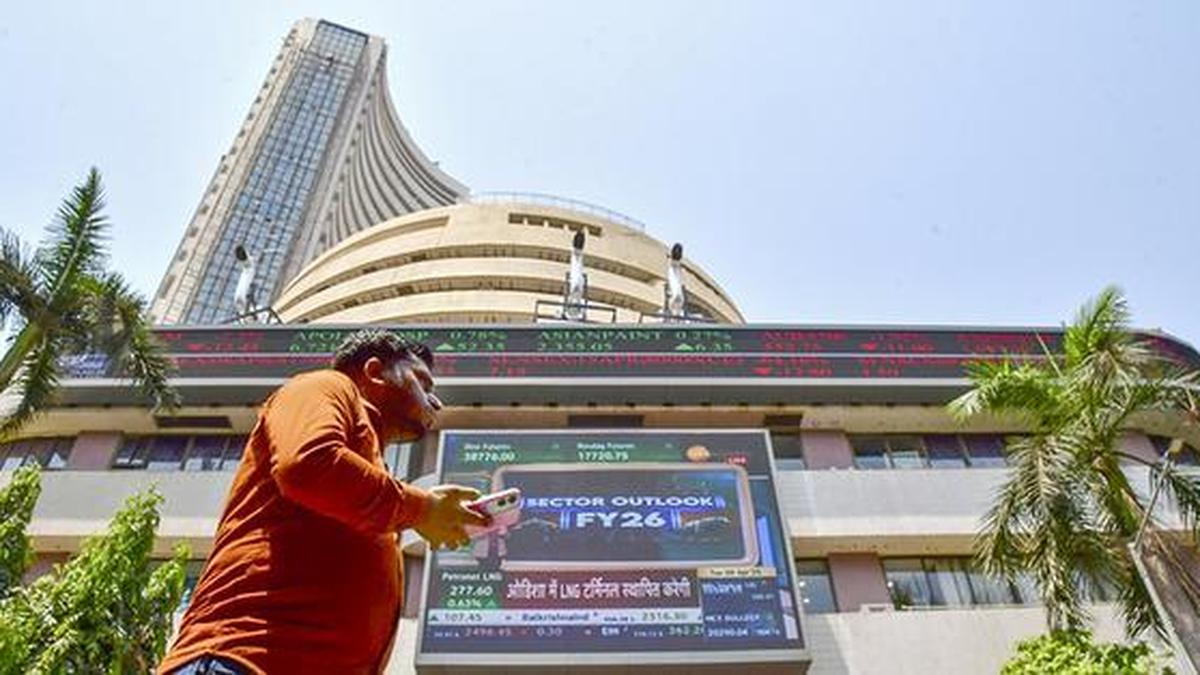
SBI’s 70% rally narrows valuation gap with HDFC Bank, ICICI — buy, hold or book profits?
The Economic Times· 2026-02-17 04:28
Core Viewpoint - State Bank of India (SBI) has experienced a significant re-rating, with its price-to-book (P/B) multiple rising to 2.41, reflecting improved fundamentals and strong earnings visibility, positioning it favorably among public sector banks [1][10]. Valuation Metrics - SBI's current P/B multiple of 2.41 is lower than HDFC Bank's 2.69 and ICICI Bank's 2.92, indicating a valuation gap despite comparable return ratios [1][10]. - A year ago, SBI's P/B stood at 1.35, showcasing a substantial increase in valuation over the past year [10]. Earnings Performance - SBI reported a 24% year-on-year growth in standalone net profit, amounting to Rs 21,028 crore in the third quarter, while net interest income (NII) increased by 9% year-on-year to Rs 45,190 crore [12][16]. - The bank's return on equity (ROE) is projected at 16-17%, and return on assets (ROA) is above 1%, both of which are higher than SBI's historical averages [5][12]. Market Position - SBI has recently surpassed Tata Consultancy Services (TCS) to become India's fourth-largest company by market capitalization, with a valuation exceeding Rs 11 lakh crore [6]. - Within the Nifty Bank index, SBI has outperformed most large-cap peers, with only AU Small Finance Bank and Canara Bank delivering higher one-year returns [8][16]. Analyst Insights - Kranthi Bathini from WealthMills Securities considers SBI fairly valued and a preferred pick in the PSU banking space, expecting continued investor interest in government-owned banks [2][11]. - Abhinav Tiwari from Bonanza highlights SBI's favorable near-term risk-reward profile, citing its valuation comfort and earnings visibility as key factors [4][12]. - Dr. Ravi Singh from Master Capital Services notes that while SBI is no longer deeply undervalued, it is trading above long-term averages, with future returns likely driven by stronger ROE rather than further multiple expansion [9][16]. Growth Outlook - Analysts expect a potential upside of 10-20% for SBI over the next 12 months, with gradual price growth anticipated rather than sharp increases [11][16]. - Loan growth guidance for SBI is set at 13-15% on a substantial Rs 38 lakh crore book, indicating strong earnings visibility moving forward [5][12].

Stock markets rebound nearly 1% on buying in power, banking stocks
The Hindu· 2026-02-16 11:38
Market Performance - Equity benchmark indices Sensex and Nifty rebounded sharply by nearly 1% on February 16, 2026, driven by strong buying in power, banking, and financial stocks [1] - The 30-share BSE Sensex jumped 650.39 points, or 0.79%, closing at 83,277.15 [1] - The 50-share NSE Nifty advanced 211.65 points, or 0.83%, settling at 25,682.75 [2] Sector Performance - PowerGrid emerged as the top gainer in the Sensex pack, rising 4.45%, with other notable gainers including HDFC Bank, Axis Bank, NTPC, ITC, Asian Paints, Bajaj Finserv, Bharti Airtel, Adani Ports, Tata Steel, Kotak Mahindra Bank, Reliance Industries, and State Bank of India [2] - The power sector gained on expectations of sustained demand momentum, while improved loan growth and stable asset quality bolstered confidence in banks [4] Global Market Influence - A continued decline in the U.S. 10-year yield, following benign inflation data, strengthened expectations of a Fed rate cut later this year, influencing investor sentiment [5] - Stability in the rupee and range-bound crude oil prices ahead of U.S.-Iran talks provided additional support to domestic equities [5] Investor Activity - Foreign institutional investors sold equities worth ₹7,395.41 crore on February 14, 2026, while domestic institutional investors purchased stocks worth ₹5,553.96 crore [7]

US grants two licences to global companies in Venezuela oil sector
Yahoo Finance· 2026-02-16 11:02
Core Insights - The US has relaxed sanctions on Venezuela's energy sector, allowing global energy companies to resume operations and negotiate new contracts following the removal of President Nicolas Maduro [1] Group 1: Sanctions and Licenses - The US Treasury Department's OFAC issued general licenses to companies like Chevron, bp, Eni, Shell, and Repsol, enabling them to operate oil and gas projects in Venezuela [2] - A separate license allows international companies to engage with PDVSA for new investments, requiring additional permits from OFAC and excluding transactions with entities in Russia, Iran, or China [3] Group 2: Company Responses and Developments - Chevron stated that the new General Licenses and changes in Venezuela's Hydrocarbons Law are crucial for developing Venezuela's resources and enhancing regional energy security [4] - India's Reliance Industries has secured a general license from the US to purchase Venezuelan oil directly, facilitating a shift from Russian crude to discounted Venezuelan oil [5] Group 3: Economic Strategy and Future Prospects - The relaxation of sanctions is part of a broader strategy to support Venezuela's economic recovery and responsible investment, with a $100 billion reconstruction plan aimed at revitalizing the oil industry [6] - ExxonMobil and ConocoPhillips are evaluating potential re-entry into Venezuela after their assets were expropriated in 2007 [7]


Buy 2 Vanguard Index Funds to Beat the S&P 500 in the Next Decade, According to Wall Street Analysts
The Motley Fool· 2026-02-16 09:12
Core Viewpoint - Goldman Sachs anticipates that European and emerging-market equities will outperform the U.S. stock market over the next decade, with the S&P 500 projected to return 6.5% annually compared to 7.5% for European stocks and 12.8% for emerging-market stocks [1][2]. European Equities - European stocks are expected to achieve a 7.5% annual return, driven by strong earnings growth, a high dividend yield of approximately 3%, and stock buybacks [2]. - The Vanguard FTSE Europe ETF tracks around 1,200 companies in Europe, with significant weight in financials (24%), industrials (19%), and healthcare (13%) [5]. - Over the past decade, the S&P 500 outperformed the Vanguard FTSE Europe ETF, returning 335% (15.8% annually) compared to 174% (10.5% annually) for the European ETF [5][6]. - Analysts believe that European stocks, trading at cheaper valuations, could outperform U.S. stocks due to the historical expense of U.S. equities and a projected decline in the U.S. dollar relative to the euro [6]. Emerging-Market Equities - Emerging-market stocks are projected to return 12.8% annually, bolstered by strong earnings growth in China and India [2]. - The Vanguard FTSE Emerging Markets ETF measures the performance of about 6,200 companies, with a focus on technology (29%), financials (21%), and consumer discretionary (12%) [9]. - The Vanguard FTSE Emerging Markets ETF returned 162% (10.1% annually) over the last decade, significantly lagging behind the S&P 500, which returned 335% [9][10]. - Analysts expect emerging-market stocks to outperform due to stronger earnings growth, higher dividend yields, and a weakening U.S. dollar against emerging-market currencies [10]. Investment Options - The Vanguard FTSE Europe ETF has a low expense ratio of 0.06%, making it a cost-effective option for investors seeking exposure to European equities [8]. - Similarly, the Vanguard FTSE Emerging Markets ETF also features a low expense ratio of 0.06%, which is significantly lower than the average expense ratio of 1.13% for similar funds [11].
Q3 scorecard: OMCs, banks drove India Inc's steepest profit rise in 8 qtrs
Business· 2026-02-15 17:40
Core Insights - The net profits of listed companies grew 14.7% year-on-year in Q3FY26, marking the fastest growth in the last eight quarters [1] Financial Performance - Adjusted net profits of the 3,353 companies in the Business Standard sample increased to approximately ₹3.97 trillion in Q3FY26 from ₹3.47 trillion in Q3FY25 and ₹3.67 trillion in Q2FY26, reflecting a growth of 14.7% year-on-year [2] - Reported net profits showed a slower growth of 9.5% year-on-year in Q3FY26, down from 11.9% in Q3FY25 and 33.4% in Q2FY26 [5] Sector Contributions - Indian Oil Corporation (IOC) was the largest contributor to earnings growth in Q3FY26, accounting for 22.4% of incremental earnings growth, with net profits rising nearly eightfold to ₹13,007 crore from ₹1,630 crore a year earlier [6][7] - The State Bank of India reported a 24.5% year-on-year increase in net profits, contributing 8.1% to corporate earnings growth [8] - Other significant contributors included Bharat Petroleum Corporation (6.8%), Tata Steel (4.8%), and HDFC Bank (3.8%), with these five companies together accounting for nearly 46% of incremental earnings growth [9][10] Sector Performance - Cyclical sectors accounted for 56.2% of corporate profits in Q3FY26, up from 53.3% a year earlier and 55.8% in Q2FY26 [12] - Traditional earnings leaders like Reliance Industries, Tata Consultancy Services, and Infosys underperformed with below-par earnings growth [13] Revenue and Cost Analysis - Net sales of all companies increased by 8.9% in Q3FY26, reaching around ₹41.17 trillion, the fastest growth in the last 11 quarters [16] - Non-cyclical sectors saw net sales growth of 10.9% year-on-year in Q3FY26, slightly up from 9.2% in Q3FY25 [17] - The Ebitda margin for companies outside the BFSI sector decreased by 20 basis points year-on-year to 17.9% of revenues [19] - Interest expenses as a percentage of revenues fell to 2.7% in Q3FY26 from 2.9% in Q3FY25, indicating a decline in interest burden [21]

Mutual funds go big on private banks in January amid market volatility
Business· 2026-02-15 16:49
Investments in these three stocks accounted for 45 per cent of net equity purchases by MFs in January. According to data from the Securities and Exchange Board of India (Sebi), MFs invested a total of ₹40,514 crore in equities during the month. The three banking stocks also ranked among the top additions by MF schemes over the past three months, the analysis showed. Private-bank stocks, particularly major names such as HDFC Bank, have been drawing renewed investor interest as valuations softened follow ...

Mcap of 6 of top-10 valued firms erodes by ₹3 lakh cr; TCS, Infosys biggest laggards
BusinessLine· 2026-02-15 06:45
Market Valuation Decline - The combined market valuation of six of the top 10 valued firms decreased by more than ₹3 lakh crore last week, with Tata Consultancy Services (TCS) and Infosys being the largest contributors to this decline [1] - The BSE benchmark index fell by 953.64 points, or 1.14 percent, over the past week [1] Major Firms Affected - TCS's market valuation dropped by ₹90,198.92 crore to ₹9,74,043.43 crore, while Infosys's valuation decreased by ₹70,780.23 crore to ₹5,55,287.72 crore [2] - HDFC Bank's market valuation fell by ₹54,627.71 crore to ₹13,93,621.92 crore, and Reliance Industries' valuation declined by ₹41,883 crore to ₹19,21,475.79 crore [3] - Life Insurance Corporation of India's market capitalization decreased by ₹23,971.74 crore to ₹5,46,226.80 crore, and Bharti Airtel's valuation dropped by ₹19,244.61 crore to ₹11,43,044.03 crore [3] Firms with Increased Valuation - State Bank of India's market capitalization increased by ₹1,22,213.38 crore to ₹11,06,566.44 crore [3] - Bajaj Finance's market capitalization rose by ₹26,414.44 crore to ₹6,37,244.64 crore, and Larsen & Toubro's valuation increased by ₹14,483.9 crore to ₹5,74,028.93 crore [4] - ICICI Bank's market capitalization grew by ₹5,719.95 crore to ₹10,11,978.77 crore [5] Ranking of Valued Firms - Reliance Industries remains the most valued firm, followed by HDFC Bank, Bharti Airtel, State Bank of India, ICICI Bank, Tata Consultancy Services, Bajaj Finance, Larsen & Toubro, Infosys, and Life Insurance Corporation of India [5]

India doubles down on state-backed venture capital, approving $1.1B fund
Yahoo Finance· 2026-02-14 16:23
Core Insights - India has approved a $1.1 billion state-backed venture capital program aimed at funding startups through private investors, focusing on high-risk sectors like artificial intelligence and advanced manufacturing [2] Group 1: Program Details - The ₹100 billion fund received cabinet approval over a year after being proposed in the January 2025 budget speech, allowing for the deployment of government funds into the startup ecosystem [3] - This program is structured as a fund of funds, which means the government will indirectly support startups by investing in private investment firms, with a focus on deep-tech and manufacturing startups that require longer investment horizons and larger capital [4] Group 2: Startup Growth - The number of startups in India has surged from fewer than 500 in 2016 to over 200,000 today, with more than 49,000 startups registered in 2025 alone, marking the highest annual total on record [5] Group 3: Regulatory Changes - Recent changes to India's startup rules have extended the classification period for deep-tech companies as startups to 20 years and increased the revenue threshold for startup-specific benefits to ₹3 billion (approximately $33 million) from ₹1 billion [6] Group 4: Upcoming Events - The approval of the venture capital program coincides with the upcoming India AI Impact Summit, which will feature participation from global AI companies and Indian corporates, highlighting India's attractiveness as a market for tech expansion [7]
Sensex crashes over 1K points on selling in metal, IT stocks
Rediff· 2026-02-13 12:12
Market Overview - Benchmark equity indices Sensex and Nifty experienced a decline of more than 1 percent due to a broad selloff, particularly in metal, IT, and commodity stocks, reflecting sluggish global market conditions [3][4][9] - The 30-share BSE Sensex fell by 1,048.16 points, or 1.25 percent, closing at 82,626.76, with an intraday low of 82,534.55 [3] - The 50-share NSE Nifty dropped by 336.10 points, or 1.30 percent, settling at 25,471.10, hitting an intraday low of 25,444.30 [4] Sector Performance - Major laggards among Sensex constituents included Hindustan Unilever, Tata Steel, Tata Consultancy Services, and HCL Technologies, while Bajaj Finance and State Bank of India were the only gainers [5][6] - Profit-booking was observed in metal stocks amid a stronger dollar index, influenced by geopolitical developments regarding Russia's return to the US-dollar settlement system [10] Analyst Insights - Analysts noted that domestic equities ended lower due to weak global cues and concerns over upcoming US inflation data [7] - Sentiment from the US-India trade deal has diminished, with renewed fears of AI-driven disruption affecting risk appetite, particularly for Indian IT firms reliant on the labor arbitrage model [7][9] - The cautious market tone led to negative performance across all major indices, with most sectors closing in the red [9] Asian Market Performance - Asian markets, including Hong Kong's Hang Seng, Shanghai's SSE Composite, Japan's Nikkei 225, and South Korea's Kospi, also ended in negative territory [11] - Foreign institutional investors purchased equities worth Rs 108.42 crore, while domestic institutional investors were net buyers of stocks worth Rs 276.85 crore [11]