
Taiwan Semiconductor Manufacturing Company

Search documents
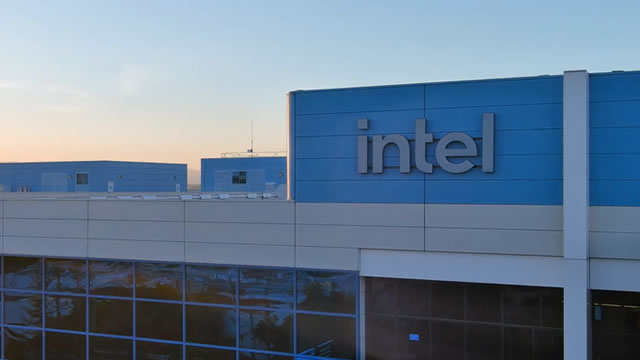
Intel Foundry's Moment of Truth: Will 18A Deliver?
MarketBeat· 2025-03-06 13:11
Core Insights - Intel is at a critical juncture with reports indicating that NVIDIA and Broadcom are evaluating its advanced 18A manufacturing process, which is pivotal for Intel Foundry Services and its IDM 2.0 strategy [1][2][3] - The market reacted negatively to Intel's foundry comeback bid, with stock prices dropping nearly 7%, reflecting the high stakes and uncertainty surrounding this endeavor [2][11] - The 18A process is Intel's most advanced technology, aimed at reclaiming technological leadership and potentially surpassing competitors like TSMC and Samsung [2][9] Group 1: Foundry Services and Market Position - Securing NVIDIA and Broadcom as clients would validate Intel's technology and significantly enhance its credibility in the foundry market [3][4] - These companies are considered "anchor clients" that could drive substantial revenue and attract additional customers, positioning Intel as a serious contender in the foundry space [4][6] - Current evaluations by NVIDIA and Broadcom are preliminary and do not guarantee long-term contracts, making the outcome uncertain [5][6] Group 2: Internal Innovations - Intel continues to innovate with the launch of Xeon 6 processors, which offer improved performance and efficiency, particularly for AI applications [7][8] - The Xeon 6 launch demonstrates Intel's commitment to maintaining a competitive edge while pursuing its foundry ambitions [8][10] Group 3: Challenges and Market Dynamics - The semiconductor foundry industry is highly competitive, with established players like TSMC and Samsung creating significant barriers for Intel [9][10] - Intel Foundry Services is still in its early stages, and achieving profitability and market share will be a long and challenging process [10][12] - Despite potential rewards, the path to success in the foundry market requires patience and exceptional execution amid intense competition [10][12] Group 4: Investor Sentiment and Stock Forecast - The stock market's response to Intel's news has been volatile, with lingering skepticism from analysts regarding Intel's turnaround and financial challenges [11][14] - Analysts have set a 12-month price target of $26.88 for Intel, indicating a potential upside of 29.17% from current levels [13][14] - A strategic approach is recommended for investors, focusing on tangible metrics such as customer wins and improvements in manufacturing processes [15][16]


Taiwan Semiconductor: To Keep On Outperforming
Seeking Alpha· 2025-03-06 07:39
Taiwan Semiconductor Manufacturing Company (NYSE: TSM ) currently produces the most advanced chips in the world, and it's shaping up to continue dominating in the near-, mid- and long term with high yield on its most advanced processes, a well-defined roadmapBorn and raised in Belgium and graduated with a masters in Nanoscience, Nanotechnology and Nano-Engineering from the university of Leuven. I did my master thesis at the research center IMEC and started working as an opto-mechanical engineer for about 4. ...

TSMC: The Backbone Of The AI Industry Continues To Be Undervalued
Seeking Alpha· 2025-02-28 14:27
Group 1 - The article highlights the successful performance of Taiwan Semiconductor Manufacturing Company (TSMC) since the initiation of coverage in January 2024, indicating a profitable investment opportunity [1] - The focus is on identifying high-quality companies with a market capitalization of less than $10 billion that have the potential for significant growth through capital reinvestment [1] - The investment strategy emphasizes a long-term perspective, aiming for higher returns compared to market indices, while occasionally pursuing favorable risk-reward opportunities [1] Group 2 - The analyst holds a beneficial long position in shares of TSM, NVDA, AMD, and ASML, indicating confidence in these companies' future performance [2] - The article is authored independently, with no compensation received other than from Seeking Alpha, ensuring the opinions expressed are personal and not influenced by external business relationships [2]
Here's how analysts reacted to Nvidia's (NVDA) earnings report
Finbold· 2025-02-28 11:25
Core Viewpoint - Nvidia reported strong fiscal fourth-quarter earnings, surpassing revenue and EPS expectations, but faced a significant sell-off due to a weaker-than-expected gross margin forecast [1][2][4]. Financial Performance - Nvidia posted $39.33 billion in revenue and an adjusted EPS of $0.89, exceeding analyst expectations of $38.05 billion and $0.84 EPS [1]. - The company guided for $43 billion in revenue for the first quarter, surpassing the $42.3 billion expected by analysts [1]. Market Reaction - Following the earnings report, Nvidia's stock experienced an 8.5% decline, erasing nearly $250 billion from its market cap and pushing it below the $3 trillion mark [2]. - As of the latest update, NVDA shares were trading at $120.15, reflecting a 13% decline since the start of the year [3]. Gross Margin Concerns - The primary trigger for the stock sell-off was Nvidia's first-quarter gross margin forecast of 71%, which fell short of Wall Street's expectation of 72.1% [4]. - CFO Colette Kress indicated that gross margins would remain in the low 70s during the initial ramp-up of Blackwell, with expectations to return to the mid-70s later in the fiscal year [5][6]. Analyst Sentiment - Despite the sell-off, analysts remain optimistic about Nvidia's long-term growth, citing strong AI demand and rapid adoption of Blackwell GPUs [6][7]. - BofA Securities reiterated a 'Buy' rating and raised its price target to $200, emphasizing Nvidia's leadership in AI despite challenges [7]. - Piper Sandler maintained an 'Overweight' rating with a $175 price target, highlighting overwhelming demand for Blackwell AI chips [10]. Revenue Growth and Future Outlook - Blackwell contributed $11 billion in data center revenue in Q4, indicating strong demand that may keep the company sold out through 2025 [10]. - Analysts expect margins to rebound to the mid-70% range by year-end, with continued confidence in Nvidia's long-term growth prospects [11][12]. - Morgan Stanley described Nvidia's growth as 'remarkable' despite transitional challenges, noting that Hopper still accounted for two-thirds of data center revenue [13][14].

