Ford Motor

Search documents
Opinion | Why Ford Can't Find Mechanics
WSJ· 2025-11-17 22:55
Core Viewpoint - The article emphasizes that reshoring manufacturing in the U.S. is heavily dependent on the availability of skilled workers, suggesting that without a skilled workforce, the efforts to bring manufacturing back will be ineffective [1] Group 1: Skilled Workforce - The current shortage of skilled workers is a significant barrier to reshoring manufacturing [1] - Companies are facing challenges in finding employees with the necessary technical skills to operate advanced manufacturing technologies [1] - The need for investment in education and training programs is highlighted as essential for developing a skilled workforce [1] Group 2: Manufacturing Trends - There is a growing trend among companies to consider reshoring as a strategy to mitigate supply chain risks [1] - The article points out that while reshoring is a priority, it cannot be achieved without addressing the skills gap [1] - The potential economic benefits of reshoring are contingent upon the ability to fill skilled positions within the manufacturing sector [1]


Automakers Embed AI Across Factory, Car Systems
PYMNTS.com· 2025-11-17 22:45
Core Insights - The automotive industry is increasingly adopting artificial intelligence (AI) to address rising vehicle complexity, software integration, and safety expectations [1][3] - Approximately 75% of automakers plan to integrate generative AI into vehicles in the current year, indicating a shift from experimental pilots to full-scale deployment [3] Design and Production - Ford is restructuring its enterprise-IT architecture to unify data pipelines across engineering, manufacturing, and connected-vehicle services, enabling real-time design adjustments based on vehicle performance [4] - AI-driven inspection systems at Ford utilize computer vision to identify issues on the factory line that human inspectors may overlook, enhancing quality control [5] - BMW employs its AIQX quality platform to monitor assembly operations, allowing for mid-process interventions to reduce defects and operational delays [6] - General Motors collaborates with Nvidia to use digital models for early identification of assembly behavior and layout constraints, shifting manufacturing from reactive to proactive planning [8] Safety and Mobility - Automakers are leveraging AI to analyze real driving conditions and driver responses to enhance road safety, with Toyota studying early risk indicators to update route choices and hazard information dynamically [9] In-Cabin Experience - The automotive sector is utilizing AI to improve in-vehicle controls, with a focus on reducing driver distraction from complex interfaces [10] - Kia's AI voice assistant allows for direct adjustments to navigation and climate controls, minimizing the need for drivers to navigate through multiple screens [11] - Mercedes-Benz, in partnership with Google Cloud, has enhanced its MBUX assistant to support conversational interactions, making vehicle interfaces more intuitive and responsive [12]
Ford Turns to Amazon to Drive Online Used Car Sales
PYMNTS.com· 2025-11-17 19:31
Core Insights - Ford has partnered with Amazon Autos to enhance the accessibility of its used vehicle offerings, allowing customers to search, finance, and purchase Ford Blue Advantage certified pre-owned vehicles through Amazon's platform [2][3] Group 1: Partnership Details - The collaboration enables customers to browse local dealer inventories directly on Amazon's website, complete most paperwork online, and schedule vehicle pickups [2] - Each vehicle in the program is backed by a Ford Blue Advantage warranty, ensuring it has undergone a thorough inspection and includes roadside assistance [3] Group 2: Program Rollout - The program is initially launching in Los Angeles, Seattle, and Dallas, with plans for expansion to additional markets [3] - Amazon's automotive market began in December of the previous year, initially allowing the purchase of new Hyundai vehicles, and has since expanded to include used cars and partnerships with other companies like Hertz [4] Group 3: Industry Trends - The automotive industry is seeing a shift towards omnichannel retailing, as consumers often research vehicles online before visiting dealerships, leading to a fragmented buying experience [5] - Companies like Cox Automotive are developing platforms to create a seamless digital experience that follows consumers throughout their car-buying journey [6]

Ford launches certified pre-owned vehicle sales on Amazon Autos
Proactiveinvestors NA· 2025-11-17 17:57
About this content About Emily Jarvie Emily began her career as a political journalist for Australian Community Media in Hobart, Tasmania. After she relocated to Toronto, Canada, she reported on business, legal, and scientific developments in the emerging psychedelics sector before joining Proactive in 2022. She brings a strong journalism background with her work featured in newspapers, magazines, and digital publications across Australia, Europe, and North America, including The Examiner, The Advocate, ...
You can now buy a certified pre-owned Ford on Amazon
Business Insider· 2025-11-17 16:52
Core Points - Ford has partnered with Amazon to allow customers to browse, buy, and complete paperwork for certified pre-owned vehicles on Amazon Autos [1] - The service is currently available in Los Angeles, Seattle, and Dallas, with plans for expansion [2] - Ford offers a 14-day or 1,000-mile money-back guarantee on the vehicles purchased through this platform [2] Company and Industry Summary - Approximately 160-180 local dealers have expressed interest in the program, with around 20 already participating [2] - Amazon facilitates the transaction, while the dealers manage all follow-up processes [3] - Ford's stock decreased by about 1% and Amazon's stock fell by approximately 0.5% following the announcement [3] - This initiative follows a similar deal between Amazon and Hyundai, which included plans to integrate Amazon's Alexa into Hyundai vehicles [3] - In August, Hertz also announced plans to sell pre-owned vehicles on Amazon, starting in four cities [4]
Ford (NYSE: F) Price Prediction and Forecast 2025-2030 (November 2025)
247Wallst· 2025-11-17 15:25
Shares of  Ford Motor Company ( NYSE: F ) gained 9.65% over the past month after gaining 2.32% the month prior. ...
Wall Street Is in Love With Ford
247Wallst· 2025-11-17 14:45
Core Insights - Ford Motor Co. shares have increased by 32% this year, outperforming the S&P 500, which has risen by 14% [1] Company Performance - The significant rise in Ford's stock price marks a turnaround after years of poor performance [1]
F vs. GM: Which Auto Giant Is the Better Investment After Q3?
ZACKS· 2025-11-17 13:46
Core Insights - General Motors (GM) and Ford (F) are two leading American automakers that have shown resilience through economic cycles and are transitioning towards electric and software-defined vehicles, with both companies reporting better-than-expected results in Q3 2025 [1][2] Q3 Results Review - Ford's Q3 2025 adjusted EPS was 45 cents, exceeding the Zacks Consensus Estimate of 38 cents but down from 49 cents in the previous year. Consolidated revenues reached $50.5 billion, a 9.3% increase year-over-year, with total automotive revenues at $47.2 billion, surpassing the estimate of $42.7 billion [4] - General Motors reported an adjusted EPS of $2.80, beating the Zacks Consensus Estimate of $2.28 but down from $2.96 a year ago. Revenues were $48.59 billion, exceeding the estimate of $43.61 billion but slightly lower than $48.76 billion from the previous year [6] Growth Drivers - Ford Pro is a significant growth driver for Ford, supported by strong demand for Super Duty trucks and expanding software and service offerings, with paid subscriptions increasing by 8% to 818,000 in Q3 [5] - GM's software and services business is gaining momentum, with approximately $2 billion in revenues recognized year-to-date from offerings like Super Cruise and OnStar, and deferred revenues reaching $5 billion, up over 90% year-over-year. OnStar's subscriber base grew 34% to over 11 million [7] Outlook - GM has raised its free cash flow (FCF) and EPS guidance for 2025, forecasting adjusted automotive FCF at $10-$11 billion and adjusted diluted EPS at $9.75-$10.50, indicating a stronger 2026 [8][9] - Ford has reduced its 2025 EBIT and free cash flow outlook due to supply disruptions from a fire at Novelis' aluminum plant, expecting a fourth-quarter EBIT headwind of $1.5-$2 billion and a free cash flow impact of $2-$3 billion [10] Balance Sheet - GM had total automotive liquidity of $35.7 billion as of September 30, 2025, while Ford ended Q3 with over $54 billion in liquidity. GM has a lower long-term debt-to-capitalization ratio compared to Ford [11] Dividend and Buyback Appeal - Ford offers a high dividend yield of over 4%, targeting distributions of 40-50% of FCF, while GM's dividend yield is less than 1%. GM has repurchased over $3.5 billion in stock year-to-date, enhancing shareholder value [12][13] Valuation - Ford is trading at a forward earnings multiple of 9.74X, above its five-year median of 7.48X, while GM's forward earnings multiple is at 6.26X, slightly above its median of 5.54X [14] EPS Estimates - Ford's 2025 EPS consensus indicates a year-over-year decline of 41.3%, while GM's 2025 EPS consensus implies a decline of 3%, with both companies expected to see an uptick in 2026 [17][18] Investment Recommendation - GM is viewed as a stronger investment option due to its upgraded guidance, expanding software revenue, and disciplined cost management, while Ford faces challenges from supply disruptions and a projected EPS decline [19][20]


Ford Unveil New High-Tech Head Quarters
Medium· 2025-11-17 11:02
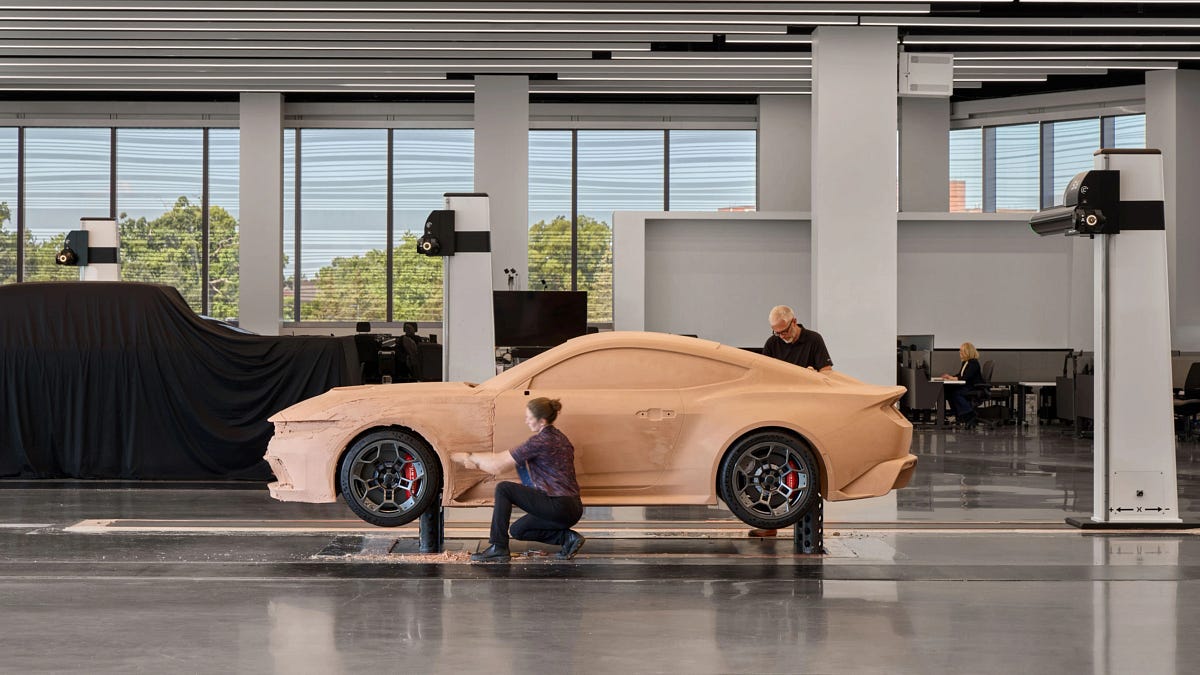
Core Viewpoint - Ford Motor Company has unveiled a new high-tech World Headquarters in Dearborn, Michigan, marking its first major headquarters relocation in approximately 70 years [1] Group 1: Overview of the New Headquarters - The new facility spans about 2.1 million square feet and aims to centralize design, engineering, and corporate functions that were previously spread across the Dearborn campus [1] - The headquarters is designed to accommodate around 4,000 employees, while the broader Dearborn campus will maintain thousands more within walking distance [2] Group 2: Building Features - The new headquarters is roughly double the size of Ford's previous "Glass House" headquarters and is situated on the former site of Ford's product development center [2] - The layout is intended to foster collaboration among product designers, software and AI talent, and other corporate teams [2] Group 3: Showroom - A key feature of the new building is a dramatic vehicle showroom referred to as the "crown jewel," which serves as a decision-making forum for executives and designers to view, evaluate, and approve new vehicles and concepts [4]
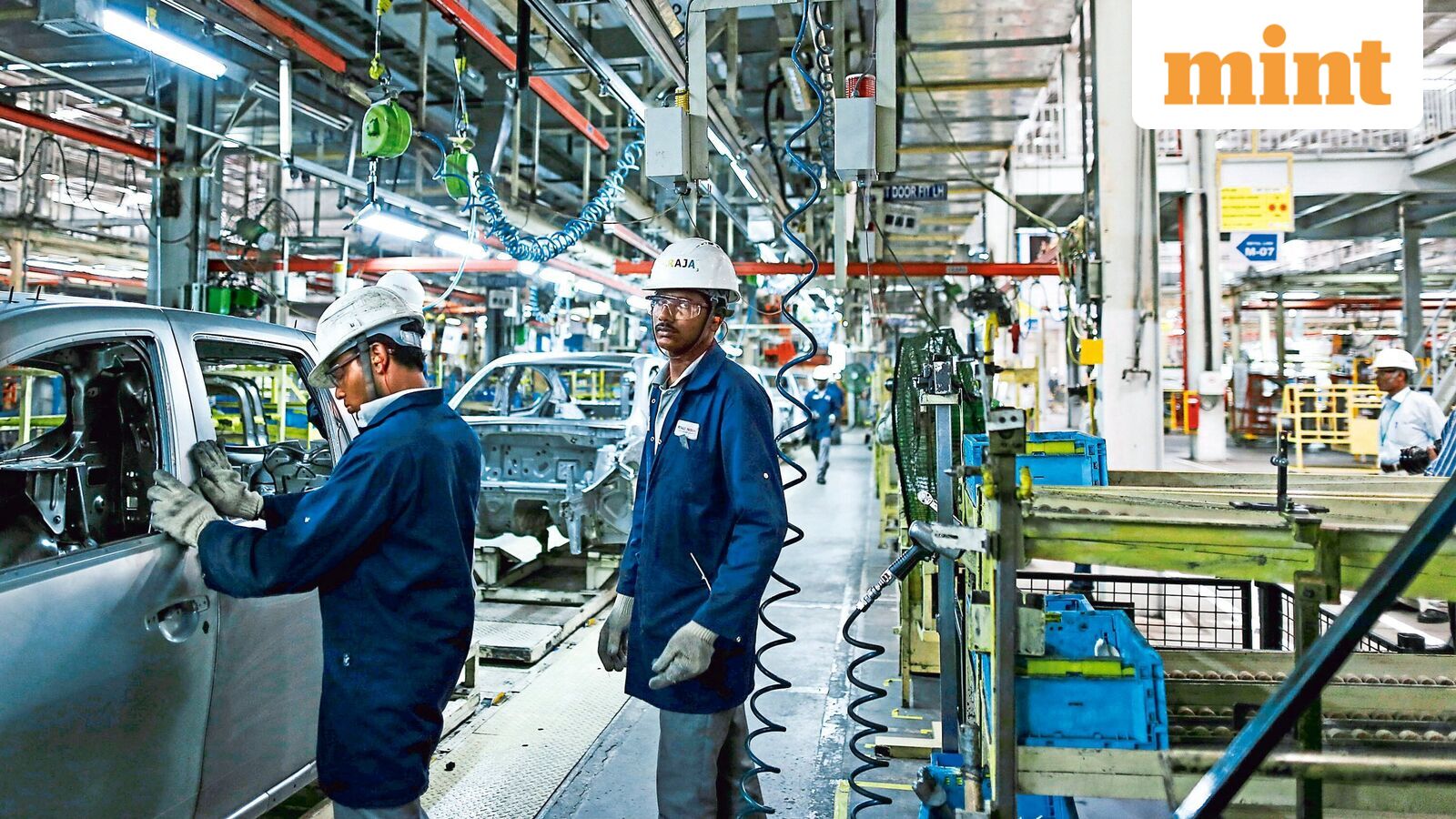
In India’s car labs, Chinese models are the new benchmark
MINT· 2025-11-17 00:30
Core Insights - The Indian automotive industry is increasingly benchmarking against Chinese carmakers, particularly in the electric vehicle (EV) sector, as they lead in technology and consumer-centric design [2][4][11] Industry Trends - Chinese vehicles like Xiaomi SU7, BYD Seal, Nio ET, and Zeekr 7X are becoming the focus of benchmarking efforts in India, reflecting a shift from traditional European and American models [2][3] - The approach of Chinese manufacturers often involves designing software first, prioritizing consumer convenience, which contrasts with the traditional hardware-first methodology [5] Competitive Advantages - Chinese automakers are noted for providing premium features at lower price points, making advanced technologies such as ADAS and smart cockpit designs more accessible [6][7] - Over the past decade, Chinese companies have invested significantly in building EV ecosystems, with an estimated $143 billion spent on EV and battery projects, supported by government subsidies [8] Market Perception - Social media comparisons highlight the technological advancements of Chinese vehicles, showcasing superior performance in various tests against established European brands [9] - Executives from major automotive companies, including Ford, have expressed surprise at the rapid technological advancements made by Chinese manufacturers [10] Future Outlook - Indian companies are expected to use Chinese benchmarks for EV technology, which is seen as beneficial due to the similarities in market conditions between India and China [11] - There is optimism within the Indian automotive sector that as EVs become mainstream, India may also set benchmarks for global companies [12]