ICICI Bank

Search documents
SBI completes divestment of 13.19% stake in Yes Bank to SMBC
BusinessLine· 2025-09-17 09:37
The State Bank of India (SBI) on Wednesday said it has received ₹8,889 crore from the divestment of about 413.44 crore equity shares of Yes Bank Ltd (YBL), being equivalent to 13.19 per cent (approximately) of the latter’s shares to Sumitomo Mitsui Banking Corporation (SMBC), at ₹21.50 per equity share.This inflow will buoy the Bank’s other income in the second quarter (Q2FY26), according to analysts. Post the divestment, SBI will continue to remain a shareholder in YBL with a shareholding of 10.8 per cent( ...

Dreamfolks exit: Is your credit card blocked from airport lounges?
MINT· 2025-09-17 07:25
Core Insights - Dreamfolks Services has exited the lounge access business in India, which is expected to disrupt lounge access for credit card users of select banks, particularly affecting customers of smaller banks [1][8] - The company faced increasing competition and market changes, leading to the withdrawal of major lounge operators from its network [2][3] - Major clients like ICICI Bank, Axis Bank, and IDFC FIRST Bank have shifted to other platforms, contributing to Dreamfolks' decline [4][5] Company Overview - Dreamfolks previously acted as an intermediary between banks, credit card issuers, and airport lounge operators, facilitating access for millions of travelers [2] - The company has been under pressure from new competitors, including TFS and Adani Digital's LoungeOne [3] - The loss of key lounge operators and clients has significantly impacted Dreamfolks' business model [4][6] Market Dynamics - ICICI Bank and Axis Bank have partnered with LoungeOne, which operates across 16 airports, affecting Dreamfolks' customer base [4] - IDFC Bank has directed its debit card customers to use Elite Assist by TFS for lounge access, while credit card users have not received similar guidance [5] - Customers with super premium credit cards that include Priority Pass membership can still access lounges, but smaller banks may face challenges until new partnerships are established [7][8]


Switching careers? 5 smart ways personal loans can fund your education, relocation and training
MINT· 2025-09-16 07:26
Core Insights - Personal loans serve as a strategic financial tool for individuals undergoing career changes, providing immediate funds for education, training, relocation, and other expenses [1][9] - The unique selling proposition of personal loans includes quick digital approvals and minimal documentation, making them accessible during urgent financial needs [2][6] Key Benefits of Personal Loans - Quick availability of funds eliminates long waiting periods, facilitating timely career transitions [6] - Flexible repayment tenures, typically ranging from 3 to 12 months, accommodate variations in cash flow [6] - Loan amounts can reach up to ₹50 lakh, supporting various costs such as education and living expenses [6] - Options for EMI holidays and interest-only payments enhance the borrowing experience, especially during career transitions [6] - Fixed EMIs simplify repayment processes, aiding in financial planning during transitions [6] Considerations Before Applying - Eligibility for personal loans is influenced by factors such as credit scores, employment stability, repayment history, and income levels [4] - A transparent loan application detailing career plans and intended fund usage can improve approval chances [4] - Borrowers should carefully assess EMIs, total tenure, and associated costs to avoid financial stress [5] - It is advisable to apply for loans while employed to enhance eligibility and secure better terms [5] - Planning for emergencies alongside EMIs is crucial for maintaining financial stability during uncertain times [5] Interest Rates and Processing Fees - Interest rates for personal loans vary by bank, with Canara Bank offering rates from 9.95% to 15.40%, and HDFC Bank starting at 9.99% [8] - Processing fees also differ, with some banks charging up to 2% of the loan amount or fixed fees ranging from ₹1,000 to ₹15,000 [8]
Deposits used to be safer than loans for banks. Now they are spooking lenders
MINT· 2025-09-16 00:15
Mumbai: Not too long ago, Indian banks were scrambling to shore up deposits to fuel credit growth. Now, they are more willing to advance loans despite the inherent risk of default than competing for depositors. The reason: digital fraud and fund diversion. Bankers say rising cases of dormant accounts being misused as mule accounts are keeping lenders on their toes. Mule accounts act as conduits for sending and receiving funds that do not belong to the account holder. They usually remain dormant but can see ...
Personal loans can help cover medical expenses with quick approval, flexible repayment and essential financial support
MINT· 2025-09-15 12:50
Medical emergencies such as accidents, unwanted surgeries, and health complications can often result in unexpected and significant expenses. It can strain finances and make things complicated.In all such cases, personal loans can provide a timely, sound, and viable solution for covering medical bills. They can enable borrowers to access funds quickly and seamlessly without collateral. The lending institution also provides adequate time so that borrowers can manage repayments over comfortable periods. Such p ...

GST reforms set to reignite consumption growth, spur corporate profitability
The Economic Times· 2025-09-15 01:00
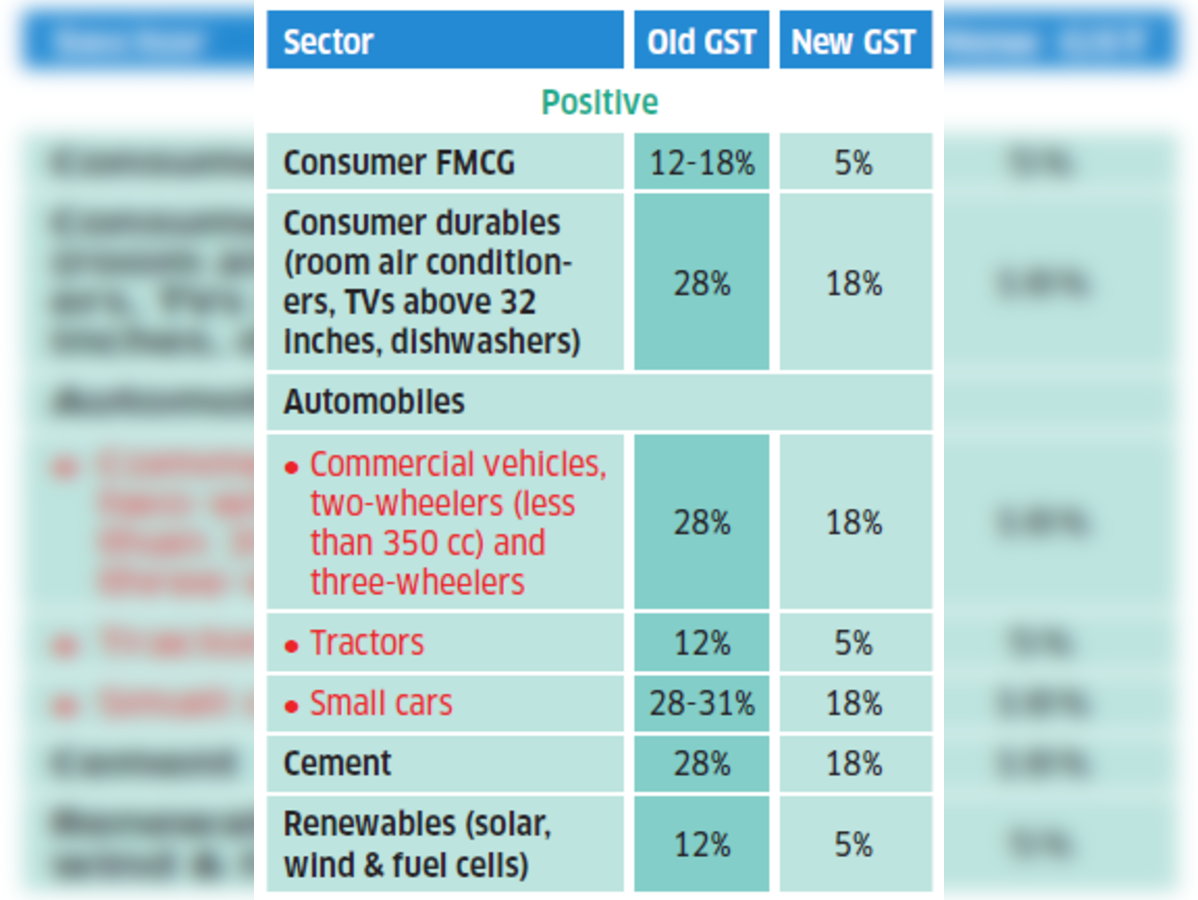
Consumption Sector - The recent GST reforms are expected to boost affordability and consumption across rural and urban markets, with around 90% of items moved from higher to lower tax slabs [1][38] - Experts anticipate a premiumisation effect among low- and middle-income households, as savings on essential goods will redirect purchasing power towards high-value consumption [2][38] - The consumption sector is projected to recover over the next 12-15 months, with private consumption growth expected to rise by 40-50 basis points in the second half of the current financial year [4][41] Corporate Profitability - Lower prices from GST reforms will create volume acceleration for producers, supporting profit margins and leading to an anticipated overall profitability increase of 1-1.5% relative to 2024-25 earnings [5][41] - The reforms are expected to stimulate demand for first-time buyers and replacement purchases, particularly during the festive season, with an industry expectation of a 10-15% improvement in demand for room air conditioners [22][41] Sector-Specific Impacts - Key beneficiaries in the consumer FMCG sector include Britannia Industries, Colgate Palmolive (India), Nestle India, and Emami due to reduced GST on essentials from 12-18% to 5% [11][15][41] - In the consumer durables sector, companies like LG, Daikin, Blue Star, and Dixon Technologies will benefit from reduced GST on room air conditioners and dishwashers from 28% to 18% [18][41] - The automobile sector, including Maruti Suzuki, TVS Motor, Hero MotoCorp, and Bajaj Auto, will see positive impacts from reduced GST rates on commercial vehicles and small cars [23][41] Infrastructure and Housing - The cement industry is expected to benefit from a reduction in GST from 28% to 9%, potentially lowering cement prices by Rs.25-30 per bag, which will support infrastructure and housing sectors [24][41] - Cost-efficient firms like Prism Johnson and Heidelberg Cement are positioned to enhance net realizations and margins over the medium to long term due to these reforms [25][41] Renewable Energy - The renewable energy sector will benefit from a reduction in GST on equipment from 12% to 5%, with key beneficiaries including Tata Power, JSW Energy, and Vikram Solar [26][41] - This reduction is expected to lower capital costs for solar and wind power projects, improving the internal rate of return and supporting government initiatives around renewable energy transition [31][41] Banking and Financial Services - Banks such as HDFC Bank, ICICI Bank, and IDFC First Bank are expected to benefit from increased demand for credit due to a pick-up in consumption and economic activities [32][41] - Non-Banking Financial Companies (NBFCs) focused on retail loans will also benefit from rising demand for consumer durables and vehicles [32][41] Insurance and Textiles - The insurance sector will face mixed impacts, with a reduction in GST on life and health insurance to nil, improving affordability but potentially diluting margins due to loss of input tax credit [33][41] - The textile industry will see a reduction in GST on fabrics and home textiles from 12% to 5%, benefiting companies like Sanathan Textiles and Grasim Industries [30][36][41] Oil and Gas - The oil exploration sector will be adversely impacted by an increase in GST from 12% to 18%, affecting companies like ONGC and Oil India [37][41] - The increase in costs for exploration and production is expected to dent cash flows significantly, with estimates of Rs.2,500-3,000 crore in losses for ONGC [40][41]
Inflation's ways give room for a rate cut, but RBI may not do it
The Economic Times· 2025-09-14 19:20
Group 1 - The Reserve Bank of India (RBI) has room to cut rates by 25-50 basis points due to a comfortable inflation trajectory, but is not expected to do so in the current cycle given strong Q1 GDP numbers and recent consumption boosts from GST cuts [1][6] - CPI-based inflation rose to 2.07% in August from July's eight-year-low of 1.61%, entering the RBI's medium-term target of 2-6% [1][6] - Economists expect inflation to ease further due to GST rate cuts effective from September 22, with CPI for FY26 likely lower than the RBI's estimate of 3.1% [6] Group 2 - Retail inflation for September is currently tracking at approximately 1.75%, with October potentially going below 1% due to GST cuts and base effects [6] - Growth momentum is expected to slow in H2 FY26 as support from transient factors wanes and the impact of tariffs becomes more visible [6] - There are downside risks to inflation that may leave scope for another repo rate cut in the October-December period, although this was priced out by the market after a strong GDP print [6]

Festive offers, tax cuts to fuel retail lending by banks
The Economic Times· 2025-09-14 19:15
Core Insights - The festive season in India is expected to drive consumer spending, with banks like Axis Bank and HDFC Bank launching special offers to capitalize on this trend [1][5][6] - The Reserve Bank of India (RBI) reported that overall bank credit growth is at 10%, down from 14% a year earlier, indicating a slowdown in major loan components [2][8] - Retail loans, which typically offer higher margins, are being targeted by banks to boost their asset base and mitigate earnings pressure during periods of reduced policy rates [8] Bank Initiatives - Axis Bank has partnered with leading brands to provide curated deals and discounts on credit cards, along with easy EMIs for large purchases [1][8] - HDFC Bank has introduced its annual 'Festive Treats' offers, collaborating with various brands across multiple sectors including apparel and travel [5][8] - ICICI Bank is set to launch its 'Festive Bonanza' offers, while Axis Bank will introduce special discounts and cashback offers aligned with GST cuts effective September 22 [6][8] Credit Growth Trends - Loan growth in agriculture and allied activities has decreased to 7% year-on-year, down from 17% a year ago, while industrial credit growth has fallen to 6% from 8% [7][8] - Mortgage growth has slowed to around 10% year-on-year in 2025, down from 18% previously, indicating a need for improvement in this segment to boost overall loan growth [9]
Yes Bank stake sale: SBI, private banks set to reap a big tax bonanza
The Economic Times· 2025-09-14 18:37
With all regulatory approvals in place, SMBC will conclude the deal to buy 20% stake through a secondary market transaction in this quarter. The selling banks will book proceeds as "other income". The Yes Bank Reconstruction Scheme, 2020 has a specific clause exempting banks that invested in the reconstruction from paying capital gains tax on profits from the sale of shares.Yes Bank and SMBC did not respond to ET's queries in this regard.The ₹13,483-crore ($1.6 billion) deal for 20% stake in the private ba ...
M-cap weekly gains: Eight of top-10 firms add Rs 1.69 lakh cr; Bajaj Finance leads rally as LIC, HUL lose value
The Times Of India· 2025-09-14 09:26
Group 1 - The BSE benchmark surged by 1,193.94 points or 1.47%, boosting the wealth of blue-chip companies [4][6] - The combined market valuation of eight of the ten most valued domestic firms increased by Rs 1,69,506.83 crore last week [6] - Bajaj Finance was the standout performer, with its valuation climbing by Rs 40,788.38 crore to Rs 6,24,239.65 crore [4][6] Group 2 - Infosys gained Rs 33,736.83 crore, bringing its market capitalization to Rs 6,33,773.30 crore [4][6] - Tata Consultancy Services added Rs 30,970.83 crore, pushing its valuation to Rs 11,33,926.72 crore [4][6] - Reliance Industries' market capitalization advanced by Rs 27,741.57 crore to Rs 18,87,509.28 crore, maintaining its position as the most valued firm [5][6] Group 3 - State Bank of India gained Rs 15,092.06 crore, reaching Rs 7,59,956.75 crore [4][6] - ICICI Bank rose by Rs 10,644.91 crore to Rs 10,12,362.33 crore [4][6] - HDFC Bank added Rs 6,141.63 crore to reach Rs 14,84,585.95 crore [4][6] Group 4 - Bharti Airtel's market capitalization rose by Rs 4,390.62 crore to Rs 10,85,737.87 crore [4][6] - Hindustan Unilever's valuation fell by Rs 12,429.34 crore to Rs 6,06,265.03 crore, making it one of the laggards [5][6] - LIC's valuation decreased by Rs 1,454.75 crore, slipping to Rs 5,53,152.67 crore [5][6]