AbbVie

Search documents
AbbVie Inc. (ABBV) Presents at Morgan Stanley 23rd Annual Global Healthcare Conference
Seeking Alpha· 2025-09-09 17:46
PresentationTerence FlynnEquity Analyst Great. Thanks for joining us, everybody. I'm Terence Flynn, Morgan Stanley's U.S. biopharma analyst. I'm very pleased to be hosting AbbVie this morning. Joining us from the company, we have the company's CEO, Rob Michael. We have Jeff Stewart, the company's Chief Commercial Officer; and Roopal Thakkar, the company's Chief Scientific Officer. Thank you all so much for being here today. I'm really looking forward to it. ...



AbbVie Inc. (ABBV) Presents At Morgan Stanley 23rd Annual Global Healthcare Conference (Transcript)
Seeking Alpha· 2025-09-09 17:46
PresentationTerence FlynnEquity Analyst Great. Thanks for joining us, everybody. I'm Terence Flynn, Morgan Stanley's U.S. biopharma analyst. I'm very pleased to be hosting AbbVie this morning. Joining us from the company, we have the company's CEO, Rob Michael. We have Jeff Stewart, the company's Chief Commercial Officer; and Roopal Thakkar, the company's Chief Scientific Officer. Thank you all so much for being here today. I'm really looking forward to it. ...

AbbVie (NYSE:ABBV) FY Conference Transcript
2025-09-09 15:02
Summary of AbbVie Conference Call Company Overview - **Company**: AbbVie - **Industry**: Biopharmaceuticals Key Points and Arguments Policy Dynamics and Industry Engagement - AbbVie is actively engaged with the U.S. administration to improve access and affordability of medicines while maintaining innovation. The company emphasizes the disparity in innovation spending between the U.S. (0.8% of GDP) and Europe (0.4% of GDP) [4][5] - The company is addressing unfair practices in Europe, such as delayed reimbursement decisions and high clawbacks in the U.K. (20%) [5][6] - AbbVie is working on a direct-to-patient program for Synthroid, which has a $25 copay, and is focused on affordability strategies for other products [5][6] - The company is also advocating for reforms in the 340B program, highlighting that patients often pay more than necessary, which detracts from R&D funding [6][7] Capital Investment and U.S. Footprint - AbbVie has committed to investing $10 billion over the next decade to expand its U.S. presence, including the construction of a new API plant in North Chicago [9][10] - The company believes it is insulated from potential tariff impacts due to its significant U.S. footprint and local production of key products like Skyrizi [9][10] Product Performance and Market Dynamics - AbbVie has raised its guidance by $1.5 billion for the year, driven by strong performance from SKYRIZI and RINVOQ [20][21] - The company captures one out of every two newer switching patients between RINVOQ and SKYRIZI, indicating strong market share growth [22][23] - The atopic dermatitis market is growing in the mid-teens, while other markets are growing in high single digits [23][24] - New indications for RINVOQ, including GCA and alopecia areata, are expected to add over $2 billion in peak revenue [25] Competitive Landscape - AbbVie is confident in maintaining its competitive position against J&J's TREMFYA, citing strong data and physician perceptions of SKYRIZI [29][30] - The IL-23 class currently holds about 10% patient share in IBD, while SKYRIZI is expected to remain resilient against new oral competitors [31][32] Neuroscience and Future Growth - AbbVie is focusing on neuroscience, expecting to lead in this area next year, with significant investments in Parkinson's treatments and Alzheimer's research [48][49] - The Violev product for Parkinson's is ramping up faster than expected, with a projected exit of over $400 million by 2025 [52][53] Long-term Strategy and Pipeline Development - AbbVie is positioning itself for growth beyond the next decade by investing in new assets and technologies, including in oncology and obesity [55][56] - The company has no significant loss of exclusivity (LOE) issues through the end of the decade, allowing for a clear line of sight to growth [57] Aesthetics Market Insights - The aesthetics market is currently under pressure, with a 20% year-over-year decline in the HA filler market, while the toxin market remains flat [43][44] - AbbVie is preparing for the launch of a new short-acting toxin, which is expected to stimulate market growth [46] Other Important Insights - AbbVie is exploring combination therapies in immunology to address unmet needs, particularly in IBD and psoriatic arthritis [38][39] - The company is focused on precision medicine and biomarker collection to enhance treatment efficacy in immunology [40] This summary encapsulates the key points discussed during the AbbVie conference call, highlighting the company's strategic focus, market dynamics, and future growth opportunities.
Calls of the Day: Abbvie, Vertex, Veeva and Vistra
Youtube· 2025-09-08 17:47
Group 1: Biotech Sector - Wolf expresses a bullish outlook on the biotech sector, indicating significant upside potential for the group [1] - Abby and Vertex are highlighted as companies with multiple approved drugs generating revenue, contrasting with typical biotech firms that may rely on a few products awaiting FDA approval [2][3] - Abby is noted for its mid-teens valuation multiple and approximately 3% dividend yield, while Vertex has a recently approved pain medication that enhances its attractiveness [3][4] Group 2: Healthcare Sector - JP Morgan upgrades Viva to overweight, emphasizing its role as a cloud-based software provider for the life sciences sector [5] - Viva has demonstrated consistent revenue growth, with last quarter's growth at 16%, and prior years at 15% and 14% respectively, while maintaining a balanced revenue exposure of 50% in the US and 50% internationally [6] - Viva's market capitalization is around $45 billion, and its stock is currently trading about 15% below its all-time high from August 2021 [6] Group 3: Utility Sector - Roth Capital shows a bullish stance on Vistra, which is one of the three utility names owned by the company, alongside Constellation and Atmos Energy [7] - The utility sector is experiencing a pullback, with Vistra and Constellation both seeing declines of just over 1.5% [7]

J&J vs. AbbVie: Which Healthcare Powerhouse Is Better Positioned?
ZACKS· 2025-09-08 14:15
Core Insights - Johnson & Johnson (JNJ) and AbbVie (ABBV) are both major players in the pharmaceutical sector, focusing on immunology, oncology, and neuroscience, with JNJ also having a strong presence in cardiovascular and metabolic diseases, while AbbVie expanded into aesthetics through the acquisition of Allergan [1][2] Group 1: Johnson & Johnson (JNJ) - JNJ's diversified business model, with over 275 subsidiaries, allows it to better withstand economic cycles [3] - The Innovative Medicine segment saw a 2.4% sales increase in the first half of 2025, with expectations for continued growth driven by key products and new drug launches [4] - JNJ anticipates over $57 billion in sales for the Innovative Medicines segment in 2025, with a projected growth rate of 5% to 7% from 2025 to 2030 [5][10] - The MedTech segment experienced a 6.1% sales increase in Q2, driven by growth in Cardiovascular, Surgery, and Vision [5] - JNJ is advancing its pipeline and has made significant acquisitions, including Intra-Cellular Therapies, to enhance its neurological and psychiatric drug offerings [6] - However, JNJ faces challenges in its MedTech business due to the volume-based procurement program in China, which is expected to impact sales in 2025 [7] - The loss of U.S. patent exclusivity for Stelara in 2025 has led to a 38.6% decline in its sales in the first half of 2025 [8] - JNJ's stock has risen 26.3% year-to-date, reflecting positive market sentiment despite ongoing challenges [22] Group 2: AbbVie (ABBV) - AbbVie expects combined sales of Skyrizi and Rinvoq to reach $25 billion in 2025, increasing to $31 billion by 2027 [10][12] - The company has successfully navigated the loss of exclusivity for Humira by launching new immunology drugs, which are performing well [11] - AbbVie's oncology segment generated $3.3 billion in revenue in the first half of 2025, while neuroscience drugs saw a 20.3% increase in sales [13] - AbbVie has engaged in over 30 M&A transactions since early 2024 to strengthen its early-stage pipeline [14] - The company faces near-term challenges, including biosimilar erosion of Humira and competitive pressures on its cancer drug Imbruvica [15] - AbbVie projects a 7.5% increase in sales and an 18.9% increase in EPS for 2025 [18] - AbbVie's stock has risen 23.0% year-to-date, indicating strong market performance [22] - AbbVie offers a higher dividend yield of around 3.2% compared to JNJ's 2.9% [27] Group 3: Comparative Analysis - Both companies have seen stock gains exceeding 20% year-to-date, outperforming the industry average of 1.3% [22] - JNJ's EPS estimate for 2025 has increased from $10.62 to $10.86, while AbbVie's has decreased from $12.25 to $12.03 [16][18] - AbbVie appears more attractive from a valuation perspective, trading at a forward P/E ratio of 15.61 compared to JNJ's 15.93 [23] - JNJ is positioned for growth in the latter half of the decade, while AbbVie is expected to return to robust revenue growth in 2025, driven by its ex-Humira platform [29][30] - AbbVie is seen as the better short-term investment until JNJ navigates the challenges posed by the Stelara patent cliff [32]
1 Reason Every Investor Should Know About AbbVie (ABBV)
The Motley Fool· 2025-09-08 07:43
Core Insights - AbbVie's ability to extend patent-protected market exclusivity for its drugs is a positive indicator for new investors [1][3] - The company has delivered a total return of 494% over the past decade, largely due to its successful management of patent exclusivity for its lead drug, Humira [3] - AbbVie has a strong track record of increasing dividend payouts, with a 221.6% increase over the past ten years [1] Patent Exclusivity - Composition of matter patents typically provide 25 years of protection, allowing drugmakers over a decade of exclusivity after new drug development [4] - AbbVie utilized a range of additional patents to delay biosimilar competition for Humira in the U.S. until 2023 [4] New Drug Performance - AbbVie's new lead drug, Skyrizi, has seen sales increase by 69% year-over-year in the first half of 2025, reaching $7.8 billion [6] - Rinvoq, another drug launched in 2019, generated $3.7 billion in sales during the same period, contributing to an overall 8% increase in total first-half revenue despite a significant decline in Humira sales [6] Dividend Yield - AbbVie currently offers a dividend yield of 3.1%, and if the company can maintain exclusivity for Rinvoq and Skyrizi as it did for Humira, shareholder dividends may increase significantly in the coming decade [7]
TEVA Stock Up More Than 19% in a Month: Buy, Sell or Hold the Stock?
ZACKS· 2025-09-04 15:31
Core Viewpoint - Teva Pharmaceutical Industries Limited's stock has increased by 19.4% in the past month, driven by mixed second-quarter results where earnings estimates were beaten but sales fell short [1][2]. Group 1: Financial Performance - Teva's second-quarter results showed a 1% decline in sales on a constant currency basis, primarily due to lower sales in its global generics business [1][11]. - The company reported strong sales growth for its three innovative branded drugs: Austedo, Ajovy, and Uzedy, which collectively saw a 26% year-over-year increase in sales during the second quarter [2][3]. - Teva's U.S. generics/biosimilars business rose by 15% in 2024, although sales were nearly flat in the first half of 2025 due to lower revenues from specific generic products [12][14]. Group 2: Product Performance - Austedo sales increased by 29% in the first half of 2025, reaching $891 million, with expectations of annual revenues exceeding $2.5 billion by 2027 [4]. - Ajovy sales rose by 34% in the first half of 2025 to $117 million, with anticipated growth from patient expansion and international launches [5]. - Uzedy, launched in May 2023, achieved sales of approximately $117 million in 2024 and saw a 134% increase to $93 million in the first half of 2025 [6]. Group 3: Pipeline and Future Outlook - Teva aims to generate over $5 billion in revenues from its branded products by 2030 [8]. - The company has a promising pipeline for branded drugs, including olanzapine and duvakitug, with plans for phase III trials and new drug applications in 2025 [7]. - Teva plans to double its global biosimilars sales by 2027, with several new launches expected [13]. Group 4: Market Position and Valuation - Teva's stock is currently trading at a price/earnings ratio of 7.11, which is lower than the industry average of 11.26, indicating an attractive valuation [19]. - Despite a 14.8% decline in stock price year-to-date, the company is experiencing stock price appreciation due to improved growth prospects and a robust pipeline [16][25]. Group 5: Strategic Initiatives - The company is optimizing operations for efficiency, aiming for an adjusted operating margin of 30% by 2027 through cost savings and growth in branded drugs [24]. - Recent credit outlook upgrades from Fitch, Moody's, and S&P reflect improved growth prospects for Teva [25].

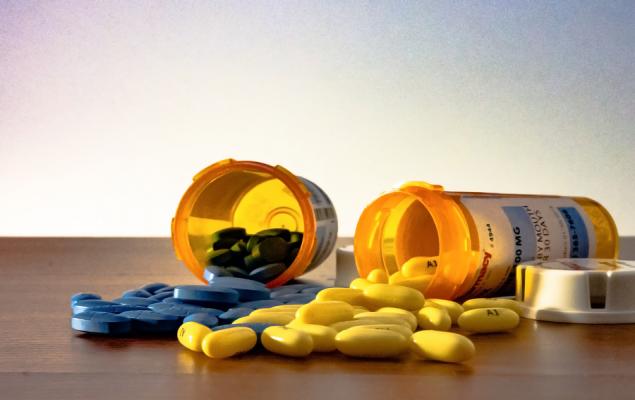
Will AbbVie's Neuroscience Portfolio Continue to Aid Top-line Growth?
ZACKS· 2025-09-04 14:21
Core Insights - AbbVie has developed a strong neuroscience franchise, initially driven by blockbuster drugs like Botox Therapeutic and Vraylar, and has expanded its portfolio with new migraine treatments Qulipta and Ubrelvy, as well as Vyalev for Parkinson's disease [1][2]. Financial Performance - The neuroscience segment contributed over 17% to AbbVie's total sales in the first half of 2025, with revenues growing nearly 21% year over year, primarily due to increased sales of Botox Therapeutic and Vraylar, along with rising uptake of Ubrelvy and Qulipta [2][9]. - The strong performance in the neuroscience segment has helped mitigate the decline in Duodopa sales [2][9]. Product Launches and Acquisitions - AbbVie launched Vyalev in the U.S. earlier this year, and while initial sales have been modest, expectations are for its contribution to total revenues to grow over time [3]. - The company is actively investing in new therapies, including a recent agreement to acquire Gilgamesh Pharmaceuticals' lead pipeline drug for approximately $1.2 billion, which targets major depressive disorder (MDD). This follows a $1.4 billion acquisition of Aliada Therapeutics, which added an investigational antibody for Alzheimer's disease (AD) [4][5]. Competitive Landscape - Major competitors in the neuroscience space include Biogen and Johnson & Johnson. Biogen is diversifying its offerings due to declining revenues in its multiple sclerosis franchise and has partnered with Eisai to market an FDA-approved treatment for Alzheimer's disease [6]. - Johnson & Johnson has a strong neuroscience portfolio, including the antidepressant nasal spray Spravato and the antipsychotic Invega Sustenna, and recently acquired Intra-Cellular Therapies to enhance its offerings [7]. Valuation and Market Performance - AbbVie shares have outperformed the industry year to date, trading at a premium with a price/earnings (P/E) ratio of 15.59, compared to the industry average of 14.84 and above its five-year mean of 12.82 [8][11]. - Earnings per share (EPS) estimates for 2025 and 2026 have seen slight increases in the past 30 days [12].

Could These 3 Dividend Kings Be Worth $1 Trillion in 10 Years?
The Motley Fool· 2025-09-04 08:09
Core Insights - The article discusses the potential of three major healthcare companies—AbbVie, Johnson & Johnson, and Abbott Laboratories—to reach a market capitalization of $1 trillion within the next decade, highlighting their current market caps and required growth rates to achieve this milestone. Group 1: AbbVie - AbbVie has a current market cap of approximately $369 billion and requires a compound annual growth rate (CAGR) of 10.5% to join the trillion-dollar club within 10 years [4] - The company has seen positive revenue and earnings growth driven by its immunology drugs, Skyrizi and Rinvoq, which are expected to continue their sales growth until patent expiration in 2033 [5] - AbbVie has a strong pipeline and has made recent acquisitions in various fields, enhancing its growth prospects [6] - The company has increased its dividends for 53 consecutive years, offering a forward yield of 3% [7][8] Group 2: Johnson & Johnson - Johnson & Johnson currently has a market cap of $429 billion and needs an 8.8% CAGR over the next decade to reach a trillion-dollar valuation [9] - The company maintains consistent revenue and earnings due to its diverse portfolio of drugs and medical devices, despite facing some patent cliffs [10] - Johnson & Johnson is developing a robotic-assisted surgery device, Ottava, which could be a significant growth driver [11] - The company has a solid dividend history with 62 consecutive years of payout increases and a forward yield of approximately 3% [12] Group 3: Abbott Laboratories - Abbott Laboratories has a market cap of $231 billion and requires a CAGR of 15.8% to reach $1 trillion by 2035, which is considered a challenging target [13] - The company is diversified across four segments: medical devices, nutrition, diagnostics, and established pharmaceuticals, which helps mitigate risks [13] - Abbott is a leader in continuous glucose monitoring devices, with its FreeStyle Libre being the most successful medical device in history by dollar sales [15] - The company has increased its dividends for 53 consecutive years, with a forward yield of 1.8% [16][17]



Genmab Announces Updated Results from Phase 2 EPCORE® NHL-6 Study Evaluating Epcoritamab Monotherapy in the Outpatient Setting in Patients with Relapsed/Refractory (R/R) Diffuse Large B-Cell Lymphoma (DLBCL)
Globenewswire· 2025-09-03 12:30
Core Insights - Genmab A/S announced updated results from the Phase 2 EPCORE NHL-6 trial evaluating the investigational epcoritamab for treating relapsed/refractory diffuse large B-cell lymphoma (DLBCL) in an outpatient setting [2][4] - The trial demonstrated the feasibility of outpatient treatment, with 92% of patients receiving the first full dose in this setting, and showed consistent safety and efficacy profiles compared to previous studies [3][4] Study Results - A total of 88 patients received the first full dose (48 mg) of epcoritamab, with 81 patients (92%) treated as outpatients [3] - The overall response rate (ORR) was 64.3% and the complete response (CR) rate was 47.6% in patients who had received one prior line of systemic therapy [4] - In patients treated after two or more lines of therapy, the ORR was 60.0% and the CR rate was 38.0% [4] Safety Profile - Cytokine release syndrome (CRS) occurred in 40.2% of patients during the trial, primarily low grade (Grade 1-2), with a median resolution time of two days [3] - Immune cell-associated neurotoxicity syndrome (ICANS) was observed in 7.6% of patients, also primarily low grade, resolving within a median of three days [3] Industry Context - DLBCL is the most common type of non-Hodgkin lymphoma, accounting for approximately 25-30% of all NHL cases, with around 25,000 new cases diagnosed annually in the U.S. [7][8] - The EPCORE NHL-6 trial results are significant as they suggest a shift towards outpatient treatment options for DLBCL patients, potentially increasing access to therapies [4]