Lilly

Search documents
Eli Lilly's Investigational Obesity Drug Shows Up To 20% Weight Loss In Phase 2 Study, Analyst Sees It As Emerging Cornerstone In Obesity Treatment
Benzinga· 2025-11-07 17:33
Core Insights - Eli Lilly and Co. has released promising data from a Phase 2 trial of eloralintide, showing significant weight reduction in obese adults with obesity-related health issues [1][2] Group 1: Trial Results - The Phase 2 trial involved 263 obese adults and demonstrated that all treatment arms of eloralintide achieved superior mean weight reductions ranging from 9.5% to 20.1% compared to a mere 0.4% with placebo at 48 weeks [1] - Secondary endpoints also showed clinically meaningful improvements in body weight and body mass index, along with enhancements in cardiometabolic risk factors such as waist circumference, blood pressure, lipid profiles, glycemic control, and inflammation markers [2] Group 2: Analyst Commentary - Analysts believe that the data supports the notion that the amylin agonist class, including eloralintide, will become a key treatment option for chronic obesity management, either as a standalone therapy or in combination with other incretin drugs [3] - Concerns were raised regarding the higher incidence of fatigue associated with eloralintide (21% vs. 12% for other incretin drugs), which could impact patients' quality of life [4] - The trial indicated a directional decrease in pulse rate with eloralintide, differentiating it from other incretin-based drugs, which may alleviate concerns about cardiovascular risks associated with high-potency obesity treatments [5]


Eli Lilly, Novo Nordisk's Historic GLP-1 Pricing Deals - What Investors Need To Know
Seeking Alpha· 2025-11-07 16:49
Group 1 - Edmund Ingham is a biotech consultant with over 5 years of experience in covering biotech, healthcare, and pharma sectors [1] - He has compiled detailed reports on more than 1,000 companies and leads the investing group Haggerston BioHealth, which caters to both novice and experienced biotech investors [1] - The Haggerston BioHealth group provides insights on catalysts, buy and sell ratings, product sales forecasts, integrated financial statements, discounted cash flow analysis, and market-by-market analysis for major pharmaceutical companies [1]

Musk's $1 trillion pay, a price cut for obesity drugs, Target's in-store woes and more in Morning Squawk
CNBC· 2025-11-07 12:57
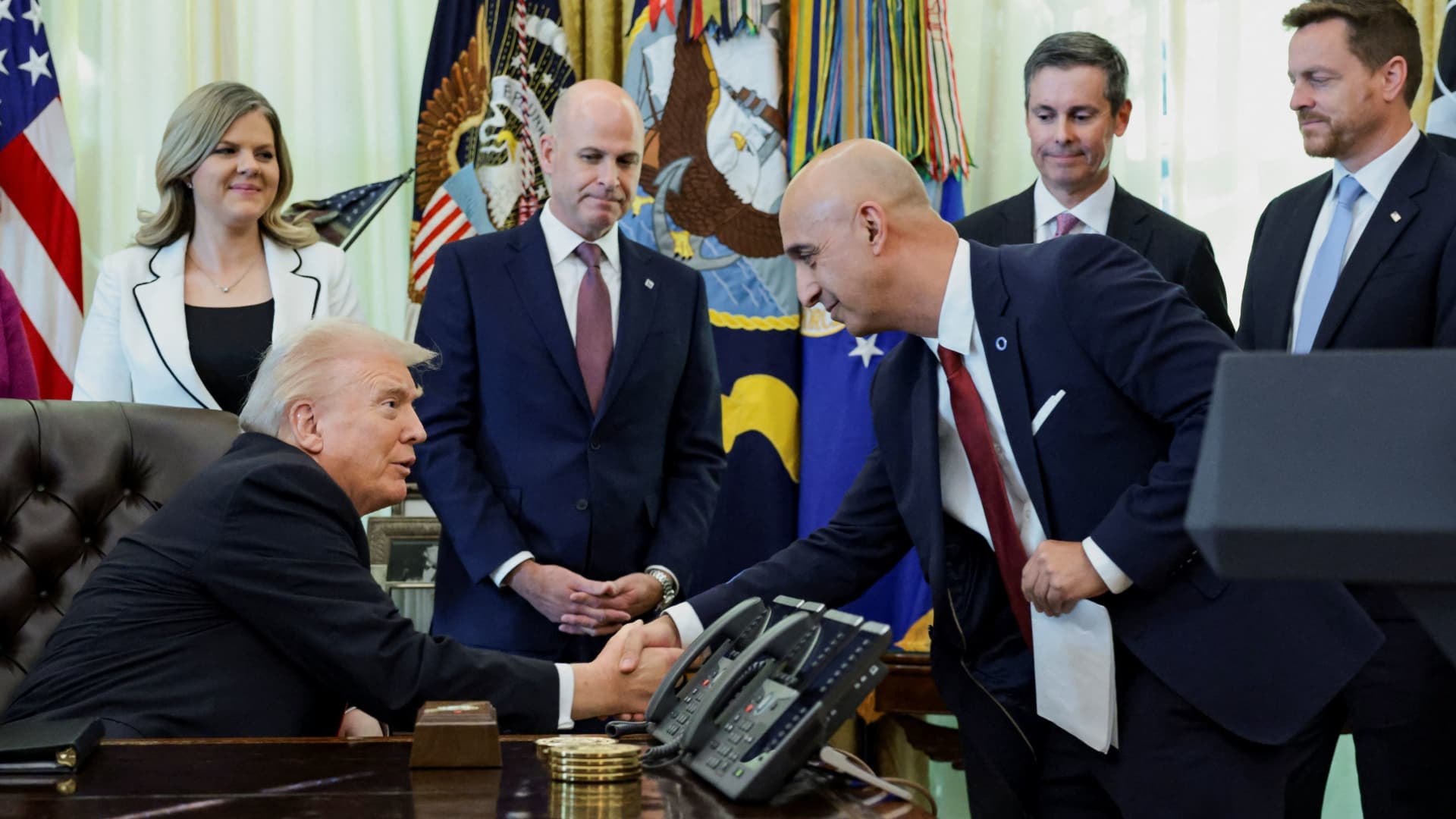
Group 1: Tesla and Elon Musk - Tesla shareholders approved CEO Elon Musk's nearly $1 trillion pay plan with 75% voting in support, granting Musk 12 tranches of shares based on company milestones over the next decade and increasing his ownership from 13% to 25% [2] - One of the milestones includes the delivery of 1 million Optimus humanoid robots, which Musk claims will "eliminate poverty" and be "bigger than cell phones" [3] Group 2: AI Market Concerns - Stocks resumed their sell-off as traders expressed concerns over elevated valuations of artificial intelligence stocks, with major companies like Nvidia, Advanced Micro Devices, and Microsoft seeing declines [4][6] - OpenAI expects to generate over $20 billion in annualized revenue this year, aiming for hundreds of billions by 2030, despite investor uncertainty regarding funding for its infrastructure commitments worth over $1.4 trillion [9] Group 3: Pharmaceutical Pricing Changes - President Donald Trump announced agreements with Eli Lilly and Novo Nordisk to significantly reduce prices of obesity drugs, with Medicare set to cover GLP-1 drugs for obesity starting mid-2026 [5][7] - The monthly out-of-pocket price for these drugs could range from $50 to $350, compared to list prices that can reach up to $1,350 before insurance [7] Group 4: Retail Strategy Adjustments - Target is facing customer complaints regarding in-store experiences, prompting a shift in its website strategy to limit which stores fulfill online orders, allowing employees to focus more on in-store customer service [11][12]
Lilly's obesity drug Mounjaro becomes India's top-selling drug by value in October
Reuters· 2025-11-07 05:51
Core Insights - Eli Lilly's obesity drug Mounjaro has become the top-selling drug in India by value for October, achieving sales of 1 billion rupees ($11.38 million) [1] Company Summary - Mounjaro's sales performance indicates strong market acceptance and demand for obesity treatments in India [1] Industry Summary - The success of Mounjaro highlights the growing importance of obesity drugs in the pharmaceutical market, particularly in emerging markets like India [1]
Eli Lilly expects US FDA approval for oral obesity drug in March 2026
Reuters· 2025-11-06 21:48
Core Insights - Eli Lilly anticipates approval from the U.S. Food and Drug Administration for its experimental oral obesity drug, orforglipron, by March 2026 [1] Company Summary - The chief executive of Eli Lilly provided the timeline for the expected FDA approval of orforglipron, indicating the company's confidence in the drug's potential [1]

Lilly announces two new Executive Committee members and expansion of leadership roles to prepare for next wave of growth
Prnewswire· 2025-11-06 21:05
Core Insights - Eli Lilly and Company has announced the appointment of two new Executive Committee members and the expansion of existing leaders' roles to enhance its ambitious pipeline and improve patient access to medicines [1][6]. Leadership Changes - Carole Ho, M.D., has been appointed as executive vice president and president of Lilly Neuroscience, bringing over 20 years of biopharmaceutical experience [2]. - Adrienne Brown has been promoted to executive vice president and president of Lilly Immunology, having held various leadership roles at Lilly for over 20 years [3]. - Daniel Skovronsky, M.D., Ph.D., will expand his role as chief scientific and product officer, overseeing research and development for Cardiometabolic Health, Immunology, and Neuroscience [4]. - Jacob Van Naarden will also take on an expanded role, incorporating corporate business development under his leadership [5]. Strategic Vision - The company aims to leverage its transformed research engine and expanded production capacity to enhance access to care and affordability, with a focus on driving growth and improving patient outcomes [6].

Here's how much weight loss drugs could cost you under Trump's deals with Eli Lilly, Novo Nordisk
CNBC· 2025-11-06 19:42
Core Insights - The Trump administration has reached agreements with Eli Lilly and Novo Nordisk to significantly reduce the prices of their weight loss drugs, making them more accessible to patients [1][4]. Pricing Structure - Monthly out-of-pocket costs for the weight loss injections and upcoming pills will range from $50 to $350, depending on dosage and insurance coverage [2]. - Current GLP-1 drugs, such as Zepbound and Wegovy, have list prices exceeding $1,000 per month, limiting patient access [3]. Medicare Coverage - Starting mid-2026, Medicare will cover GLP-1 drugs for obesity for the first time, potentially increasing access for seniors [5]. - Certain Medicare patients will pay a copay of $50 per month for approved uses of GLP-1 drugs, including obesity treatment [5]. Eligibility Criteria - Eligibility for GLP-1 drugs under Medicare is limited to three cohorts: individuals with a BMI greater than 27, those with obesity and specific health conditions, and patients with severe obesity (BMI greater than 35) [9]. Direct-to-Consumer Pricing - The TrumpRx platform will offer GLP-1s at lower prices, starting at $350 per month and expected to drop to $250 within two years [7]. - Eli Lilly plans to reduce prices on its direct-to-consumer platform, LillyDirect, with Zepbound available for $299 per month at the lowest dose [11]. Medicaid Coverage - Novo Nordisk and Eli Lilly will extend lower government pricing of $245 per month for GLP-1 drugs to all 50 Medicaid programs, although states must opt into these prices [12].
Eli Lilly, Novo Nordisk Make Weight-Loss Drugs More Affordable Via Medicare, Medicaid, TrumpRx
Benzinga· 2025-11-06 19:10
Core Insights - President Trump announced agreements with Eli Lilly and Novo Nordisk to reduce prices for GLP-1-based obesity and diabetes drugs and expand Medicare and Medicaid coverage starting mid-2026 [1][3] Group 1: Agreements and Pricing - Eli Lilly and Novo Nordisk will provide GLP-1 medications to Medicare and Medicaid for $245 per month, with Medicare patients paying a $50 copay for approved drugs [3] - Initial costs for existing injectables like Wegovy and Zepbound will be $350 per month, decreasing to $245 within two years [4] - Upcoming oral versions are expected to be priced at $145 per month through Medicare, Medicaid, or TrumpRx once approved [4] Group 2: Coverage and Eligibility - The initiative will start as a Medicare Part D pilot program, covering about 6.6 million Medicare enrollees with obesity or related health risks [5][6] - Eligibility will focus on individuals with obesity, prediabetes, heart disease, or kidney complications [6] Group 3: Company Developments - Eli Lilly will receive relief from potential new tariffs and be exempt from additional drug pricing programs under the Trump administration [6] - Eli Lilly announced additional price cuts on its LillyDirect platform, reducing Zepbound's price to $299 per month for the lowest dose [7] - Eli Lilly's Phase 2 trial of eloralintide showed significant weight reductions, with plans to initiate Phase 3 studies by year-end [8]
Lilly and U.S. government agree to expand access to obesity medicines to millions of Americans
Prnewswire· 2025-11-06 18:54
Core Insights - Eli Lilly and Company has reached an agreement with the U.S. government to enhance access to its obesity medications, specifically Zepbound and orforglipron, for Medicare beneficiaries at a cost of $50 per month, pending FDA approval [1][5] - This initiative aims to support nearly 40 million Americans with obesity on government insurance programs, addressing a significant health risk associated with over 200 diseases [1][4] Group 1: Agreement Details - The agreement builds on Lilly's previous collaboration with the Trump Administration, which included capping out-of-pocket insulin costs at $35 per month [1][2] - Lilly will receive three years of tariff relief and will not be subject to future pricing mandates in exchange for addressing the Administration's priorities, including a balanced pricing approach for new medicines [4][5] - The company is investing over $50 billion in U.S. manufacturing to enhance domestic production capabilities [4] Group 2: Product Pricing and Access - Starting April 1, 2026, Zepbound will be available for Medicare beneficiaries at a maximum of $50 per month, with orforglipron also priced similarly, contingent on FDA approval [5] - Zepbound will be priced at $299 for the lowest dose, with additional doses up to $449, reflecting a $50 discount from current prices [5] - Orforglipron will start at $149 for the lowest dose, with higher doses priced up to $399 [5] Group 3: Broader Impact - The agreement is expected to significantly improve access to obesity treatments, which are crucial for managing health risks associated with obesity [2][4] - LillyDirect will facilitate access for self-pay patients, offering additional medications at reduced prices [5] - The initiative aligns with Lilly's commitment to affordability and innovation in healthcare [2][4]

Lilly, Novo Will Lower Obesity Drug Prices in Trump Deal
Youtube· 2025-11-06 18:02
Group 1 - Eli Lilly and Novo Nordisk are offering significant discounts on their popular weight loss drugs, reducing prices from $1,350 a month to $250 a month for American patients [2][3] - The commitment to provide these drugs at most favored nations rates aims to improve health outcomes for millions of Americans [2] - The monthly cost of a related health plan has also been reduced from $1,080 to $346, indicating a broader trend of decreasing healthcare costs [3] Group 2 - There is currently no negative feedback reported regarding the effectiveness of the drugs offered by Eli Lilly and Novo Nordisk [1] - The drugs, including Zep and Wegovy, are positioned as life-saving treatments for American patients [2] - The aggressive pricing strategy reflects a competitive response in the pharmaceutical industry to enhance accessibility for patients [2]