
Huawei

Search documents
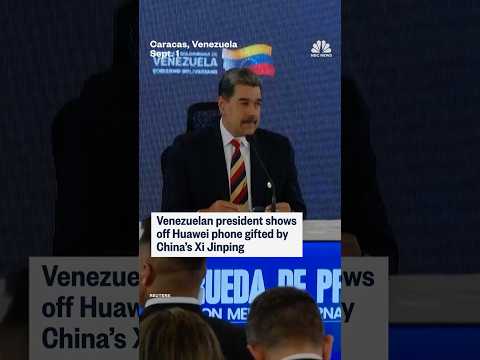
Venezuelan president shows off Huawei phone gifted by China's Xi Jinping
NBC News· 2025-09-03 20:56
en este salón de la rueda de prensa. >> Impresionante. Ahí me llega todo por aquí.Teléfono que me regaló, mira, sin Chinín. Esto me lo regaló Sin Chinín. Un Huawei, mira, el mejor teléfono del mundo, el Huawei.Y no te lo pueden intervenir los gringos, ni los aviones espías, ni los satélites. a todo el gobierno, el consejo de vicepresidentes, vicepresidente. ...

X @TechCrunch
TechCrunch· 2025-09-03 15:48
Huawei phones, given their custom hardware and operating system, may actually be easier to hack than other brands. https://t.co/z7yPsSk5AT ...
拓普集团 - 2025 年第二季度符合预期;探索液冷潜力
2025-09-03 13:23
Summary of Tuopu's 2Q25 Earnings Call Company Overview - **Company**: Ningbo Tuopu Group Co., Ltd. - **Industry**: Autos & Auto Parts - **Ticker**: 601689 CH - **Market Cap**: RMB105.6 billion ($14.8 billion) [8] Key Financial Results - **2Q25 Revenue**: RMB7.2 billion, up 10% YoY [1][2] - **2Q25 Earnings**: RMB729 million, down 10% YoY [1][2] - **Gross Profit Margin (GPM)**: 19.3%, down 0.6/1.1 percentage points QoQ/YoY [1][2] - **D&A Cost to Revenue Ratio**: Estimated to have risen to approximately 7% in 1H25, up 1 percentage point YoY [2] Management Outlook - **Revenue Growth Target**: Aiming for 20% YoY revenue growth in 2026 [1][2] - **Long-term Growth Expectation**: Management expects double-digit growth from 3Q25 through 2030, supported by contributions from major clients like Xiaomi, Seres, and Geely [2] - **2025 Revenue Target**: RMB30 billion [2] Business Expansion - **Overseas Markets**: Focus on Europe and the US as key growth drivers, with major customers including Ford, GM, Stellantis, Volkswagen, BMW, and Mercedes [3] - **Production Capacity**: Plans for a second phase at the Poland factory due to increased demand from Mercedes and BMW; Thailand plant aimed at humanoid robots and supporting local Chinese OEMs like BYD and Chery [3] Humanoid Robots Development - **Current Production Challenges**: Inefficiencies in producing humanoid robot actuators due to a wide variety of specifications (48 in total) and lack of full automation [4] - **Future Orders**: Expected to start receiving orders for the next-generation Optimus in 1Q26 [4] - **R&D Investment**: Annual investment of approximately RMB100 million with a robotics team of 138 members [4] Liquid Cooling Business - **Market Potential**: Strong potential identified in transitioning from automotive thermal management to liquid cooling solutions for AI data centers [5] - **Core Products**: Cooling plates and CDU components [5] - **Order Backlog**: Liquid cooling order backlog has reached RMB1.7 billion [5] Valuation and Price Target - **Price Target**: RMB72.5 based on a 35x 2026E P/E [6][14] - **Current Price**: RMB62.61, representing a potential upside of 16% [8] Financial Estimates - **Revenue Estimates**: - 2025: RMB29.04 billion - 2026: RMB33.18 billion - 2027: RMB39.85 billion [7] - **Net Profit Estimates**: - 2025: RMB3.06 billion - 2026: RMB3.49 billion - 2027: RMB4.25 billion [7] Risks - **Potential Risks**: Lower-than-expected NEV sales and slower development of humanoid robots [24] Sustainability Goals - **Carbon Neutrality Targets**: Aiming to achieve carbon peak by 2030 and carbon neutrality by 2060 in line with China's decarbonization goals [17] Conclusion - **Investment Recommendation**: Maintain Buy rating with a focus on growth opportunities in both the automotive and emerging technology sectors, particularly humanoid robots and liquid cooling solutions [6][11]

McNeal: China sees chips as a national vulnerability
CNBC Television· 2025-09-02 11:37
Thank you very much for joining us this morning. Take us through the gist of your oped. What exactly is the issue that Nvidia will have visav the geopolitical tensions between the US and China.>> Good morning Dom. Thanks for having me. The gist here is you know for a long time now 2015 or so uh China has identified as a strategic vulnerability uh their dependence on western technology particularly semiconductor chips and Dom they've spent over hundred billion dollars uh in that time trying to do what many t ...

Qualcomm Declines 8.3% in Past Year: Time to Rethink QCOM Stock?
ZACKS· 2025-09-01 15:01
Core Viewpoint - Qualcomm's stock has underperformed significantly over the past year, declining 8.3% compared to the industry's growth of 36.2%, with competitors like Hewlett Packard and Broadcom showing substantial gains [1][3]. Group 1: Market Performance - Qualcomm's shares have dropped 8.3% in the last year, while Hewlett Packard and Broadcom have increased by 16.5% and 82.7%, respectively [1]. - The company is facing challenges in maintaining its operations in China due to ongoing trade tensions, impacting its ability to supply chips to local manufacturers [3][4]. Group 2: Financial Challenges - Qualcomm's margins have been eroded by high operating expenses and R&D costs, with expectations of continued softness in the handset market [5]. - The company is experiencing competitive pressures from both low-cost chip manufacturers and established players, which may further impact profitability [6]. Group 3: Growth Opportunities - Despite short-term challenges, Qualcomm is benefiting from investments in its licensing program and anticipates long-term revenue growth driven by its Snapdragon portfolio and 5G technology [7][8]. - The company is expanding into AI capabilities with the launch of the Snapdragon X chip for mid-range desktops and laptops, aiming to diversify its revenue streams [9]. - Qualcomm is gaining traction in the automotive sector with its V2X communication systems, enhancing its position in the growing connected vehicle market [10]. Group 4: Earnings Estimates - Earnings estimates for fiscal 2025 have increased by 8.6% to $11.87, while estimates for fiscal 2026 have decreased by 2.5% to $11.86, indicating mixed investor sentiment regarding growth potential [11]. Group 5: Overall Outlook - Qualcomm's portfolio strength, particularly in automotive and Snapdragon technologies, positions it relatively well, but it faces significant competition and market softness that could pressure growth [13][14].

AI Growth vs. High Expectations: Where Do NVIDIA ETFs Stand?
ZACKS· 2025-08-29 18:21
Core Insights - NVIDIA reported second-quarter revenue of $46.74 billion, a 56% year-over-year increase, with earnings per share of $1.05, surpassing Zacks Consensus Estimates [1][2] - Despite strong overall results, NVIDIA's data center revenue of $41.1 billion narrowly missed analyst expectations of $41.2 billion, leading to a slight decline in share price [2][3] Financial Performance - The data center segment, NVIDIA's largest business line, generated $41.1 billion in revenue, up from $26.2 billion in the same quarter last year [3] - NVIDIA provided guidance for third-quarter sales of $54 billion, indicating approximately 15% year-over-year growth, excluding contributions from China [4] Market Dynamics - Strong demand for AI chips persists, with ongoing shortages prompting customers to purchase older models [5] - Following NVIDIA's earnings release, shares of other AI-related companies, such as Micron and Broadcom, experienced gains, suggesting a potential shift in investor sentiment [6] Industry Relationships - NVIDIA's revenue is significantly tied to major tech companies, with Microsoft, Amazon, Alphabet, and Meta accounting for about 41% of its annualized revenue [7] - Concerns exist regarding potential reductions in spending from these tech giants, which could impact NVIDIA's performance [8] Profitability and Cost Pressures - Despite impressive sales growth, profitability may face challenges due to rising operating expenses, which could compress margins in the second half of the year [11] - Geopolitical issues, particularly in China, present additional risks, with ongoing negotiations regarding chip sales and competition from local firms [12][13] Valuation Concerns - NVIDIA shares have increased by 26% year-to-date and 48% over the past year, currently trading at 35.33X forward 12-month earnings, higher than industry and sector averages [14] - High valuations and market cap raise skepticism among investors, especially in light of potential future earnings challenges [15][16] Investment Strategies - The broader tech and AI sector remains robust, suggesting that investing through exchange-traded funds (ETFs) may mitigate company-specific risks [17] - Recommended ETFs include Strive U.S. Semiconductor ETF, VanEck Semiconductor ETF, and iShares Semiconductor ETF, providing diversified exposure to the semiconductor industry [18]

China Doesn't Need Nvidia Anymore: Alibaba's New Chip Is A Challenge To Washington
Benzinga· 2025-08-29 15:48
Core Viewpoint - Alibaba Group has launched a new AI chip to reduce dependence on Nvidia, highlighting China's efforts to develop homegrown technology amid U.S. restrictions [1][3]. Group 1: AI Chip Development - Alibaba's new processor is designed for AI inference, allowing compatibility with Nvidia's software ecosystem, enabling Chinese engineers to use existing programs without major modifications [3]. - The chip's introduction comes as U.S. export rules impact Nvidia's H20, the most powerful AI processor allowed in China, leading to a competitive landscape with other Chinese companies like MetaX and Huawei also developing advanced chips [4]. Group 2: Financial Implications - Alibaba's cloud computing revenue surged by 26% in the April–June quarter, driven by increasing AI demand, prompting the CEO to commit at least $53 billion in cloud and AI investments over the next three years [5]. - The chip initiative reflects a broader challenge in China's semiconductor production capabilities, as U.S. tech bans hinder mass production of cutting-edge chips, leading companies to innovate with existing technologies [6]. Group 3: Competitive Landscape - Other Chinese firms, including MetaX and Huawei, are also racing to develop competitive AI chips, with MetaX's upcoming chip featuring larger memory than Nvidia's H20 and Huawei claiming high performance with its Ascend chips [4][6].

X @Bloomberg
Bloomberg· 2025-08-29 09:10
Huawei posted a first-half profit, getting back into the black after the emergence of DeepSeek ignited a wave of AI development across China https://t.co/ZYYYREjsmv ...
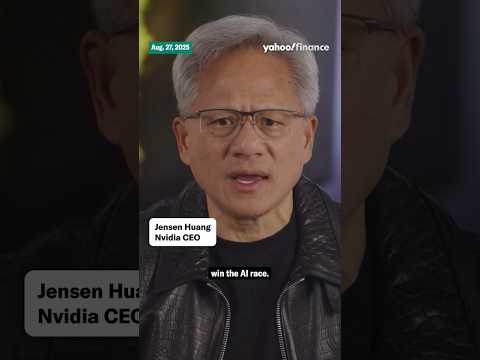
Dan Ives: Nvidia is the “biggest poker chip at the table.”
Yahoo Finance· 2025-08-28 20:30
President Trump really understands and really wants and his it's his policy to have America win the AI race. It's important for national security. It's important for economic security. It's important for American leadership around the world.Don't let the black leather jacket fool you. That's 10% politician in Jensen, 90% CEO. The biggest poker chip at the table is Nvidia.I believe they're going to sell into China. That that's what ultimately could be 50 billion 50% type growth. And again, there's one chip i ...
Light and Shadow Witness History, Lenses Record Metamorphosis -- The International Photography Exhibition Marking the 45th Anniversary of the Shenzhen Special Economic Zone Opens
Globenewswire· 2025-08-28 09:45
Core Insights - The exhibition "Metamorphosis: International Photography Exhibition for the 45th Anniversary of the SEZ" celebrates Shenzhen's transformation over 45 years, showcasing its journey from a small border town to an international metropolis [1][2]. Economic Growth - Shenzhen's regional GDP has increased dramatically from 270 million yuan in 1980 to 3.68 trillion yuan in 2024, highlighting its status as a "miracle model" of China's reform and opening-up [3]. - The city has utilized economic system reforms to foster the development of emerging and traditional industries, leading to accelerated growth [3]. Innovation and Technology - Shenzhen is recognized as the first National Demonstration City of Innovation in China, home to numerous high-tech enterprises such as Huawei, ZTE, Tencent, BYD, and DJI, earning it the title "City of Innovation" [4]. Cultural Impact - The exhibition features over 100 photographs that reflect the cultural richness and harmonious environment of Shenzhen, portraying the commitment and pioneering spirit of its citizens [6].