Berkshire Hathaway

Search documents
BRK.B Stock Moves Above 50- & 200-Day SMA: Buy, Sell or Stay Invested?
ZACKS· 2025-12-24 17:05
Core Insights - Berkshire Hathaway Inc. (BRK.B) shares have recently shown bullish momentum, surpassing both the 50-day and 200-day simple moving averages, indicating a potential uptrend [1][8] - The average price target from analysts suggests a 7.6% upside from the last closing price, with BRK.B shares up 10.4% year-to-date, outperforming the industry average of 9.9% [2][8] - Berkshire Hathaway operates as a conglomerate with over 90 subsidiaries, providing stability across various economic cycles [2] Financial Performance - The stock is currently trading at a price-to-book multiple of 1.54, which is above the industry average of 1.51 but below the median of 1.57, indicating it may be overvalued compared to its peers [6][8] - Return on equity (ROE) for BRK.B was 7.3%, which is below the industry average of 8%, although it has shown improvement over time [17] - Return on invested capital (ROIC) was 5.7%, lower than the industry average of 6.2%, but has been increasing annually since 2020 [19] Business Segments - The insurance operations of Berkshire Hathaway account for about 25% of total revenues and are a significant driver of long-term value creation, supported by disciplined underwriting and a broad market reach [10] - Berkshire Hathaway Energy (BHE) provides stable cash flows and is expanding investments in renewable energy, aligning with global trends [11] - The manufacturing, service, and retail segments offer diversification and growth potential, benefiting from economic expansion and increased consumer activity [13] Strategic Initiatives - Berkshire has been adjusting its equity portfolio, exiting positions in BYD and reducing stakes in Apple and Bank of America, while increasing exposure to Japanese trading houses and initiating an investment in Alphabet [15] - The company's insurance float has grown from $114 billion in 2017 to $176 billion by the end of Q3 2025, providing a low-cost capital source [16] Analyst Sentiment - The Zacks Consensus Estimate for 2025 and 2026 revenues indicates a 3.5% and 6% year-over-year increase, respectively, while earnings estimates suggest a decline of 5.2% and 3.9% for the same years [20] - Analyst sentiment appears muted, with no movement in earnings estimates over the last 30 days [21] Leadership Transition - Berkshire Hathaway has been a stable investment under Warren Buffett's leadership, with a transition to Greg Abel as CEO set for January 1, 2026, while Buffett will remain as executive chairman [22]

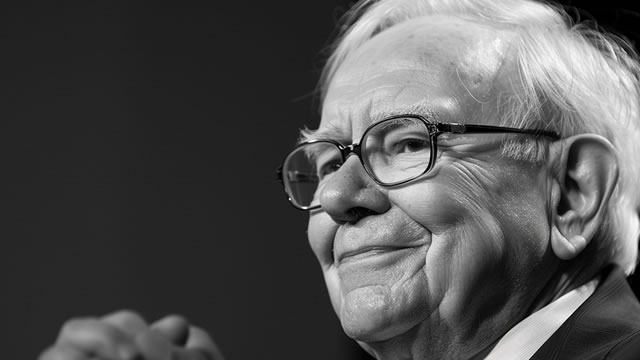
Buffett's $24 Billion Selling Spree: The 6 Stocks Berkshire Hathaway Dumped
247Wallst· 2025-12-23 14:02
Core Viewpoint - Warren Buffett has adopted a more conservative approach to the stock market over the past three years, selling significant portions of his holdings as he perceives the market to be overvalued and is waiting for better buying opportunities [1][2]. Group 1: Stock Sales Overview - In Q3 2025, Buffett sold over $24 billion worth of stocks, including major positions in Apple, Bank of America, VeriSign, DaVita, D.R. Horton, and Nucor [1][2]. - Buffett's strategy involves reducing equity exposure during perceived market overheating, which aligns with his recent stock sales [5]. Group 2: Individual Stock Analysis - **Apple (AAPL)**: Berkshire Hathaway has been reducing its AAPL position since Q4 2023, selling $10.6 billion worth in Q3 2025. The decision is likely based on a broader market overvaluation rather than issues with Apple itself [4][5]. - **Bank of America (BAC)**: Buffett sold $1.92 billion worth of BAC stock in Q3 2025, maintaining a significant holding valued at $29.3 billion. This sale follows a pattern of quarterly reductions since Q3 2024 [6][7]. - **VeriSign (VRSN)**: Buffett sold $1.2 billion worth of VRSN to keep his ownership below 10%, as the stock price rose to $266.93 [9]. - **DaVita (DVA)**: Buffett sold $217 million worth of DVA stock in Q3 2025, marking a profit-taking move after a long-term holding since Q4 2014 [10]. - **D.R. Horton (DHI)**: Despite the potential for a homebuilding recovery, Buffett sold $199 million worth of DHI stock in Q3 2025, exiting his position entirely [11][12]. - **Nucor (NUE)**: Buffett sold approximately $29 million worth of NUE stock, reducing his stake by 3.1% as he began to take profits after entering the position in Q1 and Q2 2025 [13][14].


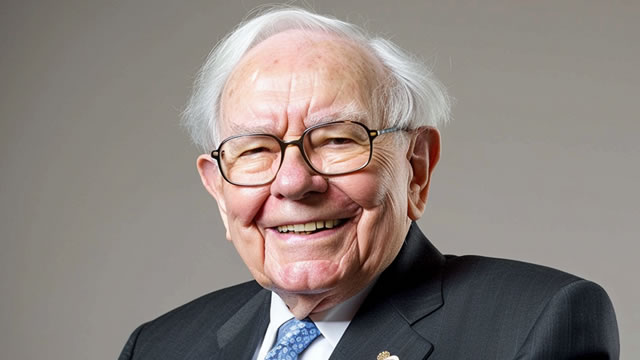
Buffett’s $24 Billion Selling Spree: The 6 Stocks Berkshire Hathaway Dumped
Yahoo Finance· 2025-12-23 14:02
Group 1 - Warren Buffett has been increasingly conservative in the stock market over the past three years, selling over $24 billion worth of stocks in the first nine months of 2025, including significant sales of Apple, Bank of America, and others [1][2][7] - Buffett believes the market is currently overvalued and is willing to wait for better buying opportunities, indicating a strategic approach to investing [2][3] - As Buffett prepares to retire as CEO, there is speculation that he is building a cash reserve for his successor, Greg Abel [2] Group 2 - Berkshire Hathaway has been reducing its position in Apple since Q4 2023, selling $10.6 billion worth of shares in Q3 2025, likely due to a perception of an overheated market rather than issues with the company itself [4][5] - Buffett's long-standing relationship with Bank of America includes a significant investment during the 2008 financial crisis, but he has now reduced his stake by $1.92 billion in Q3 while still holding $29.3 billion worth of shares [6][7] - Buffett sold $1.2 billion of VeriSign to maintain ownership below 10% and avoid regulatory obligations [7]
Warren Buffett: This asset offers ‘more opportunity’ than real estate, young Charlie Munger would pick it ‘in a second’
Yahoo Finance· 2025-12-23 11:55
Core Insights - Warren Buffett emphasizes the advantages of stock investing over real estate, citing the speed and simplicity of stock transactions compared to the lengthy negotiation processes in real estate [1][2][4]. Group 1: Investment Preferences - Buffett believes that the stock market presents more opportunities than real estate, particularly in the U.S. [4]. - He expresses a strong preference for stocks, stating that if given a choice between stocks and real estate at a young age, he would have chosen stocks without hesitation [2]. - The complexities and time-consuming nature of real estate transactions are highlighted as significant drawbacks compared to stock investments [3][11]. Group 2: Real Estate Market Insights - Despite his reservations about real estate, Buffett acknowledges its potential as a productive, income-generating asset, particularly given the current housing shortage in the U.S. [11]. - He noted that if offered "1% of all the apartment houses in the country" for $25 billion, he would consider it a worthwhile investment due to the consistent demand for housing [11]. - The typical duration to close a real estate deal in the U.S. is mentioned as taking 30 to 60 days, which can be extended due to various complications [12]. Group 3: Investment Strategies - Buffett advocates for investing in S&P 500 index funds as a straightforward strategy for most investors, providing exposure to a diverse range of large companies without the need for active management [6][7]. - His estate plan includes directing a significant portion of his wife's inheritance into a low-cost S&P 500 index fund, underscoring his commitment to this investment strategy [7]. - The article discusses alternative investment platforms that allow individuals to invest in real estate without the burdens of property management, such as crowdfunding options [13][20].
Warren Buffett's company took Kraft Heinz off its subsidiary list weeks before board exit and $5 billion writedown
Business Insider· 2025-12-23 10:17
Core Insights - Berkshire Hathaway has removed Kraft Heinz from its list of operating companies, indicating a significant shift in its investment strategy [1][6] - The company recorded a $5 billion impairment loss on its Kraft position, reducing its carrying value to $8.4 billion, reflecting a decline in Kraft's fair value [2][3] - Kraft Heinz is undergoing a strategic split into two main businesses, focusing on sauces and North American staples, which may impact its future performance [10] Investment and Financial Analysis - Berkshire holds a 27% stake in Kraft Heinz, accounting for it using the equity method, which adjusts the carrying value based on Kraft's profits and losses [2] - The decision to write down the investment was influenced by the decline in fair value, Kraft's operating results, and the departure of Berkshire's board representatives [3][6] - The unrealized loss on the investment was deemed "other-than-temporary," suggesting a long-term concern regarding Kraft's financial health [6] Historical Context - Berkshire Hathaway, in partnership with 3G Capital, acquired Heinz for approximately $23 billion in 2013 and later merged it with Kraft in a $40 billion deal [11] - The combined entity has faced numerous challenges, including layoffs, management changes, and a decline in net revenues due to shifting consumer preferences [11] - A finance professor described the merger of Kraft and Heinz as a "rare mistake" for Warren Buffett, highlighting the difficulties faced by the company since the merger [12]


Warren Buffett’s Legacy: A Look At One of the Greatest Investors Of All Time
Yahoo Finance· 2025-12-22 16:42
分组1 - Warren Buffett is recognized as the greatest investor of all time, with unmatched historical outperformance [2][3] - Berkshire Hathaway has compounded returns at 19.9% annually from 1965 through 2024, significantly outperforming the S&P 500's 10.4% [5][6] - Investors who held Berkshire Hathaway shares since 1965 would have seen their wealth increase by over 5,000,000%, compared to a 40,000% increase for S&P 500 investors [7][8] 分组2 - Buffett's investment strategy includes recent shifts from core holdings into short-duration bonds, indicating a tactical adjustment [5] - The long-term compounding effect of Berkshire Hathaway's returns illustrates the power of sustained investment in a strong company [7]
4 Industries That Don’t Get Warren Buffett’s Money
Yahoo Finance· 2025-12-22 13:07
Investment Strategy - Warren Buffett, known as the "Oracle of Omaha," has a net worth of approximately $150 billion and is recognized for his investment timing and strategy [1] - Buffett plans to retire at the end of 2025 at the age of 95, but his influence on investment strategies remains significant [1] Industries Avoided by Buffett - New Technology: Buffett avoids investing in emerging technologies, labeling bitcoin as "a mirage" and advising against it, although Berkshire Hathaway has invested in Nu Holdings, a Brazilian digital banking company with a cryptocurrency platform [3][4] - Precious Metals: Buffett is skeptical about investing in gold, viewing it as speculative rather than a solid investment, and believes productive assets yield better returns through dividends [5][6] - Airlines: Berkshire Hathaway previously invested $10 billion in major airlines but sold these stakes in 2020 due to the pandemic's impact, reflecting Buffett's critical stance on the airline sector [7]
Warren Buffett Departs With 64% of Berkshire Hathaway in 5 Stocks to Hold Forever
247Wallst· 2025-12-22 12:15
Core Insights - Warren Buffett is recognized as a long-standing and successful investor, demonstrating resilience and strategic acumen in the investment landscape [1] Company and Industry Summary - The article highlights Warren Buffett's investment philosophy and approach, which have contributed to his enduring success in the financial markets [1]

SoftBank Group Corp. (OTC:SFTBF) Announces Stock Split and Funding Commitment to OpenAI
Financial Modeling Prep· 2025-12-22 10:00
Group 1 - SoftBank Group Corp. is a multinational conglomerate based in Japan, known for its investments in technology, energy, and financial sectors, with significant stakes in companies like Arm Holdings [1] - The company is set for a stock split on December 29, 2025, where shareholders will receive 4 shares for every 1 share currently held, aiming to make the stock more accessible [2][5] - Currently, SFTBF trades at $102.15, with a slight increase of 0.39% today, and has fluctuated between $102.15 and $107 [2] Group 2 - SoftBank is working to fulfill a $22.5 billion funding commitment to OpenAI by the end of the year, exploring various cash-raising strategies including selling some investments [3][5] - The company may utilize undrawn margin loans secured against its significant stake in Arm Holdings to raise necessary funds [3] - SFTBF has a market capitalization of approximately $145.5 billion, with a past year high of $180 and a low of $38.16 [4][5] Group 3 - The trading volume for SFTBF today is 150 shares on the OTC exchange, indicating relatively low activity, which the stock split could potentially increase by making shares more affordable [4][5]

If You Own Occidental Petroleum Stock, Take A Look At This Instead
The Motley Fool· 2025-12-22 07:45
Core Viewpoint - ConocoPhillips is positioned as a more attractive investment compared to Occidental Petroleum due to its clear growth strategy and strong financial position. Group 1: Occidental Petroleum - Occidental Petroleum is a leading international energy company with operations in the U.S., Middle East, and North Africa, but it has accumulated significant debt from acquisitions [3]. - The company plans to reduce its principal debt balance below $15 billion by selling OxyChem to Berkshire Hathaway for $9.7 billion, which will allow it to focus on shareholder value creation [4]. - Despite the sale, Occidental lacks a firm action plan for growth, relying on free cash flow and asset sales to manage its debt [6]. Group 2: ConocoPhillips - ConocoPhillips has a robust growth strategy, having invested heavily in acquisitions funded primarily through equity, resulting in a strong balance sheet [6]. - The company is investing $3.4 billion in three liquefied natural gas (LNG) projects and $8.5 billion to $9 billion in the Willow oil project in Alaska, which is expected to generate an additional $6 billion in annual free cash flow by 2029 [8]. - This increasing cash flow will support dividend growth within the top 25% of S&P 500 companies and enable share repurchases, positioning ConocoPhillips for strong total returns [9].