
Stripe

Search documents
从大气中吸碳的公共气候事业,如今只剩下几家科技公司在支撑
Sou Hu Cai Jing· 2025-10-28 09:55
Core Insights - The carbon removal industry has faced significant challenges, highlighted by the collapse of Running Tide, which aimed to sequester 1 billion tons of CO2 and raised over $50 million [1] - The industry is transitioning from a phase of hype to a reality check, with many companies struggling to survive due to a flawed business model that does not meet immediate consumer or corporate needs [1][2] - The future of carbon removal largely depends on government intervention through policies, subsidies, and mandatory compliance for polluters [2][5] Industry Overview - The rise of the carbon removal industry was driven by climate science warnings indicating that merely reducing emissions is insufficient; proactive carbon removal is necessary [3] - The IPCC's 2022 report suggests that up to 11 billion tons of CO2 may need to be removed annually by mid-century to limit global warming to 2°C [3] - Despite initial enthusiasm and nearly $1 billion in venture capital by 2023, the industry faces structural contradictions, with high costs for durable carbon removal methods [3][4] Market Dynamics - Current market demand is insufficient to support the industry's scale, with only about 38 million tons of carbon removal sold globally, and actual deliveries being less than 1 million tons [4] - The market is heavily reliant on a few major buyers, with Microsoft accounting for 80% of the total procurement, raising concerns about the industry's sustainability [4] - Investment in the carbon removal sector has decreased, with a year-on-year decline of over 13% expected by mid-2025, making it harder for companies without revenue to survive [4][5] Future Prospects - The future of the carbon removal industry hinges on government support, with experts advocating for direct purchases, subsidies, and integration into carbon trading systems [5][6] - Global policy initiatives are emerging, such as the EU's plan to include domestic carbon removal in its emissions trading system by 2030, which could drive demand for carbon removal services [6] - Countries like Canada and Japan are also taking steps to support carbon removal, while the U.S. maintains tax incentives for carbon sequestration [6] Trust and Accountability - The industry faces a "trust crisis," with pressures leading some companies to rush carbon removal claims, risking a repeat of past failures in carbon offsetting [6] - Experts call for stricter verification mechanisms to ensure that claimed carbon removals are legitimate and to build community trust [6] - A fundamental shift in perspective is suggested, viewing carbon removal as a global public good rather than a profit-driven market, with developed nations bearing moral responsibility for funding global carbon cleanup efforts [7]

红杉资本推出9.5亿美元早期投资基金应对AI热潮
Sou Hu Cai Jing· 2025-10-28 07:25
Core Insights - Sequoia Capital remains committed to its investment strategy despite discussions about an AI bubble, focusing on identifying exceptional founders to build generational companies [2] - The firm announced two new funds totaling $950 million, including a $750 million early-stage fund for Series A startups and a $200 million seed fund, reflecting its consistent investment approach [2][3] - Sequoia's recent challenges included significant financial losses from its investment in FTX and restructuring its operations, but it is now refocusing on early-stage investments [2][4] Fund Details - The new funds consist of a $750 million early-stage fund aimed at Series A startups and a $200 million seed fund, both targeting promising founders in the AI sector [3][4] - The strategy emphasizes early investment to secure lower valuations and larger equity stakes as AI startup valuations rise rapidly [3] Recent Investment Performance - Sequoia's early investments in companies like Clay, Harvey, n8n, Sierra, and Temporal have yielded multiple returns during the AI boom [3] - The firm has also made recent investments in Xbow, Traversal, and Reflection AI, which have subsequently raised funds at higher valuations [4] Strategic Focus - Sequoia aims to leverage its historical success in early-stage investments to maintain its position as a top investor in Silicon Valley [4] - The company emphasizes the importance of its next investment, as reflected in its newly renovated office, which features a wall reminding investors of this principle [4]

Sequoia unveils $950M in new early-stage funds as it strives to be ‘only as good as our next investment’
Yahoo Finance· 2025-10-27 14:00
Core Insights - Sequoia Capital maintains a consistent investment strategy focused on identifying outlier founders despite market fluctuations and the current AI bubble [1][4] - The firm has launched two new funds: a $750 million early-stage fund for Series A startups and a $200 million seed fund, reflecting its commitment to early-stage investments [2][4] - Sequoia aims to leverage its early-stage focus to secure lower valuations and significant ownership stakes in promising AI startups [5][6] Investment Strategy - The firm emphasizes investing in founders at the earliest stages, which is crucial given the rapid increase in startup valuations [5][6] - Sequoia's recent investments in companies like Clay, Harvey, n8n, Sierra, and Temporal have seen substantial appreciation amid the AI boom [5] - The firm has also made early investments in security tester Xbow, AI reliability engineer Traversal, and DeepSeek alternative Reflection AI, which have attracted significant capital at higher valuations [6] Historical Context - Sequoia underwent a structural overhaul in 2021 to create an evergreen main fund supported by strategy-specific sub-funds, allowing for long-term retention of stock in portfolio companies [3] - The firm faced a significant financial setback in late 2022 due to its investment in FTX, losing over $200 million [3] - Despite recent challenges, Sequoia is refocusing on its core mission of supporting promising founders [4][7] Legacy and Culture - Sequoia is committed to upholding its legacy as a top investor in Silicon Valley, with a renewed emphasis on the importance of each investment [7]
X @The Block
The Block· 2025-10-27 11:19
Stablecoins & Fintech Transformation - Pantera Capital discusses the massive potential of stablecoins to transform fintech, making it more internet and blockchain native [1] - The discussion includes a "$1T stablecoin thesis", indicating a belief in significant growth and adoption of stablecoins [1] Payment Innovation - Paradigm's Tempo, a payments L1 (Layer 1), is highlighted as a potential disruptor in the payments space, possibly challenging traditional systems like Stripe [1] - Stripe's potential self-disruption is explored, suggesting the company may need to innovate to stay competitive [1] DeFi & Emerging Trends - Hyperliquid's USDH bidding war is mentioned, indicating competitive dynamics in the DeFi space [1] - Tokenized collectibles (RWAs - Real World Assets) are discussed as an area of interest [1] - Launchpads and DeFi platformization are identified as trends [1] Social Finance - SocFi platforms are compared, specifically https://t.co/ULtHsIwR9U vs FriendTech [1] Prediction Markets & Regulation - Prediction markets and the regulatory landscape surrounding them are discussed [1]
稳定币对国际货币体系的影响:基于货币流通域的分析
Sou Hu Cai Jing· 2025-10-25 20:43
Core Insights - The article discusses the rapid expansion of stablecoins and their profound impact on the international monetary system, emphasizing the need for regulatory frameworks and reforms to address structural changes in the currency circulation domain [2][3][4]. Group 1: Overview of Stablecoins - Stablecoins are a significant innovation in the cryptocurrency sector, effectively addressing the high volatility issues prevalent in the cryptocurrency market by anchoring to fiat currencies or other assets [3][4]. - The market value of stablecoins has surged from under $2 billion in October 2017 to nearly $170 billion by October 2024, with a notable increase in transaction volumes during 2020 and 2021 [13][14]. - USDT, as the leading stablecoin, holds approximately two-thirds of the market share, followed by USDC and DAI, highlighting the dominance of dollar-pegged stablecoins [13][14]. Group 2: Impact on International Monetary System - Stablecoins enhance the efficiency of cross-border payments and may replace some functions of traditional reserve currencies under specific conditions, posing challenges to the existing payment ecosystem [4][5]. - The reliance on stablecoins, particularly those pegged to the US dollar, may lead to increased dollarization in smaller economies, threatening the sovereignty of local currencies [4][5][6]. - The cross-border nature and technological complexity of stablecoins present significant challenges for international regulation, including jurisdictional issues and compliance risks [4][5][6]. Group 3: Theoretical Framework and Analysis - The article introduces the concept of "currency circulation domain" to analyze the relationship between stablecoins and the international monetary system, focusing on spatial, institutional, and functional dimensions [5][19]. - The analysis reveals that the expansion of stablecoins is driven by the dysfunction of the current international monetary system, creating a demand for new tools and institutions [19][20]. - The emergence of stablecoins has blurred the boundaries of traditional currency circulation, particularly as they are increasingly adopted by traditional payment systems [30][31]. Group 4: Regulatory and Policy Recommendations - The article calls for enhanced regulatory measures and international cooperation to address the challenges posed by stablecoins, particularly in the context of their rapid growth and impact on monetary sovereignty [4][5][6]. - Specific policy suggestions are provided to strengthen the regulatory framework for stablecoins and reform the international monetary system to better accommodate the changes brought about by digital currencies [5][6].

X @Andy
Andy· 2025-10-25 11:27
if I told you at the beginning of this year...- sbf is teasing about being released on x- coinbase bought echo for 375m- bitcoin to underperform gold- stablecoins would be announced as collateral for nasdaq trading- cz would be pardoned by trump- hyperliquid would have a $1B treasury company- robinhood, Stripe, Circle would announce their own chains- Tom Lee & Joe Lubin would buy billions of Ethereum- ETH would hit $1,400 then rally to $4,800 in a few months- pumpdotfun launched a token- trump would announc ...

Crypto.com Wants a National Trust Bank License – What Would a Federal License Really Change?
Yahoo Finance· 2025-10-24 19:18
Core Insights - Crypto.com has filed for a National Trust Bank Charter with the U.S. Office of the Comptroller of the Currency (OCC), aiming to expand its regulated financial services in the U.S. [1] - The charter will enhance Crypto.com's custody and staking technology, allowing services across multiple blockchains, and positioning it as a trusted custody destination for digital asset treasuries and institutional investors [2][3] - The filing is part of Crypto.com's strategy to build secure and compliant crypto infrastructure, joining other firms like Coinbase and Ripple in seeking similar federal recognition [3] Industry Context - The OCC is the sole agency authorized to issue national bank charters, enabling firms to operate banking services across all 50 states under one legal framework [5] - A federal charter is viewed as a pathway to legitimacy for digital asset firms, granting access to Federal Reserve payment systems and simplifying regulatory compliance [6] - The current leadership of the OCC has shown increased openness to digital asset activities, contributing to the rise in crypto firms pursuing national bank charters [7]
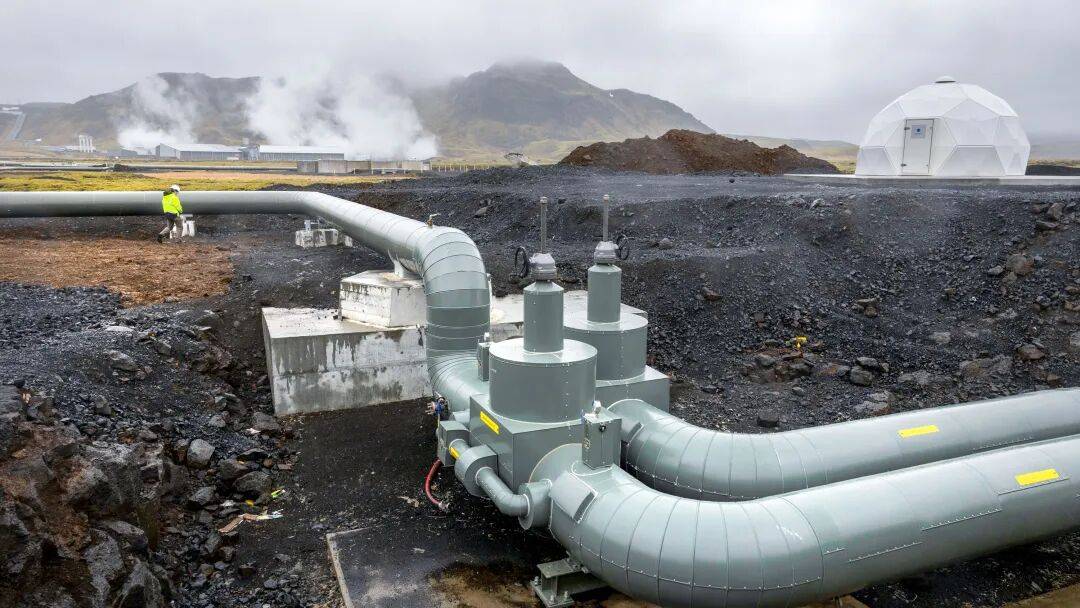
Arbor’s ‘vegetarian rocket engine’ power plant is actually an omnivore
Yahoo Finance· 2025-10-24 16:10
Core Insights - Arbor Energy has raised $55 million in Series A funding to enhance its power plant technology, which will now utilize both biomass and natural gas for energy production [2][3] - The shift to include natural gas is driven by the increasing electricity demand from data centers, allowing for a more reliable energy source compared to solely relying on biomass [3] - Arbor Energy's power plant employs oxy-combustion technology to capture CO2 efficiently, making it more cost-effective to store CO2 due to available tax credits [4][3] Company Developments - Arbor Energy is currently constructing a biomass-burning power plant in Louisiana, partially funded by a $41 million agreement with Frontier, which requires the removal of 116,000 tons of CO2 by 2030 [8] - The company is collaborating with natural gas providers that have low leakage rates to minimize the climate impact of its electricity generation [7] Environmental Considerations - The use of natural gas introduces concerns regarding methane emissions, which can significantly affect the overall climate impact of the power plant [5][6] - Research indicates that even low leakage rates of natural gas can equate the carbon footprint of gas-fired plants to that of coal plants, highlighting the importance of managing emissions [6]
X @Decrypt
Decrypt· 2025-10-24 15:55
https://t.co/hglQp7AMzv Files for National Bank Charter Following Circle, Stripe and Coinbase► https://t.co/KVQ24djsQ9 https://t.co/KVQ24djsQ9 ...
Crypto.com Files for National Bank Charter Following Circle, Stripe and Coinbase
Yahoo Finance· 2025-10-24 15:54
Group 1 - Crypto.com has filed for a national trust bank charter with the Office of the Currency Comptroller (OCC), joining other crypto companies like Circle and Coinbase in this pursuit [1][3] - The CEO of Crypto.com, Kris Marszalek, emphasized the company's focus on building a regulated and secure product portfolio, expressing excitement about the charter application as a step towards providing trusted services [2] - The OCC's approval for banks to manage crypto assets has led to increased interest from crypto firms in obtaining national trust bank charters, with Erebor recently becoming the first to earn a conditional federal charter [3] Group 2 - The Federal Reserve is exploring the issuance of "skinny master accounts" for crypto banks, which would allow access to the Fed for direct payments, albeit with limitations [4][5] - These "skinny" master accounts would not include benefits such as interest payments or overdraft protection, indicating a cautious approach towards crypto banking [5] - Crypto.com has recently relaunched its institutional exchange amid a more favorable regulatory environment in the U.S., although it faced a regulatory setback in Nevada [5]