Berkshire Hathaway Inc

Search documents
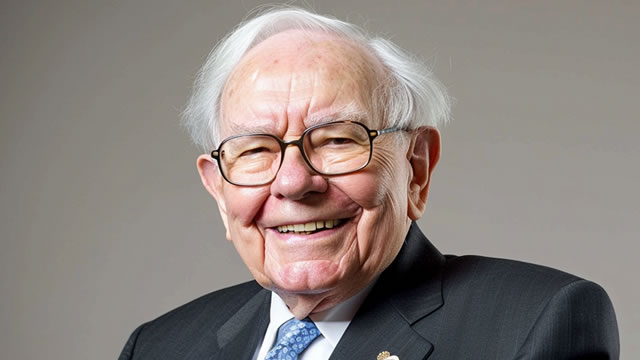
Warren Buffett Buys Stock Of Company With $500 Million Howard Stern Decision To Make
Benzinga· 2025-08-07 18:13
Group 1 - Sirius XM Holdings Inc is facing potential changes as Howard Stern's five-year contract worth $500 million is set to expire at the end of 2025, with reports suggesting the company may move on from him [2][5] - Warren Buffett has been increasing his investment in Sirius XM, owning approximately 119,776,692 shares valued at $2.5 billion, which constitutes 0.9% of Berkshire Hathaway's assets [3][4] - Sirius XM currently has around 33 million subscribers, but a report indicates that 15% of Stern's listeners, equating to about 2.7 million subscribers, would cancel if he were to leave [5][6] Group 2 - Sirius XM's second-quarter results showed a decline in revenue to $2.14 billion, with both subscription and advertising revenues decreasing year-over-year [6] - The stock price of Sirius XM is currently at $21.02, reflecting a year-to-date decline of 7.81% in 2025, with a 52-week trading range between $18.69 and $36.40 [7]


X @Cointelegraph
Cointelegraph· 2025-08-06 08:00
⚡️ INSIGHT: Warren Buffett's Berkshire reports holding $100.49B in cash by the end of June.If 5% was allocated to $BTC in early 2025, it would have generated $850M in additional gains by August. https://t.co/3lFJD0H4MD ...
Opportunity In Japan After Breakout Triggered By Trade Deal With U.S., Trump AI Speech Ahead
Benzinga· 2025-07-23 17:03
Core Insights - The article discusses the investment opportunities in Japan, particularly through the iShares MSCI Japan ETF (EWJ), following a trade deal between the U.S. and Japan that reduces tariffs on Japanese auto imports from 27.5% to 15% and includes a $550 billion investment package from Japan [12]. Group 1: Investment Opportunities - The trade deal is expected to boost investor sentiment towards Japan, with EWJ showing a breakout above previous resistance levels [12]. - Japan's corporate governance improvements, strategic trade agreements, and undervalued equities present a favorable investment landscape [12]. - The weak yen and the Bank of Japan's reluctance to raise interest rates further enhance the attractiveness of Japanese equities [12]. Group 2: Market Dynamics - Money flows in major tech stocks like Apple, Amazon, and NVIDIA are positive, while flows in Google and Tesla are negative, indicating mixed investor sentiment in the tech sector [5][7]. - The article highlights the importance of monitoring money flows in ETFs like SPY and QQQ for investment strategies [8]. Group 3: Political Landscape - Increased political instability in Japan is noted, with the Liberal Democratic Party losing its majority in the upper house and lower house elections, which could impact future economic policies [12]. Group 4: Earnings Reports - Upcoming earnings reports from major companies such as Alphabet, Tesla, and IBM are highlighted, which could influence market movements [12].

Should Schwab U.S. Large-Cap Value ETF (SCHV) Be on Your Investing Radar?
ZACKS· 2025-07-23 11:20
Core Viewpoint - The Schwab U.S. Large-Cap Value ETF (SCHV) is a passively managed fund that provides broad exposure to the Large Cap Value segment of the US equity market, with significant assets under management and low operating costs [1][4]. Group 1: Fund Overview - SCHV was launched on December 11, 2009, and is sponsored by Charles Schwab, accumulating over $12.91 billion in assets [1]. - The ETF targets companies with market capitalizations above $10 billion, typically offering more stability and lower risk compared to mid and small-cap companies [2]. Group 2: Financial Metrics - The ETF has an annual operating expense of 0.04%, making it one of the least expensive options in its category, and it offers a 12-month trailing dividend yield of 2.12% [4]. - The ETF's return is approximately 9.12% year-to-date and 12.74% over the past year, with a trading range between $23.55 and $28.20 in the last 52 weeks [8]. Group 3: Sector Exposure and Holdings - The largest sector allocation for SCHV is Financials, comprising about 23% of the portfolio, followed by Industrials and Healthcare [5]. - The top holding is Berkshire Hathaway Inc Class B (BRK/B) at approximately 3.51% of total assets, with the top 10 holdings accounting for about 18.85% of total assets under management [6]. Group 4: Performance and Risk - SCHV aims to match the performance of the Dow Jones U.S. Large-Cap Value Total Stock Market Index, which includes the large-cap value portion of the broader market index [7]. - The ETF has a beta of 0.88 and a standard deviation of 14.55% over the trailing three-year period, indicating a medium risk profile [8]. Group 5: Alternatives - Other ETFs in the same space include the Schwab U.S. Dividend Equity ETF (SCHD) and the Vanguard Value ETF (VTV), with SCHD having $71.16 billion in assets and VTV at $140.23 billion [11].

Coca-Cola Q2 Preview: Will Warren Buffett Favorite Acknowledge Donald Trump's Sugar Push?
Benzinga· 2025-07-21 15:17
Core Viewpoint - Coca-Cola is set to report its second-quarter financial results, with analysts expecting a revenue increase to $12.54 billion, up from $12.36 billion in the same quarter last year [1] Earnings Estimates - Analysts predict Coca-Cola will report quarterly earnings of 83 cents per share, a slight decrease from 84 cents in the previous year [3] - The company has consistently beaten earnings estimates, achieving this in five consecutive quarters and eight out of the last ten [3][2] Market Context - Coca-Cola's results come after PepsiCo's recent earnings report, which exceeded analyst expectations and raised full-year guidance [4][5] - The weak dollar is anticipated to positively impact Coca-Cola's earnings in key foreign markets, such as Latin America and Asia [6] Analyst Insights - Bank of America Securities analyst Bryan D. Spillane remains bullish on Coca-Cola, citing resilient growth and improving fundamentals [6] - Spillane has reiterated a Buy rating with a price target of $66, suggesting that Coca-Cola's strength is not fully reflected in its stock price [7] Key Items to Watch - Analysts will be focused on the potential impact of tariffs and the company's response to President Trump's comments about using real cane sugar in its beverages [10][8] - Coca-Cola may consider offering a version of its product with real cane sugar while maintaining its regular formula due to cost and logistics concerns [9] Stock Performance - Coca-Cola stock is currently trading at $70.08, reflecting a year-to-date increase of 13.3% [13] - The stock's performance is significant as it is a key holding in Warren Buffett's Berkshire Hathaway, which owns over 400 million shares [11][12]


Should Vanguard Value ETF (VTV) Be on Your Investing Radar?
ZACKS· 2025-07-21 11:21
Core Viewpoint - The Vanguard Value ETF (VTV) is a leading passively managed ETF focused on the Large Cap Value segment of the US equity market, with significant assets under management and low expense ratios, making it an attractive option for investors seeking stability and long-term growth [1][4]. Group 1: Fund Overview - VTV was launched on January 26, 2004, and has accumulated over $139.18 billion in assets, making it the largest ETF in its category [1]. - The ETF targets large cap companies, defined as those with market capitalizations above $10 billion, which are generally more stable and less volatile compared to mid and small cap companies [2]. Group 2: Investment Characteristics - Value stocks, which VTV focuses on, typically have lower price-to-earnings and price-to-book ratios, and while they have historically outperformed growth stocks in the long term, growth stocks may perform better in strong bull markets [3]. - The ETF has an annual operating expense ratio of 0.04%, making it one of the least expensive options available, and it offers a 12-month trailing dividend yield of 2.18% [4]. Group 3: Sector Exposure and Holdings - VTV has a significant allocation to the Financials sector, comprising approximately 25.10% of the portfolio, followed by Healthcare and Industrials [5]. - The top holdings include Berkshire Hathaway Inc (3.59% of total assets), Jpmorgan Chase & Co, and Exxon Mobil Corp, with the top 10 holdings accounting for about 9.06% of total assets [6]. Group 4: Performance Metrics - The ETF aims to match the performance of the CRSP U.S. Large Cap Value Index, with a year-to-date gain of approximately 6.11% and a 9.18% increase over the past year as of July 21, 2025 [7]. - VTV has a beta of 0.81 and a standard deviation of 13.92% over the trailing three-year period, indicating a medium risk profile with effective diversification across 333 holdings [8]. Group 5: Competitive Landscape - VTV holds a Zacks ETF Rank of 1 (Strong Buy), indicating strong expected returns and favorable expense ratios, positioning it as a prime choice for investors interested in the Large Cap Value segment [9]. - Alternative ETFs in the same space include the iShares Russell 1000 Value ETF (IWD) with $62.49 billion in assets and an expense ratio of 0.19%, and the Schwab U.S. Dividend Equity ETF (SCHD) with $70.54 billion in assets and a 0.06% expense ratio [10]. Group 6: Market Trends - Passively managed ETFs like VTV are gaining popularity among both retail and institutional investors due to their low costs, transparency, flexibility, and tax efficiency, making them suitable for long-term investment strategies [11].

Should Invesco RAFI US 1000 ETF (PRF) Be on Your Investing Radar?
ZACKS· 2025-07-17 11:21
Core Viewpoint - The Invesco RAFI US 1000 ETF (PRF) is designed to provide broad exposure to the Large Cap Value segment of the US equity market, with significant assets under management and a focus on stable, lower-risk investments [1][2]. Group 1: Fund Overview - The Invesco RAFI US 1000 ETF was launched on December 19, 2005, and has accumulated over $7.83 billion in assets, making it one of the larger ETFs in its category [1]. - The ETF targets companies with a market capitalization above $10 billion, which are generally considered stable with more reliable cash flows compared to mid and small cap companies [2]. Group 2: Investment Characteristics - Value stocks, which the ETF primarily invests in, typically have lower price-to-earnings and price-to-book ratios, as well as lower sales and earnings growth rates [3]. - Historically, value stocks have outperformed growth stocks in most markets, although they may underperform during strong bull markets [3]. Group 3: Costs and Performance - The ETF has an annual operating expense ratio of 0.33% and a 12-month trailing dividend yield of 1.76%, which is competitive within its peer group [4]. - As of July 17, 2025, the ETF has returned approximately 6.18% year-to-date and 8.97% over the past year, with a trading range between $35.77 and $43.05 in the last 52 weeks [7]. Group 4: Sector Exposure and Holdings - The ETF has a significant allocation to the Financials sector, comprising about 21.80% of the portfolio, followed by Information Technology and Healthcare [5]. - Microsoft Corp (MSFT) represents about 2.39% of total assets, with the top 10 holdings accounting for approximately 19.42% of total assets under management [6]. Group 5: Risk Profile - The ETF has a beta of 0.91 and a standard deviation of 15.22% over the trailing three-year period, indicating a medium risk profile [8]. - With around 1,092 holdings, the ETF effectively diversifies company-specific risk [8]. Group 6: Alternatives - The Invesco RAFI US 1000 ETF has a Zacks ETF Rank of 3 (Hold), suggesting it is a viable option for investors seeking exposure to the Large Cap Value segment [9]. - Alternative ETFs in this space include the Schwab U.S. Dividend Equity ETF (SCHD) and the Vanguard Value ETF (VTV), which have larger asset bases and lower expense ratios [10]. Group 7: Conclusion - Passively managed ETFs like the Invesco RAFI US 1000 ETF are favored by both institutional and retail investors due to their low costs, transparency, flexibility, and tax efficiency [11].
Should Invesco Russell 1000 Dynamic Multifactor ETF (OMFL) Be on Your Investing Radar?
ZACKS· 2025-07-17 11:21
Core Viewpoint - The Invesco Russell 1000 Dynamic Multifactor ETF (OMFL) is designed to provide broad exposure to the Large Cap Growth segment of the US equity market, with significant assets under management and a focus on large-cap companies [1][10]. Group 1: Fund Overview - OMFL is a passively managed ETF launched on November 8, 2017, and has amassed over $4.93 billion in assets, making it one of the larger ETFs in its category [1]. - The ETF has an annual operating expense ratio of 0.29%, which is competitive within its peer group, and a 12-month trailing dividend yield of 0.71% [4]. Group 2: Market Characteristics - Large cap companies, defined as those with market capitalizations above $10 billion, are generally more stable and exhibit predictable cash flows compared to mid and small cap companies [2]. - Growth stocks, while having higher sales and earnings growth rates, also come with higher valuations and volatility, making them a safer bet in strong bull markets but less effective in other financial environments [3]. Group 3: Sector Exposure and Holdings - The ETF has a significant allocation to the Information Technology sector, comprising about 22.80% of the portfolio, followed by Consumer Staples and Financials [5]. - Microsoft Corp (MSFT) is the largest holding at approximately 5.38% of total assets, with the top 10 holdings accounting for about 43.87% of total assets under management [6]. Group 4: Performance Metrics - As of July 17, 2025, the ETF has returned approximately 6.57% year-to-date and 11.67% over the past year, with a trading range between $47.65 and $58.13 in the past 52 weeks [8]. - The ETF has a beta of 1 and a standard deviation of 16.04% for the trailing three-year period, indicating effective diversification of company-specific risk with about 277 holdings [8]. Group 5: Alternatives and Comparisons - OMFL holds a Zacks ETF Rank of 2 (Buy), indicating strong expected performance based on various factors [10]. - Other ETFs in the same space include the Vanguard Growth ETF (VUG) and Invesco QQQ (QQQ), with VUG having $178.36 billion in assets and an expense ratio of 0.04%, while QQQ has $355.54 billion in assets and charges 0.20% [11]. Group 6: Investment Appeal - Passively managed ETFs like OMFL are favored by both institutional and retail investors due to their low costs, transparency, flexibility, and tax efficiency, making them an excellent choice for long-term investors [12].


Nvidia Vs. Microsoft Vs. Apple: Who Will Hit $5 Trillion Market Cap First?
Benzinga· 2025-07-14 15:22
NVIDIA Corporation NVDA has taken the world by storm, becoming the first public company to surpass the $4 trillion market capitalization milestone. A new poll asks whether Nvidia will also be the first to hit $5 trillion or will be beaten by one of the other tech giants. What Happened: Nvidia has quickly climbed the ranks as one of the most valuable companies in the world, first reaching a $1 trillion market cap in May 2023 and becoming the most valuable company less than two years later. The semiconductor ...




Warren Buffett's Giant Berkshire Portfolio: Top 10 Includes Banks, Oil, And Apple
Benzinga· 2025-05-05 21:01
Over multiple decades, legendary investor Warren Buffett has helped produce incredible returns for conglomerate Berkshire Hathaway Inc BRK BRK, often times outperforming the S&P 500.With news that Buffett is stepping down as Berkshire CEO at the end of the year, here's a look at the top 10 stock holdings of the Berkshire Hathaway portfolio.Buffett Builds Berkshire Hathaway: Buffett has shaped Berkshire Hathaway from the early days of a textile maker into a conglomerate that owns companies like Duracell, Dai ...