Ally Financial Inc.

Search documents
Capital One Stock Rises 21.6% YTD: Is There More Upside Ahead?
ZACKS· 2025-11-07 17:16
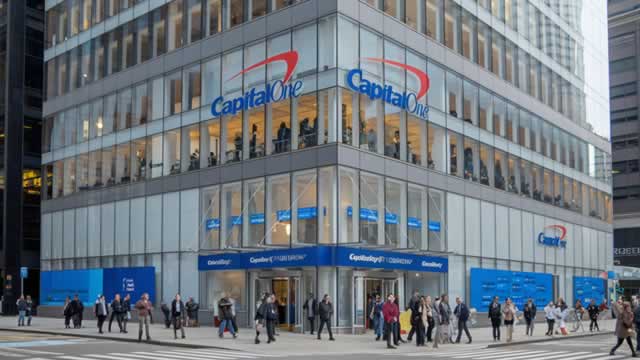
Core Insights - Capital One Financial (COF) stock has increased by 21.6% year-to-date, outperforming peers Ally Financial (ALLY) and OneMain Holdings, Inc. (OMF), as well as the Zacks Finance Sector and the S&P 500 index, while underperforming the industry overall [1] Financial Performance - Adjusted earnings for Capital One rose by 47.3% to $16 per share in the first nine months of 2025 compared to the previous year, with revenues increasing by 30.9% to $37.9 billion, driven by higher net interest income (NII) and non-interest income, alongside an increase in loans held for investments [4] - Non-interest expenses increased by 37.4% during the same period [4] - Capital One's NII recorded a compound annual growth rate (CAGR) of 6% over the five years ending in 2024, with NIM expanding to 7.69% in the first nine months of 2025 from 6.83% in the prior year quarter [9][10] Strategic Acquisitions - The company has pursued strategic buyouts, including the acquisition of Discover Financial in May 2025 for $35.3 billion, which has reshaped the credit card industry and enhanced shareholder value [6] - Other acquisitions, such as Velocity Black, ING Direct USA, and HSBC's U.S. Credit Card Portfolio, have transformed Capital One into a diversified financial services firm [7] Market Position and Growth Drivers - Rising demand for credit card loans and online banking is expected to drive continued growth in NII and NIM [12] - Capital One's Domestic Credit Card segment contributed 93.7% of Credit Card net revenues in the first nine months of 2025, with segment net revenues growing by 33.5% year-over-year and domestic credit card loans surging by 70% [13] Financial Strength and Capital Distribution - As of September 30, 2025, Capital One had total debt of $51.5 billion and cash and cash equivalents of $55.3 billion, with strong investment-grade long-term senior debt ratings [15] - The company has a common equity tier 1 ratio of 14.4% and a total capital ratio of 17.4%, both well above regulatory requirements [17] - Capital One recently increased its dividend by 33.3% to 80 cents per share and authorized a $16 billion share repurchase program, indicating strong financial health [20][24] Analyst Sentiment and Future Outlook - The Zacks Consensus Estimate for 2025 and 2026 earnings has been revised upward by 8.9% and 2.8%, respectively, indicating projected year-over-year growth of 33.5% for 2025 [25] - Capital One is well-positioned to capitalize on the Discover acquisition and expand its presence in the credit card market, supported by revenue diversification and a solid balance sheet [27] Valuation Metrics - Capital One's price-to-book (P/B) ratio is 1.22X, higher than the industry's 0.81X, indicating it is trading at a premium [29][31] - The company's return on equity (ROE) stands at 10.94%, compared to the industry's 10.22%, demonstrating efficient capital allocation [31]


Ally trims headcount by another 2%
Yahoo Finance· 2025-11-06 09:23
Core Insights - Ally Financial is implementing a second round of layoffs this year, reducing about 2% of its workforce, which consists of approximately 10,000 employees [1][3] - The layoffs primarily affect managerial positions and are part of a strategy to align the organizational structure with a more focused business model [2][3] - Affected employees will receive full salary and benefits for the remainder of the year, along with separation packages [3] Company Strategy - The decision to reduce workforce is aimed at enhancing efficiency and effectiveness in delivering services to customers and stakeholders [5] - Ally Financial previously announced layoffs in January, which involved less than 5% of its workforce, and plans to exit its mortgage business [3][4] - The bank's CEO expressed confidence in the long-term strategy and the ability to deliver compelling returns despite the workforce reductions [5] Industry Trends - Other major banks are also considering workforce reductions, with executives from Wells Fargo and Bank of America indicating similar trends [5][6] - Bank of America has significantly reduced its consumer banking workforce from 101,000 to 55,000 over the past 15 years [7]

独家洞察 | 美允许401(k)退休金计划进军私募市场:接下来会发生什么?
慧甚FactSet· 2025-11-06 02:01
Core Viewpoint - The article discusses the significant policy shift initiated by President Trump's executive order on August 7, which aims to broaden the investment options for retirement plan participants, allowing them to invest in alternative assets beyond traditional stocks and bonds [3][4]. Group 1: Policy Changes - The executive order represents the most substantial expansion in the U.S. retirement investment landscape in decades, encouraging retirement plans to allocate funds to alternative assets such as private equity, private credit, infrastructure, real estate, and digital assets [3][4]. - The order does not amend existing pension or securities laws but mandates the Department of Labor (DOL) and the Securities and Exchange Commission (SEC) to develop new regulations in consultation with the IRS and the Treasury Secretary [4]. Group 2: Implementation Timeline - Proposed rules are expected to be released by February 3, 2026, which is 180 days post-executive order, with final rules to be established by the end of 2026 [4]. - The new regulations will likely impact fiduciary duties and compliance obligations under ERISA and may affect disclosure and conduct standards under federal securities laws [4]. Group 3: CUSIP System Expansion - CUSIP Global Services announced an expansion of its identification system to include private market instruments, aligning with the direction of the executive order [5]. - The introduction of standardized identification codes for private assets will enhance transparency and compliance with SEC reporting requirements, facilitating better tracking and evaluation of asset holdings [5]. Group 4: Stakeholder Responsibilities - Plan sponsors, asset managers, and private credit providers are encouraged to participate in the implementation process by providing feedback and guidance on integrating private assets into defined contribution pension plans [5].

Truist Lifts PT on Ally Financial (ALLY) to $47, Maintains Buy Following Q3 Report
Yahoo Finance· 2025-11-01 02:27
Core Viewpoint - Ally Financial Inc. is considered one of the best stocks to buy and hold for the next decade, with multiple analysts raising their price targets following the company's Q3 2025 report [1][2][3]. Analyst Ratings and Price Targets - Truist raised Ally Financial's price target to $47 from $45 while maintaining a Buy rating after the Q3 report [1]. - JPMorgan increased the price target to $43 from $42 and kept an Overweight rating, citing potential upside from improved credit performance [2]. - TD Cowen upgraded Ally Financial to Buy from Hold with a new price target of $50, up from $43, highlighting strong credit performance and margins that could lead to a 14% ROTCE by 2027 [3]. Company Overview - Ally Financial Inc. is a digital financial services company that offers a variety of digital financial products and services in the US, Canada, and Bermuda [4].
What a Federal Reserve rate cut means for your finances
Yahoo Finance· 2025-10-29 19:42
Core Points - The Federal Reserve has cut its benchmark interest rate by a quarter point for the second time since September, following a nine-month period without cuts [1] - The federal funds rate influences borrowing costs for consumers, affecting credit cards, auto loans, and mortgages [1][3] - The Fed aims to manage inflation and encourage full employment, facing challenges with inflation above the 2% target and a weak job market [3] Impact on Savings and Loans - Falling interest rates will reduce the attractiveness of yields on savings accounts and certificates of deposit [4] - After the last rate cut in September, three of the top five high-yield savings accounts reduced their rates, with current top rates around 4.46% to 4.6% [5] - The national average for traditional savings accounts is significantly lower at 0.63% [6] - Prospective homebuyers have already factored in the recent rate cut into the housing market [7]
Navient Q3 Earnings Beat on NII Growth & Lower Expenses, Provisions Up
ZACKS· 2025-10-29 19:16
Core Insights - Navient Corporation (NAVI) reported third-quarter 2025 adjusted earnings per share (EPS) of 29 cents, exceeding the Zacks Consensus Estimate of 18 cents, and up from 28 cents in the prior-year quarter [1][8] - The results were driven by an increase in net interest income (NII) and a significant reduction in expenses, although a decline in other income and higher provisions for loan losses posed challenges [1][10] Financial Performance - NII increased by 4.2% year over year to $146 million, surpassing the Zacks Consensus Estimate by 2.8% [3] - Total other income fell sharply by 92.6% year over year to $23 million [3] - Provisions for loan losses rose to $168 million from $42 million in the prior-year quarter, reflecting elevated delinquency rates and macroeconomic factors [2][3][8] - Total expenses decreased by 67.8% year over year to $110 million [3][8] Segment Performance - Federal Education Loans segment generated a net income of $35 million, up 29.6% year over year, with net FFELP loans at $28.9 billion, down 8.1% sequentially [4] - Consumer Lending segment reported a net loss of $76 million compared to a net profit of $27 million in the year-ago quarter, with a delinquency rate greater than 30 days at 6.1%, up from 5.3% [4][5] Liquidity and Capital Management - As of September 30, 2025, the company had $571 million in total unrestricted cash and liquid investments [7] - NAVI plans to utilize various sources for liquidity, including cash, predictable operating cash flows, and potential debt issuance [6] Capital Distribution Activities - In Q3, the company paid $16 million in common stock dividends and repurchased shares for $26 million [9] - A new $100 million share-repurchase program was authorized, in addition to approximately $26 million remaining under the prior authorization [9] Strategic Outlook - The company is positioned as a significant holder of private education loans, with diversified business segments expected to support revenue growth [10] - Strategic actions to control expenses are anticipated to bolster financial performance in the near term, despite concerns over higher provisions for loan losses [10]

Navient's Q3 Earnings on the Deck: Here's What You Should Know
ZACKS· 2025-10-23 19:11
Core Insights - Navient Corporation (NAVI) is set to report its third-quarter 2025 results on October 29, with expectations of revenue growth but a decline in earnings year-over-year [1][9] Revenue Expectations - Quarterly revenues are projected to rise by 1.6% to $142.2 million, while earnings per share (EPS) are expected to drop by 35.7% to 18 cents [3][9] - The Consumer Lending segment is anticipated to show a decent rise in revenues due to solid consumer loan demand, while the Federal Education Loans segment may face pressure from lower prepayment levels and subdued originations [4] - The consensus estimate for net interest income (NII) is $142.2 million, reflecting an 8.6% sequential increase, with specific estimates of $50.3 million for Federal Education loans (up 2.7%) and $107.8 million for consumer lending (down 4.6%) [5] - Total non-interest income is estimated to decline by 27.5% sequentially to $23.9 million [6] Expense Management - Ongoing cost-control initiatives are expected to enhance operating efficiency and reduce expenses, aided by strategic actions such as divestitures and workforce reductions [7][9] Earnings Surprise History - NAVI has a notable earnings surprise history, having outperformed estimates in three of the last four quarters, with an average earnings surprise of 17.97% [2] Earnings ESP and Zacks Rank - The Earnings ESP for Navient is -3.44%, indicating a lower likelihood of an earnings beat, and the company currently holds a Zacks Rank of 3 (Hold) [8][10]
SouthState Q3 Earnings Surpass Estimates, NII & Fee Income Rise Y/Y
ZACKS· 2025-10-23 16:20
Core Insights - SouthState Corporation (SSB) reported third-quarter 2025 adjusted earnings per share of $2.58, exceeding the Zacks Consensus Estimate of $2.20, and reflecting a 35.8% increase year-over-year [1][8] - The results were driven by a rise in net interest income (NII) and non-interest income, along with the successful integration of Independent Bank, acquired in January 2025 [1][10] - However, higher expenses and provisions posed challenges to overall performance [1][10] Revenues & Expenses - Total revenues for the quarter reached $698.8 million, marking a 63.9% year-over-year increase and surpassing the Zacks Consensus Estimate by 6.7% [3][8] - NII was reported at $599.7 million, up 70.6% from the previous year, with the net interest margin increasing to 4.06% from 3.40% [3][4] - Non-interest income amounted to $99.1 million, reflecting a 32.2% increase year-over-year [3] - Non-interest expenses rose significantly by 50.8% to $372.3 million, primarily due to merger and restructuring costs related to the Independent Bank acquisition [4][8] - The efficiency ratio improved to 49.88% from 56.58% in the prior-year quarter, indicating enhanced profitability [4] Loans & Deposits - As of September 30, 2025, net loans stood at $47.1 billion, showing a nearly 1% increase from the prior quarter [5] - Total deposits were $54.1 billion, with a slight sequential rise [5] Asset Quality - Provision for credit losses was $5.1 million, compared to provision benefits of $6.9 million in the prior-year quarter [6] - The allowance for credit losses as a percentage of loans decreased to 1.24%, down 15 basis points year-over-year [6] - The ratio of annualized net charge-offs to total average loans increased to 0.27%, up from 0.07% in the prior-year quarter [6] - Non-performing loans to total loans rose to 0.63%, an increase of seven basis points from the prior-year quarter [6] Capital Ratios & Profitability Ratios - As of September 30, 2025, the Tier I leverage ratio was 9.4%, down from 10% in the prior-year quarter [9] - The Tier 1 common equity ratio decreased to 11.5% from 12.4% in the prior-year quarter [9] - The annualized return on average assets was 1.49%, up from 1.25% in the year-ago period [9] - Return on average common equity improved to 11.04% compared to 9.91% in the prior-year quarter [9] Overall Assessment - SSB concluded the third quarter positively, with both top and bottom lines showing year-over-year growth [10] - The increase in NII and non-interest income is expected to support future financial performance [10] - The growth in loan and deposit balances is viewed as encouraging [10] - The acquisition of Independent Bank enhances SSB's presence in rapidly growing U.S. Metropolitan Statistical Areas [10] - However, elevated expenses from expansion efforts may impact profitability in the near term [10]


6 best bank account features for freelancers
Yahoo Finance· 2025-10-22 22:12
Core Insights - Freelancers require specialized bank accounts that help manage fluctuating income and complex tax situations, focusing on features that simplify expense tracking and maximize profits [1] Group 1: Essential Features for Freelancer Bank Accounts - No monthly fees are crucial for freelancers as unpredictable income makes it hard to maintain a minimum balance, thus avoiding accounts that charge monthly maintenance fees is recommended [3][4] - Competitive interest rates are important for freelancers to maximize earnings; high-yield savings accounts can offer 3% to 4% APY compared to traditional accounts that may offer only 0.01% [5][6] - Easy transfers to and from accounts are necessary due to varied payment methods from clients, making it essential to choose banks that facilitate efficient and fee-free transactions [7] Group 2: Additional Functionalities - Expense tracking and built-in bookkeeping tools are beneficial for freelancers managing multiple projects, helping them track income, spot errors, and simplify tax filing [7][8] - Mobile check deposit functionality allows freelancers to deposit checks quickly via banking apps, saving time and providing immediate access to funds [8] - Access to digital budgeting tools from banks like Capital One and Current can assist freelancers in tracking spending, setting savings goals, and monitoring financial progress [9]
Four takeaways from the first week of bank earnings season
American Banker· 2025-10-22 19:35
Core Insights - Banks' credit quality is under scrutiny due to fraud scandals and a weakening labor market, despite positive financial reports [1][2] - A significant sell-off in bank stocks occurred, with the KBW Nasdaq Regional Bank Index dropping approximately 8% in two days, although bank executives assert that losses are isolated [2][3] Group 1: Fraud Concerns - An increase in serious borrower fraud schemes has negatively impacted the earnings season, despite initial positive reports from major banks like Wells Fargo and Bank of America [8][6] - Concerns about banks' exposure to fraud have been heightened by a $200 million Ponzi scheme linked to WaterStation, leading to the departure of First Federal Bancorp's CEO [9][10] - Western Alliance Bancorp and Zions Bancorp disclosed substantial loans to funds involved in distressed commercial mortgage loans, but both banks assured investors that these situations were isolated incidents [11][12] Group 2: Mergers and Acquisitions - Bank mergers and acquisitions (M&A) have become a hot topic, with many banks feeling pressure to grow or consider selling [7][16] - Home Bancshares expressed interest in acquiring another bank, indicating ongoing consolidation in the industry [18][20] - First Horizon Corp. has been viewed as a potential takeover target, with its CEO expressing confidence in future merger opportunities [20][21] Group 3: Consumer Behavior - Despite concerns about a softening labor market and other macroeconomic factors, banks reported stable or improving consumer business and asset quality [22][23] - JPMorganChase noted robust consumer spending and lower delinquency rates, although macroeconomic risks remain a concern [24][25] - PNC Financial Services Group highlighted that consumer spending is primarily driven by wealthier clients benefiting from a rising stock market [28][29]