BYD

Search documents
China's BYD, Exxon Mobil to deepen hybrid technology partnership
Reuters· 2026-01-27 03:49
Group 1 - BYD and Exxon Mobil are set to deepen their partnership in hybrid technology, indicating a strategic collaboration between the Chinese electric vehicle manufacturer and the U.S. oil giant [1]


India To Slash Tariffs On EU Car Imports To 40%: How This Move Could Affect Elon Musk's Tesla, Stellantis - Tesla (NASDAQ:TSLA)
Benzinga· 2026-01-26 08:05
Group 1 - The Indian government has reached an agreement with the EU to reduce tariffs on cars imported from the bloc from 110% to 40%, with further reductions expected over time [1][2] - The immediate tariff reduction applies to cars with an import price of around 15,000 Euros (approximately $17,700), potentially benefiting up to 200,000 vehicles [3] - The agreement is expected to positively impact companies like Tesla and Stellantis, as reduced tariffs could enhance their market presence in India [4][6] Group 2 - Tesla may supply vehicles to the Indian market from its Gigafactory in Berlin to take advantage of lower tariffs, as current imports come from Shanghai [5] - Stellantis, which includes brands like Jeep and Citroen, could expand its portfolio in India due to the reduced tariffs, despite local manufacturing challenges [6] - The U.S. has not reached a similar tariff agreement with India, maintaining a 50% tariff, which contrasts with the EU-India deal [7]


储能电池:2025 财年出货量约 640GWh,同比增 90%;12 月出货量回顾-ESS Battery_ ~640Gwh FY25 shipment, _90% y_y; December shipment review
2026-01-26 02:50
Summary of ESS Battery Industry Conference Call Industry Overview - **Global ESS Battery Demand**: The demand for Energy Storage Systems (ESS) batteries is projected to accelerate significantly, with shipments expected to reach approximately 640 GWh in FY25, reflecting a year-over-year growth of over 90% [2][5][37]. - **China's Role**: China's domestic demand is a primary growth driver, with shipments surging over 100% year-over-year in 4Q25 due to supportive policies [2][11]. The country accounts for about 97% of global ESS battery supply [41]. Key Insights - **December Shipment Performance**: December 2025 shipments were robust at 85 GWh, marking a 34% month-over-month increase and a 90% year-over-year increase [2][21]. - **Future Projections**: The base case model anticipates global ESS battery shipments to grow over 40% to around 900 GWh in 2026, driven by policy support from China and strong order momentum from Europe [3][37]. - **Policy Changes**: China's Ministry of Finance announced a reduction in VAT export rebates from 9% to 6% starting April 2026, which is expected to optimize capacity structure and reduce market involution, benefiting leading players like CATL [2]. Company Highlights - **CATL**: As the largest ESS battery maker globally, CATL is well-positioned to gain market share with new capacity releases. It is projected that ESS will account for 20% of CATL's total battery production volume in FY26 [12][14][109]. - **Sungrow**: Recognized as the largest solar inverter producer, Sungrow is expected to benefit from rising ESS demand, particularly in emerging markets [4][12]. - **LGES**: LG Energy Solution is well-positioned to capture growth in the US ESS market, having commenced production of LFP ESS batteries in Michigan [12][14]. - **BYD**: ESS accounts for 17% of BYD's total battery production volume in FY25, indicating a growing focus on this segment [106]. Market Dynamics - **Export Trends**: Chinese ESS battery exports to the US saw a significant increase of 126% year-over-year in FY25, driven by rush purchases ahead of tariff hikes [48]. However, shipments to the US slowed to 9% year-over-year in 4Q25 due to tariff shifts [13]. - **Price Trends**: ESS battery prices from Chinese manufacturers increased by 1-2% in 4Q25, following a rebound of 5-10% earlier in the year [13][100]. Competitive Landscape - **Market Share**: CATL's global market share fell by 10 percentage points in FY25 due to capacity constraints, while competitors like Hithium and BYD gained market share [72][99]. CATL holds nearly 50% of the US market share and about 20% in the EU [50]. - **Emerging Competitors**: Companies like Gotion and Narada are gaining traction in the telecom ESS market, with Gotion achieving a 5 percentage point market share increase [99]. Conclusion The ESS battery market is poised for substantial growth, driven by strong demand in both domestic and international markets, particularly in China and the US. Leading companies like CATL, Sungrow, and LGES are well-positioned to capitalize on these trends, although they face increasing competition and market dynamics that could impact their market shares.



Why Lucid Is Zigging While Rival Tesla Zags
Yahoo Finance· 2026-01-25 20:22
Core Insights - Tesla and Lucid Motors are both electric vehicle makers but operate under significantly different business models and strategies [1] - Tesla has successfully expanded its customer segments and geographical reach, while Lucid aims to achieve similar growth in the future [1] Market Entry Strategies - Both companies see potential in markets like India and Saudi Arabia, which currently have low EV adoption but optimistic consumer bases [2] - Tesla's entry into India contrasts with Lucid's approach in Saudi Arabia, highlighting their differing strategies [2] Lucid Motors' Developments - Lucid opened a manufacturing plant in Saudi Arabia in September 2023, with the Public Investment Fund (PIF) holding a nearly 60% stake [4] - The plant is expected to begin full-scale production by 2026, aiming for an annual capacity of 150,000 vehicles by 2029 [4] Market Opportunities - Saudi Arabia's Vision 2030 plan aims to diversify its economy away from oil, creating a favorable environment for EV manufacturers [5] - Lucid is leveraging local production to avoid high import tariffs and establish its brand early in the market [6] Competitive Challenges - Tesla faces challenges in India due to high import duties, leading to a starting price of nearly $70,000 for the Model Y and necessitating discounts to clear inventory [6]

Another Signal a Massive Fight Is Headed Toward Detroit Autos
Yahoo Finance· 2026-01-25 20:05
Core Insights - Bank of America analyst John Murphy warned in mid-2024 that General Motors and Ford should consider exiting the Chinese market due to the rapid advancement of subsidized Chinese automakers in technology and pricing for electric vehicles [1] - The current state of China's automotive market is characterized by a severe price war, which is negatively impacting foreign automakers [2] Group 1: Market Dynamics - Chinese brands are intensifying their competition and expanding beyond their borders, with full-electric vehicle exports increasing by 67% to 1.65 million vehicles in 2025 [4] - The global automotive industry is witnessing a shift, as Tesla has lost its position as the largest seller of EVs, facing challenges such as the end of the federal EV tax credit and an aging product lineup [5] - BYD, a leading Chinese EV manufacturer, reported selling 2.26 million EVs globally in 2025, marking a 28% increase from 2024, with a growing share of sales occurring outside China [6] Group 2: Strategic Responses - U.S. automakers are aware that Chinese vehicles will eventually enter the U.S. market, and they are preparing by adjusting their offerings, such as Tesla's introduction of a more affordable Model 3 sedan priced at approximately $37,000 [7] - The rise in Chinese vehicle exports is accompanied by a fierce price war domestically, indicating a challenging environment for both local and foreign competitors [8]
BYDDY Accelerates Premium EV Push With 2026 Flagship Launches
ZACKS· 2026-01-23 18:55
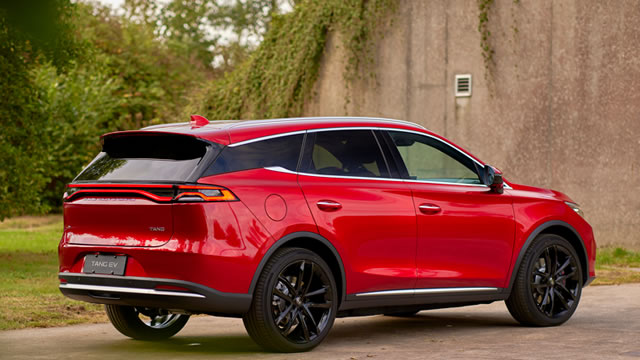
Core Insights - BYD Co., China's largest automaker, is set to launch two flagship electric vehicles, the Seal 08 Sedan and Sealion 08 SUV, in early 2026 [1][10] - These new models will be positioned above the existing Ocean Series vehicles, which include popular models like Dolphin and Seal, and are designed to cater to the growing demand for premium electric vehicles [2][10] Product Details - The Seal 08 will be a mid-to-large coupe sedan, while the Sealion 08 will be a rugged mid-to-large SUV, both featuring BYD's latest battery technology and advanced driver-assistance systems [3][4] - The design of the Seal 08 emphasizes a sporty aesthetic inspired by BYD's Ocean S concept, while the Sealion 08 is designed to be strong and spacious, offering more interior room than its predecessor [3][4] Sales Performance - Since its launch in November 2021, BYD's Ocean Series has achieved cumulative sales of 6 million units over four years, with several models surpassing 1 million units sold [5] - In 2025, BYD sold over 2.25 million all-electric vehicles, outselling Tesla by more than 600,000 vehicles, indicating strong sales momentum [7] Future Plans - In addition to the Ocean Series, BYD plans to launch two flagship models from its Dynasty lineup, the Han sedan 9 series and the Tang SUV 9 series, in the first half of 2026 [6] - The company aims to further solidify its position in the premium EV segment and extend its global lead in electric vehicles with the introduction of these new models [7]
Tesla Delivers Disappointing News That Could Impact Investor Returns
Yahoo Finance· 2026-01-23 13:30
Core Business Performance - Tesla experienced a significant decline in vehicle deliveries, with approximately 1.63 million vehicles delivered in 2025, marking an 8.5% decrease from 2024, the largest year-over-year drop in its history [3] - In Q4 2025, deliveries fell by 16% year over year, and Tesla lost its position as the world's top electric vehicle seller to BYD, which sold around 2.26 million battery EVs in 2025 [4] Market Dynamics - The decline in Tesla's sales can be attributed to the rise of lower-cost competitors like BYD and Geely, as well as the expiration of government tax credits, specifically the $7,500 U.S. federal EV tax credit that ended in September 2025 [5] Future Prospects - Tesla's long-term investment potential is heavily reliant on the successful commercialization of robotaxis, which could transform its business model to resemble that of a software company rather than a traditional automaker [6] - The current stock price reflects expectations of significant growth, trading at 201 times projected earnings for the next 12 months, which is substantially higher than competitors like Nvidia and Amazon [8][9]
Wall Street Breakfast Podcast: Futures Slip As Trading Resumes
Seeking Alpha· 2026-01-20 11:52
Group 1: Stock Market Movements - Logitech (LOGI), NetApp (NTAP), and CDW (CDW) saw declines of 6%, 4%, and 2% respectively after Morgan Stanley downgraded all three, citing a "perfect storm" for IT hardware due to the slowest corporate spending in 15 years outside of COVID-19 [4] - The downgrade was influenced by a 4Q CIO survey indicating softer demand, with resellers expecting 30%-60% of customers to cut budgets for PCs, servers, and storage amid rising component prices [4][5] - The hardware down-cycle is expected to last three to five quarters, with CDW downgraded to Equal-Weight (PT $141), Logitech to Underweight (PT $89), and NetApp to Underweight (PT $89) [5] Group 2: NYSE Developments - The New York Stock Exchange (NYSE) is developing a platform for 24/7 trading of tokenized U.S.-listed equities and ETFs using blockchain technology [5][6] - This platform aims to enable instant settlement, dollar-sized orders, and stablecoin-based funding, although the launch date has not been disclosed [6] - The initiative is part of Intercontinental Exchange's (ICE) broader digital strategy, which includes enhancing clearing infrastructure for 24/7 trading and supporting tokenized deposits [7][8] Group 3: Tesla and EV Market - Tesla (TSLA) is expected to benefit from Canada's decision to reduce tariffs on Chinese-made electric vehicles (EVs) from 100% to 6.1%, allowing 49,000 EVs to be imported annually [9][10] - The EV quota may increase to 70,000 within five years, with half reserved for vehicles priced under C$35,000 ($25,192), which does not include Tesla's models [11] - Tesla's largest plant in Shanghai is already equipped to produce a Canada-specific version of its Model Y, which was previously shipped to Canada before the tariff imposition [10]





Can BYD Ever Earn Premium Margins?
The Motley Fool· 2026-01-19 22:30
Core Viewpoint - BYD has achieved significant scale in the electric vehicle (EV) market but faces challenges in earning premium margins that justify long-term multiple expansion for investors [1][10]. Group 1: Margin Structure - BYD's strategy focuses on cost leadership rather than premium pricing, which limits its margin potential [2][3]. - The company's product mix is heavily oriented towards mass-market vehicles and plug-in hybrids, where competition is fierce and pricing power is restricted [3][5]. - BYD's brand recognition is improving, particularly in China, but it still lacks the emotional connection necessary for premium pricing [4][5]. Group 2: Software and Services - Software could be a key factor in achieving premium margins, with BYD making strides in advanced driver-assistance systems and a unified operating system [6][7]. - The challenge lies in monetizing these software features, as offering them at low costs may hinder future revenue generation [7]. - For margins to improve, BYD needs to charge for advanced software features and develop subscription or service-based revenue streams [7][12]. Group 3: Investment Outlook - BYD is unlikely to achieve luxury-brand margins but could still deliver respectable long-term returns through durable profitability on a large scale [8][10]. - The company may evolve into a high-quality industrial compounder rather than a premium-margin tech firm [9][10]. - Investors should focus on BYD's ability to maintain solid operating margins, strong free cash flow, and incremental upside from software and energy [12][13].
Why Elon Musk’s Tesla is betting on FSD subscriptions to protect its $1.5 trillion valuation?
MINT· 2026-01-15 17:12
Core Viewpoint - Tesla Inc. is transitioning its Full Self-Driving (FSD) system from a one-time purchase model to an exclusively monthly subscription service, effective after February 14, 2026, eliminating the $8,000 upfront payment option [1][3]. Group 1: Business Strategy - The shift represents a significant change in Tesla's business strategy as it faces a prolonged sales slump, having lost its title as the world's top electric vehicle manufacturer to BYD [3]. - Tesla's fourth quarter sales in the United States fell by 15%, marking the second consecutive year of declining volume despite introducing lower-priced trims of the Model 3 and Model Y [3]. - To protect its $1.5 trillion valuation, Tesla is focusing on high-margin, recurring revenue streams from AI and software rather than one-time hardware sales [4]. Group 2: Financial Implications - The subscription model could impact Tesla's bottom line, as it shifts the perception of FSD from a permanent vehicle upgrade to a software-as-a-service (SaaS) offering [4]. - Increasing subscription sign-ups is crucial for CEO Elon Musk to meet product goals tied to his $1 trillion incentive plan, which includes achieving "10 million active FSD subscriptions" by late 2035 [5]. Group 3: Competitive Landscape - The timing of this transition coincides with increased competition from Nvidia, which introduced an open-source AI model for autonomous vehicle development, potentially providing rival automakers with advanced driver assistance systems [6]. - Mercedes-Benz Group AG plans to deploy similar technology in the US soon, posing a direct challenge to Tesla's software dominance with lower upfront capital requirements for manufacturers [7].