
Saudi Aramco

Search documents
CPC Cuts Fail to Lift Brent as Saudi Pricing Undercuts Rally
Yahoo Finance· 2025-12-05 16:19
Oil Market Overview - Oil prices remained rangebound this week, with ICE Brent hovering around $63 per barrel as markets reacted to higher Russian oil export loadings and potential military action in Venezuela [2] - The curtailment of Kazakhstan's CPC Blend exports has been a bullish factor, but this was offset by Saudi Arabia's weak pricing for January, indicating lukewarm Asian demand signals for January-February 2026 [2] Saudi Aramco Pricing Strategy - Saudi Aramco has reduced its January official selling price for Asia-bound grades by 20-60 cents per barrel compared to December, with the Arab Light grade set at a $0.60 per barrel premium to Oman/Dubai, the lowest since January 2021 [3] Chinese Oil Purchases - Chinese independent refiners in Shandong province have been purchasing large volumes of Iranian crude at discounts exceeding $8 per barrel compared to Brent, sourced from bonded storage following the last 2025 import quota issued by Beijing [4] Chevron's Investment in Gas - Chevron announced the approval of a $2 billion Stage 3 expansion of the Gorgon LNG project off Australia's northwestern coast, focusing on the Geryon and Eurytion fields [5] Turkey's Gas Deal with Russia - Turkey's BOTAS has extended its natural gas import deal with Gazprom for another year, securing 16 billion cubic meters (bcm) of supply via the Blue Stream pipeline and 6 bcm from the Turkish Stream conduit [6] Chile-Argentina Oil Agreement - Chile's ENAP has signed a $12 billion term deal with Argentina's major oil producers, including YPF, Vista Energy, Shell, and Equinor, to purchase crude oil from Vaca Muerta over the next 7 years, fulfilling 35% of the company's total requirements [7] PetroChina's Gas Storage Acquisition - PetroChina has acquired three natural gas storage companies for $5.7 billion, marking one of the largest M&A deals in 2025, aimed at enhancing its geographic coverage and capacities for gas-driven power peak-shaving [8]
Valaris Limited (VAL): A Bull Case Theory
Yahoo Finance· 2025-12-04 18:40
Core Thesis - Valaris Limited (VAL) is positioned as a strong investment opportunity due to its recovery from bankruptcy, lean cost structure, and favorable market conditions in offshore drilling, with a potential stock price exceeding $250 per share within five years [5][6]. Company Overview - Valaris is the world's second-largest offshore drilling contractor, operating 48 high-spec rigs globally, including 13 drillships, 2 semisubmersibles, and 26 jackups, with 7 additional jackups leased to ARO Drilling [2]. - The company provides full-service offshore drilling solutions for major clients such as ExxonMobil, Chevron, BP, Petrobras, and Saudi Aramco, focusing on leasing rigs to enhance operational flexibility [3]. Financial Position - Valaris emerged from Chapter 11 bankruptcy in 2021 with a deleveraged balance sheet and a lean cost structure, positioning itself well for the upcoming offshore drilling upcycle [4]. - The Q3 results indicated short-term softness but reinforced a positive long-term outlook, supported by increasing contract backlogs and strong customer demand [5]. Market Dynamics - The offshore drilling recovery is gaining momentum as global exploration and production budgets expand, tightening rig availability in deepwater basins [4]. - Modern, high-spec rigs command premium day rates, which enhances operating leverage as utilization rates increase [4]. Investment Potential - Valaris offers a leveraged play on a multi-year offshore recovery, with minimal debt and disciplined capital allocation, indicating significant embedded earnings power [5]. - The stock has appreciated approximately 23.47% since a previous bullish thesis, reflecting the strengthening offshore cycle [6].

Perma-Pipe International Holdings, Inc. Secures $52 Million in Third-Quarter Awards, Expands Global Reach With U.S. Data Centers and Saudi Aramco Projects
Businesswire· 2025-12-03 13:45
Core Viewpoint - Perma-Pipe International Holdings, Inc. has secured $52 million in project awards during Q3 2025, indicating strong demand for its services in key infrastructure projects [1] Group 1: Financial Performance - The company announced $52 million in project awards for Q3 2025, which includes $30 million previously disclosed in September [1] - An additional $22 million in new awards has been secured, highlighting the company's growth trajectory [1] Group 2: Project Highlights - The new awards include significant data center infrastructure projects in the United States [1] - Projects related to Saudi Aramco will be executed from the company's newly approved facility in Dammam, Saudi Arabia [1]



BW LPG Limited(BWLP) - 2025 Q3 - Earnings Call Transcript
2025-12-02 14:02
Financial Data and Key Metrics Changes - For Q3 2025, the company reported a net profit after tax of $57 million, translating to an earnings per share of $0.38, with a declared dividend of $0.40 per share, representing 75% of shipping NPAT [2][21] - The TCE income was reported at $51,300 per available day and $48,700 per calendar day, slightly below the guidance of $53,000 per day [2][4] - The net leverage ratio decreased to 29.7% from 32.7% at the end of 2024, primarily due to lower lease liabilities [21][22] - Operating expenses for Q3 were $9,300 per day, with an estimated operating cash break-even of $19,400 per day for the own fleet [22][23] Business Line Data and Key Metrics Changes - Product Services reported a gross loss of $23 million and a loss after tax of $29 million for the quarter, attributed to a negative mark-to-market valuation adjustment [3][19] - Despite the loss, the trading activities generated a realized gain of $15 million in Q3, contributing to an aggregated realized result of $54 million as of September 30 [3][4][19] Market Data and Key Metrics Changes - The VLGC market fundamentals remain strong, with expected growth in U.S. LPG export volumes in the mid-high single digits, supported by increased gaseous drilling wells and terminal expansions [5][6] - The total Far East LPG imports on VLGCs remained stable compared to the previous year, with a slight decline in Chinese imports offset by higher Japanese imports [11][12] - The market is experiencing increased competition from U.S. exports, leading to a reduction in Saudi contract prices [12][14] Company Strategy and Development Direction - The company aims to maintain about 40% of fleet capacity locked in on period charters and/or FFAs to protect against downside risks [26][28] - The focus remains on optimizing the performance of the fleet acquired from Avance Gas, with a gradual reduction in the time charter in fleet [41] Management's Comments on Operating Environment and Future Outlook - Management highlighted the geopolitical events and market disruptions that have increased uncertainty in the shipping segment, impacting TCE guidance for Q4 [2][10] - The company expects continued growth in LPG exports from both North America and the Middle East, with stable OPEC+ production supporting the market [13][14] Other Important Information - The company has terminated two ship financing facilities as part of its refinancing strategy, leading to a repayment of $36 million [5][23] - The current fleet consists of 413 vessels, with one more to be delivered in 2025, and the order book includes 108 VLGCs with deliveries extending into 2028 [16] Q&A Session Summary Question: What is the targeted TC coverage for 2026 and 2027? - The company aims for about 40% of fleet capacity locked in on period charters and/or FFAs, with ongoing renewal of current contracts [26][27] Question: Can you comment on the Avance Gas fleet acquisition and its contribution to quarterly profit? - The acquisition included 12 vessels, with minimal impact on time charter coverage as most were trading spot [32][35] Question: Do you see any specific risk from the dark fleet of Russian ships? - The impact of Russian LPG exports is negligible for the VLGC segment, as it primarily involves smaller vessels not affecting the market [36] Question: Will the board consider the distribution of realized gains from the product services division post-year-end? - The board's discretion will determine the dividend distribution, with product services contributing significantly to dividend potential [38][39] Question: What is the view on long-term time charter rates currently? - The company is gradually reducing the time charter in fleet but remains open to attractive opportunities in the future [40][41] Question: How do spot bookings for Q4 compare to the Baltic benchmark? - Spot bookings are closer to the Baltic index compared to the previous months, with improved waiting times and repositioning costs [43][44] Question: What is the reason for the increase in average daily OpEx per vessel? - The increase is attributed to the takeover of Avance Gas vessels and associated management changes, but overall costs are being optimized [45]

BW LPG Limited(BWLP) - 2025 Q3 - Earnings Call Transcript
2025-12-02 14:02
Financial Data and Key Metrics Changes - For Q3 2025, the company reported a profit of $57 million, translating to an earnings per share of $0.38, with a declared dividend of $0.40 per share, representing 75% of shipping NPAT [2][21] - TCE income was reported at $51,300 per available day and $48,700 per calendar day, slightly below the guidance of $53,000 per day [2][4] - The net profit after tax was $57 million, including a profit of $11 million from BW LPG India and a $29 million loss from Product Services [21][22] - The net leverage ratio decreased to 29.7% from 32.7% at the end of 2024, primarily due to lower lease liabilities [22] Business Line Data and Key Metrics Changes - Product Services reported a gross loss of $23 million and a loss after tax of $29 million for the quarter, attributed to a negative mark-to-market valuation adjustment [3][19] - Despite the loss, the trading activities generated a realized gain of $15 million in Q3, bringing the total realized result to $54 million as of September 30 [4][19] - The shipping segment maintained a fleet utilization rate of 92% after accounting for technical off-hire and waiting time [17] Market Data and Key Metrics Changes - The VLGC market is characterized by solid fundamentals, with expected growth in US LPG export volumes in the mid-high single digits [5][12] - The trade tensions between the US and China have led to a two-tier market, affecting the positioning of vessels and overall market dynamics [8][11] - Chinese LPG imports have slightly declined, offset by increased imports from Japan, with North American volumes replacing a significant portion of Middle Eastern cargoes [11][12] Company Strategy and Development Direction - The company aims to maintain about 40% of fleet capacity locked in on period charters and/or FFAs to protect against downside risks [26][27] - The focus remains on optimizing the performance of the fleet acquired from Avance Gas, with ongoing evaluations of time charter opportunities [41] - The company is monitoring the geopolitical landscape, particularly the impact of the Ukraine-Russian situation on the LPG market [36] Management's Comments on Operating Environment and Future Outlook - Management noted that Q3 was marked by geopolitical events and market disruptions, leading to increased uncertainty in the shipping segment [2] - The fundamentals for the LPG shipping market remain supportive despite recent volatility, with expectations for continued growth in exports from both North America and the Middle East [5][13] - The company anticipates a gradual recovery in trading activity with China, although it may take time to return to previous levels [48] Other Important Information - The company has terminated two ship financing facilities as part of its refinancing efforts, leading to a repayment of $36 million [5][23] - The average OPEX per vessel was reported at $9,300 per day, reflecting changes in ship management and crew costs [45] Q&A Session Summary Question: What is the targeted TC coverage for 2026 and 2027? - The company aims for about 40% of fleet capacity locked in on period charters and/or FFAs, with ongoing evaluations based on market conditions [26][27] Question: Can you provide price points for ammonia-ready new builds and five-year-old VLGCs? - The estimated new building price for a dual fuel vessel is approximately $116 million, while a five-year-old VLGC is around $90 million [30] Question: What is the contribution of the Avance Gas fleet acquisition to current quarterly profit? - The acquisition included 12 vessels, with minimal impact on time charter coverage as most were trading spot [35][36] Question: Is there a risk from the dark fleet of Russian ships affecting time charter pricing? - The impact of Russian LPG exports is negligible for the VLGC segment, as it primarily involves smaller vessels not affecting the market [36] Question: Will the board consider the distribution of realized gains from the product services division post-year-end? - The board's discretion will guide dividend distribution, with historical performance indicating a strong contribution from product services [39] Question: What is the outlook for long-term time charter rates? - The company is gradually reducing the time charter in fleet but remains open to attractive opportunities in the future [41] Question: How do spot bookings for Q4 compare to the Baltic benchmark? - Spot bookings are closer to the Baltic index, with improved conditions compared to the previous months [43] Question: What is the reason for the increase in average daily OPEX per vessel? - The increase is attributed to the optimization of the Avance Gas fleet and changes in ship management, alongside crew cost adjustments [45]
BW LPG Limited(BWLP) - 2025 Q3 - Earnings Call Transcript
2025-12-02 14:00
Financial Data and Key Metrics Changes - For Q3 2025, the company reported a profit of $57 million, translating to an earnings per share of $0.38, with a declared dividend of $0.40 per share, representing 75% of shipping NPAT [2][19] - The TCE income was reported at $51,300 per available day and $48,700 per calendar day, slightly below the guidance of $53,000 per day [2][3] - The net leverage ratio decreased to 29.7% from 32.7% at the end of 2024, primarily due to lower lease liabilities [19][20] Business Line Data and Key Metrics Changes - Product Services reported a gross loss of $23 million and a loss after tax of $29 million for the quarter, attributed to a negative mark-to-market valuation adjustment [3][17] - Despite the loss, the trading activities generated a realized gain of $15 million in Q3, bringing the total realized result to $54 million as of September 30 [3][17] Market Data and Key Metrics Changes - The VLGC market fundamentals remain strong, with expected growth in US LPG export volumes in the mid-high single digits, supported by increased gaseous drilling wells and terminal expansions [5][6] - The total Far East LPG imports on VLGCs remained stable compared to the previous year, with a slight decline in Chinese imports offset by higher Japanese imports [10][11] Company Strategy and Development Direction - The company aims to maintain about 40% of fleet capacity locked in on period charters and/or FFAs to protect against downside risks [23][24] - The focus remains on optimizing the performance of the fleet acquired from Avance Gas, with ongoing evaluations of time charter opportunities [31][32] Management's Comments on Operating Environment and Future Outlook - Management noted that geopolitical events and market disruptions have increased uncertainty in the shipping segment, impacting TCE guidance for Q4 [2][9] - The company expects continued growth in LPG exports from both North America and the Middle East, with stable OPEC+ production supporting the market [12][13] Other Important Information - The company has terminated two ship financing facilities as part of its refinancing strategy, leading to a repayment of $36 million [5][21] - The average OPEX per vessel increased to $9,300 per day, attributed to the integration of Avance Gas vessels and management changes [35][36] Q&A Session Summary Question: What is the targeted TC coverage for 2026 and 2027? - The company aims for about 40% of fleet capacity locked in on period charters and/or FFAs, with ongoing evaluations based on market conditions [23][24] Question: Can you provide price points for new builds and five-year-old VLGCs? - The estimated price for a dual fuel new build is approximately $116 million, while a five-year-old VLGC is around $90 million [25][26] Question: What is the contribution of the Avance Gas fleet acquisition to current quarterly profit? - The acquisition included 12 vessels, with minimal impact on time charter coverage as most were trading spot [27][30] Question: Do you see risks from the dark fleet of Russian ships affecting time charter pricing? - The impact of Russian LPG exports is negligible for the VLGC segment, as it primarily involves smaller vessels not affecting the market [29][30] Question: Will the board consider distributing realized gains from the product services division post-year-end? - The board's discretion will guide dividend distribution, with historical trends indicating a strong contribution from product services [31][32] Question: What is the outlook for long-term time charter rates? - The company is gradually reducing the time charter in fleet but remains open to attractive opportunities in the future [32][33] Question: How do you view the decrease in Chinese imports and its implications? - The reduction is partly due to insufficient propane supply from the Middle East to replace US imports, reflecting a new trend in demand [37][38]
India's IT growth trails global clients amid shift in tech spending; experts urge caution
MINT· 2025-12-01 06:50
Core Insights - Revenue growth at India's five largest IT services companies has been slower than that of their global clients since 2023, indicating a shift in tech spending patterns and leading to a cautious outlook on India's $283 billion IT sector [1][2] Revenue Growth Trends - The five largest IT services companies account for 28% of the country's overall tech sector, and their slowdown in revenue growth may have a cascading effect on smaller rivals [2] - Revenue growth for the top five IT services companies has been around 1-2%, compared to 3-5%+ for the S&P 500 and Stoxx 600 since CY23, indicating a weakening correlation with major global indices [3][7] - The S&P 500's technology revenue grew over 15%, while IT services companies' revenue grew at about 1%, highlighting a significant divergence in growth rates [8] Factors Influencing Growth - The decoupling of growth between large companies and IT services is attributed to the rise of automation tools, a shift in IT spending towards product-based and AI infrastructure companies, and investments in in-house tech centers [5][10] - IT deals are now priced based on outcomes rather than headcount, reducing the need for excess personnel in projects due to automation [6] - The shift in spending patterns of large multinationals towards AI infrastructure and data modernization has impacted traditional IT outsourcing deals [14] Current Financial Performance - TCS, Infosys, and HCLTech reported revenues of $30.18 billion, $19.28 billion, and $13.84 billion, growing at 3.78%, 3.85%, and 4.3% respectively, while Wipro and Tech Mahindra saw declines in revenue [13] - The divergence in revenue growth is linked to changing spending patterns among large multinationals, with a focus on AI and automation rather than traditional IT services [12][14] Future Outlook - IT services spending is expected to remain steady with no significant changes anticipated in the near term, as companies maintain tight control over discretionary budgets amid economic uncertainties [15] - Analysts suggest that a faster rate-cutting cycle and improvements in the macroeconomic environment could serve as tailwinds for growth in the IT sector [16]

2025 年全球能源大会:勾勒 2026 年能源格局;宏观、微观与管理问答-Global Energy Conference 2025-Framing the Energy Landscape into 2026; Macro, micro and management Q&A
2025-12-01 03:18
Summary of the J.P. Morgan Global Energy Conference 2025 Industry Overview - The conference focuses on the energy sector, particularly oil and gas, with discussions on macroeconomic factors, OPEC+ policies, and the future of LNG markets [1][2][3]. Key Points and Arguments Conference Details - The 10th annual J.P. Morgan Global Energy Conference will take place in London on November 3-4, 2025, featuring over 40 corporates from the energy value chain and prominent industry experts [1]. Oil Market Outlook - J.P. Morgan Commodities Research predicts Brent crude oil's fair value to decline below $60 per barrel in the coming year, with global supply/demand surpluses exceeding 2 million barrels per day [2]. - A keynote panel will discuss the implications of OPEC's new order and the transition in upstream oil and gas capital investment budgets due to market volatility [2]. Financial Performance of Major Oil Companies - European oil companies are currently valued near fair value, with an 8.4% forward free cash flow yield at $65 per barrel, which aligns with long-term averages [3]. - Dividends for these companies are secure down to $50 per barrel, with an expected average 20% reduction in total distributions in 2026 at $65 per barrel [3]. LNG Market Insights - The near-term LNG market remains tight, but there is a growing debate among investors regarding the acceleration of medium-term LNG capacity growth [10]. - Expert panels will assess the outlook for the European market and global LNG dynamics [10]. Technological and Geopolitical Influences - The conference will explore the impact of artificial intelligence and technological innovations on energy demand and solutions [11]. - Discussions will also address the interconnectedness of energy with geopolitical fluctuations and trade dynamics [4]. Midcap Equity Themes - The oilfield services (OFS) sector is expected to face its first global upstream capex contraction since 2019, with a projected decline of 1% [12]. - Investors are advised to focus on companies with advantageous exposures that can leverage current market strengths into healthy order intake [12]. Valuation Insights - The valuation sheets for European integrated oils indicate varying price-to-earnings (P/E) ratios and cash flow yields across major companies, with TotalEnergies and Shell showing strong cash yields [16][18]. - The sector's average cash yield is projected to be around 10.4% for 2025, with individual companies like TotalEnergies and Shell expected to yield 11.1% and 9.2%, respectively [18]. Future Projections - The conference will feature discussions on the petrochemicals cycle and its long-term influence on global oil markets, as well as insights into new oil and gas frontiers like Argentina's Vaca Muerta [11]. Additional Important Content - The conference will include discussions on the competitive advantages of major players in the LNG market and how they can capture premium value amid potential oversupply [3]. - The importance of dividend security and operational efficiency for exploration and production (E&P) companies is emphasized, as these factors are critical for attracting investors [12]. This summary encapsulates the key themes and insights from the J.P. Morgan Global Energy Conference 2025, highlighting the current state and future outlook of the energy sector.
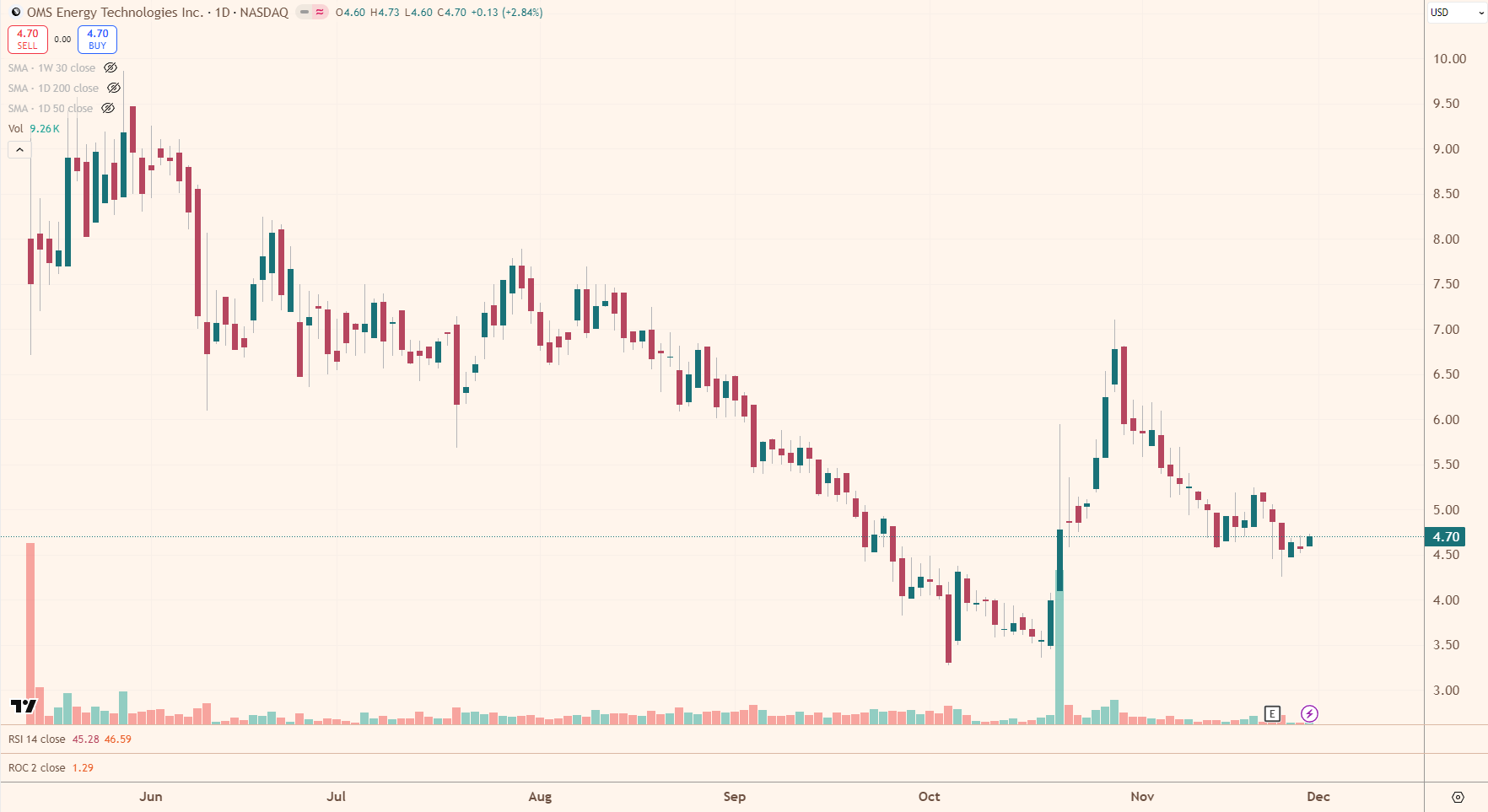
OMS Energy ($OMSE): Trading at 2 times Ex-Cash PE.
Investment Moats· 2025-11-30 23:42
Core Viewpoint - OMS Energy Technologies, a Singapore-based company, raised US$29 million through its IPO on Nasdaq, but is currently trading lower than its IPO price, indicating potential undervaluation and investment opportunities [1][6][21]. Company Overview - OMS Energy Technologies operates in the oil and gas industry and has been led by CEO How Meng Hock, who has 30 years of experience in the sector. The company was previously under Sumitomo Corporation and faced significant challenges from 2014 to 2019 due to poor oil demand forecasts [2][21]. - The company underwent a management buyout in 2023, initiated by Meng Hock, to ensure the continuity of employment for its 600 employees and their families [3][21]. Financial Performance - OMS has shown a strong financial performance with net income reaching US$34 million within two years post-buyout. The company has zero debt and holds US$126 million in cash, indicating a strong liquidity position [9][10][21]. - The financial metrics for OMS are promising, with gross profit and net income figures for various periods indicating profitability. For instance, in 2H 2025, gross profit was US$68 million and net income was US$47 million [10][11]. Revenue and Client Base - OMS's revenue is heavily reliant on long-term contracts, particularly with Saudi Aramco, which accounted for 67% of its revenue prior to the latest quarter. This reliance introduces fluctuations in revenue recognition due to the nature of call-up orders [12][30]. - The company is actively seeking to diversify its client base and expand its product portfolio to mitigate risks associated with dependency on a single client [29][30]. Cash Management and Future Plans - The company has demonstrated effective cash management, with significant increases in cash holdings over recent periods, attributed to operating cash flow and IPO proceeds [15][21]. - Future plans include potential share buybacks to enhance earnings per share (EPS) and improve market valuation, although there are concerns about the effective use of cash [19][22]. Market Position and Valuation - OMS is classified as a micro-cap company with a market capitalization of approximately US$195.5 million. The current trading price suggests it is undervalued, trading at about 2 times ex-cash price-to-earnings (PE) ratio [7][13]. - The company’s valuation is seen as attractive, especially given its high return on invested capital (ROIC) and the potential for future earnings growth [18][24].

OPEC+ Turns to Dallas Based Consultant for Capacity Review
Yahoo Finance· 2025-11-30 17:49
Core Viewpoint - OPEC+ is conducting a comprehensive audit of its members' oil production capabilities, with updates set to take effect in 2027, in response to the need for more realistic output quotas amid shifting global oil markets [2][4]. Group 1: Audit Methodology and Implementation - The audit, initiated in May, aims to align output quotas with actual production capabilities, utilizing Dallas-based DeGolyer and MacNaughton Corp. for most of the work [2][4]. - The definition of "maximum sustainable capacity" will be based on output achievable within 90 days and maintainable for a year [6]. Group 2: Member-Specific Considerations - Some OPEC+ members, such as the United Arab Emirates and Iraq, have increased their production capacity, while others are facing declines [3]. - Iran has chosen to use the average of its production in August, September, and October as its baseline for the audit [5]. Group 3: Market Context and Implications - The global oil market is experiencing a shift towards oversupply, which may lead OPEC+ to consider new production cutbacks next year [4]. - More realistic quotas resulting from the audit could enhance the credibility of potential production curbs [4]. Group 4: Historical Context and Challenges - The audit process has previously caused friction within OPEC+, exemplified by Angola's departure from the group following a review in 2023 [7]. - Historical practices of applying pro-rata changes to output targets have led to discrepancies between quotas and actual production capabilities [7][8].