
Schneider Electric

Search documents
Cybeats Technologies Corp. Strengthens Board with Global Software Supply Chain Security Leader
TMX Newsfile· 2025-12-23 12:13
Core Insights - Cybeats Technologies Corp. has appointed Cassie Crossley to its Board of Directors, effective immediately, enhancing its leadership in software supply chain security [1][2]. Company Overview - Cybeats Technologies Corp. specializes in software supply chain security, providing Software Bill of Material (SBOM) management and software supply chain intelligence technology to help organizations manage risk and comply with regulations [4]. - The company's platform offers comprehensive visibility into the software supply chain, improving operational efficiency and aligning organizations with current and future regulations [4]. Leadership Appointment - Cassie Crossley is recognized as a leading authority in software supply chain security, with over 20 years of experience in cybersecurity and product security across Fortune 100 companies [2]. - Previously, she served as Vice President of Supply Chain Security at Schneider Electric, where she led initiatives for global SBOM adoption and compliance with international regulations [2]. - Crossley expressed enthusiasm for her new role, emphasizing the importance of software transparency and supply chain security in critical industries [3]. Strategic Importance - The appointment of Crossley is seen as a validation of Cybeats' technological leadership and growth momentum, particularly as SBOM requirements evolve into enterprise-level accountability [3]. - Her expertise in risk-informed decision-making in complex environments will enhance the strategic oversight of Cybeats' governance and growth strategy [3]. Product Offering - Cybeats SBOM Studio is an enterprise-class solution designed to manage the software security lifecycle, helping organizations track third-party components and maintain security posture over time [5]. - The platform includes features for real-time vulnerability monitoring, regulatory compliance, and enhanced security visibility, particularly for critical infrastructure sectors such as energy, healthcare, and defense [7].


Japan's MUFG to invest $4.4 billion for 20% stake in Shriram Finance
MINT· 2025-12-19 06:47
Investment Overview - Mitsubishi UFJ Financial Group (MUFG) plans to invest ₹39,618 crore ($4.4 billion) for a 20% stake in Shriram Finance Ltd, marking a significant cross-border transaction in 2023 [1] - The investment will be executed through a preferential issuance of equity shares [1] Financial Impact - The fund infusion is expected to enhance Shriram Finance's capital adequacy, strengthen its balance sheet, and provide long-term growth capital [2] - This collaboration aims to unlock synergies in technology, innovation, and customer engagement, driving sustainable growth and improving access to low-cost liabilities [2] Market Context - MUFG's investment adds momentum to financial services activities in the Indo-Japan corridor, following notable transactions such as Mizuho's investment in Avendus and Sumitomo Mitsui Banking Corp's stake acquisition in Yes Bank [4] - Shriram Finance shares traded at ₹868, reflecting a nearly 49% increase this year, with the purchase occurring at a valuation premium of about 21.5% to the current market capitalization [5] Company Background - Shriram Finance is India's second-largest non-banking finance company, managing assets of approximately ₹2.81 trillion as of September [8] - The company has undergone several strategic changes since its establishment in 1979, including mergers and investments from private equity firms [9][10] Recent Performance - Shriram Finance reported total income of ₹41,859.47 crore in FY25, up from ₹34,997.61 crore the previous year, with net profit increasing to ₹9,761 crore from ₹7,190.48 crore in FY24 [14]


年复合增长2.6%|全球变频器市场争夺战,五大厂商拿下45%份额
Sou Hu Cai Jing· 2025-12-17 13:42
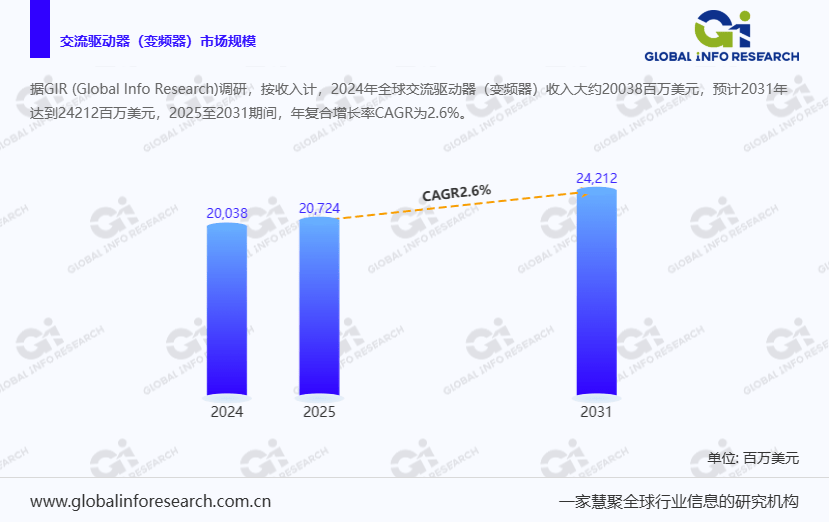
Core Insights - The global market for AC drives (inverters) is projected to grow from approximately $20.038 billion in 2024 to $24.212 billion by 2031, with a compound annual growth rate (CAGR) of 2.6% from 2025 to 2031 [3][5]. Market Overview - The major manufacturers of AC drives include ABB, Siemens, Inovance, Schneider Electric, Yaskawa Electric, Rockwell Automation, Danfoss, Fuji Electric, Mitsubishi Electric, and Delta Electronics [5]. - The top five manufacturers are expected to hold about 45.0% of the market share in 2024 [5]. Product Type Segmentation - Low and medium voltage inverters currently dominate the market, accounting for approximately 62.3% of the total market share [8]. Application Segmentation - The petrochemical industry is the primary source of demand for AC drives, representing about 17.5% of the market [11]. Market Dynamics - Key drivers for the AC drives market include the increasing global demand for energy efficiency and the promotion of energy-saving policies. The rise in energy costs and the implementation of carbon neutrality goals are leading industries to adopt inverters for precise control of motor speed and torque, significantly reducing energy consumption [15]. - The acceleration of industrial automation and smart manufacturing is also driving the widespread application of inverters in production lines, conveyor systems, and process control [15]. Challenges - The market faces challenges such as high initial investment costs, particularly for small and medium-sized enterprises, which can deter widespread adoption [16]. - There is a strong reliance on specialized knowledge and skilled personnel for the selection, configuration, integration, and maintenance of inverters, which can limit market expansion [17]. Opportunities - The AC drives industry is poised for unprecedented growth opportunities driven by global energy transitions and industrial digitization. The demand for energy-saving retrofits under carbon reduction strategies presents a significant market opportunity [18]. - The advancement of Industry 4.0 and smart manufacturing is opening new avenues for value enhancement, as modern inverters evolve into intelligent nodes capable of predictive maintenance and energy management [18]. - Emerging industries such as electric vehicles, photovoltaic manufacturing, and data center cooling systems are creating substantial demand for high-precision and reliable inverters, providing lucrative profit growth points [18]. Industry Chain - The AC drives industry chain is well-defined, with upstream components including power modules, microprocessors, and other essential materials. The midstream involves core manufacturing and R&D, while the downstream penetrates various industrial and some civilian sectors, emphasizing the importance of energy savings and process control [19].
液冷增长半场报告:热度高企,但新进入者涌现,更看好端到端参与者-A Halftime Report on Liquid Cooling Growth running hot, but rising new entrants. Prefer end-to-end players.
2025-12-16 03:30
Summary of Liquid Cooling Industry Report Industry Overview - **Industry**: Liquid Cooling - **Region**: Europe - **Market Growth**: The liquid cooling market is projected to more than double to approximately $2.5 billion in 2025, with forecasts reaching $6 billion by 2029, indicating a compound annual growth rate (CAGR) of 24% from 2025 to 2029 [5][8][15]. Key Insights - **Drivers of Growth**: The adoption of AI servers, particularly the GB200/300 models, is significantly driving the penetration of liquid cooling solutions in data centers. In 2025, liquid cooling penetration in AI data centers is expected to rise to 33%, up from 13% in 2024 [9][15]. - **Acquisition Activity**: The past year has seen active acquisitions in the liquid cooling space, with notable transactions including: - Schneider acquiring Motivair - Samsung acquiring FläktGroup - Eaton purchasing Boyd - Daikin acquiring Chilldyne - Asetek receiving a buyout offer from CQXA [10][12]. - **Emerging Competitors**: Traditional HVAC companies are entering the liquid cooling market, raising concerns about potential commoditization. Companies like Johnson Controls and Carrier have launched new products, indicating increased competition [13]. Market Dynamics - **End-to-End Players**: Integrated vendors that provide both power and cooling solutions, such as Schneider, are expected to be better positioned in the market. Companies like ABB may need to pursue mergers and acquisitions or partnerships to remain competitive [5][14]. - **Market Penetration**: The significant increase in market size reflects growing penetration in new-build data centers, with an estimated 27,000 units of GB200/300 racks shipped in 2025, expected to nearly triple in 2026 [9][21]. Financial Implications - **Stock Recommendations**: - **Schneider**: Preferred as the only company in coverage with liquid cooling capabilities. - **Legrand**: Positive outlook on its Rear Door Heat Exchanger product for near-term growth, but cautious on long-term prospects due to inferior cooling capacity. - **ABB**: Currently lacks a full-stack offering but has potential for future acquisitions [14]. Market Forecasts - **Revenue Projections**: The liquid cooling market is expected to reach $2.5 billion in 2025, reflecting a 127% year-over-year growth. The market is projected to grow to $6 billion by 2029, indicating a significant acceleration in growth expectations [8][15]. Conclusion The liquid cooling industry is experiencing rapid growth driven by advancements in AI technology and increased competition from traditional HVAC players. The market dynamics favor integrated solution providers, and ongoing acquisition activity suggests a consolidation trend. Investors should monitor these developments closely as they present both opportunities and risks in the sector.
Motivair by Schneider Electric Announces New Range of CDUs to Meet the Rising Demands of HPC and AI Workloads
Globenewswire· 2025-12-15 07:11
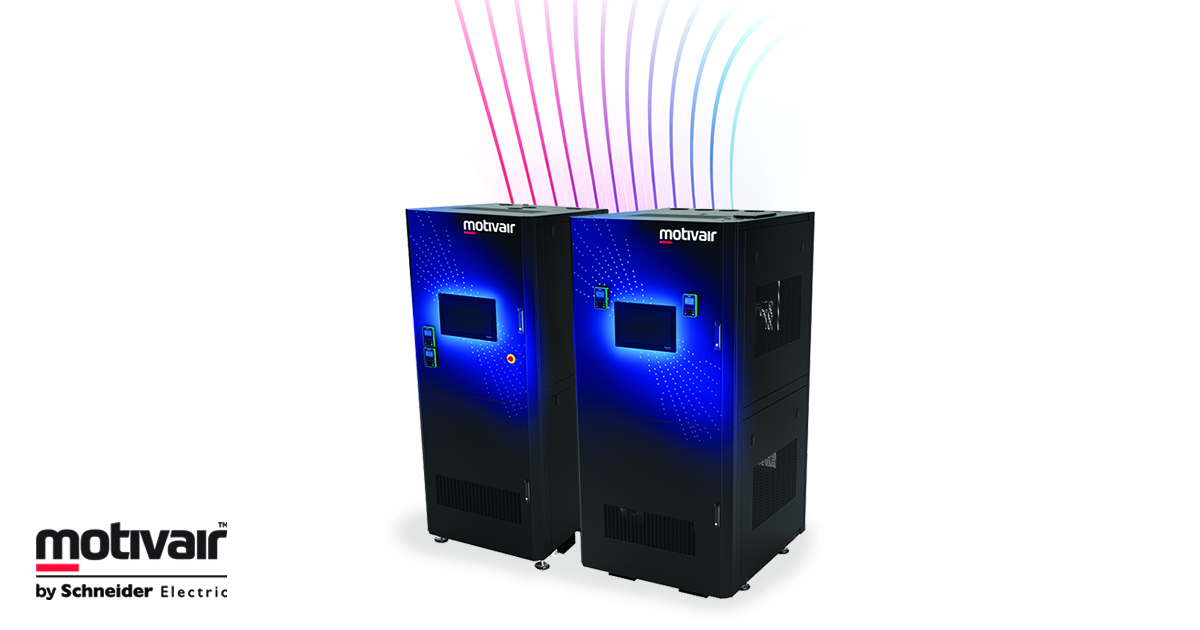
Core Insights - Motivair by Schneider Electric has introduced two new Coolant Distribution Units (CDUs), the MCDU-45 and MCDU-55, designed to meet the increasing thermal demands of High-Performance Computing (HPC) and AI workloads [1][2][4] Product Overview - The MCDU-45 and MCDU-55 are engineered for optimized installation in utility corridors, providing enhanced flexibility and performance for data center operators [1][2] - These CDUs allow operators to utilize a wider range of chilled water temperatures, optimizing deployment and operations [2][4] Key Benefits - The new CDUs reflect the evolution of liquid cooling, enabling tailored cooling strategies for specific AI infrastructure and workload demands [3][4] - Flexibility is emphasized, with a diverse portfolio of end-to-end solutions to match deployment strategies for accelerated computing applications [4] - The CDUs support advanced thermal management strategies, including precise flow control and real-time monitoring, which contribute to energy efficiency and improved Power Usage Effectiveness (PUE) [6] Market Context - The introduction of these CDUs follows Schneider Electric's acquisition of Motivair in February 2025, aimed at addressing the explosive demand for high-density computing solutions in the AI era [4][5] - Motivair positions itself as a trusted partner for advanced liquid cooling solutions, focusing on scalability, performance, and reliability for data center operators [5]

Schneider Electric (OTCPK:SBGS.F) 2025 Earnings Call Presentation
2025-12-11 08:45
Financial Performance & Targets - Schneider Electric achieved a revenue CAGR of +7% from 2019 to 2024 [5], reaching €38.2 billion in 2024 [5] - The company drove superior profitability growth with an adjusted EBITA CAGR of +11% from 2019 to 2024 [7], reaching €7.1 billion in 2024 [7] - Schneider Electric aims for organic revenue growth between +7% to +10% CAGR from 2025 to 2030 [165] - The company targets an adjusted EBITA margin organic expansion of +250bps cumulatively from 2026 to 2030 [166] - Schneider Electric expects a free cash flow conversion of ~100% of net income (Group share) from 2026 to 2030 [166] Digital Transformation & Innovation - The "Digital Flywheel" represented 60% of Group revenues in H1 2025 [8], with a target of >70% by 2030 [107] - Schneider Electric plans to increase software and services to approximately 25% of Group revenues by 2030 [107] - The company is committed to R&D, with a cash spend of approximately 7% of revenues [105] Market Positioning & Strategy - Schneider Electric estimates a potential addressable market of €600 billion+ by 2030, with a CAGR of +6% to +7% from 2025-2030 [151] - The company is focused on technology leadership, customer differentiation, and operational excellence [170]
Schneider Electric Expands Revenue Target, Plans Buyback Program
WSJ· 2025-12-11 07:57
Core Insights - The company anticipates organic revenue growth of 7% to 10% for the period from 2026 to 2030 [1] - The company has announced a share buyback plan amounting to $4.09 billion [1]
X @Bloomberg
Bloomberg· 2025-12-11 07:35
Schneider Electric announced a share buyback program of as much as $4.1 billion through 2030 as it targets growing profitability over the next five years https://t.co/Pw7pZgffuP ...
全球数据中心设备_深度分析 4.0:热度未减-Global Data Centre Equipment_ Deep dive 4.0. No signs of cooling down
2025-12-08 15:36
Summary of Global Data Centre Equipment Market Conference Call Industry Overview - The report focuses on the **Global Data Centre Equipment** market, providing an updated outlook and analysis of key players across the value chain [2][3]. Market Growth Forecast - The **Data Centre equipment market** (including grey, white, and cooling segments) is projected to grow by **20-25% in 2026**, **15-20% in 2027**, and **10-15% annually from 2028 to 2030**. The estimated growth for 2025 is around **25-30%** [3][39]. - The **Cooling segment** is expected to grow at a **CAGR of approximately 20%** until 2030, with **Liquid Cooling** projected to grow by **45%** [3][39]. Pricing Dynamics - A **20% increase** in market **$/MW** is anticipated due to higher power density rack architectures, primarily driven by cooling and grey space [4][28]. - The **IT equipment $/MW** is expected to rise by **3-4 times**, which explains the rapid capital expenditure (capex) ramp by hyperscalers and reduces price sensitivity towards facility costs [4][28]. AI Adoption and Monetization - There is evidence of rapid adoption of **Generative AI (GenAI)**, with an annual recurring revenue (ARR) of **$17 billion**, representing **6-7%** of the current total SaaS market [5][26]. - Hyperscalers' **Capex/Sales** ratio is projected to more than double compared to 2023, reaching **25-30%**, raising questions about sustainability. However, even with 2026 estimates, capex is expected to represent **75%** of the industry's operating cash flow [5][26]. Key Players and Stock Recommendations - In **Europe**, preferred companies include **Schneider**, **Halma**, **Siemens**, **Prysmian**, and **Wartsila**. - In the **US**, favored companies are **Vertiv**, **Eaton**, **nVent**, **GE Vernova**, and **Comfort Systems**. - In **Asia**, **Delta Electronics** and **Envicool** are highlighted as key players [6][39]. Capacity and Demand Insights - The **Global Data Centre Capacity** is expected to grow significantly, with **24% year-over-year growth** in 2026 and a **21% CAGR from 2025 to 2029** [50][56]. - The **Tech 6** companies (Amazon, Microsoft, Google, Meta, Oracle, and Apple) are projected to account for **10%** of total US electricity demand by 2030, with their incremental demand surpassing the entire US utility-scale solar industry by 2028 [56][58]. Challenges and Risks - Potential risks include project delays, cancellations, and the need for stable grid connections, particularly in Europe where connections are quoted into the 2030s [57][58]. - The industry has faced equipment shortages, particularly in electrical equipment, but this has returned to normal as manufacturers ramped up capacity [57]. Conclusion - The **Global Data Centre Equipment** market is poised for significant growth driven by AI adoption, increased demand for cooling solutions, and substantial capital investments from hyperscalers. However, challenges related to infrastructure and supply chain must be monitored closely to ensure sustainable growth [5][56][57].





亚洲电力设备:美国 AI 数据中心发展与电力约束专家电话会要点-Asia Power Equipment_ Expert call takeaways on AI DC development in the US and power constraints
2025-12-08 00:41
Summary of Key Points from the Conference Call on AI DC Development and Power Constraints Industry Overview - The discussion focused on the **data center (DC)** industry in the **United States**, particularly regarding power constraints and the development of AI data centers. Core Insights 1. **Grid Connection Delays**: - Grid connection issues for data centers have worsened, with waiting times extending to approximately **5-6 years** in regions like **Silicon Valley** and **Virginia** [2][15][20]. 2. **Onsite Power Generation**: - Due to insufficient utility-scale base-load power capacity, hyperscalers are increasingly relying on onsite power generation. The proportion of power sourced from onsite resources is expected to rise significantly over the next **three to five years** [2][15][20]. 3. **Natural Gas as Primary Source**: - Natural gas remains the most critical power source for supporting data center consumption, with both large and smaller-sized gas turbines being utilized [2][15][20]. 4. **Supply Chain Considerations**: - Given the tight supply of power equipment, hyperscalers are considering importing products from Asia, particularly from **Korea** and **China** [2][15][20]. 5. **Emerging Technologies**: - The increasing demand for onsite generation may drive the demand for technologies such as **fuel cells**, **solid oxide fuel cells (SOFC)**, and **battery energy storage systems (BESS)** [2][15][20]. 6. **Future Power Demand**: - The U.S. team forecasts that around **100 GW** of new generation capacity will be needed to meet data center power demand by **2028**, while base-load power capacity is expected to remain largely flat [2][15][20]. 7. **Interconnection Queues**: - Interconnection queues for data centers are reported to be between **three to seven years** in certain clusters, indicating a tight reserve margin in the electricity market [2][15][20]. Potential Solutions and Strategies 1. **Alternative Locations**: - Some data center developers are exploring locations outside traditional clusters like Texas and Virginia, seeking states with better power supplies [15][20]. 2. **Hybrid Power Solutions**: - The introduction of onsite generation to complement grid supply is being considered, with a mix of power from both the grid and onsite resources [15][20]. 3. **Nuclear Power**: - Small modular reactors (SMRs) and increased power from existing nuclear plants are being discussed as potential long-term solutions [15][20]. Key Companies Mentioned - **Hyundai Electric**, **Sieyuan Electric**, **LS Electric**, and **Hyosung Heavy** are highlighted as top picks in the Asian market that could benefit from the tight power supply in the U.S. [2][15][20]. Financial Metrics of Key Companies - **HD Hyundai Electric**: Market Cap: **20,183 million USD**, PE (2025E): **41.1**, ROE (2025E): **40.3%** [17]. - **Hyosung Heavy Industries**: Market Cap: **12,053 million USD**, PE (2025E): **36.1**, ROE (2025E): **22.9%** [17]. - **LS Electric**: Market Cap: **9,781 million USD**, PE (2025E): **44.0**, ROE (2025E): **16.5%** [17]. - **Sieyuan Electric**: Market Cap: **16,270 million USD**, PE (2025E): **38.9**, ROE (2025E): **21.8%** [17]. Conclusion - The conversation underscores the significant challenges facing the data center industry in the U.S. due to power constraints, while also highlighting potential opportunities for Asian companies to gain market share and expand margins in this evolving landscape [2][15][20].