
Merck

Search documents
Amphista Therapeutics announces achievement of a research milestone in its collaboration with Merck triggering a milestone payment
GlobeNewswire News Room· 2025-07-16 11:00
Core Insights - Amphista Therapeutics has achieved a significant discovery research milestone in its collaboration with Merck, leading to a financial payment for the company [1][2] - The collaboration focuses on the development of novel, non-CRBN/VHL Targeted Glue™ degraders for oncology and immunology applications [1][2] Company Overview - Amphista Therapeutics specializes in next-generation Targeted Protein Degradation (TPD) medicines, aiming to transform the lives of patients with severe diseases such as cancer and neurodegenerative disorders [3] - The company utilizes its proprietary Eclipsys® platform to create unique, bifunctional Targeted Glue™ therapeutics, which offer improved drug-like properties compared to traditional CRBN and VHL-based agents [3] - Amphista was co-founded by Advent Life Sciences and is supported by notable investors including Forbion, Gilde Healthcare, Novartis Venture Fund, SV's Dementia Discovery Fund, and Eli Lilly [3]



Merck Starts Phase III Studies on Once-Monthly Pill for HIV Prevention
ZACKS· 2025-07-15 17:55
Core Insights - Merck has initiated two late-stage clinical studies for MK-8527, a once-monthly oral pill for HIV pre-exposure prophylaxis (PrEP) [1][8] - The studies aim to enroll nearly 9,000 participants and will compare MK-8527 with Gilead's daily oral PrEP pill, Truvada [2][8] - The initiation of these studies is backed by positive Phase II results showing similar adverse event rates between treatment and placebo [3] Company Developments - Merck is expanding its HIV portfolio, focusing on both prevention and treatment, with MK-8527 being a key component [6][10] - The FDA has accepted a regulatory filing for Merck's once-daily, two-drug, single-tablet regimen of doravirine/islatravir (DOR/ISL) for treating HIV-1, with a decision expected by April 28, 2026 [7] - Merck is also collaborating with Gilead on a once-weekly, two-drug, single-tablet regimen of islatravir/lenacapavir (ISL/LEN) [9][10] Competitive Landscape - Merck's growing HIV portfolio positions it to compete with Gilead, which currently leads the market with its PrEP medications, Truvada and Descovy [11] - If approved, MK-8527 could challenge Gilead's dominance in the PrEP market [11] - Gilead's recent approval of lenacapavir, a twice-yearly injectable for HIV prevention, adds to the competitive pressure in the HIV therapeutic space [13] Market Context - GSK is another significant player in the HIV market, with strong sales driven by products like Cabenuva, Apretude, and Dovato [14] - The competitive dynamics in the HIV space are intensifying as companies innovate and expand their product offerings [11][14]

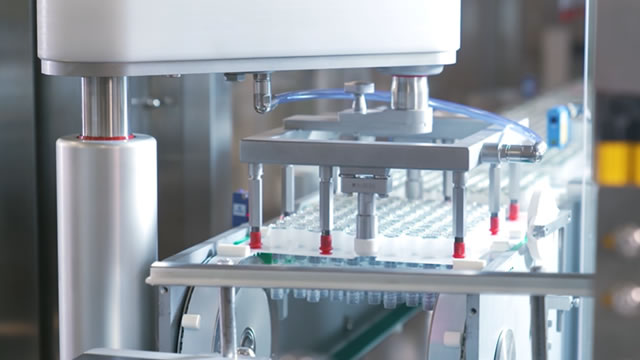
MRK's Buyout Spree to Broaden Product Portfolio: Can it Aid Growth?
ZACKS· 2025-07-14 15:25
Core Insights - Merck (MRK) is intensifying its acquisition strategy to enhance its development pipeline and broaden its product portfolio, with significant investments in strategic mergers and acquisitions over the past few years [1][6] Group 1: Recent Acquisitions - Merck announced a definitive agreement to acquire Verona Pharma (VRNA) for approximately $10 billion, adding the COPD treatment Ohtuvayre to its portfolio [2][12] - The addition of Ohtuvayre is expected to strengthen Merck's cardio-pulmonary pipeline due to its unique dual inhibition of PDE3 and PDE4, providing a competitive edge [3][12] - The transaction is anticipated to close in the fourth quarter of 2025, marking Merck's largest acquisition since the $10.8 billion acquisition of Prometheus Bioscience in 2023 [4] Group 2: Strategic Focus - Merck has been pursuing licensing deals with Chinese biotechs, including multi-billion-dollar agreements with Hansoh Pharma, LaNova Medicines, and Hengrui Pharma, to diversify its pipeline beyond oncology [5][6] - The company aims to reduce its dependency on the blockbuster PD-L1 inhibitor Keytruda, which is expected to lose patent exclusivity in 2028, while still maintaining strong sales until then [6] Group 3: Industry Trends - M&A activity in the pharma/biotech sector has increased significantly in 2025, with major companies seeking to diversify their revenue bases and acquire strategic assets [7] - Other notable acquisitions in the industry include Sanofi's agreement to acquire Blueprint Medicines for up to $9.5 billion, Eli Lilly's intent to acquire Verve Therapeutics for up to $1.3 billion, and AbbVie's acquisition of Capstan Therapeutics for nearly $2.1 billion [8][9][10] Group 4: Financial Performance - Year to date, Merck's shares have decreased by 16.2%, contrasting with a 0.3% increase in the industry [11] - Merck's shares currently trade at a price/earnings ratio of 8.98, which is lower than the industry average of 15.13 and its 5-year mean of 12.82, indicating attractive valuation [13] - The Zacks Consensus Estimate for Merck's 2025 earnings has declined from $8.94 per share to $8.85, and for 2026 from $9.77 to $9.66 over the past 60 days [14]
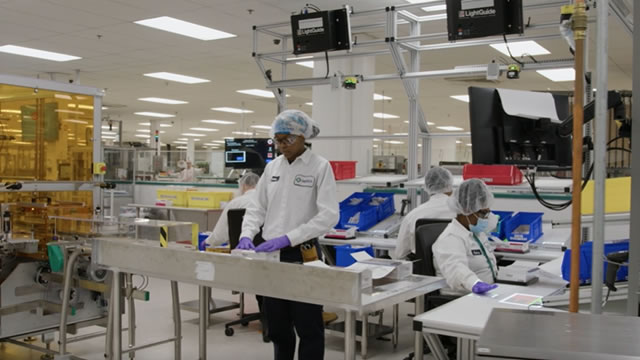
FDA Accepts Merck's Filing for Two-Drug, Once-Daily HIV Pill
ZACKS· 2025-07-11 17:15
Core Insights - Merck (MRK) has received FDA acceptance for the new drug application (NDA) for its investigational two-drug regimen doravirine/islatravir (DOR/ISL) aimed at treating virologically suppressed adults with HIV-1 infection, with a decision expected by April 28, 2026 [1][7] Drug Efficacy and Studies - If approved, DOR/ISL would be the first non-integrase inhibitor-based two-drug regimen demonstrating comparable efficacy and safety to the current three-drug standard, BIC/FTC/TAF, in phase III studies [2] - The NDA is supported by data from two pivotal phase III studies (MK-8591A-051 and MK-8591A-052), which showed that DOR/ISL (100 mg/0.25 mg) was non-inferior to comparator antiretroviral therapies in adults with virologically suppressed HIV-1 [3] Ongoing Research and Collaborations - Merck is continuing its HIV research with additional trials, including MK-8591A-053 and MK-8591A-054, which evaluate DOR/ISL in treatment-naïve individuals and those from earlier studies, respectively [9][10] - The company is collaborating with Gilead Sciences (GILD) to evaluate islatravir in combination with GILD's lenacapavir in a phase II study for HIV treatment [10] Stock Performance - Year to date, Merck's shares have decreased by 15.5%, contrasting with a 0.2% rise in the industry [4]

Ligand Partner Pelthos Therapeutics Launches ZELSUVMI™
Globenewswire· 2025-07-10 12:00
Core Insights - Ligand Pharmaceuticals' partner Pelthos Therapeutics has launched ZELSUVMI™, the first FDA-approved at-home treatment for molluscum contagiosum, leading to a $5 million milestone payment for Ligand [1][2] Company Overview - Ligand Pharmaceuticals is a biopharmaceutical company focused on supporting the clinical development of high-value medicines through financing and licensing technologies [4] - The company aims to create a diversified portfolio of biotech and pharmaceutical revenue streams while maintaining a low corporate cost structure [4] - Ligand partners with leading pharmaceutical companies to leverage their expertise in late-stage development, regulatory management, and commercialization [4] Product Details - ZELSUVMI™ (berdazimer) is a nitric oxide-releasing topical gel indicated for treating molluscum contagiosum in patients aged one year and older [3] - It is the first and only approved topical prescription medication that can be applied at home, outside of a medical setting [3] - The product was developed using Ligand's proprietary NITRICIL™ technology platform [3] Financial Aspects - Following the merger between Pelthos Therapeutics and Channel Therapeutics, Ligand now owns 56% of Pelthos [2] - Ligand is entitled to a 13% royalty on worldwide sales of ZELSUVMI and can earn up to an additional $5 million in commercial sales milestones [2]


Merck Faces Multiple Challenges: Will It Steer Through Successfully?
ZACKS· 2025-07-09 14:25
Core Insights - Merck (MRK) is anticipated to encounter significant challenges affecting its long-term growth, primarily due to the expected loss of exclusivity for its leading PD-L1 inhibitor, Keytruda, in 2028 [1][10] - Keytruda, which accounts for approximately 50% of Merck's sales, generated $7.21 billion in Q1 2025, reflecting a 6% year-over-year increase [2][10] - The company is also facing declining sales for its second-largest product, Gardasil, which saw a 40% drop in Q1 2025 due to weak demand in China [3][10] Revenue Drivers - Keytruda is projected to maintain strong sales until its patent expiration in 2028, with an estimated compound annual growth rate (CAGR) of 5.4% over the next three years [2] - Gardasil's sales have been declining, with a 3% decrease to $8.58 billion in 2024, and a negative CAGR of 6.4% expected over the next three years [4] Regulatory Impact - The redesign of Medicare Part D under the Inflation Reduction Act (IRA), effective in 2025, is expected to negatively impact sales of Merck's diabetes drug, Januvia/Janumet, in 2026, and Keytruda starting in 2028 [5][10] - Other pharmaceutical companies, including J&J, Pfizer, and Eli Lilly, are also anticipating adverse effects from the Medicare Part D changes [8] Future Growth Potential - Merck's new products, such as the 21-valent pneumococcal conjugate vaccine, Capvaxive, and the pulmonary arterial hypertension drug, Winrevair, are expected to support growth post-Keytruda exclusivity [6] - The company is actively seeking to diversify its product offerings, particularly in the non-oncology sector, to mitigate potential challenges [6] Market Performance - Year-to-date, Merck's shares have decreased by 18.2%, contrasting with a 1.1% decline in the industry [11] - Merck's current price/earnings ratio stands at 8.71, which is lower than the industry average of 14.93 and its own 5-year mean of 12.83, indicating an attractive valuation [12] Earnings Estimates - The Zacks Consensus Estimate for Merck's 2025 earnings has slightly decreased from $8.94 to $8.91 per share, while the estimate for 2026 has dropped from $9.77 to $9.73 over the past 60 days [13]
Merck & Co (MRK) M&A Announcement Transcript
2025-07-09 13:00
Summary of Merck and Company Investor Event on Acquisition of Verona Pharma Company and Industry - **Company**: Merck and Company Incorporated - **Acquisition Target**: Verona Pharma Public Limited Company - **Industry**: Pharmaceuticals, specifically focusing on treatments for Chronic Obstructive Pulmonary Disease (COPD) Core Points and Arguments 1. **Acquisition Announcement**: Merck announced the acquisition of Verona Pharma, highlighting the strategic importance of this move in enhancing its portfolio in the cardiopulmonary space [1][2][7] 2. **O2Ver Product Introduction**: Verona's O2Ver is noted as the first novel mechanism for inhaled maintenance treatment of COPD in over twenty years, launched successfully in 2024 with rapid market uptake [8][9][12] 3. **Market Potential**: O2Ver is expected to achieve multibillion-dollar peak commercial potential, contributing to both short-term and long-term revenue growth for Merck [9][29] 4. **COPD Unmet Need**: COPD is the fourth leading cause of global mortality, with significant unmet medical needs, as many patients remain symptomatic despite existing treatments [12][20] 5. **Clinical Validation**: O2Ver demonstrated strong clinical efficacy in phase three trials, showing significant improvements in lung function and a positive safety profile [14][15][19] 6. **Market Opportunity**: In the U.S., approximately 15 million people are diagnosed with COPD, with a significant portion remaining symptomatic, indicating a large market opportunity for O2Ver [23][24] 7. **Sales Performance**: O2Ver generated approximately $114 million in sales within its first eight months, with a notable increase in new patient starts and total prescriptions [24][25] 8. **Financial Position**: Merck is in a strong financial position to complete the acquisition, with a total transaction value of approximately $10 billion, financed through cash, commercial paper, and new debt issuance [29][30] 9. **Future Growth Strategy**: Merck aims to leverage Verona's capabilities to expand its cardiopulmonary commercial footprint and explore additional indications for O2Ver, including non-cystic fibrosis bronchiectasis [16][18][26] Additional Important Content 1. **Regulatory Considerations**: The acquisition is subject to Verona shareholder approval and regulatory approvals, with expectations for closure in the fourth quarter of the year [30] 2. **Long-term Vision**: Merck emphasizes a commitment to advancing its internal pipeline while supplementing it with external innovations like the acquisition of Verona [10][31] 3. **Market Dynamics**: The COPD therapy market is projected to grow from approximately $17 billion to $27 billion by 2032, highlighting the potential for O2Ver to capture significant market share [27][55] 4. **Patient Compliance**: The delivery method of O2Ver via nebulizer is designed to be straightforward, with expectations for good patient compliance due to the relief it provides [66][70] 5. **Competitive Landscape**: Merck acknowledges the competitive landscape but believes O2Ver's unique dual mechanism of action positions it favorably against existing treatments [111][114] This summary encapsulates the key points discussed during the investor event regarding Merck's acquisition of Verona Pharma and the strategic implications for both companies in the COPD treatment market.
Merck & Co (MRK) Earnings Call Presentation
2025-07-09 12:29
Acquisition Overview - Merck将以每ADS 107美元的价格收购Verona Pharma的所有已发行股份[14,47],总交易价值约为100亿美元[14,47](约98亿美元扣除约2亿美元的现金、投资和债务[47]),预计将于2025年第四季度完成[14,47] - 这项以科学为驱动的业务发展[14],加强并补充了心肺产品组合[14] - Ohtuvayre®是20多年来的首个新型吸入性COPD维持治疗药物[14],这是一个巨大的疾病领域,存在着显著未被满足的医疗需求[14] Ohtuvayre® Clinical Data - Ohtuvayre®是一种磷酸二酯酶3(PDE3)和磷酸二酯酶4(PDE4)的双重抑制剂[24],是20多年来首个用于COPD维持治疗的新型吸入机制[24] - 在两项3期试验中,Ohtuvayre®在肺功能方面表现出具有临床意义的改善,平均FEV1 AUC0-12h从基线相比安慰剂显著改善+87 mL和+94 mL[25,27] - 汇总数据显示,在ENHANCE-1和ENHANCE-2研究中,Ohtuvayre®降低了24周内的年度中度或重度加重率[28,29],ENHANCE-2研究中,Ensifentrine 3 mg组的年度事件率为0.24,安慰剂组为0.42[29],风险比为0.57[29],降低了43%[29] Commercial Opportunity - 美国约有860万接受维持治疗的COPD患者[35,40],其中约50%仍然持续有症状[36,40],针对持续有症状的患者是启动重点[40],人数约为430万[40] - 2025年第一季度,处方量约为25000张[42],约60%的处方是续方[42],自上市以来约有5300名处方医生[42],相比2024年第四季度,处方医生增加了约50%[42] - Ohtuvayre®代表着到2030年代中期的一个数十亿美元的商业机会[14,43] Financial Impact - 预计该交易将在最初的12个月内对非GAAP每股收益产生约0.16美元的负面影响[47],这代表着与为交易融资相关的成本,部分被Ohtuvayre®的业绩所抵消[47],预计将在2027年实现非GAAP每股收益的增厚[47],并在2028年全年实现增厚[47]
默克公司同意以每股107美元的价格收购维罗纳制药公司。据悉,此次收购对维罗纳的估值约为100亿美元。
news flash· 2025-07-09 10:39
默克公司同意以每股107美元的价格收购 维罗纳制药公司。据悉,此次收购对维罗纳的估值约为100亿 美元。 ...
默克公司同意以每股107美元的价格收购维罗纳制药(Verona )。
news flash· 2025-07-09 10:34
默克公司同意以每股107美元的价格收购维罗纳制药(Verona )。 ...