Tesla

Search documents
ABB Logs Higher Orders, Record Revenues
WSJ· 2026-01-29 07:18
Fourth-quarter net profit rose to $1.27 billion from $987 million in the prior year on revenue that grew 9%. ...


Ross Gerber Calls It An 'End Of An Era,' While Gary Black, Gene Munster Stay Bullish On Tesla - Tesla (NASDAQ:TSLA)
Benzinga· 2026-01-29 07:11
Core Insights - Analysts have provided mixed perspectives on Tesla Inc.'s fourth-quarter earnings, highlighting various strategic shifts and market expectations. Group 1: Analyst Perspectives - Gary Black anticipates a 2-3% rise in Tesla shares following the earnings call [2] - Ross Gerber describes the earnings as marking the "end of an era" for Tesla, emphasizing the company's shift towards autonomous vehicles and the need for significant investment and time for this transition [3] - Gene Munster notes that Tesla's Full Self-Driving (FSD) system has shown remarkable improvement, but the shift to FSD subscriptions may reduce auto margins to 16% [3] Group 2: Market Expectations and Performance - Munster indicates that Tesla's confidence in the FSD system has led to plans for Robotaxi expansion in multiple cities this year, with market estimates suggesting a 7% increase in deliveries, although he expects deliveries to remain flat [4] - Tesla is focusing on higher volume models, which is viewed positively for the company's future [4] - Tesla's stock price increased by 2.01% to $440.13 during overnight trading [5]

Tesla axes EV models in drive for robotics revenue
Sky News· 2026-01-29 07:11
Core Viewpoint - Tesla is shifting its focus from electric vehicle production to robotics, announcing the discontinuation of the Model S and Model X to allocate resources for manufacturing Optimus robots, following its first annual revenue decline [1]. Group 1: Production Changes - Tesla will cease production of the older Model S and Model X vehicles to repurpose factory space for its Optimus robots [1]. - The company is facing challenges in its transition to self-driving cars and robotics, with plans for Cybercabs (robotaxis) hindered by capacity issues and regulatory hurdles [3]. Group 2: Financial Investments - Tesla's investment is set to more than double to $20 billion this year, with $2 billion allocated to its artificial intelligence division, xAI [2]. - The increased spending aims to fulfill promises made by CEO Elon Musk regarding the company's transition towards advanced technologies [3]. Group 3: Market Position and Competition - Tesla is exploring new revenue streams as competition in the electric vehicle market intensifies, particularly with BYD surpassing Tesla to become the world's largest EV manufacturer [5]. - The company has experienced revenue and profit declines due to backlash against Musk's cost-cutting measures and competitive pricing from rivals [5][6]. Group 4: Stock Performance and Investor Sentiment - Tesla shares rose by 2% in after-hours trading, reflecting cautious gains attributed to AI-driven turnaround plans [11]. - There are concerns among investors regarding Musk's ability to manage multiple ventures, including a potential public offering for SpaceX [11].
Tesla, Apple And 3 Stocks To Watch Heading Into Thursday - Tesla (NASDAQ:TSLA)
Benzinga· 2026-01-29 07:10
Core Viewpoint - U.S. stock futures are trading higher, with Microsoft and Apple expected to attract investor attention due to their recent financial performances [1] Group 1: Microsoft Corp. (NASDAQ:MSFT) - Microsoft reported second-quarter revenue of $81.3 billion, representing a 21% year-over-year increase, surpassing the Street consensus estimate of $80.25 billion [1] - The company achieved non-GAAP earnings per share of $4.14, exceeding the Street consensus estimate of $3.86 [1] - Despite the strong financial results, Microsoft shares fell 6.1% to $452.04 in after-hours trading [1] Group 2: Apple Inc. (NASDAQ:AAPL) - Analysts anticipate Apple to report quarterly earnings of $2.67 per share on revenue of $138.42 billion [1] - Apple shares experienced a slight increase of 0.1%, reaching $256.79 in after-hours trading [1]


Tesla Reveals Active FSD Subscriptions Globally For First Time Amid Elon Musk's 10 Million Goal - Tesla (NASDAQ:TSLA)
Benzinga· 2026-01-29 05:55
Core Insights - Tesla Inc. has disclosed the total number of active Full Self-Driving (FSD) subscriptions, reporting 1.1 million active subscribers globally during its fourth-quarter earnings call [2]. Group 1: FSD Subscriptions - The company reported 1.1 million active FSD subscribers, with over 70% of these being upfront purchases [2]. - Tesla is transitioning to a subscription-only model for FSD starting next month, which is expected to impact automotive margins [2]. - The subscription is priced at $99 per month, with an upfront payment option of $8,000 available until February 14 of this year [2]. Group 2: Future Projections and Investments - The transition to a subscription model could help Tesla achieve its goal of reaching 10 million active subscriptions, a milestone linked to CEO Elon Musk's compensation package [2]. - Tesla announced a $2 billion investment in Musk's artificial intelligence company, xAI, with the deal expected to finalize in the first quarter of 2026, pending regulatory approval [3]. - Tesla's stock price increased by 2.01% to $440.13 during overnight trading following the earnings call [3].
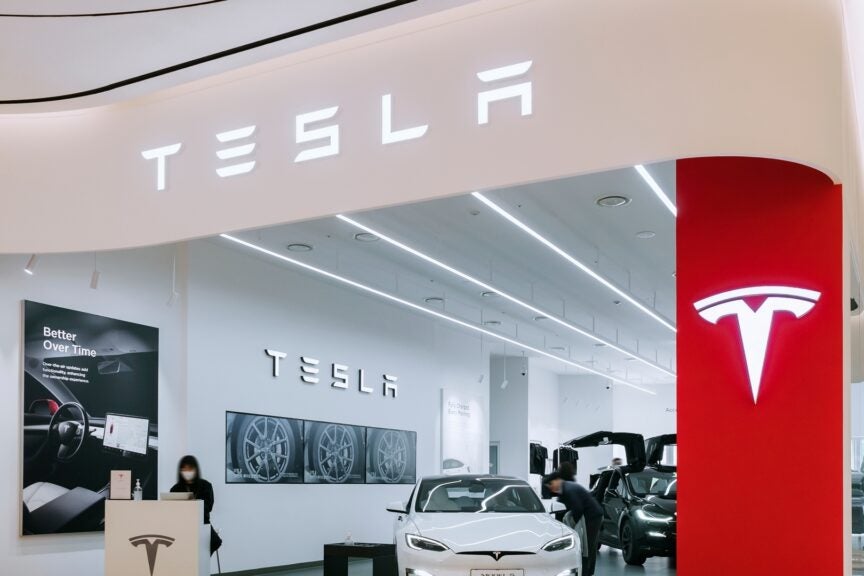
Tesla takes another leap toward becoming a physical AI company: Here are the 6 biggest takeaways from its Q4 earnings call.
Business Insider· 2026-01-29 05:02
Core Viewpoint - Tesla is transitioning from an electric vehicle (EV) manufacturer to a comprehensive AI and robotics company, with significant investments planned for the future [1][4]. Investment and Financials - Tesla plans to invest $20 billion in its future AI and robotics initiatives, significantly higher than the $8.5 billion in capital expenditures reported for the 2025 fiscal year [2]. - A $2 billion investment in Musk's xAI was announced, part of a larger $20 billion Series E funding round, aimed at enhancing collaboration and advancing Tesla's autonomous vehicle and robotics agenda [5][6]. - The energy segment achieved record gross profits, contributing to nearly $12.8 billion in revenue for the year [14]. Product Strategy - Production of the Model S and Model X will be discontinued to allocate resources for humanoid robot production, leaving Tesla with four models: Cybertruck, Model 3, Model Y, and the upcoming Cybercab [3][6][7]. - The Cybercab is expected to start production in April for integration into the Robotaxi fleet [8]. Robotaxi and Autonomous Driving - Tesla aims to expand its Robotaxi service to several cities, including Dallas, Houston, and Miami, by the first half of 2026 [9]. - Full Self-Driving (FSD) technology is reportedly operating "100% unsupervised," with limited unsupervised rides already offered in Austin [10]. Chip Development - Musk emphasized the importance of in-house chip manufacturing, referring to the Tesla "Terafab" concept, which aims to integrate logic, memory, and packaging to mitigate supply chain limitations [12]. Optimus Robot Development - The Optimus humanoid robot is still in the research and development phase, with no material contribution to manufacturing yet [13].
Elon Musk Says Tesla Model S, X Production To End, Cybertruck To Transition To An Autonomous Vehicle With Fleet Future: 'It's Time To Bring…' - Tesla (NASDAQ:TSLA)
Benzinga· 2026-01-29 04:15
Core Viewpoint - Tesla Inc. will cease production of the Model S and Model X, marking the end of its premium vehicle offerings as part of a strategic shift towards autonomous technology [1][2]. Group 1: Production Changes - CEO Elon Musk announced during the Q4 earnings call that production of the Model S and Model X will be halted, with plans to stop production in the next quarter [2]. - The Fremont facility will transition from producing the Model S and X to manufacturing the Optimus humanoid robot, aligning with Tesla's focus on an autonomous future [3]. Group 2: Sales Performance - Since their introduction, Tesla has delivered approximately 730,000 to 740,000 units of the Model S and Model X combined [2]. - The Cybertruck has faced challenges, with a reported 48% decline in sales in 2025, indicating difficulties in moving units off showroom lots [4]. Group 3: Emotional Response - Musk expressed a sense of sadness regarding the discontinuation of the Model S and X, stating that while they will no longer be in production, they will still exist in the fleet [5]. Group 4: Financial Investments - Tesla announced a $2 billion investment in Musk's artificial intelligence company xAI, with the deal expected to be finalized in Q1 2026, pending regulatory approval [6]. - Following the earnings call, Tesla's stock price increased by 2.01%, reaching $440.13 during overnight trading [6].
Investors punish Big Tech AI spending that delivers slower growth
Reuters· 2026-01-29 03:51
Core Viewpoint - Investors are increasingly cautious about Big Tech's AI spending, expecting substantial growth in return for record investments, particularly following the launch of ChatGPT over three years ago [1]. Group 1: Company Performance - Meta Platforms reported a 24% revenue increase in the December quarter, driven by enhanced online ad targeting through AI, and forecasts a further 33% growth in the current quarter [2][10]. - Microsoft experienced only slight growth in its Azure cloud-computing business, which fell short of expectations despite record spending [3]. - Tesla plans to double its capital expenditure to over $20 billion this year, focusing on AI and autonomous vehicles, although this raised concerns about the alignment of corporate AI ambitions with investor expectations [12][13]. Group 2: Investor Sentiment - Investors reacted negatively to Microsoft’s earnings, leading to a 6.5% drop in its shares, while Meta's shares surged by 10% due to its strong revenue guidance [6]. - The market is increasingly questioning whether the significant capital expenditures by tech companies will yield adequate returns, reflecting a growing divide between AI ambitions and Wall Street's patience [13][14]. Group 3: AI Investment and Risks - Microsoft disclosed that its investment in OpenAI accounts for 45% of its backlog, raising concerns about concentration risk as the startup faces challenges in maintaining momentum in the AI race [4]. - Meta's aggressive investment strategy in AI and data centers is expected to lead to a 43% increase in total expenses this year, reaching $169 billion [10][11].

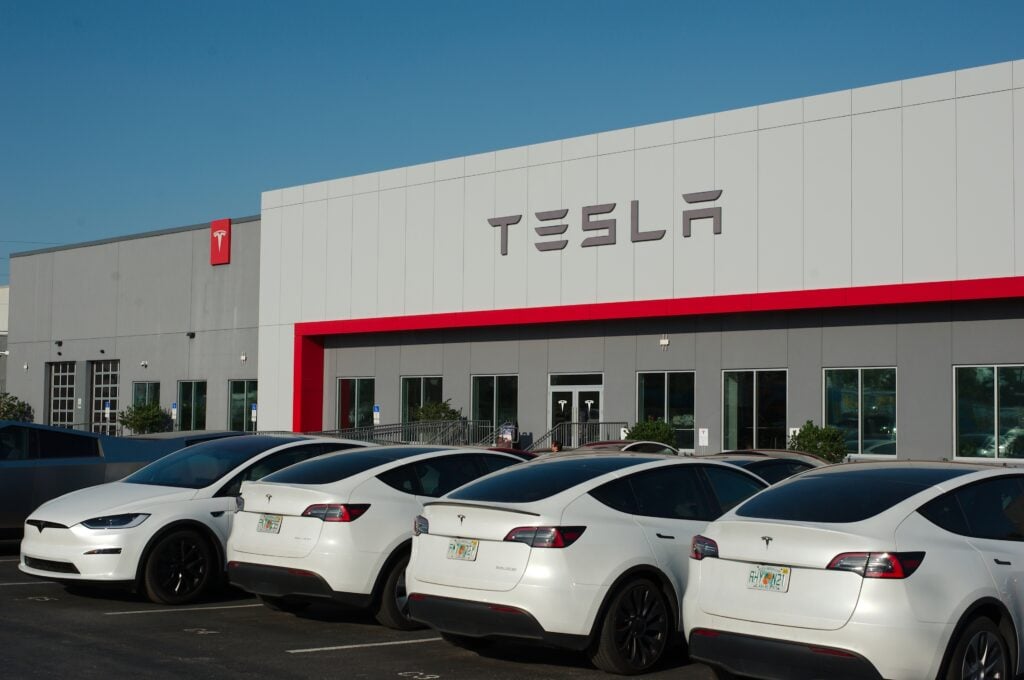
End of an Era: Tesla Ends Model S and X Production
ZACKS· 2026-01-29 03:16
Core Insights - Tesla is ending production of the Model S and X, marking a significant shift in its strategy towards future products and technologies [1][7] Financial Performance - The Model S and X account for less than 5% of Tesla's overall revenue, indicating a decline in their financial significance as the EV market becomes more competitive [2] Manufacturing Strategy - Tesla plans to retool its Fremont factory for the production of the Optimus humanoid robot, aiming for a potential output of one million units per year [3][7] Strategic Focus - The decision to phase out the Model S and X reflects Tesla's pivot towards autonomy and robotaxis, moving away from traditional EV offerings [3][6][7] Future Outlook - Investors should monitor Tesla's progress in three key areas: Tesla Energy growth, robotaxi expansion, and Optimus production, as these will significantly influence stock performance [6]
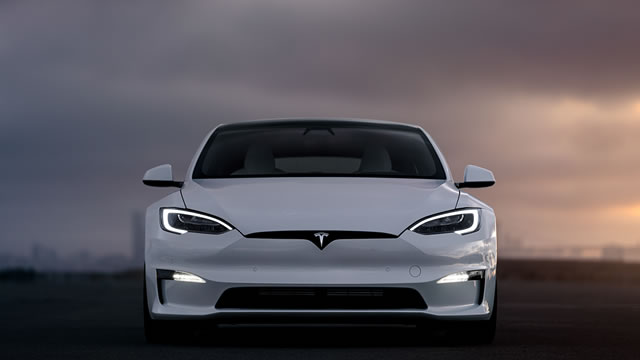
Tesla plans $20 billion capital spending spree in push beyond human-driven cars
Reuters· 2026-01-29 02:57
Core Viewpoint - Tesla plans to significantly increase its capital spending to over $20 billion this year, focusing less on traditional electric vehicle sales to human drivers [1] Group 1: Capital Spending - Tesla's capital spending is set to more than double compared to previous years, reaching a record high of over $20 billion [1] Group 2: Business Focus - A minimal portion of the increased capital expenditure will be allocated to the traditional business of selling electric vehicles to human drivers [1]