
Berkshire Hathaway

Search documents
Berkshire Hathaway Just Reported a 34% Rise in Operating Income. Here Are 3 Key Insights from the Financial Giant's Latest Quarterly Report.
The Motley Fool· 2025-11-10 00:05
Core Insights - Berkshire Hathaway reported a third-quarter operating income of $13.49 billion, a 34% increase from $10.09 billion in the same quarter last year, highlighting strong performance despite previous challenges [2][10] - The company's market capitalization is over $1 trillion, with its privately owned businesses valued higher than its stock holdings, emphasizing the conglomerate's diverse revenue sources [4] - The operating income figure does not account for gains or losses from stock holdings, which amounted to $9.2 billion in total investment gains for the quarter [8][9] Financial Performance - The $13.49 billion operating income is the highest third-quarter figure ever for Berkshire, driven by manufacturing income and a recovery in insurance underwriting [14] - The year-over-year increase in operating income is partly due to a low comparison base from the previous year, where operating earnings fell by 7% [10] - The conglomerate's privately owned businesses generated $13.5 billion in operating income on revenues of just under $95 billion during the quarter [6] Business Structure and Strategy - Berkshire Hathaway operates as both a mutual fund and a conglomerate, allowing it to leverage its cash reserves of over $380 billion without being constrained by market conditions [16] - The company's insurance operations provide a "float" that can be invested, contributing to its overall profitability and cash flow [17] - Incoming CEO Greg Abel is expected to continue the strategic management of the company's diverse assets, having gained experience since joining the Berkshire family in 1999 [18]

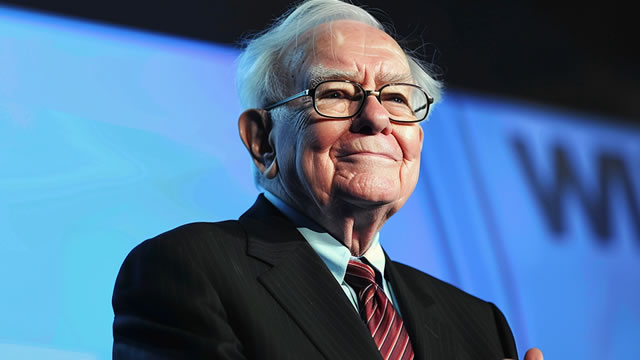
Should You Really Invest in the Stock Market Right Now? Here's Warren Buffett's Best Advice.
Yahoo Finance· 2025-11-09 23:00
Market Sentiment - The S&P 500 has been performing well in 2025, but investor sentiment is mixed, with 38% feeling optimistic and 36% feeling pessimistic about the market's performance over the next six months [1]. Investment Strategy - Warren Buffett emphasizes the importance of a long-term investment approach over trying to time the market, suggesting that patience is key to navigating market fluctuations [4][6]. - Historical context shows that despite significant challenges, the stock market has delivered substantial long-term gains, as evidenced by the Dow's rise from 66 to 11,497 throughout the 20th century [5]. Current Market Concerns - Investors are increasingly worried about potential issues such as an AI bubble burst and the overall state of the economy, leading to uncertainty in investment decisions [2][7].
Has Contrarian Michael Burry Found His Next Big Short? The Famed Investor Is Betting the Farm Against an Artificial Intelligence Stock That Is Up 1,290% Over the Past 5 Years
The Motley Fool· 2025-11-09 19:11
Core Viewpoint - Michael Burry, known for predicting the housing market crash, is currently bearish on the U.S. stock market and has made significant short bets against AI stocks, particularly Palantir and Nvidia [2][3][4]. Company Analysis - Scion Asset Management, led by Burry, purchased 5 million put options on Palantir with a notional value of over $912 million and 1 million puts on Nvidia in the third quarter [4]. - Palantir's stock has increased by 156% this year and trades at approximately 300 times forward earnings, raising concerns about its valuation [8][10]. - Despite Palantir's strong third-quarter earnings, which exceeded analysts' expectations, CEO Alex Karp criticized short sellers like Burry, asserting that the companies he is shorting are profitable [11]. Industry Insights - Burry's recent tweets indicate a belief that the market is in a bubble, supported by charts showing slowed cloud growth and high technology capital expenditure growth reminiscent of the dot-com bubble [5][6]. - The AI sector, particularly companies like Palantir and Nvidia, has attracted significant investor enthusiasm, but the high valuations pose risks for potential investors [10][11].

Will Berkshire Hathaway Succeed After Warren Buffett Leaves?
The Motley Fool· 2025-11-09 18:05
Core Viewpoint - Berkshire Hathaway is facing concerns regarding its future performance following Warren Buffett's eventual exit, but the company's strong fundamentals and significant cash reserves present potential investment opportunities [2][3][10]. Business Performance - Berkshire Hathaway reported a 34% increase in operating profit from its wholly owned businesses, with insurance underwriting income rising to $2.37 billion [4]. - The company has a diversified business model that remains fundamentally strong despite challenges in its core operating units, such as railroads and insurance [3][10]. Leadership and Succession - Concerns about succession are highlighted by KBW's downgrade, but Buffett's successors, particularly Greg Abel, have been involved in shaping the company's operations for years [3][5]. - Abel has been overseeing non-insurance operations since 2018 and has gained trust within the company, suggesting that Berkshire's success will not vanish with Buffett's departure [5]. Financial Strength - Berkshire Hathaway currently holds a record cash pile of $381.6 billion, providing the company with unmatched flexibility for capital deployment during market downturns [6][7]. - This cash reserve positions Berkshire to make significant acquisitions or buy distressed assets at attractive valuations in the event of a market correction [7][8]. Market Performance - The stock has seen only a 5.86% gain in 2025, compared to a 16.56% return from the S&P 500, reflecting investor uncertainty regarding Buffett's exit [9]. - Despite the current slow performance, the long-term outlook for Berkshire remains positive due to its strong structure and disciplined capital allocation [9][10].
President Donald Trump's Huge Spending Bill May Prove to Be a Headwind for Berkshire Hathaway's Stock
The Motley Fool· 2025-11-09 11:00
Core Insights - The recent spending bill passed by Congress, supported by President Trump, includes significant tax cuts and provisions affecting various policy areas, including renewable energy [1][2] - The bill will phase out tax credits for large wind and solar projects starting from July 5, 2026, which could negatively impact Berkshire Hathaway's energy business [7][10] Company Overview - Berkshire Hathaway is a conglomerate with diverse business interests, including insurance, energy, mortgage, and transportation, and has a substantial portfolio in wind energy [3][4] - The company is the largest U.S. owner of wind-powered electric generation, with subsidiaries MidAmerican Energy and PacifiCorp owning approximately 3,400 wind turbines and generating around 10,100 megawatts of wind capacity combined [4] Financial Impact - Berkshire Hathaway Energy (BHE) has benefited significantly from tax credits, generating $3.7 billion in earnings in 2024 and realizing over $5.5 billion in income tax benefits from 2022 to 2024 due to these credits [5][6] - The elimination of tax credits may lead to increased costs and reduced attractiveness of wind projects for investors, potentially affecting future investments in renewable energy [6][10] Future Considerations - Berkshire is currently assessing the implications of the new legislation on its financial results and capital expenditures related to renewable energy projects [8] - Despite the challenges posed by the loss of tax credits, Berkshire's diversified revenue streams may provide resilience, allowing the company to navigate through economic cycles effectively [11]
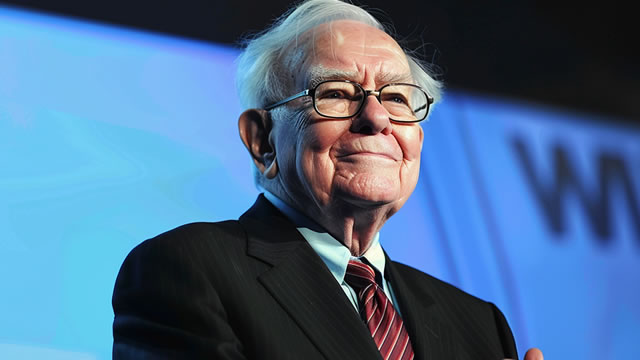
Warren Buffett's Dire Stock Market Warning That Could Be Completely Wrong
The Motley Fool· 2025-11-09 08:45
Core Viewpoint - The article discusses Warren Buffett's concerns about stock market valuations, particularly highlighting the current high level of the Buffett indicator, which stands at 223%, suggesting potential overvaluation in the market [4][5]. Group 1: Buffett's Historical Perspective - Buffett has historically warned about high market valuations, notably in a 2001 article where he indicated that a ratio of total stock market capitalization to gross national product (GNP) above 200% is risky [4][3]. - The Buffett indicator, which measures this ratio, reached an all-time high two years prior to Buffett's warning, leading to a subsequent market crash [3][4]. Group 2: Current Market Context - Despite Buffett's warnings, many investors are ignoring these signals, believing that the current market conditions are different from the past [5]. - The shift from GNP to gross domestic product (GDP) in the valuation metric reflects changes in economic measurement, with GDP being a more comprehensive indicator of economic activity [6]. Group 3: Impact of Artificial Intelligence - The potential impact of artificial intelligence (AI) on corporate profitability and efficiency could alter traditional stock valuation metrics, including the Buffett indicator [7][10]. - AI's development may unlock significant value for businesses, which could render current high valuation levels misleading if the economic landscape changes dramatically [8][10]. Group 4: Caution Against Complacency - While there is a possibility that current market conditions could be different, dismissing Buffett's warnings entirely may be unwise, as betting against his insights has historically been risky for investors [9][11].

Warren Buffett Sends a $382 Billion Warning to Wall Street. Are You Paying Attention?
The Motley Fool· 2025-11-08 23:05
Core Insights - Berkshire Hathaway is accumulating cash, reaching a record $382 billion, indicating a cautious market outlook from Warren Buffett [1][6][9] - Buffett emphasizes the importance of being ready to act decisively when attractive investment opportunities arise, despite the current market conditions [5][8][12] - The company continues to invest selectively, as evidenced by a significant investment in UnitedHealth Group when its P/E ratio fell below 10, showcasing a strategic approach to capital deployment [12] Investment Philosophy - Buffett advocates for a buy-and-hold strategy, although he does not hold onto stocks indefinitely, typically maintaining around 45 stocks in the portfolio [2][3] - He believes in understanding the fundamentals of potential investments thoroughly before making acquisitions [4] - The company’s strategy includes maintaining cash reserves to capitalize on compelling opportunities when they present themselves [6][8] Market Perspective - Buffett's growing cash reserves suggest a lack of compelling investment opportunities in the current market, which he views as not favorable for buyers [9][10] - He warns against the pitfalls of a bull market, emphasizing the need for caution and selectivity among investors [10][11] - Despite the cash accumulation, Buffett remains optimistic about the stock market and the future of the U.S. economy [11]

As Cash Continues to Pile Up, Should Investors Buy Berkshire Hathaway Stock or Stay Away?
The Motley Fool· 2025-11-08 18:23
Core Insights - Warren Buffett believes the market is currently overvalued, leading Berkshire Hathaway to adopt a cautious investment strategy [1][9] - Berkshire Hathaway has sold more stocks than it has purchased for twelve consecutive quarters, with $6.4 billion in purchases and $12.5 billion in sales during the latest quarter [1][9] - The company has not repurchased its own shares for five consecutive quarters, despite a significant drop in stock price [2][3] Financial Performance - Berkshire Hathaway's operating profit increased by 34% to $13.5 billion in the third quarter [6] - Underwriting earnings surged from $750 million to $2.4 billion due to fewer claims [7] - The Burlington Northern Santa Fe railroad division's earnings rose nearly 5% to $1.45 billion, while the utility portfolio saw a nearly 9% decline to $1.49 billion [8] Cash Position - Berkshire Hathaway holds a record cash balance of $381.6 billion, attributed to the lack of equity purchases and stock repurchases [4][10] - The stock is currently trading at approximately 1.5 times book value, down from 1.8 times earlier this year [3]
Markets "Overdue" for 10%-20% Correction?
Youtube· 2025-11-08 14:30
Market Overview - The current market pullback is seen as a normal profit-taking phase, with expectations of a 10% to 20% correction within the next six months [2][3][4] - The market is considered overblown, and a correction is anticipated, potentially triggered by unforeseen events [4][5] Investment Strategy - Investors, particularly those nearing retirement, are advised to maintain a cautious approach, keeping a portion of their portfolio safe from market losses while diversifying [7][10] - Companies like Berkshire Hathaway, which hold significant cash reserves (over $380 billion), are positioned to capitalize on market downturns [8][9] Sector Analysis - The technology sector remains bullish long-term, despite recent pullbacks and layoffs in major companies like Amazon and Microsoft [14][15] - Utilities are highlighted as a stable investment, especially with the growth of data centers and tech companies [17] - Silver is suggested as a diversification opportunity, alongside gold, which is currently above the $4,000 level [18][19] Economic Concerns - There is a significant concern regarding the all-time high levels of credit card debt, with interest rates exceeding 20%, which poses a risk to the broader economy [21][22] - Consumers are refinancing low-rate mortgages into higher rates to manage credit card debt, indicating a potential economic reckoning within the next year [23]

As Warren Buffett Waves Goodbye – 5 Dividend Stocks That Never Leave Berkshire Hathaway
Yahoo Finance· 2025-11-08 13:31
Core Insights - Warren Buffett's investment strategy focuses on acquiring strong companies with globally recognized products and services while paying dividends, a timeless approach that has proven successful over the years [1][2] - Berkshire Hathaway's portfolio is heavily concentrated, with five top companies making up over 70% of its total holdings, a strategy that has historically benefited investors [2] - Buffett announced his retirement as CEO of Berkshire Hathaway, with Greg Abel set to succeed him, raising questions about the future of the portfolio [5] Berkshire Hathaway - Berkshire Hathaway holds a significant cash reserve of $381 billion, positioning itself to capitalize on potential market dislocations similar to the Global Financial Crisis [3] - The company has reduced its underperformance against the S&P 500 from 12.2% to 4.3% in 2025 [4] American Express - American Express has shown strong performance in 2025, with a dividend yield of 0.88% and earnings per share of $4.14, exceeding analyst expectations [6][7] - The company reported a revenue growth of 11% to $18.43 billion and a net income increase of 16% to $2.9 billion compared to the previous year [7] Apple - Apple remains a major holding for Berkshire Hathaway, constituting 23.8% of its portfolio, despite a recent sale of 20 million shares [12] - The company offers a small dividend yield of 0.38% and has a diverse range of products and services, including smartphones, personal computers, and various subscription services [12][15] Bank of America - Bank of America has a solid dividend yield of 2% and reported impressive Q3 results with earnings per share of $1.06, beating estimates [15][16] - The company’s revenue grew 11% year-over-year to $28.24 billion, with profit rising 23% to $8.5 billion [16] Chevron - Chevron is a major player in the energy sector, offering a substantial dividend yield of 4.42% and recently raised its dividend by 5% [19] - The company announced a $53 billion acquisition of Hess Corporation, with the deal expected to close in the fall [23] The Coca-Cola Company - Coca-Cola remains a long-term holding for Buffett, with 400 million shares that increased by 11% in 2025 and a dividend yield of 2.92% [25] - The company is the world's largest beverage provider, offering over 500 brands and serving more than 1.9 billion servings per day globally [28]