
Stripe

Search documents
如何在五分钟打动投资人?硅谷传奇投资人20年识人心得
创业邦· 2025-09-16 03:30
Core Insights - The article emphasizes the importance of recognizing extraordinary entrepreneurs and the unique potential of startups in leveraging disruptive technologies like AI [5][9][27] - It discusses the evolutionary dynamics of Silicon Valley's ecosystem compared to China's more distributed innovation landscape, highlighting the competitive advantages of both [6][14] - The article posits that the next wave of trillion-dollar companies is likely to emerge from Silicon Valley due to its adaptive ecosystem and historical accumulation of knowledge [6][12][30] Group 1: Evolutionary Dynamics - The application of Darwinism in the context of Silicon Valley illustrates how natural selection, planned and unplanned variations, and inheritance drive innovation [9][11] - Silicon Valley's history of rapid adaptation and competition fosters a unique environment where startups can thrive and evolve [12][16] - The article suggests that the current AI wave represents a critical phase of radical variation, with significant changes expected every six months between 2025 and 2030 [9][27] Group 2: Investment Philosophy - The investment philosophy of focusing on "people" rather than just ideas is central to the success of venture capital firms like Benchmark [7][39] - The article highlights the importance of building long-term relationships with entrepreneurs, emphasizing that true value comes from deep, supportive partnerships over time [39][41] - It argues that early-stage investments allow for greater flexibility and adaptability, enabling startups to pivot and innovate effectively [50][51] Group 3: Competitive Landscape - The competitive landscape in China is characterized by multiple teams pursuing different strategies within the same company, which fosters innovation and pressure [15][16] - The article notes that while established companies have dominated the market in recent years, the emergence of new business models, particularly in AI, could lead to the rise of several new trillion-dollar companies [26][30] - The potential for creative destruction in the tech industry suggests that even successful companies will eventually be surpassed by new entrants [20][30]


Dust Settles Over HYPE Price After Hyperliquid Stablecoin Decision
Yahoo Finance· 2025-09-15 23:58
Core Insights - Hyperliquid has selected Native Markets as the issuer of the new USDH stablecoin, marking a significant development in the $160 billion stablecoin sector [2][5] - Native Markets is backed by notable figures from the finance and crypto industries, including former executives from Uniswap Labs and BlackRock [3][4] - The revenue-sharing model proposed by Native Markets aims to distribute 100% of stablecoin revenues to Hyperliquid users, contrasting with Circle's current model that does not share revenues [5][6] Company Developments - The decision to partner with Native Markets was finalized on September 15 after a week-long bidding process [2] - Native Markets will issue USDH through Bridge, a stablecoin infrastructure acquired by Stripe for $1.1 billion, with BlackRock managing treasury reserves initially [4] - Over time, Fidelity and BNY Mellon are expected to join as custodians for the USDH stablecoin [4] Market Implications - The aggressive revenue-sharing model could lead to a price war in the stablecoin market, which is considered one of the most lucrative segments in crypto [5] - Hyperliquid users currently hold approximately $6 billion in USDC, representing about 8% of total USDC circulation, which may be threatened by the introduction of USDH [6] - The decision has sidelined competitors such as Paxos, Ethena, BitGo, Frax Finance, and Agora, raising questions about the transparency of the bidding process [7]
X @Polygon
Polygon· 2025-09-15 12:46
RT John Egan (@john3gan)Guess it’s time to dust off my X account: I’m excited to announce that I’m joining @0xPolygon as Polygon Labs' first Chief Product OfficerAfter an incredible run as Head of Crypto at @Stripe, it’s no secret that I deeply believe stablecoins are driving the most significant payments evolution since credit cards were launched in the 1950s.@0xPolygon has been at the forefront of this change: as the first true scaling solution for Ethereum and an early leader in stablecoin adoption (the ...
Stripe’s crypto head leaves firm for Polygon amid Tempo blockchain build-up
Yahoo Finance· 2025-09-15 12:13
Core Insights - John Egan, head of crypto at Stripe, has left the company to become the first chief product officer at Polygon Labs, focusing on enhancing Polygon's stablecoin payments capabilities [1][2] - Egan's departure comes as Stripe prepares to launch its Tempo blockchain, which will compete directly with Polygon in the stablecoin payments sector [2][4] - The crypto industry is experiencing significant momentum, particularly in stablecoin payments, following regulatory support from the Trump administration [3] Company Developments - Egan's role at Polygon Labs will involve increasing adoption, scalability, and interoperability of its blockchain for stablecoin payments [1] - Stripe's Tempo, unveiled on September 4, is designed specifically for stablecoin payments and is incubated by Stripe and Paradigm, operating as a standalone entity [4] - Polygon has seen a resurgence in stablecoin payments, with a nearly 40% increase in monthly peer-to-peer stablecoin transaction volume since the beginning of the year [5] Market Context - The stablecoin market is expanding, with major banks like Bank of America, JPMorgan Chase, and Wells Fargo exploring their own stablecoin initiatives [4] - Polygon currently has almost $3 billion in stablecoins, nearing its record high, indicating strong market interest and activity [6] - Egan's previous experience includes significant roles at Stripe, where he was instrumental in blockchain integration and led major acquisitions, including a $1.1 billion purchase of Bridge [7][8]
X @Polygon
Polygon· 2025-09-15 12:13
Proud to announce John Egan, Stripe's former Head of Crypto, as Polygon Labs Chief Product Officer, as we continue to accelerate our global payments strategy.@john3gan joins us to lead Polygon's product vision, bringing deep expertise in digital asset integration and innovation that will help deliver institutional-grade infrastructure for the next generation of onchain financial experiences.He will champion products that make stablecoin adoption easy, global, and interoperable via Agglayer, redefining how v ...
Is Klarna Stock Worth The Premium?
Forbes· 2025-09-15 11:10
Core Insights - Klarna, a Swedish fintech known for its "buy now, pay later" services, has expanded into a comprehensive payments ecosystem with over 100 million active users and partnerships with major retailers like Walmart and eBay [2] - The company went public on September 10, 2025, with an IPO price of $40 per share, raising approximately $1.37 billion and achieving a valuation of around $15.1 billion [3] - On its first trading day, Klarna's stock opened near $52, peaked at $57.20, and closed at $45.82, reflecting strong initial demand but also potential overvaluation concerns [3] Financial Performance - In 2024, Klarna processed approximately $105 billion in merchandise volume, generated nearly $2.8 billion in revenue, and recorded a net profit of $21 million, marking a significant turnaround from a loss of over $200 million the previous year [3][4] - In Q2 2025, revenue surged to $823 million, with the company gaining over 111 million active users and approximately 790,000 merchant partners [3] Profitability and Risks - Klarna's net profit of $21 million represents a net margin of less than 1%, indicating a thin profitability cushion [4] - Credit losses are managed better than the previous year, at about 0.5% of GMV in Q2 2025, but remain a significant risk, especially in the U.S. market [4] - The U.S. market presents both a major growth opportunity and a higher-risk credit landscape, with potential challenges from rising consumer delinquencies and regulatory scrutiny [4] Competitive Landscape - Klarna faces competition from other players like Affirm, PayPal, and Afterpay, all targeting the same merchants and consumers [5] - While partnerships with Walmart and eBay are significant, they often yield low economics for Klarna, raising concerns about the company's ability to increase its "take rate" and maintain margins [5] Valuation Considerations - Despite robust revenue growth and a vast merchant network, the narrow margin for error raises questions about the justification of Klarna's valuation [6] - For a bullish case to hold, Klarna must demonstrate the ability to scale profitably in the U.S., manage credit losses effectively, and convert merchant partnerships into high-margin growth [7]


3 Reasons XRP Enthusiasts Should Still Be Cautious
Yahoo Finance· 2025-09-15 10:00
Group 1 - The article emphasizes the importance of maintaining caution and a sober approach when investing in XRP, despite its improving narrative [2][4] - XRP faces significant competition from well-capitalized alternatives in the financial sector, which could impact its market share [4][6] - Ethereum is highlighted as a major competitor due to its established role in asset tokenization and decentralized finance, attracting traditional financial institutions [5][7] Group 2 - Emerging payment and stablecoin chains, such as Circle Internet Group's Arc and Stripe's Tempo, pose potential long-term threats to XRP [6] - The total addressable market for XRP remains large, but increasing competition from both established and new entrants could hinder its growth [7][8] - XRP's stablecoin segment is particularly lagging, with new challengers rapidly emerging to target its core areas [8]
Here are the five fintechs that could be next to IPO after Klarna
CNBC· 2025-09-15 06:21
Core Insights - Klarna's IPO at $17 billion has sparked interest in which fintech company will be next to go public [1] - Klarna's stock rose by 30% on its IPO day, closing 15% higher, and is currently up about 7% from its IPO price of $40 [2] - The positive reception of Klarna's IPO indicates a more welcoming environment for fintech listings on Wall Street [2] Klarna's IPO Impact - Klarna's successful debut has set a precedent for other fintech companies, with several firms like eToro, Circle, and Bullish also experiencing positive first-day receptions [2][3] - The performance of Klarna's IPO is being closely monitored by other fintech unicorns considering their own public offerings [6] Potential IPO Candidates - Stripe, valued at $91.5 billion, is a long-time IPO contender but opted for a secondary share sale in January 2023 [5] - Revolut recently allowed employees to sell shares at a valuation of $75 billion, positioning itself as a strong IPO candidate [7][8] - Monzo reached a valuation of $5.9 billion and is reportedly preparing for an IPO as early as the first half of 2026 [10] - Starling Bank is also considering an IPO in the U.S. as part of its expansion plans [13][15] - Payhawk, a Bulgarian fintech, is eyeing an IPO in the next five years, aiming for significant annual recurring revenue [17] Other Notable Mentions - Ripple has paused its IPO plans due to regulatory challenges but remains a potential candidate [18][19] - N26, valued at $9 billion, is also seen as a potential IPO contender but faces regulatory hurdles following leadership changes [19]
Next trillion-dollar idea: Indians bet big on overseas unicorns despite valuation uncertainty
The Economic Times· 2025-09-15 01:00
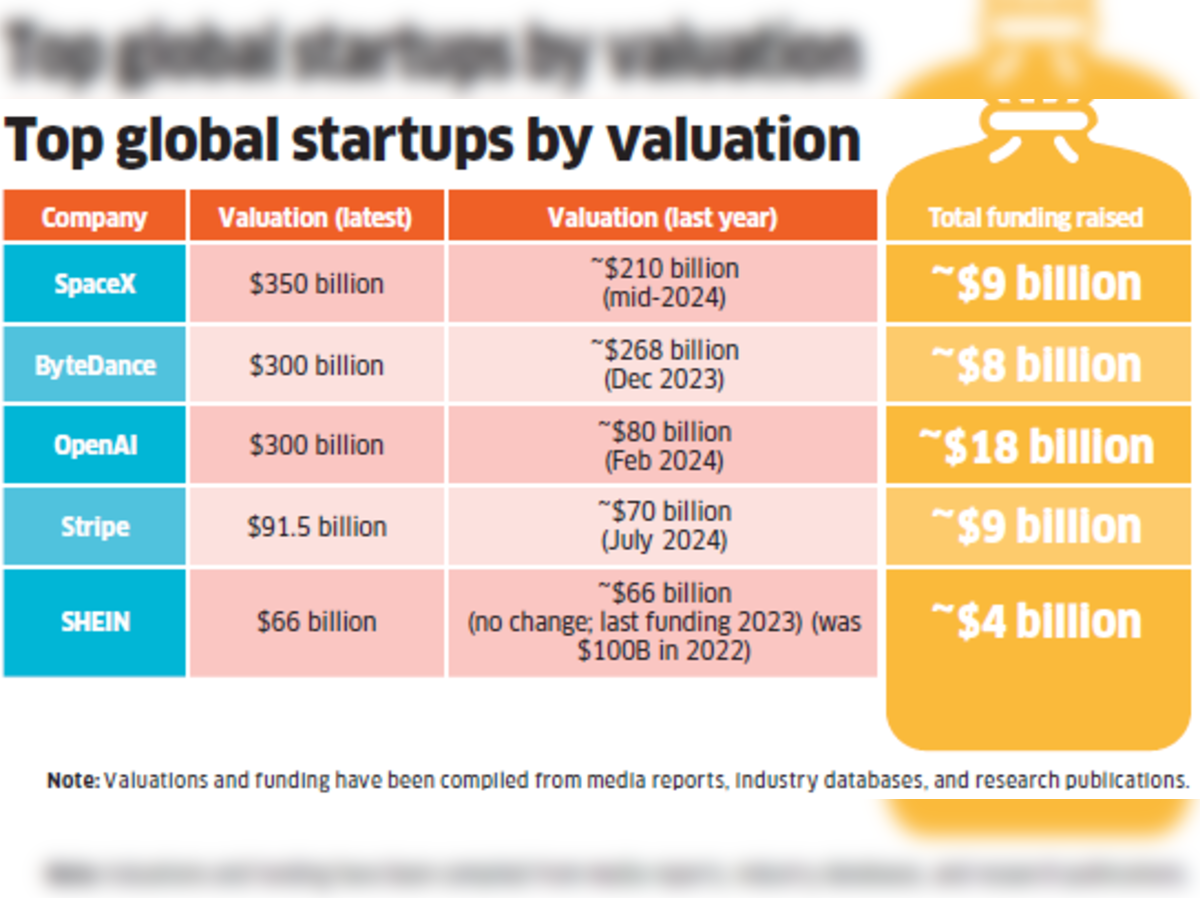
Group 1 - Indian investors are increasingly looking to invest in overseas startups, particularly in the technology sector, to capture potential trillion-dollar opportunities [1][4][35] - The trend is driven by the absence of new-age tech, especially artificial intelligence, in India, prompting investors to seek opportunities in companies like SpaceX, OpenAI, and Perplexity [4][35] - The median age at IPO has increased from four years to 12 years, with valuations at IPO rising nearly 400%, indicating that significant value creation occurs before companies go public [4][35] Group 2 - Secondary market volumes for unlisted shares have surged to nearly $100 billion globally, with high-net-worth individuals (HNIs) and family offices being the primary participants [5][35] - The Liberalised Remittance Scheme (LRS) has enabled new types of investors, including startup founders and professionals, to participate in overseas investments [5][35] - Investment platforms are providing access to ETFs and funds, simplifying the process for investors seeking global exposure [6][35] Group 3 - Popular companies among Indian investors include SpaceX, which reported $14.2 billion in revenue for 2024, a 63% year-over-year increase, with Starlink contributing 58% of that revenue [7][8] - Valuations of companies like SpaceX, OpenAI, and Stripe have seen significant increases, with SpaceX rising from $210 billion in mid-2024 to $350 billion in 2025, and OpenAI increasing from $80 billion to $300 billion in the same period [9][8][35] Group 4 - Special Purpose Vehicles (SPVs) are a common route for Indian investors to access overseas investments, allowing for pooled investments in private companies [12][13][14] - Ticket sizes for investments vary, with minimums around $20,000 for marquee names like SpaceX, while other opportunities may start below $10,000 [15][36] - Recent investments include Groq, an AI semiconductor company valued at $2.2 billion, and Perplexity, valued at $8.5 billion, with a total of approximately $5 million deployed across these two companies [16][36] Group 5 - The GIFT City IFSC route is being explored by some funds for outbound investments, with plans for India's first outbound-focused angel fund targeting $70 million over five years [19][20] - Direct investing in private companies is also an option, but it requires accreditation with strict income and net worth thresholds [21][22] - The SPV route is often preferred due to its ability to simplify access and pool risk among multiple investors, despite potentially higher costs [28][35]

Ethereum stablecoin market adds $17bn. Here’s what’s driving the growth
Yahoo Finance· 2025-09-12 17:39
Ethereum is outpacing its rivals in the stablecoin market. In August, Ethereum’s stablecoin supply increased 13% by more than $17 billion, more than all other blockchains combined, according to data from Artemis. Tron, Ethereum’s main stablecoin rival, lost 1.3% of its supply in August after Binance rerouted a chunk of reserves to Ethereum, shifting on-chain liquidity. All told, the stablecoin market has ballooned to a record $287 billion, and has more room to grow, according to industry stakeholders li ...