Honda Motor

Search documents
Honda Motor(HMC) - 2026 Q1 - Earnings Call Presentation
2025-08-06 06:30
Financial Performance (Q1 2025) - Operating profit decreased by 49.6% to 244.1 billion yen, compared to 484.7 billion yen in the same period last year[7] - Profit attributable to owners of the parent decreased by 50.2% to 196.6 billion yen, from 394.6 billion yen[7] - Sales revenue decreased slightly by 1.2% to 5,340.2 billion yen[7] - Operating margin declined by 4.4 percentage points to 4.6%[7] Financial Forecast (FYE 2026) - Revised operating profit forecast upward by 200 billion yen to 700 billion yen[3] - Revised profit for the year forecast to 420 billion yen[3] - Sales revenue forecast revised to 21,100 billion yen, a decrease of 2.7% from the previous year[8] - Operating profit forecast decreased by 42.3% to 700 billion yen[8] Shareholder Returns - Acquired 646.66 million of the company's own shares for 936.5 billion yen, achieving 85.1% of the planned acquisition[5, 9]

汽车、汽车零部件、轮胎行业-Autos_Auto Parts_Tire Sectors
2025-07-28 01:42
Summary of Key Points from the Conference Call Industry Overview - **Industry**: Autos/Auto Parts/Tire Sectors - **Key Event**: Reports of a trade agreement for a 15% auto tariff between Japan and the US Core Insights and Arguments - **Tariff Agreement**: Media reports indicate a potential agreement on a 15% auto tariff rate, which includes an additional 12.5% tariff on top of the previously agreed 2.5% duty [1][4][8] - **Impact on Major Automakers**: - **Toyota Motor**: Expected earnings upside of approximately ¥500 billion, with a potential boost of around 12% to FY2025 operating profit estimate of ¥3.80 trillion, reducing gross tariff impact from ¥1.44 trillion to ¥980 billion [1][4][5] - **Mazda Motor, Subaru, and Nissan Motor**: Anticipated low earnings even with reduced tariffs, with ongoing tariff costs estimated between ¥200 billion to ¥300 billion [1][4][5] - **Honda Motor**: Minimal impact on profits due to limited exports of finished vehicles from Japan to the US, with a calculated tariff impact of around ¥330 billion [1][4][5] - **Auto Parts Sector**: Major suppliers like Aisin Seiki and Denso may experience a relatively greater reduction in tariff costs [1][4][5] Market Reactions and Future Considerations - **Market Re-appraisal of Toyota**: The market may reassess Toyota's stock due to its high export volume and earnings resilience, although the 15% tariff will still apply [1][5] - **Price Increases**: Subaru and other automakers have announced price increases of up to $2,000 per vehicle, raising concerns about the impact on sales and potential downside on US SAAR (Seasonally Adjusted Annual Rate) in 2025 [1][5] Additional Important Information - **USMCA Framework**: The current framework remains unchanged, suggesting minimal benefits for Honda Motor under this agreement [1][4] - **Forecast Adjustments**: Current forecasts for companies under coverage factor in a maximum of 25% auto tariffs, with adjustments made based on the new tariff agreement [1][4][10] This summary encapsulates the critical insights from the conference call regarding the auto industry, focusing on the implications of the tariff agreement and its expected impact on major automakers and the auto parts sector.
Pre-Markets in Green Amid Trade Deal With Japan
ZACKS· 2025-07-23 15:55
Group 1: Market Overview - Pre-market futures are up, driven by foreign auto companies, particularly Japanese firms, following a new trade agreement that reduces tariffs on Japanese imported autos from +27.5% to +15% [1] - Major indexes are showing robust gains, with the Dow up +240 points (+0.54%), S&P 500 up +24 points (+0.38%), Nasdaq up +24 points (+0.10%), and Russell 2000 leading at +19 points (+0.87%) [3] Group 2: Company Performance - Toyota Motors (TM) is up +14% in early trading, while Honda Motor Co. (HMC) is up +11%, despite both companies facing expected double-digit earnings losses in upcoming quarterly reports [2] - AT&T (T) reported earnings of 54 cents per share, beating estimates by 3 cents, with revenues of $30.85 billion, up +1% from estimates, but shares are down -2.5% in early trading [4] - NextEra Energy (NEE) also exceeded bottom-line expectations with earnings of $1.05 per share, but revenues of $6.7 billion missed estimates by -7.28%, yet the stock is up +0.4% in pre-market [5] Group 3: Upcoming Earnings Reports - Major Q2 earnings reports are expected after the market closes, including Alphabet (GOOGL) and Tesla (TSLA), with GOOGL anticipating over +13% earnings growth and better than +11% revenue gains, while Tesla is expected to see declines of -25% on earnings and -12% on revenue [7] - Other companies reporting include IBM (IBM), Southwest Airlines (LUV), ServiceNow (NOW), and Las Vegas Sands (LVS), indicating a busy earnings season across multiple sectors [8]


Pre-Markets Shine on Japanese Auto Trade Deal
ZACKS· 2025-07-23 15:16
Group 1: Market Overview - Pre-market futures are up, driven by foreign auto companies, especially Japanese firms, following a new trade agreement that reduces tariffs on Japanese imported autos from +27.5% to +15% [1] - Major indexes are showing robust gains, with the Dow up +240 points (+0.54%), S&P 500 up +24 points (+0.38%), Nasdaq up +24 points (+0.10%), and Russell 2000 leading with +19 points (+0.87%) [3] Group 2: Company Earnings - AT&T reported Q2 earnings of 54 cents per share, beating estimates by 3 cents, with revenues of $30.85 billion, up +1% from estimates, but shares are down -2.5% in early trading [4] - NextEra Energy's Q2 earnings were $1.05 per share, also beating expectations by 3 cents, but revenues of $6.7 billion missed estimates by -7.28%, yet the stock is up +0.4% in pre-market [4] Group 3: Upcoming Earnings Reports - Major Q2 earnings reports are expected from Alphabet and Tesla, with Alphabet anticipating over +13% earnings growth and +11% revenue gains, while Tesla is expected to see declines of -25% in earnings and -12% in revenue [6] - Other companies reporting include IBM, Southwest Airlines, ServiceNow, and Las Vegas Sands, indicating a busy earnings season across various sectors [7]

Honda & Nissan in Discussion to Co-Develop Advanced Auto Software
ZACKS· 2025-07-15 16:31
Group 1: Joint Software Development - Honda Motor Co., Ltd. and Nissan Motor Co., Ltd. are in discussions to jointly develop and share a foundational software platform for advanced vehicle control systems to compete with leading U.S. and Chinese automakers in the software-defined vehicles (SDVs) market [1][9] - The two companies aim to introduce vehicles utilizing the new software in the latter half of the decade, emphasizing the need for massive data inputs for development and operation, making collaboration crucial for innovation and cost reduction [2] Group 2: Strategic Manufacturing Agreement - Nissan may begin manufacturing pickup trucks for Honda at its U.S. plants under a proposed strategic agreement, allowing Honda to diversify its U.S. vehicle lineup and mitigate the financial impact of new tariffs [5][6] - The proposed manufacturing agreement could enhance profitability for both firms, especially as recent tariff increases on Japanese imports are projected to reduce Honda's operating profit by ¥650 billion and Nissan's by up to ¥450 billion in fiscal 2025 [6]

Honda pulls the plug on large electric SUV as driver demand for battery powered cars plummets
New York Post· 2025-07-09 17:28
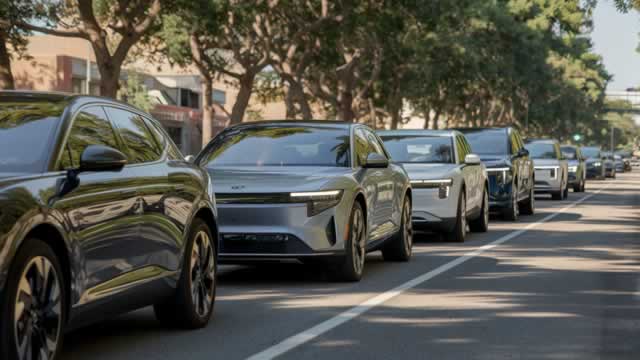
Core Viewpoint - Honda has halted plans for a large electric SUV due to weaker-than-expected demand for sizable electric vehicles and the impact of President Trump's decision to cut EV incentives in the US [1][2][4]. Group 1: Honda's Decision - Honda has reportedly scrapped the development of a seven-seat electric SUV, which was initially planned to follow the five-seat SUV and sedan based on the Concept 0 unveiled at CES [1][4]. - The company has cut approximately $48 billion (¥7 trillion) from its research and development budget for electric vehicles [4]. Group 2: Market Context - Demand for large electric cars has been lower than anticipated, influencing Honda's decision to suspend its EV plans [2][9]. - Other manufacturers, including Ferrari and Lamborghini, have also delayed or pushed back their electric vehicle projects in response to market conditions [12]. Group 3: Broader Industry Trends - The electric vehicle market is facing challenges, as evidenced by Kia's EV9 selling only 165 units in Australia compared to 5,165 units of the combustion-powered Sorento in the first half of the year [8][11]. - Major brands like Mercedes and VW are experiencing significant sales ratios favoring combustion-powered models over their electric counterparts [11].

Honda recalls 259K vehicles over faulty brake pedal that can increase crash, injury risk
New York Post· 2025-06-18 13:25
Core Points - Honda Motor is recalling over 259,000 vehicles in the US due to a faulty brake pedal that can shift out of position, increasing the risk of crashes or injuries [1][3] - The recall affects specific models including Acura MDX (2023-2025), Acura TLX (2021-2025), and Pilot (2023-2025) [1] - Honda estimates that about 1% of the recalled vehicles may have the defect, and owners will be notified by mail starting July 28 [3] Recall Details - There have been three warranty claims related to the recall, but no injuries or deaths have been reported [2] - Owners are advised to take their vehicles to a Honda dealership for inspection and potential free repairs [3][8] - The defect originated during production at a US plant, which has since relocated to Mexico [4] Production Changes - The new facility in Mexico has implemented a camera sensor system to ensure the brake pin is securely staked [5] - Honda initiated an investigation in April 2024 after receiving reports of brake pedal movement, confirming the defect on June 5 [8]

Tariffs, EV And China Risks: Is Honda Stock Still Worth It?
Forbes· 2025-06-16 11:05
Core Viewpoint - Honda Motor's stock has shown limited growth, with a 2% increase since the start of 2023, and recent financial results have been disappointing, particularly in Q4 FY'25, where revenues fell to $35.1 billion from $36.5 billion the previous year [1][2] Financial Performance - For Q4 FY'25, Honda's revenues were approximately $35.1 billion, a decline from $36.5 billion year-over-year, and profits also did not meet expectations [1] - The company sold 1.65 million vehicles in North America in FY'25, a slight increase from the previous year, aided by a rise in hybrid vehicle adoption [1] - Honda has projected a net profit forecast for 2026 that is expected to be 70.1% lower than FY'25, with revenues anticipated to decline by 6.4% year-over-year [2] Market Challenges - The 25% tariff on foreign automotive imports imposed by the Trump Administration is expected to impact Honda's U.S. operations, prompting the company to consider producing its next-generation Civic hybrid in the U.S. instead of Mexico [2] - Honda's sales volumes in Asia decreased by nearly 28% year-over-year in FY'25, indicating challenges in maintaining competitiveness in the region [3] - The strengthening of the yen, which has appreciated almost 8% against the dollar in the past year, could negatively affect Honda's export competitiveness and international earnings [3][4] Valuation and Investment Outlook - Honda's stock is trading at approximately 8x FY'25 earnings, suggesting a reasonable valuation, supported by ongoing share repurchase programs and potential growth in the hybrid sector [4] - The current stock valuation is estimated at around $32 per share, slightly above the present market price [4]

Honda Puts EVs in the Rearview: Can Hybrids Power the Next Chapter?
ZACKS· 2025-05-21 13:50
Group 1: Honda's Strategy Shift - Honda is scaling back its electric vehicle (EV) plans due to cooling global demand and is focusing on hybrid cars, planning to launch 13 new hybrid models globally between 2027 and 2030 [1][5] - The company is reducing its EV and software investment target by 30%, from 10 trillion yen ($69 billion) to 7 trillion yen ($48.4 billion) by 2030, and now expects EVs to account for less than 30% of its production by that year [2] - Honda aims to sell 2.2–2.3 million hybrids by 2030, a significant increase from 868,000 in 2024 [2] Group 2: Industry Trends - The shift in Honda's strategy aligns with a broader industry trend where global automakers are slowing EV rollouts as governments ease emission targets and hybrids gain popularity [3] - Competitors Nissan and Toyota are also rethinking their EV strategies, with Nissan scrapping plans for a $1.1 billion battery plant and Toyota reducing its EV production plans by 20% [6][8] Group 3: Market Challenges - Honda faces increasing pressure in China, where EV adoption is rising and competition from domestic brands is strong, leading to a drop in profits in the region [4] - The company has only launched two EVs so far and recently paused a $10.7 billion EV plant project in Canada due to sluggish demand [4] Group 4: Financial Performance - Honda's shares have gained 3.7% year to date, contrasting with the industry's decline of 1.7% [9] - The company trades at a forward price-to-sales ratio of 0.32, which is below the industry average, and carries a Value Score of A [11]
Honda plans a $20 billion pivot to hybrids as EV sales slow
Business Insider· 2025-05-20 11:03
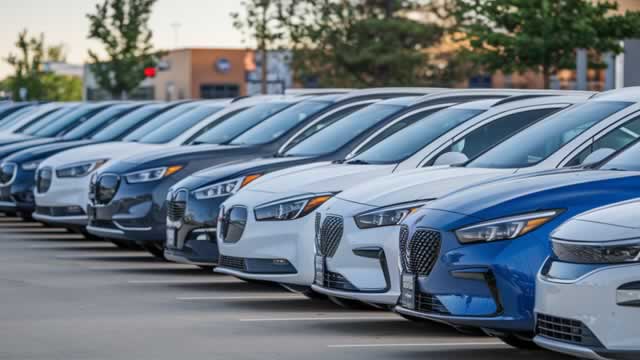
Core Insights - Honda is reducing its EV investment by 30% from $69 billion to $48.4 billion through the 2031 fiscal year to stabilize its future in a slowing EV market [1][2] - The company will focus on increasing its hybrid lineup due to changes in environmental regulations and a slowdown in EV market expansion [2] - Honda's expected EV sales ratio for 2030 is now projected to fall below the previously announced target of 30% [2] Investment Strategy - Honda plans to launch 13 new hybrid models globally starting in 2027, aiming to sell 2.2 million hybrids annually by 2030 [4] - Despite the shift towards hybrids, Honda remains committed to achieving 100% zero-emission vehicle sales by 2040 [4] Market Context - In the first four months of 2025, EV sales in North America increased by only 5%, compared to 25% in Europe and 35% in China [3] - The International Energy Agency indicated that higher tariffs could further increase EV prices and slow down sales growth [3] Organizational Changes - Honda is mandating US employees to return to the office at least 80% of the time by October, emphasizing the importance of in-person work in a rapidly changing business environment [5]