Target

Search documents
Walmart and Target Wrangling With Suppliers Following Tariffs
PYMNTS.com· 2025-03-24 16:30
Group 1 - Walmart and Target are negotiating with suppliers regarding price hikes due to tariffs, which will influence product pricing and inventory decisions [1][2] - Retailers express concerns that raising prices could lead to loss of market share and customers, complicating negotiations with suppliers facing increased costs from tariffs [2][3] - Nordic Ware, a cookware manufacturer, reports a 10% to 15% increase in costs due to aluminum tariffs, complicating their pricing strategy for the holiday season [3] Group 2 - Walmart emphasizes collaboration with suppliers to navigate pricing challenges during uncertain times [4] - Target indicates it is too early to assess specific price changes but is taking a comprehensive approach to pricing analysis [5] - Research indicates that 60% of middle-market CFOs believe tariffs will exacerbate economic uncertainty and planning difficulties [6] Group 3 - Nearly 70% of CFOs anticipate supply shortages or delays, with many expecting increased raw material costs and complications from retaliatory tariffs [7] - Most smaller businesses foresee negative impacts from tariffs, such as product shortages and declining product quality [7]



3 Reasons Costco Is a Must-Buy for Long-Term Investors
The Motley Fool· 2025-03-24 12:05
Group 1: Company Overview - Costco is a strong investment option due to its consistent business performance and high membership renewal rate of 93% in the U.S. market, indicating customer loyalty [2][3] - The majority of Costco's profits come from membership fees rather than product sales, allowing for steadier annual earnings compared to traditional retailers [3] Group 2: Competitive Position - Costco's comparable-store sales increased by 9% in the last quarter, outperforming competitors like Target (2%) and Walmart (5%) [4] - The company's e-commerce revenue, which includes discretionary products, grew by 22% last quarter, showcasing its ability to thrive in various market conditions [5] Group 3: Valuation and Investment Appeal - Costco shares are trading at over 50 times earnings, indicating a premium valuation compared to Walmart's P/E ratio of 36 and Target's 0.5 times sales [6] - Despite a lower dividend yield compared to Walmart, Costco is expected to deliver market-beating returns as it continues to gain market share and expand into new growth areas [7][8]


Algorhythm Holdings to Participate in the iAccess Alpha Virtual Best Ideas Spring Investment Conference 2025 on March 25-26, 2025
Globenewswire· 2025-03-24 12:00
Company Overview - Algorhythm Holdings, Inc. is an AI-driven technology and consumer electronics holding company with two primary investments: SemiCab Holdings and The Singing Machine Company [4] - SemiCab Holdings is an emerging leader in the AI-enabled global logistics industry, while The Singing Machine Company is the worldwide leader in consumer karaoke products [4] SemiCab Holdings - SemiCab operates a cloud-based Collaborative Transportation Platform designed to optimize logistics by predicting and managing millions of loads and hundreds of thousands of trucks [5] - The platform utilizes real-time data and AI/ML predictions to enhance transportation capacity, improve asset utilization, and reduce logistics costs, potentially saving shippers tens of billions of dollars annually [6] - SemiCab's technology has improved truck utilization rates from 65% to over 90%, adding approximately 30% more trucking capacity without increasing the number of trucks or drivers, addressing industry challenges like driver shortages and road congestion [6] The Singing Machine Company - The Singing Machine Company designs and distributes a wide range of karaoke products, marketed under proprietary brands and popular licenses, including Carpool Karaoke and Sesame Street [7] - The company provides access to over 100,000 songs through its mobile app and is developing a fully integrated in-car karaoke system [7] - Its products are sold in over 25,000 locations worldwide, including major retailers like Amazon, Costco, and Walmart [7] Upcoming Events - Algorhythm's management will participate in the iAccess Alpha Virtual Best Ideas Spring Investment Conference on March 25 and 26, 2025, with a presentation scheduled for March 25 at 3:00 PM ET [1][2] - A live webcast of the presentation will be available, along with a replay on the company's website [3]

美国综合零售和耐用消费品零售 - 零售业的未来以及谁已做好准备
2025-03-23 15:39
Summary of US Retailing Broadlines & Hardlines Conference Call Industry Overview - The report focuses on the US retailing broadlines and hardlines sector, analyzing future consumer shopping trends and identifying potential winners among retailers [1][12]. Key Insights E-commerce Growth - US e-commerce sales have reached $1.2 trillion annually, accounting for approximately 16% of total retail sales [2][24]. - E-commerce has gained an average of 60 basis points (bps) market share per year since 1993, accelerating to 107 bps per year over the last decade [14][18]. - Discretionary categories are expected to lead in e-commerce penetration, while food and beverage categories lag behind [22][27]. Retailer Performance - Walmart (WMT) is viewed as a structural winner due to its scale and investment in automation, which supports profitability improvements [2]. - Target (TGT) faces challenges due to its smaller scale and limited investments, leading to persistent margin headwinds in e-commerce [2][40]. - Costco (COST) is selective in its e-commerce efforts, focusing on partnerships for same-day delivery rather than in-house fulfillment [38]. Retail Media Opportunities - The retail media market could grow to $100 billion by 2028, representing about 19% of total media ad spend [3][74]. - Walmart's retail media could become a $10 billion business, while Target's Roundel is already a $2 billion business [3][72]. Labor Market Challenges - Inflationary pressures and tightening immigration policies may increase labor costs, with dollar retailers being the most vulnerable due to their low pay models [5][60]. Supply Chain and Global Sourcing - Retailers manage complex supply chains with up to 50% of cost of goods sold (COGS) coming from imports [4][88]. - Target and Dollar Tree are most exposed to tariff risks due to their higher discretionary exposure [4][86]. Consumer Behavior Trends - The pandemic shifted consumer preferences towards "do it for me" (DIFM) services, but there is potential for a rebound in DIY home improvement projects among younger homeowners [6][12]. - Millennials and Gen-Z are expected to show a greater propensity for DIY compared to older generations [6]. AI and Future Retail Landscape - The rise of AI agents poses a potential threat to traditional retail models by automating shopping decisions [79]. - Despite this, physical retail remains relevant, especially for grocery offerings, as consumers still prefer in-store shopping for certain products [82]. Investment Implications - Ratings for key retailers include: - Costco (COST): Outperform, Target Price (TP): $1,177 - Walmart (WMT): Outperform, TP: $113 - Dollar General (DG): Outperform, TP: $95 - Lowe's (LOW): Outperform, TP: $289 - Target (TGT): Market-Perform, TP: $124 - Dollar Tree (DLTR): Market-Perform, TP: $80 - Home Depot (HD): Market-Perform, TP: $421 [9]. Additional Considerations - The report emphasizes the importance of scale in retail as a defense against competition from e-commerce and AI [84]. - The potential for deglobalization to impact sourcing strategies and cost structures is highlighted, particularly for retailers heavily reliant on imports [100].
3 Dividend Kings That Are Trading Near Their 52-Week Lows
The Motley Fool· 2025-03-20 08:55
Core Viewpoint - Buying top dividend stocks near their 52-week lows can provide long-term investors with higher yields and potential for future capital appreciation Group 1: Target (TGT) - Target has faced challenges with declining sales due to reduced consumer discretionary spending, with a revenue drop of less than 1% to under $107 billion for the year ending Feb. 1 [4] - Despite the sales decline, Target maintains a strong profit margin, with a payout ratio around 50%, allowing for continued dividend increases; the current yield is 4.3% and the dividend has been raised by 70% over five years [5] - The stock has only increased by 2% over the past five years and is trading at 12 times trailing earnings, close to its 52-week low of $103.46, indicating potential for long-term investment despite short-term challenges [6] Group 2: PepsiCo (PEP) - PepsiCo has a 53-year streak of dividend increases, with a recent 7% hike, offering a current yield of 3.7%, which is significantly higher than the S&P 500 average of 1.4% [7] - The company reported flat sales of $91.9 billion in 2024, with concerns about the impact of GLP-1 weight loss drugs on consumer behavior; PepsiCo is adapting by acquiring healthier brands, such as Poppi for $2 billion [8] - PepsiCo shares have declined by 8% in the past year and are trading near their 52-week low of $141.51 at 22 times trailing earnings, presenting a potential buying opportunity [9] Group 3: Stanley Black & Decker (SWK) - Stanley Black & Decker has the longest dividend increase streak at 57 years, with a current yield exceeding 4%, making it attractive for income-focused investors [10] - The company has experienced sales declines over the past two years due to economic conditions affecting consumer spending on repairs and renovations; it is focusing on cost-cutting and debt reduction, with long-term debt at $5.6 billion [12] - Although the trailing earnings multiple is high at 43 due to restructuring charges, the forward price-to-earnings multiple is estimated at 15, and the stock is near its 52-week low of $77.70, suggesting it may be undervalued for long-term investors [13]



The S&P 500 Entered a Correction Last Week. 2 Winning Stocks to Buy While They're Still on Sale
The Motley Fool· 2025-03-19 14:17
Market Overview - The S&P 500 has entered a correction, falling at least 10% from its recent peak, alongside concerns about weakening consumer sentiment, an intensifying trade war, and rising inflation [1] - The market's initial positive reaction to President Trump's election quickly reversed, leading to the S&P 500's lowest level in six months [1] Investment Opportunities - Despite the market sell-off, there are stocks trading at a discount, presenting good buying opportunities [2] Company Analysis: Target - Target's stock has declined over 50% in the last three years due to weak consumer discretionary spending and internal issues like inventory management and theft [3] - Currently, Target is trading at a price-to-earnings (P/E) ratio of 12 and offers a dividend yield of 4.2% [4] - For 2025, Target's guidance indicates flat comparable-sales growth and net sales growth of 1%, with adjusted earnings per share expected to be between $8.80 and $8.90 [4] - Target has fundamental strengths, including a unique retail brand and a growing portfolio of owned brands, with at least 10 generating over $1 billion in annual revenue [5] - The company has set ambitious goals for 2030, aiming for total sales growth of over $15 billion, focusing on categories like gaming, sports, and toys [6] - Target is currently valued like a declining retailer, but a recovery in consumer sentiment could lead to steady growth and a significant boost in stock performance [7] Company Analysis: Shopify - Shopify's shares have decreased by 27% from their peak due to concerns about consumer sentiment and economic growth [8] - Despite the broader market weakness, Shopify reported a 31% revenue increase to $2.81 billion in Q4 2024, with a 26% rise in gross merchandise value (GMV) to $94.5 billion [10] - Shopify's platform is outpacing Amazon in GMV growth, demonstrating its effectiveness in enabling e-commerce for businesses of all sizes [10] - The company continues to invest in technology, including AI, to drive future growth, with expectations of mid-20s revenue growth and mid-teens free cash flow margin into 2025 [11] - Following the recent sell-off, Shopify's valuation has become more reasonable, with a price-to-sales ratio around 14 and a P/E ratio of less than 100 [12]


Near 52-Week Lows, is Target a Safe Stock to Buy?
The Motley Fool· 2025-03-17 11:00
Core Insights - Target's current valuation is discounted, presenting a potential investment opportunity for investors [1] - The company is offering a high dividend yield, which adds to its attractiveness as a stock to buy and hold [1] - Despite recent struggles, Target's turnaround efforts are expected to yield solid returns for investors [1] Financial Performance - The stock prices referenced were from the afternoon of March 13, 2025, indicating a specific timeframe for the analysis [1] - The video discussing these insights was published on March 17, 2025, providing a recent perspective on Target's financial situation [1]

Is Costco a Buy, Sell, or Hold in 2025?
The Motley Fool· 2025-03-15 13:39
Core Insights - Costco is favored by customers and investors, but its stock is considered expensive given current market conditions [1] - The company has shown resilience and growth, making it a potential investment opportunity [1] Financial Performance - In fiscal Q2 2025, Costco reported revenue of $62.5 billion and net income of $1.8 billion, reflecting year-over-year growth of 9.1% and 2.6% respectively [3] - The company has 78.4 million paid household members, a 6.8% increase from the previous year, and 140.6 million cardholders, up 6.6% year over year [3] Membership Fee Increase - A membership fee increase in September 2024 raised fees for U.S. and Canadian members, contributing approximately 3% to the quarter's $1.2 billion membership fee revenue [4] - The full impact of the new pricing is expected to be realized over the next four fiscal quarters [4] Dividend Growth - Costco has a history of paying and increasing dividends for 20 consecutive years, with an annual dividend yield of 0.5% [5] - The company has a low payout ratio of 20.3%, allowing for continued dividend growth and special cash dividends [6][7] Valuation Metrics - Costco's stock trades at a high price-to-earnings (P/E) ratio of 52.1, compared to competitors like Target and Walmart, which have P/E ratios of 11.8 and 35.1 respectively [8][9] - The median P/E ratio for Costco over the past five years is 40.4, indicating the stock is currently priced significantly higher than usual [10] Expansion Plans - Costco plans to open 25 to 30 new warehouses annually, with nearly half in international markets [10] - As of the end of 2024, Costco operated 897 warehouses, with 69% located in the United States [10] Investment Outlook - Despite its premium valuation, Costco's strong fundamentals and healthy dividend make it a hold for long-term investors [11] - The company's strategy of providing high-quality items at great prices has proven effective, with renewal rates of 93% in the U.S. and Canada [11]

3 Stocks on Sale in the Nasdaq Correction
The Motley Fool· 2025-03-15 12:00
Market Overview - The stock market has recently entered correction territory, defined as a decline of 10% to 20% from its recent peak, with the Nasdaq Composite down 9% year-to-date [1] Investment Opportunities - During market downturns, investment opportunities increase as stock prices may not fully reflect the underlying business values [2] - Three companies identified as solid buys during this correction are Costco Wholesale, Lululemon Athletica, and Target [3] Costco Wholesale - Costco has shown exceptional performance, with a stock price increase of over 200% in the past five years, excluding dividends [4] - The company maintains strong revenue and comparable sales growth, driven by a compelling membership fee model that fosters customer loyalty [5] - Renewal rates for memberships are consistently above 90%, reaching 93% in the U.S. and Canada, even after a recent fee increase [6] - Costco's paid household members increased by 6.8% year-over-year to 78.4 million, with revenue up 9.1% and earnings per share rising from $3.92 to $4.02 [7] - Despite a high P/E ratio of 54, the current dip may present a good entry point for long-term investors [8] Lululemon Athletica - Lululemon has achieved approximately 20% annual growth in revenue and earnings over the past decade, with a current P/E ratio of 23 [9] - The brand has outperformed competitors like Nike, indicating strong brand power and growth potential [10] - For fiscal 2024 Q4, Lululemon expects an 11% year-over-year revenue increase, with international revenue up 33% year-over-year [11] - The company reported $1.7 billion in earnings on $10 billion of revenue over the last four quarters, highlighting its profitability and growth in international markets [12] Target - Target's stock has declined roughly 50% over the past three years due to weak consumer spending and internal challenges [13] - The latest earnings report indicated flat comparable sales and minimal growth expectations for fiscal 2025 [14] - Target's management has outlined a long-term growth plan, predicting a 15% total sales increase by 2030 [15] - The company aims to grow through new store openings, expanding owned brands, and enhancing same-day fulfillment services [16] - Currently trading at a P/E ratio of 12 and offering a dividend yield of about 4%, Target presents a value opportunity for income investors [17] - The recent sell-off may allow investors to acquire shares of this established retailer at a discounted price [18]


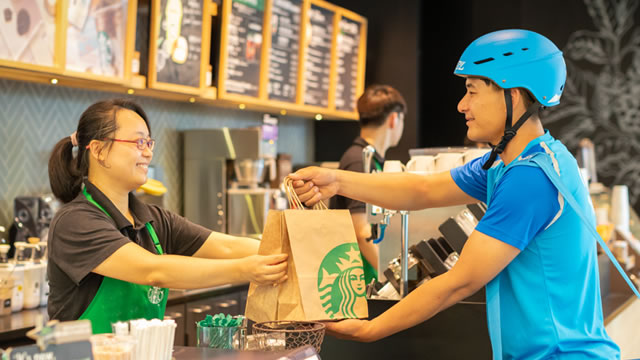
Starbucks CEO defends company's DEI practices, says they are 'key' strength of business
Fox Business· 2025-03-13 15:15
Core Viewpoint - Starbucks CEO Brian Niccol emphasized the company's commitment to diversity as a fundamental strength, stating that it is essential for connecting with customers globally [1][3]. Group 1: Company Strategy - Niccol introduced a "Back to Starbucks" strategy aimed at returning the company to its coffee house roots to increase store traffic [2]. - The company operates 40,000 stores across 88 markets, highlighting the importance of reflecting the diversity of its customers and staff in every location [3]. Group 2: Commitment to Diversity - Chief Partner Officer Sarah Kelly reiterated the company's deep commitment to diversity and inclusion, ensuring that every partner and customer feels a sense of belonging [4]. - Niccol mentioned the focus on enhancing the board's diversity to ensure effective oversight and success of the business [5]. Group 3: Industry Context - The comments come amid a trend where major corporations are scaling back on diversity, equity, and inclusion (DEI) initiatives, facing pressure from various sectors, including political figures [6][8]. - Companies like Target, Amazon, and Walmart have recently pulled back on their DEI programs, indicating a broader industry shift [8].