Samsung Electronics

Search documents
Thai, Japanese Stocks Surge on Ruling Parties' Election Wins | Insight with Haslinda Amin 02/09/2026
Bloomberg Television· 2026-02-09 06:26
WE HAVE HAD THE RIGHT PEOPLE TO TACKLE ALL THOSE PROBLEMS. WE THINK IT IS IN A STEADY STATE AND LOOK FORWARD TO MOVING ON WITH EVEN A STRONGER CABINET AND GOVERNMENT. YVONNE: THAILAND'S PRIME MINISTERS SPEAKING WITH HIS RULING PARTY, ON TRACK TO TRIPLE ITS NUMBER OF PARLIAMENTARY SEATS AFTER VOTERS SEEKING STABILITY HAD A SURPRISE ELECTION WIN TO THE ROYALIST ESTABLISHMENT.FROM BANGKOK, THIS IS INSIGHT WITH HASLINDA AMIN WHERE WE DIVE DEEPER INTO THE STORIES THAT MATTER WITH CRUCIAL CONTEXT AND SHARP ANALYS ...


Better iShares International ETF: IEFA vs. IXUS
Yahoo Finance· 2026-02-08 16:26
Core Insights - The iShares Core MSCI Total International Stock ETF (IXUS) includes both developed and emerging markets, while the iShares Core MSCI EAFE ETF (IEFA) focuses solely on developed markets, providing different investment exposures [1][2] Cost & Size Comparison - Both IXUS and IEFA have an expense ratio of 0.07% - As of January 30, 2026, IXUS has a 1-year return of 37.7% compared to IEFA's 34.9% - IXUS has a dividend yield of 3.2%, while IEFA offers a slightly higher yield at 3.6% - IXUS has assets under management (AUM) of $51.9 billion, whereas IEFA has a significantly larger AUM of $162.6 billion [3][4] Performance & Risk Comparison - The maximum drawdown over five years for IXUS is -30.05%, while IEFA's is -30.41% - An investment of $1,000 in IXUS would grow to $1,305 over five years, compared to $1,353 for IEFA [5] Portfolio Composition - IEFA tracks developed markets in Europe, Australasia, and the Far East, holding 2,589 companies with a sector tilt towards financial services (22%), industrials (20%), and healthcare (11%) [6] - IXUS holds over 4,100 stocks, providing broader diversification with sector allocations leaning towards financial services, industrials, and basic materials, featuring top holdings in Taiwan Semiconductor Manufacturing, ASML, and Samsung Electronics [7] Investment Implications - The choice between IXUS and IEFA depends on the desired exposure; IEFA avoids the volatility of emerging markets but limits potential upside during strong emerging market cycles, while IXUS offers broader diversification and exposure to high-growth potential [8]
Better iShares International ETF: IEFA vs. IXUS
The Motley Fool· 2026-02-08 16:06
Core Insights - The iShares Core MSCI Total International Stock ETF (IXUS) and the iShares Core MSCI EAFE ETF (IEFA) provide different exposures to international equities, with IXUS including emerging markets and IEFA focusing solely on developed markets [1][2] Cost and Size Comparison - Both IXUS and IEFA have an expense ratio of 0.07% - As of January 30, 2026, IXUS has a 1-year return of 37.7% while IEFA has a return of 34.9% - IXUS has a dividend yield of 3.2% compared to IEFA's 3.6% - IXUS has assets under management (AUM) of $51.9 billion, while IEFA has $162.6 billion [3][4] Performance and Risk Comparison - Over the past five years, IXUS experienced a maximum drawdown of -30.05%, while IEFA had a drawdown of -30.41% - An investment of $1,000 in IXUS would have grown to $1,305, whereas the same investment in IEFA would have grown to $1,353 [5] Fund Composition - IEFA tracks developed markets in Europe, Australasia, and the Far East, holding 2,589 companies with a sector focus on financial services (22%), industrials (20%), and healthcare (11%) [6] - IXUS holds over 4,100 stocks, providing broader diversification with sector allocations leaning towards financial services, industrials, and basic materials [7] Investor Implications - The choice between IXUS and IEFA depends on the desired exposure; IXUS offers global exposure including emerging markets, while IEFA provides stability and a higher dividend yield from developed markets [8][11] - IEFA's focus on developed markets avoids emerging market volatility but limits growth potential, while IXUS can deliver higher returns due to emerging market growth despite associated risks [9][10]



IEMG vs. SPGM: How These Popular Global ETFs Stack Up for Investors
The Motley Fool· 2026-02-08 08:00
Core Insights - The iShares Core MSCI Emerging Markets ETF (IEMG) and the State Street SPDR Portfolio MSCI Global Stock Market ETF (SPGM) provide low-cost equity exposure but differ in geographic focus and risk profiles [1][2] Cost & Size Comparison - Both ETFs have an expense ratio of 0.09% - IEMG has a significantly higher one-year return of 38.07% compared to SPGM's 21.83% - IEMG offers a higher dividend yield of 2.75% versus SPGM's 1.89% - IEMG has an asset under management (AUM) of $138.8 billion, while SPGM has $1.3 billion [3] Performance & Risk Comparison - IEMG has a max drawdown of -37.11% over five years, while SPGM's is -25.92% - The growth of $1,000 over five years is $1,100 for IEMG and $1,570 for SPGM [4] Holdings and Sector Exposure - IEMG includes 2,672 holdings, focusing on large-, mid-, and small-cap equities in emerging markets, with a sector mix dominated by technology (27%) and financial services (21%) [5] - SPGM has nearly 3,000 holdings, blending developed and emerging markets, with significant exposure to technology (26%), financial services (17%), and industrials (12%) [6] Investment Implications - IEMG targets high-growth potential in emerging markets but carries higher risk and volatility [7] - SPGM offers a more stable investment option with exposure to both developed and emerging markets, providing greater diversification [8] - IEMG has shown significant short-term performance but has underperformed in five-year total returns, potentially due to volatility or the performance of major tech companies [9] - Investors seeking higher growth may prefer IEMG, while those desiring diversification might opt for SPGM [10]

IEMG vs. IXUS: Should You Bet on Emerging Markets or Diversify With Total International Stocks?
The Motley Fool· 2026-02-07 11:30
Core Insights - The iShares Core MSCI Total International Stock ETF (IXUS) provides broad exposure to developed and emerging markets at a lower cost compared to the iShares Core MSCI Emerging Markets ETF (IEMG), which focuses solely on emerging markets and has seen stronger recent returns [1][2] Cost and Size Comparison - IXUS has an expense ratio of 0.07%, while IEMG has a slightly higher expense ratio of 0.09% [3][4] - As of February 2, 2026, IXUS has a one-year return of 35.9% and a dividend yield of 3.24%, whereas IEMG has a one-year return of 41.5% and a dividend yield of 2.75% [3] - IXUS has assets under management (AUM) of $51.9 billion, while IEMG has a significantly larger AUM of $120.0 billion [3] Performance and Risk Analysis - Over the past five years, IXUS has experienced a maximum drawdown of 30.05%, compared to IEMG's 37.16% [6] - A $1,000 investment in IXUS would have grown to $1,305 over five years, while the same investment in IEMG would have grown to $1,106 [6] Portfolio Composition - IXUS holds 4,173 stocks across developed and emerging markets, with a focus on financial services (21%), industrials (15%), and basic materials (13%) [7] - IEMG consists of 2,725 stocks from emerging economies, with a significant emphasis on technology (26%), financial services (21%), and consumer cyclicals (12%) [6][10] - Both ETFs have Taiwan Semiconductor Manufacturing as a top holding, but IXUS diversifies its exposure across various sectors and regions, while IEMG is heavily concentrated in technology [10][11] Investment Implications - International stocks have outperformed U.S. markets in 2025, driven by a weaker dollar, attractive valuations, and strong earnings growth, making both IXUS and IEMG viable options for investors [8][9] - IXUS is suitable for investors seeking comprehensive international exposure with stability, while IEMG appeals to those willing to accept higher volatility for potential long-term growth in emerging markets [11]

Bitcoin falls 8% and Asian shares mostly slip after Wall Street is hit by tech stock losses
ABC News· 2026-02-06 07:57
Market Overview - Asian shares traded mostly lower, following Wall Street's losses driven by technology stocks [1] - The S&P 500 fell 1.2% to 6,798.40, marking its sixth loss in seven days, while the Dow Jones Industrial Average also dropped 1.2% to 48,908.72 [5] Technology Sector - Technology stocks were significantly impacted, with Qualcomm sinking 8.5% despite better-than-expected quarterly revenues, and Alphabet losing 0.5% due to concerns over its AI spending [5] - Amazon's shares fell 11% in after-hours trading after announcing plans to increase capital spending by over 50% to $200 billion in AI and other areas [6] - The sell-off in technology stocks was exacerbated by new AI tools from American startup Anthropic, which raised concerns about the disruption of traditional software services [6] Cryptocurrency - Bitcoin's price dropped to just under $65,000, down approximately 8% and giving back all gains since President Trump's re-election, with a peak of over $124,000 in October [4] - The cryptocurrency experienced a significant decline, briefly sinking over 12% to below $64,000 [4] Automotive Industry - Shares of Toyota Motor rose 2% following the announcement that CEO Koji Sato will step down in April, to be replaced by CFO Kenta Kon [3] Commodity Prices - Gold prices fell 0.6% to $4,858.60 per ounce after nearing $5,600 last week, while silver prices dropped 5.5% to $72.52 per ounce [7] - U.S. benchmark crude oil gained 35 cents to $63.64 a barrel, and Brent crude rose 36 cents to $67.91 a barrel [8]

Asia-Pacific markets set for another weak session as tech sell off deepens after Wall Street rout
CNBC· 2026-02-06 00:05
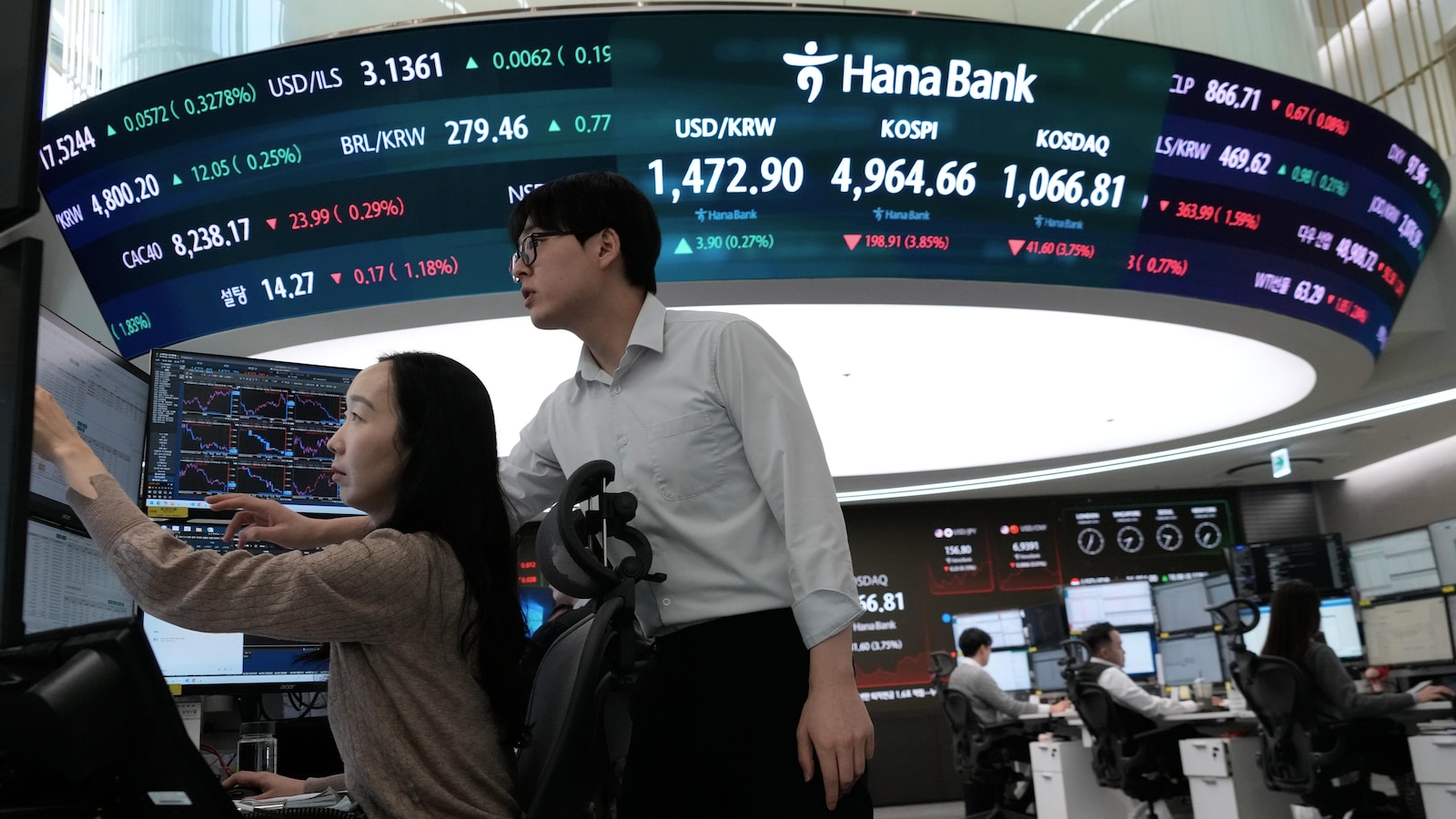
Market Overview - South Korea's Kospi index experienced a significant decline, plunging as much as 5% before closing down 3.20%, while the small-cap Kosdaq fell by 3.17% [1] - The market is heavily influenced by the chip and automotive industries, which have seen sharp fluctuations due to negative sentiment surrounding tech stocks [2] Company Performance - Major companies such as Samsung Electronics and SK Hynix saw their stock prices drop by 3.08% and 3.56% respectively [1] - Hyundai Motor's shares decreased by 5.42%, and Hanwha Aerospace, a defense heavyweight, fell by 5.87% [1] - LG Energy Solution also faced a decline, losing 3.67% [1] Regional Market Trends - Japan's Nikkei 225 index fell by 0.57%, marking a third consecutive day of losses, while the broader Topix index was marginally lower [2] - Japanese pharmaceutical companies, including Sumitomo Pharma and Takeda Pharmaceutical, experienced stock declines of over 5% and 1.75% respectively, following U.S. President Donald Trump's announcement of discounted prescription medicines [3] - Hong Kong's Hang Seng Index opened down about 2%, and mainland China's CSI 300 saw a marginal decline [3] - Australia's S&P/ASX 200 index also showed weakness, falling by 1.84% [3] Commodity Market - Spot silver prices continued to decline, dropping by 1.63% after a significant crash of about 13% on Thursday [3]

US markets today: Alphabet drags Wall Street lower; bitcoin, gold and silver slide
The Times Of India· 2026-02-05 15:17
Market Overview - The S&P 500 fell 0.8%, marking its sixth loss in seven days since reaching an all-time high [4][6] - The Dow Jones Industrial Average declined by 326 points, or 0.7%, while the Nasdaq composite dropped 0.8% [4][6] - Global stock markets also experienced declines, with London's FTSE 100 down 0.9%, France's CAC 40 down 0.6%, and Germany's DAX down 1.1% [5][6] Company Performance - Alphabet's stock fell 5.4% despite reporting stronger-than-expected profits, as investors were concerned about its aggressive AI spending plans, which could double to approximately $180 billion this year [4][6] - Qualcomm's shares dropped 9.1% after it issued a weaker profit forecast due to an industry-wide memory shortage affecting handset demand, despite reporting better-than-expected profit and revenue [5][6] - Estee Lauder's stock fell 16.9% even after beating earnings estimates, as the company warned that tariff-related pressures could reduce profits by about $100 million in its fiscal year [5][6] Economic Indicators - US unemployment benefit applications increased more than expected, indicating potential acceleration in layoffs, with layoffs announced by US-based employers surging to 108,435 last month, the highest since October [5][6] - The yield on the 10-year Treasury fell to 4.23% from 4.29%, reflecting a weaker labor outlook and raising expectations for potential interest rate cuts by the Federal Reserve [5][6] Commodity Market Movements - Silver prices tumbled 12.1% amid volatility after a record-breaking rally stalled, while gold fell 1.9% to $4,855 per ounce after fluctuating sharply [5][6] - Bitcoin, referred to as "digital gold," briefly slipped below $70,000, down from a record above $124,000 in October [5][6]

BTC crash today: Why is Bitcoin down today by 8% and will crypto currency go below $71,000 or rise again? Here's what should investors do
The Economic Times· 2026-02-05 10:54
BTC crash today is part of a wider market move seen across global stocks and digital assets. Bitcoin dropped sharply during Asian trading hours as technology shares fell across major markets. Investor mood turned cautious after comments from US officials and ongoing pressure on high priced tech stocks. The sell off pushed Bitcoin to its lowest level since November 2024. Global equities also showed mixed trends as oil prices fell and precious metals moved in different directions. Market participants are now ...


Silver gives back two days of gains amid a broader market rotation
Business Insider· 2026-02-05 07:50
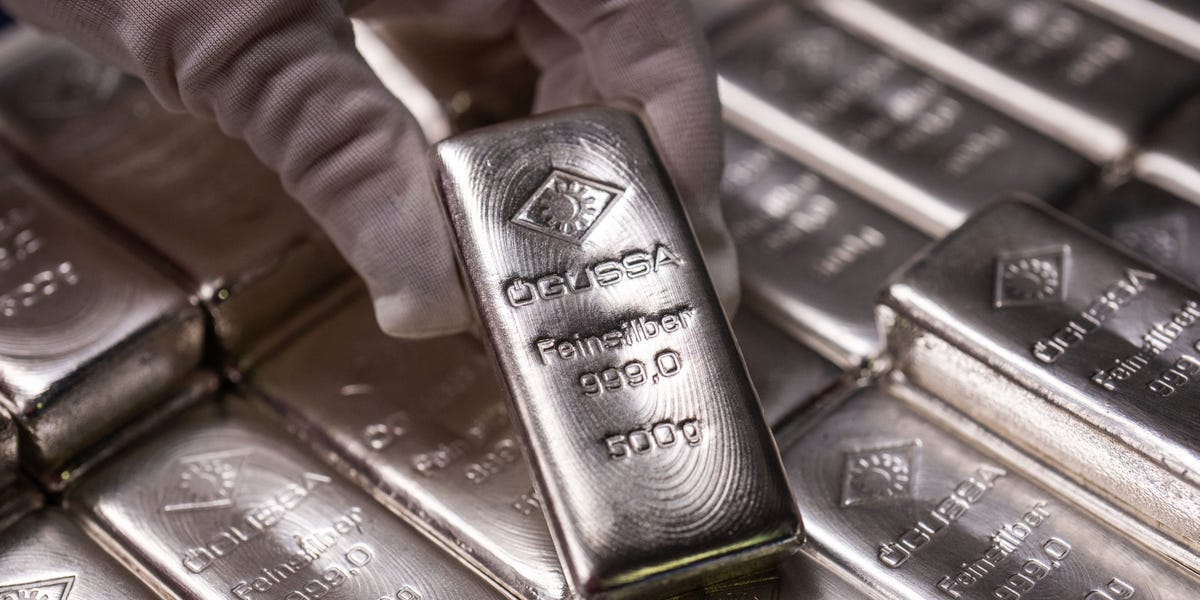
Silver Market Dynamics - Silver prices experienced a significant decline, dropping 9.2% to around $80.05 per troy ounce, with earlier losses reaching as much as 17% in a single session [1] - This decline reversed previous gains, as silver had recently hit a record high above $121 per ounce [2] - The drop in silver prices coincided with a rise in the US Dollar Index, which reached a two-week high, making dollar-denominated commodities more expensive [2][3] Volatility and Market Sentiment - Analysts indicate that silver is likely to remain highly volatile due to its smaller market size compared to gold, which can amplify price fluctuations [4] - Hedge funds had already begun reducing long positions in silver and other metals prior to the selloff, reallocating investments into energy and other commodities [4] Broader Market Trends - The overall market saw a broad selloff, affecting risk assets including tech stocks and cryptocurrencies, with notable declines in software stocks following the introduction of new AI tools [5][6] - The tech selloff is viewed as a healthy rotation by some analysts, as investors seek better opportunities outside of a tech-driven market [7] - Bitcoin also faced a downturn, trading around $71,200, down approximately 7% in the last 24 hours and about 19% over the past week [8]