Tesla

Search documents
Tesla: The Elon Premium Is Off The Charts (NASDAQ:TSLA)
Seeking Alpha· 2026-01-11 06:56
Group 1 - Tesla's valuation premium compared to other US mega cap stocks is at an all-time high [1] - The stock is no longer trading based on automotive revenue expectations but rather on hopes for autonomous technology [1]


Nvidia, Tesla chase same self-driving goal via varying paths
BusinessLine· 2026-01-11 04:09
Core Insights - Nvidia's CEO Jensen Huang presented the company's autonomous driving technology at CES, emphasizing its potential to compete with major players like Tesla [1][2] - The central question raised is about who will control the technology for consumer self-driving cars and robotaxis, with Nvidia promoting its open-source AI model, Alpamayo, for Level 4 self-driving cars [2][3] Group 1: Nvidia's Technology and Strategy - Nvidia introduced Alpamayo as part of a comprehensive toolkit for automakers, which includes powerful chips for data centers, in-vehicle chips, and simulation software to expedite the development of self-driving technology [3] - The company aims to provide the intelligence layer for autonomous vehicles without manufacturing the cars themselves, asserting ownership of the technology that enables self-driving capabilities [4] - Nvidia's strategy has been validated by analysts, indicating that its approach complements Tesla's efforts in the autonomous vehicle space [6] Group 2: Tesla's Position and Response - Tesla's CEO Elon Musk responded to Huang's remarks, asserting that Tesla is already implementing similar reasoning capabilities in its autonomous driving system [5][6] - Tesla has invested approximately $10 billion in Nvidia hardware for training its autonomous driving software, highlighting the interdependence between the two companies [9] - Tesla's approach relies solely on vision-based technology, while Nvidia supports a broader range of sensor technologies, indicating differing philosophies in achieving autonomy [10] Group 3: Market Dynamics and Future Outlook - The competition in the autonomous vehicle market remains intense, with Tesla and Nvidia both pursuing paths that could lead to consumer adoption of self-driving technology [11][12] - Nvidia is collaborating with various technology companies and automakers to provide tools for robotaxi fleets, aiming for deployment as early as 2027 [14] - The upcoming Mercedes-Benz CLA will be the first vehicle to utilize Nvidia's technology, with deliveries starting in early 2026, showcasing the company's commitment to advancing autonomous driving capabilities [15]
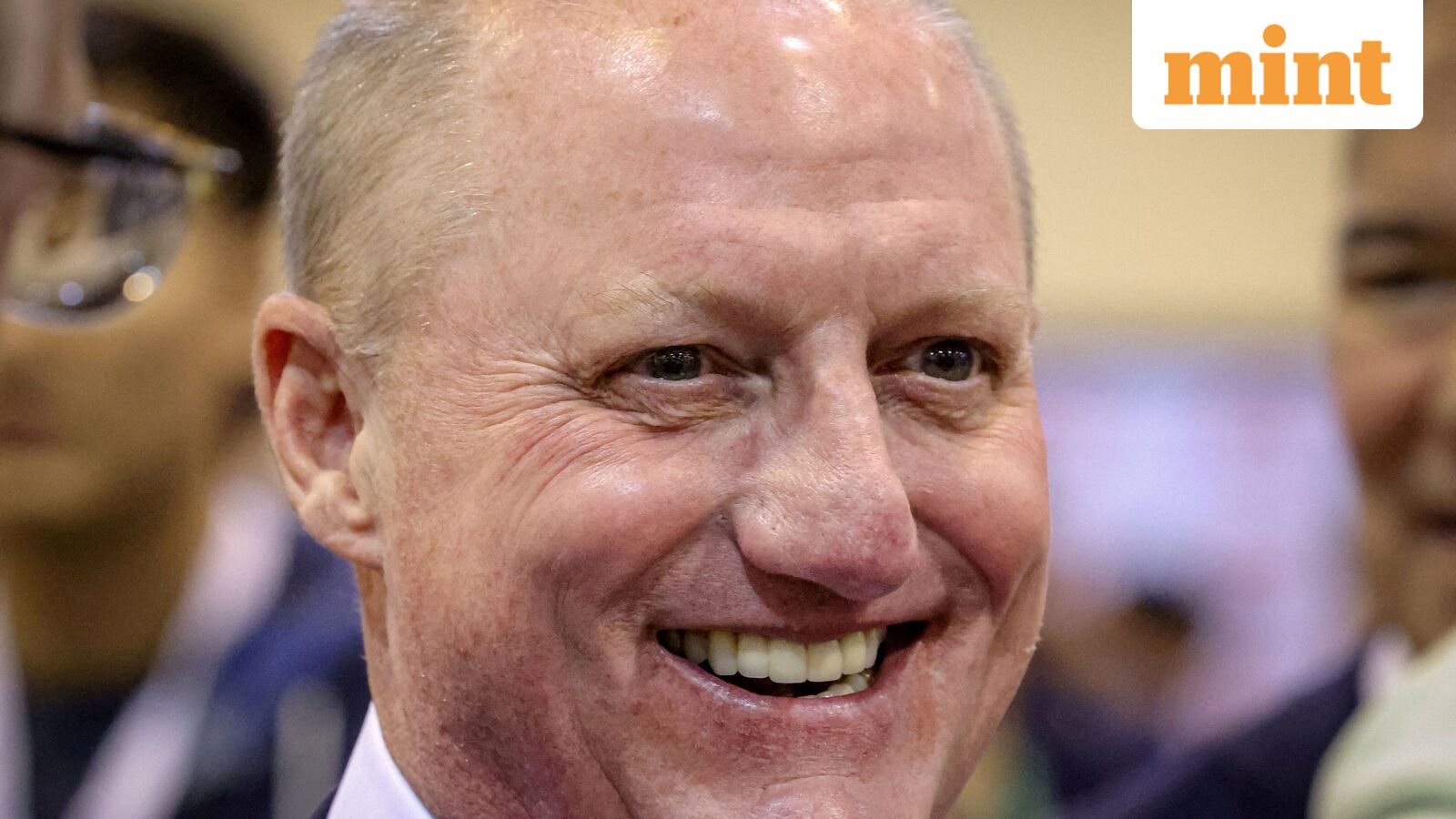
Greg Abel's salary as Berkshire CEO is way more than Warren Buffett! Here's how much cash he's getting paid in 2026
MINT· 2026-01-11 02:51
Core Insights - Berkshire Hathaway is increasing the salary of its new CEO, Greg Abel, to $25 million annually, marking a 19% increase from his previous compensation [1][2] - This new salary significantly surpasses the $100,000 that Warren Buffett earned during his tenure as CEO [1] - Abel's compensation reflects a broader trend in executive pay, contrasting with Buffett's historically low salary [4] Salary Details - Greg Abel's new salary as CEO is a 19% increase from his previous salary of $21 million in 2024 [2] - In 2023, Abel received a salary of $20 million, and in 2022, he earned $16 million plus a $3 million bonus [3] - Berkshire's Vice Chairman Ajit Jain received the same compensation as Abel from 2022 to 2024, with future compensations for both not yet disclosed [3] Background on Greg Abel - Greg Abel became CEO of Berkshire Hathaway on January 1, succeeding Warren Buffett, who led the company for over 60 years [5] - Abel joined Berkshire in 1999 through the acquisition of MidAmerican Energy and has held various leadership roles, including CEO of Berkshire Hathaway Energy and Vice Chairman overseeing non-insurance businesses [6] - Abel owns approximately $171 million in Berkshire stock and sold a 1% stake in Berkshire Hathaway Energy for $870 million in 2022 [6] Industry Context - The increase in Abel's salary highlights a shift in compensation structures within traditional companies, especially when compared to the substantial incentive packages seen in the tech industry, such as Elon Musk's $1 trillion package approved by Tesla shareholders [4] - The disparity in executive compensation illustrates changing norms in how companies reward their leaders [6]
Prediction: Tesla's EV Sales Will Return to Growth in 2026
The Motley Fool· 2026-01-10 12:15
Core Viewpoint - Tesla's recent decline in EV deliveries is concerning, but there are strong indicators that sales will rebound in 2026, strengthening the investment case for the stock. Group 1: Sales Performance - Tesla experienced an 8.5% drop in full-year EV deliveries for the year [1] - The Model Y refresh significantly impacted sales, with the Model Y being responsible for over a quarter of total EV sales in the U.S. [2][4] - Model 3 sales rose by 17.6% in the first nine months of 2025, indicating that the sales decline is primarily a Model Y issue [5] Group 2: Future Projections - Annualizing fourth-quarter deliveries results in 1.67 million deliveries, while the second half annualized to 1.83 million deliveries, with a Wall Street analyst consensus for 2026 at 1.75 million [8] - The rollout of the Juniper Model Y and the introduction of more affordable versions are expected to improve sales in 2026 [6] Group 3: Technological Advancements - The potential introduction of robotaxis and regulatory approvals for Full Self-Driving (FSD) software will enhance the value proposition of Tesla's EVs [9][10] - Lower interest rates are anticipated to benefit vehicle sales, making EVs more affordable [11] Group 4: Investment Implications - The return to growth in EV sales is crucial for Tesla's narrative and will help counteract negative perceptions from declining sales [12] - Increasing production volume is essential for margin expansion and reducing EV production costs, ensuring affordability [12]
YieldMax TSLA ETF Is Interesting, But Here's What I'd Buy Instead
The Motley Fool· 2026-01-10 11:48
Core Insights - The YieldMax TSLA Option Income Strategy ETF offers a high distribution rate of 50.21%, attracting income-focused investors despite Tesla not paying dividends [1][2] - The ETF utilizes a covered call strategy, which generates income but limits upside potential [4] - An alternative, the NEOS Nasdaq-100 High Income ETF, provides a lower yield of 14.01% but pays monthly dividends and has shown better performance in terms of drawdowns [6][7] Group 1: YieldMax TSLA Option Income Strategy ETF - The ETF concluded 2025 with a remarkable distribution rate of 50.21% [1] - Tesla shares experienced a decline of 9.75% due to a drop in fourth-quarter deliveries, impacting the YieldMax ETF, which fell 10.69% [3] - The ETF's strategy of using covered calls caps potential upside, which is explicitly stated by the issuer [4] Group 2: NEOS Nasdaq-100 High Income ETF - The NEOS ETF is actively managed and also employs covered calls to enhance income, but pays a monthly dividend [6] - Despite a lower yield of 14.01%, the NEOS ETF has a smaller drawdown compared to both the Nasdaq-100 and the YieldMax ETF [7] - Since its launch, the NEOS ETF has returned 41.53%, closely trailing the Nasdaq-100's 46.04% gain [10]
Elon Musk's SpaceX Wins $739 Million US Space Force Contract - Lockheed Martin (NYSE:LMT), Tesla (NASDAQ:TSLA)
Benzinga· 2026-01-10 07:17
Core Insights - SpaceX has secured new contracts worth $739 million from the U.S. Space Force for military launches aimed at enhancing missile warning and tracking capabilities [1][4] Group 1: Contract Details - Nine task orders have been issued under the National Security Space Launch (NSSL) Phase 3 Lane 1 [1] - The awarded task orders will support the Space Development Agency (SDA) and the National Reconnaissance Office (NRO) [2] - Specific missions include SDA-2 for launches starting in 4QFY26, SDA-3 for launches in 3QFY27, and NTO-5 for launches in 1QFY27 and 2QFY28 [2] Group 2: Launch Specifications - The SDA-2 task order includes two launches carrying 18 Tranche 2 Tracking Layer space vehicles from L3Harris and a separate launch for eight F2 space vehicles from Millennium Space Systems [3] - The SDA-3 task order involves two launches delivering 18 Tranche 2 Tracking Layer vehicles from Lockheed Martin [3] Group 3: Strategic Importance - Colonel Matt Flahive emphasized that each task order awarded contributes to delivering national defense capabilities [4] - SpaceX's recent contract win reflects the company's strong position in securing federal contracts, which have been crucial for its success [5] - The company also won a 2024 Pentagon contract to expand Ukraine's access to its Starshield satellite network [5]
All-In's 2026 Predictions
All-In Podcast· 2026-01-10 04:50
This is what we need. Let him go. >> All right, here we go.>> This is Jason in the corner warming up. >> Two. Shut the up, Freeberg.It's my show. Three. Two.All right, everybody. Welcome back to the number one podcast in the world. The podcast I, Jason Cowakanis, named, created, and I'm the executive producer for life.With me, my three Miss Crant friends, Chimath Poly Hapatia, our dictator. Love you, brother. Good seeing you.Uh David Freedberg, our Sultan of Science and Yeah. Thesar. Yeah.Who's now made his ...
Family Sues Tesla After Autopilot Fails to Detect Motorcycle, Killing 28-Year-Old Rider says Law Firm Osborn Machler
Businesswire· 2026-01-09 21:49
Core Viewpoint - A wrongful death lawsuit has been filed against Tesla following a fatal accident involving a Tesla Model S operating on Autopilot, which failed to detect a stopped motorcycle, resulting in the death of 28-year-old Jeffrey Nissen Jr. [1][2] Company Accountability - The lawsuit alleges that Tesla has long been aware of the limitations of its Autopilot system, particularly its inability to identify motorcycles and other small vehicles, and claims the company has overstated the system's capabilities while downplaying its risks [6][11] - The attorney representing Nissen's estate argues that Tesla's marketing misrepresents the Autopilot system as capable of functioning safely without constant driver supervision, which is contrary to the reality of its operational requirements [12] Legal Context - A recent ruling by a California judge found Tesla guilty of deceptive marketing practices regarding the Autopilot and Full Self-Driving systems, ordering the company to cease marketing these systems as fully functional self-driving technology [5] - The lawsuit has been filed in Snohomish County Superior Court, with the case titled "Estate of Jeffrey Nissen Jr. v. Tesla, Inc. and Carl Hunter" [13] Driver Behavior and System Limitations - The driver involved in the accident, Carl Hunter, admitted to relying on Autopilot and potentially being distracted by his phone at the time of the collision, which raises concerns about driver engagement with the system [3][4] - Experts have noted that the design of Tesla's Autopilot system may lead to "driver alarm fatigue," where excessive alerts cause drivers to ignore critical warnings, potentially contributing to accidents [7][8] Impact on Public Safety - The lawsuit aims to hold Tesla accountable for what is perceived as an unsafe vehicle and to prompt improvements in public safety by highlighting the flaws in the Autopilot system [10][11]

Tesla Adds Nvidia To Its Enemy List (NASDAQ:TSLA)
Seeking Alpha· 2026-01-09 20:50
Tesla, Inc. ( TSLA ) saw a nice rally in its shares since the April lows, with the stock even making a new all-time high last month.James Foord is an economist by trade and has been analyzing global markets for the past decade. He leads the investing group The Pragmatic Investor where the focus is on building robust and truly diversified portfolios that will continually preserve and increase wealth. The Pragmatic Investor covers global macro, international equities, commodities, tech and cryptocurrencies an ...

Prediction: This Monster Artificial Intelligence (AI) Stock Will Reach a $5 Trillion Market Cap in 2026 (Hint: It's Not Apple or Microsoft)
The Motley Fool· 2026-01-09 20:29
Core Insights - Nvidia is the only company to have ever reached a $5 trillion market cap, currently holding a market cap of $4.5 trillion, while Alphabet is predicted to potentially join the trillion-dollar club by the end of the year [1][2]. Company Overview - Alphabet currently has a market cap of $3.8 trillion, requiring a 32% increase in stock price to reach $5 trillion, which is approximately half of the 65% gain it achieved in 2025 [10][12]. - The stock price of Alphabet is currently around $329.58, with a P/E ratio of 31, indicating it may appear expensive, but the forward P/E suggests a clearer valuation story [11][14]. Financial Performance - Alphabet's profitability has been increasing at a higher rate than its revenue, despite significant capital expenditures on AI initiatives over the past three years [6]. - The company's revenue trends have improved significantly, with its Google Cloud Platform being the fastest-growing segment, driven by partnerships with major clients like OpenAI and Meta Platforms [8][7]. Market Position and Strategy - Alphabet's comprehensive ecosystem, which includes next-generation hardware and software, positions it to compete effectively against major players like AWS, Microsoft Azure, and Nvidia [9]. - The company is expected to find more monetization opportunities within its AI product suite, enhancing its competitive stance against other megacap companies [9]. Future Outlook - 2026 is anticipated to be a pivotal year for Alphabet, with expectations of sustained revenue growth and profit margin expansion, supported by its vertically integrated tech stack [15][4]. - Given the current dynamics, there is a strong belief that Alphabet could reach a $5 trillion market cap within the year, presenting a significant investment opportunity for long-term investors [16].