Bosch

Search documents
北非:连接各大洲,创造机遇(英)2026
IMF· 2026-02-24 02:50
Investment Rating - The report does not explicitly provide an investment rating for the industry Core Insights - North Africa is positioned as a strategic connector between Europe and sub-Saharan Africa, with opportunities for deeper economic linkages and shared growth [12][14] - Current trade patterns show that 63% of North Africa's exports go to Europe, while only 4% are directed to sub-Saharan Africa, indicating a heavy reliance on European markets [13][30] - The African Continental Free Trade Area (AfCFTA) presents a significant opportunity for North Africa to enhance intra-African trade and diversify economic partnerships [13][24] Summary by Sections Executive Summary - North Africa has a unique opportunity to leverage its geographical position to enhance economic linkages with Europe and sub-Saharan Africa, fostering resilience and growth [12][14] - Empirical analysis suggests that deeper regional linkages could increase trade by up to 50%, GDP by about 2%, and FDI by roughly 40% [14] Chapter 1: Introduction - North Africa's economic ties with Europe are historically strong, but there is growing engagement with sub-Saharan Africa, presenting opportunities for enhanced economic connections [17][19] Chapter 2: The State of Economic Linkages - Trade remains heavily focused on Europe, with limited participation in global value chains, primarily centered on raw materials [24][30] - FDI inflows are modest, accounting for less than 1% of global FDI, highlighting untapped potential [24][54] Chapter 3: Unlocking Gains from Stronger Linkages - Gravity models indicate that reducing trade barriers could significantly boost trade and GDP, with complementary reforms amplifying these benefits [14][23] Chapter 4: Energy Sector - North Africa's energy resources are crucial for trilateral economic integration, supporting Europe's clean energy transition and addressing sub-Saharan Africa's energy needs [14][22] Chapter 5: Conclusions and Policy Recommendations - A coordinated reform agenda is necessary to improve logistics, infrastructure, and the business environment to realize the potential of trilateral integration [15][22]
Magna International Inc. (NYSE:MGA) Analysts Show Growing Confidence
Financial Modeling Prep· 2026-02-13 02:00
Core Viewpoint - Magna International Inc. is experiencing a positive shift in analyst sentiment, reflected in the rising consensus price target, indicating expectations of growth or stability in its stock price [2][4][6] Group 1: Analyst Sentiment and Price Targets - The average price target for Magna has increased from $50 a year ago to $61 last month, showing significant growth in analyst confidence [4][6] - Three months ago, the average price target was $58.29, indicating a gradual increase in confidence regarding Magna's performance [3][6] - Citigroup analyst Itay Michaeli has set a price target of $81, suggesting potential for substantial stock price growth [2][6] Group 2: Earnings Expectations - Analysts anticipate that Magna will exceed quarterly earnings estimates, supported by the Zacks Earnings ESP tool [5] - The upcoming earnings report is expected to reflect positive growth, reinforcing the bullish outlook among analysts [4][5] Group 3: Competitive Position - Magna competes with major players like Continental AG and Bosch, offering a wide range of products and services in the automotive industry [1]


Arteris(AIP) - 2025 Q4 - Earnings Call Transcript
2026-02-12 22:32
Financial Data and Key Metrics Changes - Total revenue for Q4 2025 was $20.1 million, up 16% sequentially and 30% year-over-year, exceeding guidance [20] - Full year 2025 total revenue reached $70.6 million, a 22% increase year-over-year [20] - Annual contract value plus royalties was $83.6 million, a 28% year-over-year increase, marking a new record [21] - Remaining performance obligations (RPO) totaled $117 million, representing a 32% year-over-year increase, another record high [21] - Non-GAAP gross profit for Q4 was $18.5 million, with a gross margin of 92% [22] - GAAP operating loss for Q4 was $8.5 million, compared to a loss of $7.1 million in the prior year [25] Business Line Data and Key Metrics Changes - Variable royalties increased by 50% year-over-year, with Q4 setting a new record [20] - FlexGen, an AI-driven smart NoC IP product, saw strong customer adoption, licensed for over 30 production device deployments [11] - Ncore, a cache coherent interconnect IP product, also experienced strength in licensing across various edge and server applications [12] Market Data and Key Metrics Changes - The largest impacts on revenue were seen in enterprise computing, automotive, and consumer electronics markets [7] - The number of large royalty reporters tripled in the last two years, indicating a diversified customer base [20] Company Strategy and Development Direction - The acquisition of Cycuity enhances Arteris' product portfolio, focusing on semiconductor cybersecurity assurance [8] - The company aims to address the growing need for cybersecurity in semiconductor designs, which is becoming a major issue [10] - Arteris is positioned to support semiconductor applications in the AI era across various sectors, including automotive and aerospace [17] Management's Comments on Operating Environment and Future Outlook - Management expressed confidence in the growth trajectory, expecting to report a non-GAAP operating profit as early as Q4 2026 [28] - The company anticipates continued strong demand for its products driven by the proliferation of AI-driven semiconductor designs [7] Other Important Information - Free cash flow was positive $3 million for Q4 and positive $5.3 million for the full year [26] - The company ended the year with $59.5 million in cash and no financial debt [26] Q&A Session Summary Question: Cross-sell opportunities and customer segments - Management highlighted that hardware security assurance is a major issue, opening significant cross-sell opportunities across the semiconductor industry [30][31] Question: NXP's increased use of Arteris solutions - Management confirmed that deploying multiple solutions increases average selling prices significantly, especially with the addition of Cycuity [35][36] Question: Strength in royalties and market segments - Management noted that the growth in royalties was due to both customer diversification and strength in various market segments, particularly automotive [37][38] Question: Impact of security acquisition on P&L - Management indicated that approximately $7 million of the projected revenue for 2026 would come from Cycuity, with expectations of breakeven by Q4 2026 [45][46]

Arteris(AIP) - 2025 Q4 - Earnings Call Transcript
2026-02-12 22:30
Financial Data and Key Metrics Changes - In Q4 2025, total revenue reached $20.1 million, a 30% year-over-year increase and 16% sequential growth, exceeding guidance [20] - For the full year 2025, total revenue was $70.6 million, representing a 22% increase year-over-year [20] - Annual contract value plus royalties hit a record $83.6 million, up 28% year-over-year [21] - Remaining performance obligations (RPO) totaled $117 million, a 32% year-over-year increase, with approximately half expected to be recognized as revenue in 2026 [21] - Non-GAAP gross profit for Q4 was $18.5 million, with a gross margin of 92% [22] - Non-GAAP operating loss for Q4 was $2.2 million, while the full year loss was $12.5 million, an improvement over the previous year [25] Business Line Data and Key Metrics Changes - The company reported a significant increase in variable royalties, which were 50% higher year-over-year, with Q4 setting a new record [20] - The number of large royalty reporters tripled over the last two years, contributing to a balanced mix of customers across vertical markets [20] - FlexGen, an AI-driven smart NoC IP product, saw strong adoption with over 30 production device deployments [11] - Ncore, a cache coherent interconnect IP product, also experienced strength in licensing across various applications [12] Market Data and Key Metrics Changes - The company noted expanding demand for AI-driven semiconductor designs across various markets, including enterprise computing, automotive, and consumer electronics [6] - The number of chiplet projects incorporating Arteris technology has more than tripled over the past two years, indicating strong market growth [15] - The automotive segment remains the largest vertical market, with emerging strength in consumer and aerospace sectors [39] Company Strategy and Development Direction - The acquisition of Cycuity enhances the company's product portfolio by adding cybersecurity assurance products, addressing market concerns about increasing cyberattacks [8][9] - The company aims to leverage its technology to improve hardware security and vulnerability testing across all SoCs, expanding its customer base [10] - Arteris is focusing on supporting semiconductor applications in the AI era, with a strong position in various sectors including autonomous vehicles and industrial automation [17] Management's Comments on Operating Environment and Future Outlook - Management expressed confidence in the company's growth trajectory, expecting to report a non-GAAP operating profit as early as Q4 2026 [28] - The company anticipates continued strong demand for its products driven by the rise of AI and the need for efficient data movement in semiconductors [6] - Management highlighted the importance of addressing cybersecurity in semiconductor designs, which is becoming a critical issue in the industry [30] Other Important Information - The company ended the year with $59.5 million in cash and no financial debt, with positive free cash flow of $3 million for Q4 [26] - The guidance for Q1 2026 includes expected ACV plus royalties of $85 million-$89 million and revenue of $20.5 million-$21.5 million [27] Q&A Session Summary Question: Cross-sell opportunities and customer segments - Management indicated that hardware security assurance is a growing issue, and the acquisition opens significant opportunities to enhance system IP value across various semiconductor companies [30][31] Question: NXP announcement and customer interest - Management confirmed that NXP is now using four solutions, indicating increased interest in deploying a full suite of solutions, which could drive average selling prices above $1 million [36] Question: Strength in royalties and market segments - Management noted that the growth in royalties is attributed to both customer diversification and an increase in large royalty reporters across various segments, including automotive and consumer markets [38][39] Question: Impact of security on P&L - Management clarified that approximately $7 million of the projected revenue for 2026 is expected from the Cycuity acquisition, with a slight contribution to operating loss anticipated [47] Question: Equity raising efforts post-acquisition - Management stated that they are in the process of activating an ATM for equity raising, with expectations for small amounts to be raised in the first quarter [49]
Arteris(AIP) - 2025 Q4 - Earnings Call Presentation
2026-02-12 21:30
Arteris 4Q 2025 Earnings Presentation Charlie Janac CEO Nick Hawkins CFO February 12, 2026 1 © 2026 Arteris, Inc. Disclaimer This presentation and the accompanying oral presentation have been prepared by Arteris, Inc. ("Arteris" or "the "Company") for informational purposes only and not for any other purpose. Nothing contained in this presentation is, or should be construed as, a recommendation, promise or representation by the presenter or Arteris or any officer, director, employee, agent or advisor of Art ...
Arteris (NasdaqGM:AIP) Earnings Call Presentation
2026-02-12 12:00
Accelerating The Creation Of Semiconductors Corporate Overview Charlie Janac CEO Nick Hawkins CFO February 2026 1 © 2026 Arteris, Inc. Disclaimer This presentation and the accompanying oral presentation have been prepared by Arteris, Inc. ("Arteris" or "the "Company") for informational purposes only and not for any other purpose. Nothing contained in this presentation is, or should be construed as, a recommendation, promise or representation by the presenter or Arteris or any officer, director, employee, ag ...
Qualcomm(QCOM) - 2026 Q1 - Earnings Call Transcript
2026-02-04 22:45
Financial Data and Key Metrics Changes - The company reported record revenues of $12.3 billion and non-GAAP earnings per share (EPS) of $3.50 for fiscal Q1 2026, with non-GAAP EPS at the high end of guidance [5][17] - QCT revenues reached a record $10.6 billion, with strong year-over-year growth across automotive and IoT segments [17] - Licensing business revenues were $1.6 billion, with an EBT margin of 77%, driven by higher units and favorable mix [17] Business Line Data and Key Metrics Changes - QCT handset revenues reached a record $7.8 billion, benefiting from recently launched flagship smartphones [17] - QCT IoT revenues grew 9% year-over-year to $1.7 billion, driven by demand across consumer and networking products [17] - QCT Automotive revenues grew to $1.1 billion, up 15% year-over-year, reflecting increased demand for Snapdragon Digital Chassis platforms [17] Market Data and Key Metrics Changes - Global consumer demand for handsets, particularly in the premium and high-tier segments, exceeded expectations, with healthy sell-through observed [5] - The handset industry is expected to face constraints due to memory availability and pricing, particularly DRAM, as suppliers redirect capacity to meet AI data center demand [5][6] Company Strategy and Development Direction - The company is focused on expanding its presence in the premium and high-tier smartphone segments, with a dual flagship product strategy that has seen broad OEM adoption [6][7] - The company is also investing in AI-native smartphones and intelligent wearables, positioning Snapdragon platforms as the choice for the industry [7][8] - In automotive, the company aims to reinforce its technology leadership with multiple design wins and collaborations with major automakers [10][11] Management's Comments on Operating Environment and Future Outlook - Management expressed confidence in the fundamentals of the handset business despite near-term challenges related to memory supply and pricing [19] - The company anticipates returning to prior growth trajectories for QCT handset revenues once memory supply normalizes [19] - Management remains optimistic about the long-term growth potential in automotive and IoT, with expectations for continued revenue acceleration [21] Other Important Information - The company completed the acquisition of Alphawave Semi, enhancing its high-speed wire connectivity technologies [15] - The company is actively engaging with leading hyperscalers and cloud service providers to develop data center solutions [14] Q&A Session Summary Question: What factors are driving the weakness in handset outlook beyond memory pricing? - Management indicated that the weakness is entirely related to memory availability, with strong microeconomic indicators and handset demand observed [26][27] Question: Is the automotive revenue growth driven by ADAS wins? - Management confirmed that the automotive pipeline continues to translate into revenue, with new car launches contributing to record revenues [29][30] Question: How is the company managing the memory supply situation? - Management clarified that they do not purchase memory directly but work closely with customers who do, ensuring flexibility with various memory providers [69][70] Question: What is the outlook for the data center business? - Management stated that progress is on track, with positive feedback from engagements with hyperscalers and cloud service providers [35][36] Question: How does the company view the impact of memory shortages on the overall handset market? - Management emphasized that the size of the handset market will be determined by memory availability, with expectations for premium and high-tier segments to remain resilient [40][76]

How the EV pullback is affecting factories and jobs in the South
CNBC· 2026-02-01 12:00
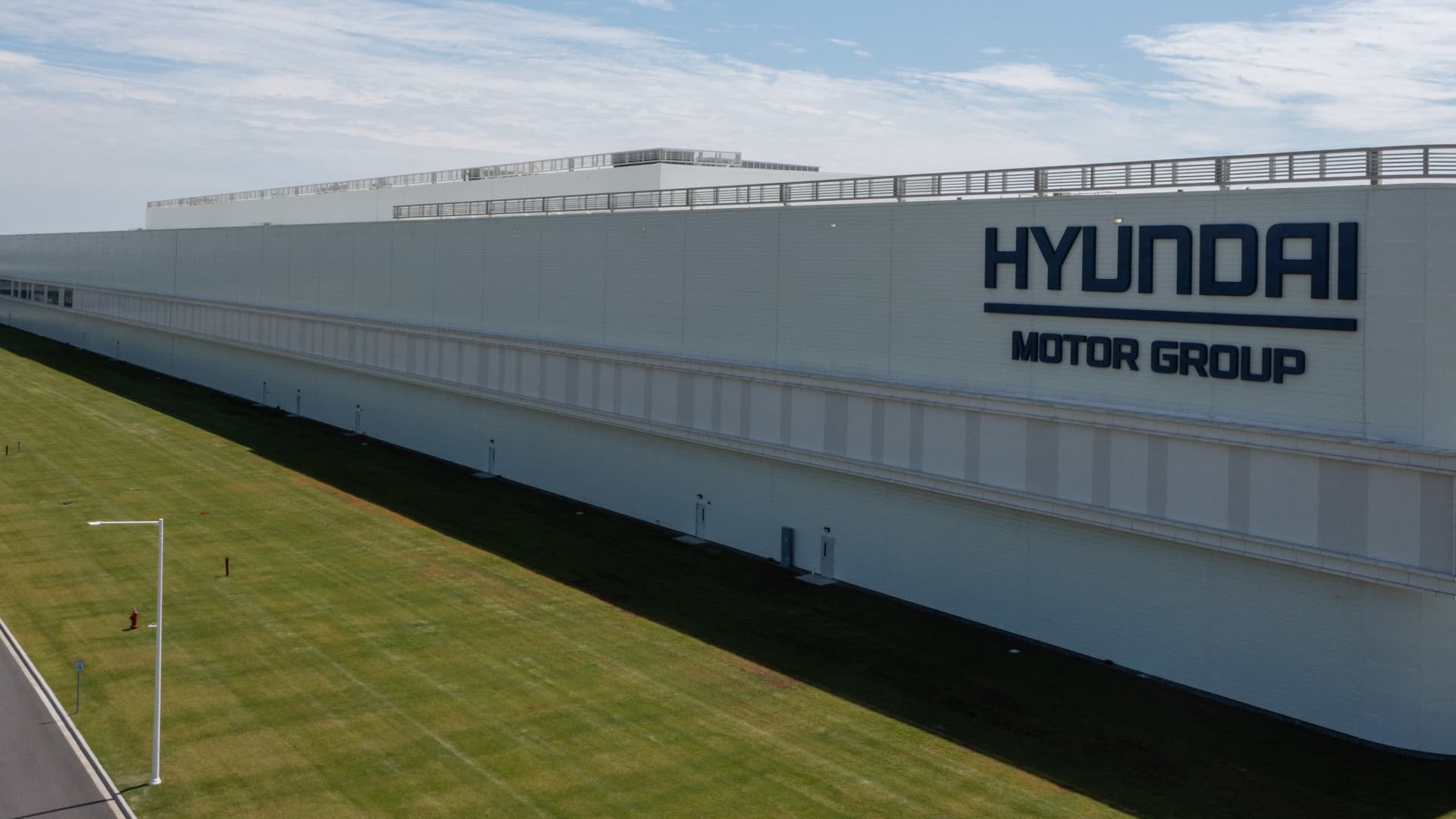
Core Insights - The majority of electric vehicle (EV) investments in the U.S. have historically favored Republican-led districts, particularly in the Southeast, raising questions about the future of these investments as the industry shifts focus away from EVs [1][2]. Investment Overview - Automakers and battery manufacturers have invested over $200 billion in EV and battery manufacturing in the U.S. from 2000 to 2024, with 84% of battery investments and 62% of EV manufacturing investments directed towards Republican-led districts [2]. - These investments were projected to create over 200,000 jobs, with 77% of these jobs located in Republican districts [2]. Regional Focus - Nearly 40% of the total investment in EVs and batteries has been allocated to the Southeastern U.S., which has been a manufacturing hub for the automotive industry for over 50 years [3]. Impact of Federal Policies - The removal of federal incentives for EVs under the Inflation Reduction Act has led to a significant decline in sales, prompting companies to pivot towards other vehicle types to mitigate losses [4][6]. Hyundai's Strategic Moves - Hyundai Motor Group, previously a leading EV seller in the U.S., has seen a 50% drop in EV sales by the fourth quarter following the end of federal incentives [6]. - The company has made a historic $12.6 billion investment in the Hyundai Metaplant in Georgia, which is expected to create approximately 8,500 jobs by 2031 [7][8]. - Hyundai plans to increase production capacity at the Metaplant by investing an additional $2.7 billion, targeting an annual output of 500,000 vehicles, with a mix of 30% EVs and 70% hybrids and gas vehicles [10]. Industry Challenges - Analysts estimate that U.S. automakers may face at least $100 billion in write-downs on EV investments, indicating that these investments may not yield the anticipated profits [11]. - Major automakers like Ford and General Motors have already announced significant financial charges related to their EV businesses, with Ford reporting a $19.5 billion charge and GM a $7.6 billion charge [12]. Market Projections - EV sales forecasts have drastically decreased from initial projections of 50% of new car sales by 2030 to a current estimate of only 17% [14][15]. - Bosch, a major automotive supplier, has had to adjust its investment strategies in light of these changing projections, moving employees from its EV motors division to other departments [16].
Bosch warns of rising cost pressure in 2026, delays margin target
Yahoo Finance· 2026-01-30 10:08
FRANKFURT, Jan 30 (Reuters) - Bosch, the world's largest car parts supplier, on Friday warned of another tough year in 2026 and postponed a 7% margin target as it expects no let-up in cost and competitive pressure in a sector hit by tariffs worldwide. Bosch last year announced a further 13,000 job cuts, or around 3% of its total workforce, to protect margins and ensure it remains competitive in light of import tariffs and price declines that have hurt its business. CEO Stefan Hartung told Reuters ...
Markets await new Trump Fed pick
Youtube· 2026-01-30 08:31
Group 1: Market Reactions and Economic Indicators - US futures are losing ground ahead of President Trump's announcement regarding the new Fed chair, with Kevin Walsh reportedly the pick [1] - Apple reported a 16% increase in first-quarter revenue, driven by strong demand for the iPhone 17, but faces supply chain issues that may impact margins [3][4] - Adidas shares rose over 6% in pre-market trading after reporting record annual sales and more than doubling operating profit in Q4 [1] Group 2: Federal Reserve and Interest Rates - The nomination of Kevin Walsh as Fed chair could enhance the credibility of the Fed, potentially influencing interest rate decisions [2] - Current expectations suggest the Fed may cut interest rates once or possibly twice in 2026, given the strong economy and persistent inflation [2] - The Fed's balance sheet currently stands at $6.6 trillion, and any tightening could have implications for US markets [2] Group 3: Technology Sector Dynamics - Microsoft experienced a significant drop in stock value due to disappointing cloud revenue growth, losing approximately $400 billion in valuation [2] - The market is becoming more discerning regarding tech companies, differentiating based on specific performance rather than general AI hype [2] - Apple's strategy involves leveraging its existing ecosystem and partnerships to enhance its AI capabilities without rushing into costly developments [4][5] Group 4: Commodities and Investment Trends - Gold prices have seen a significant decline of 4.6%, with silver down 7% and copper down 2.6%, indicating profit-taking after rapid increases earlier in the year [1] - Central banks are diversifying away from the US dollar, contributing to steady demand for gold, alongside ETF demand for hedging against geopolitical risks [3] - The market is witnessing extraordinary volatility in commodities, driven by various factors including geopolitical concerns and interest rate expectations [3]