
Burger King

Search documents
Burger King Tests AI Tracking Employee Courtesy: Will Extra 'Please' And 'Thank Yous' Lift The Stock?
Benzinga· 2026-02-27 21:20
Burger King fans may soon be celebrating the improvements made to the Whopper with the restaurant company making changes for the first time in around 10 years. The restaurant company is also adding new artificial intelligence tools to improve restaurant operations and customer service, items that could help sales and the stock of parent company Restaurant Brands International (NYSE:QSR) .Burger King Testing AI For RestaurantsBurger King parent Restaurant Brands International beat analyst estimates for the f ...


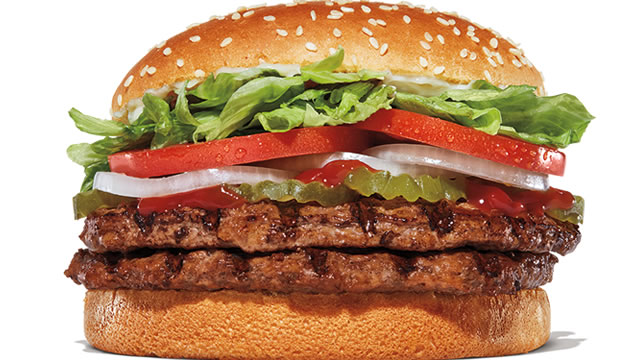
Buns, bots and ad-buys: Burger King talks strategy at RBI investor day
Yahoo Finance· 2026-02-26 09:24
This story was originally published on Restaurant Dive. To receive daily news and insights, subscribe to our free daily Restaurant Dive newsletter. Restaurant Brands International announced a series of strategic initiatives on Thursday during an investor day that are meant to extend and expand on the success of its Reclaim the Flame brand renewal at Burger King. Those plans include changes to its core menu items, broader operational use of artificial intelligence, extending its higher marketing fee rate an ...
Zeus Packaging Group expands with KOEX Packaging purchase
Yahoo Finance· 2026-02-17 13:43
Zeus Packaging Group has acquired Spain-based KOEX Packaging Solutions, according to an announcement on social networking platform LinkedIn. Financial terms of the deal remain undisclosed. The combined entity will offer integrated packaging services with a wider geographic reach for customers in Europe and North America. This development comes as Zeus projects its group revenue to reach €600m ($710.4m) by 2026, supported by a workforce exceeding 1,500 employees worldwide. Premium and retail packaging ...
Jack In The Box Q1 2026 Earnings Preview: Anticipated Declines in EPS and Revenue Amid Financial Challenges
Financial Modeling Prep· 2026-02-17 12:00
Core Viewpoint - Jack In The Box Inc. is facing significant financial challenges, with expected declines in both earnings and revenue for Q1 2026 compared to the previous year [2][3]. Financial Performance - The company is projected to report earnings per share (EPS) of $1.10 for the quarter ending December 2025, which is a 31% decrease from the previous year's EPS of $1.16 [2]. - Revenue projections for JACK are approximately $343.87 million, reflecting a 26.7% decrease compared to the same quarter last year [3]. - The previous quarter reported revenue of $326.19 million, which was slightly above analyst estimates but still indicates a challenging financial environment [3]. Financial Metrics - JACK has a negative price-to-earnings (P/E) ratio of -4.90, indicating negative earnings [4]. - The price-to-sales ratio is 0.27, suggesting the stock is valued at 27 cents for every dollar of sales [4]. - The debt-to-equity ratio is -3.33, indicating a higher level of debt compared to equity, which may pose financial challenges [4]. Market Expectations - The upcoming earnings report and management's discussion during the earnings call will be crucial for determining JACK's near-term stock price movement [5]. - Surpassing expectations could lead to a stock price increase, while failing to meet estimates might result in a decline [5].
Wendy's (NASDAQ:WEN) Faces Challenges Amid Declining Sales and Restaurant Closures
Financial Modeling Prep· 2026-02-16 19:11
Core Viewpoint - Wendy's is facing challenges in the competitive fast-food industry, leading to plans for closing a significant number of U.S. locations due to declining domestic sales [2][5]. Group 1: Company Actions - Wendy's plans to close hundreds of its U.S. restaurants, which represents about 5% to 6% of its total locations in the country [2][5]. - The company is responding to declining domestic sales as highlighted in its fourth-quarter earnings report [2]. Group 2: Stock Performance - Wendy's stock price was trading at $7.48, with a recent price target set at $7 by Morgan Stanley, indicating a potential decrease of about -6.42% [1]. - The stock has shown volatility, with a trading range between $7.08 and $7.93 on a recent trading day [3]. - Over the past year, Wendy's stock has experienced a high of $16.20 and a low of $7.08, reflecting ongoing efforts to navigate sales challenges [3]. Group 3: Market Metrics - Wendy's market capitalization is approximately $1.42 billion, indicating the total market value of its outstanding shares [4]. - The trading volume on the NASDAQ exchange is 19.22 million shares, showing active investor interest [4][5].
CleverTap Recognized as a Leader in Latest Gartner® Magic Quadrant™ for Personalization Engines
BusinessLine· 2026-02-16 06:46
Core Insights - CleverTap has been recognized as a Leader in Gartner's 2026 Magic Quadrant for Personalization Engines, highlighting its progress in customer engagement and personalization [1][4]. Company Overview - CleverTap is an AI-first, all-in-one customer engagement and retention platform that helps brands build lasting customer relationships through data [7]. - The platform integrates AI-powered segmentation, personalization, experimentation, journey orchestration, and deep analytics, working seamlessly with over 100 leading martech solutions [7]. Technology and Innovation - The company's hyper-personalization approach utilizes CleverAI™, which enables 1:1 engagement at scale and interprets customer intent to deliver the right message at the right time [2][3]. - CleverAI™ is designed for autonomous real-time orchestration, optimizing customer experiences throughout the customer lifecycle [3]. Market Impact - Brands using CleverTap's solutions have reported up to a 35% increase in conversion rates across various industries, including financial services, retail, and telecom [2]. - The company continues to innovate and execute its product roadmap, aiming to revolutionize the customer engagement industry [5]. Clientele and Global Presence - CleverTap serves a diverse range of leading brands such as TD Bank, Burger King, Paytm, and Vodafone, demonstrating its capability to drive measurable growth through effective customer engagement [8]. - The company has a global presence with backing from investors like Accel and Tiger Global, operating across regions including the US, Europe, and Asia [8].
MCD Moves Higher & QSR Slides After Earnings, PAYC Guidance Underwhelms
Youtube· 2026-02-12 15:30
Paycom - Paycom's earnings report showed revenue of $544 million, exceeding expectations of $493 million, but earnings per share (EPS) came in at $2.45, slightly below the expected $2.44 [2][3] - The company is adopting a cautious approach due to macroeconomic uncertainty, with a revenue growth outlook suggesting a maturing phase rather than hyper growth, projecting 2026 revenue between $2.17 billion and $2.19 billion [3][4] McDonald's - McDonald's reported strong quarterly results, beating expectations on both revenue and EPS, with same-store sales in the U.S. up 6.8%, significantly above expectations [6][8] - Revenue reached $7 billion, contributing to a positive market reaction, with several analysts raising price targets and maintaining buy ratings [7][9] - The company's strategy of focusing on value offerings has been effective in attracting customers amid a tight spending environment [8][9] Restaurant Brands - Restaurant Brands, the parent company of Burger King and Popeyes, reported revenue of $2.47 billion and adjusted EPS of $0.96, slightly beating expectations [12] - However, the company faced challenges with Popeyes experiencing a sharp sales decline, while Burger King showed modest growth with same-store sales up 2.7% [13][14] - Overall, the international growth story is mixed, with global same-store sales increasing by 3.1%, but not strong enough to satisfy investor expectations [14]

Restaurant Brands International(QSR) - 2025 Q4 - Earnings Call Transcript
2026-02-12 14:32
Financial Data and Key Metrics Changes - For the full year 2025, the company delivered comparable sales growth of 2.4%, net restaurant growth of 2.9%, and system-wide sales growth of 5.3% [31] - Organic adjusted operating income (AOI) growth was 8.3%, and nominal adjusted EPS growth exceeded 10% [7][31] - The company achieved its third consecutive year of approximately 8% organic adjusted operating income growth, demonstrating consistency within the industry [7][50] Business Line Data and Key Metrics Changes - Tim Hortons, which represents about 42% of operating profit, achieved comparable sales growth of 2.8% in Canada, outperforming the broader Canadian QSR industry [10] - The international segment, contributing around 27% of operating profit, saw comparable sales grow by 4.9% for the full year, with system-wide sales growth nearing 11% [15] - Burger King U.S. reported comparable sales growth of 1.6% for the full year, with a notable 2.6% in the fourth quarter [20] Market Data and Key Metrics Changes - In Canada, Tim Hortons experienced a solid performance despite macroeconomic challenges, with breakfast food sales growing by 3.5% [11] - The international segment's performance was bolstered by strong results in markets like France and Australia, with double-digit system-wide sales growth [15][17] - Burger King China reported a 9.2% increase in comparable sales, driven by improved restaurant fundamentals and marketing efforts [16] Company Strategy and Development Direction - The company is focused on long-term growth, with plans to return to a 99% franchise business model and accelerate net restaurant growth to 5%+ [9][32] - A new partnership with CPE in China aims to double Burger King China's restaurant footprint to at least 2,500 units by 2030 [16] - The company is prioritizing operational consistency and franchisee profitability, particularly at Popeyes, where leadership changes have been made to enhance performance [25][26] Management's Comments on Operating Environment and Future Outlook - Management noted that 2025 was a challenging year due to elevated costs and macroeconomic pressures, but the fundamentals of the business remained resilient [44] - The company expects to build on the momentum from 2025, with a commitment to delivering another year of 8% organic AOI growth in 2026 [42][43] - Management highlighted the importance of franchisee profitability as a key metric for assessing business health, with Tim Hortons maintaining strong average four-wall EBITDA [45] Other Important Information - The company generated nearly $1.6 billion in free cash flow in 2025 and returned $1.1 billion to shareholders through dividends [36] - The total liquidity at year-end was approximately $2.4 billion, with a net leverage ratio of 4.2x [37] - The upcoming Investor Day on February 26 will provide further insights into the company's strategic plans and performance metrics [9] Q&A Session Summary Question: Can you discuss the comparable sales evolution and trajectory in 2026, particularly for Tim Hortons and Burger King? - Management indicated that the strong performance in 2025 sets a positive foundation for 2026, with expectations for a similar consumer environment and continued focus on fundamentals [53][54] Question: How much of the international momentum is driven by a healthier backdrop versus share gains? - Management responded that the momentum is a combination of a supportive market backdrop and effective local strategies, with structural growth in many international markets [60][62] Question: Can you summarize the performance in developed markets, particularly Europe? - Management noted that Western European markets showed consistent positive performance, with strong results across major markets like France, Spain, and Germany [71]
Burger King targets over 4,000 restaurants in China by 2035
Yahoo Finance· 2026-02-02 18:42
Core Insights - Burger King aims to expand its presence in China to over 4,000 restaurants by 2035, increasing from approximately 1,250 locations currently [1] - The expansion is supported by a joint venture with CPE, which includes a $350 million investment to enhance growth, marketing, and operations [2] Group 1: Joint Venture and Investment - The joint venture allows Burger King to utilize CPE's local expertise to accelerate its development in China [2] - CPE holds about 83% ownership of the joint venture, while Restaurant Brands International (RBI) retains a 17% minority interest [3] - A 20-year master development agreement has been signed, granting exclusive rights to develop the Burger King brand in China [4] Group 2: Strategic Goals and Performance - RBI's strategy includes a return to a more simplified, highly franchised business model, with royalties from Burger King China recognized in its international segment [4] - The CEO of RBI highlighted that China represents a significant long-term growth opportunity for the brand, emphasizing a focus on food quality and brand relevance [5] - Burger King China has reported a 10.5% increase in same-store sales, exceeding expectations and indicating strong operational performance [6]
America's 50 most iconic brands, from Main Street to Silicon Valley
Yahoo Finance· 2026-02-02 17:43
Core Insights - The article highlights the significant American companies that have shaped the nation's identity and economy as it approaches its 250th birthday, emphasizing their cultural and historical impact rather than just financial metrics [1][2]. Group 1: Visa - Visa was established in 1958 as BankAmericard, launching the first consumer credit card in the U.S. [3][6] - The company rebranded as Visa in 1976 and went public in 2008, currently holding a market cap of $632 billion [4][6]. - Visa operates in over 220 countries and territories, accepted at more than 175 million merchants [7]. Group 2: Meta (Facebook) - Facebook was founded in 2004 by Mark Zuckerberg and quickly grew to 1 billion users by 2012, later rebranding to Meta in 2021 [9][13][14]. - The platform has faced controversies regarding user data and misinformation but remains a dominant social media service with over 3 billion regular users [15]. Group 3: Boeing - Boeing, established in 1916, is a leading aerospace company known for producing commercial jets and military aircraft [15][16]. - The company has faced challenges in recent years, including safety allegations and COVID-19 impacts, but continues to be a major player in the industry with a market cap of $185 billion [20][21]. Group 4: Tesla - Tesla was founded in 2003, with Elon Musk joining in 2004, and has become synonymous with electric vehicles, launching the Model 3 in 2017 as the best-selling electric car [23][27]. - The company has a market cap of $1.4 trillion and is recognized for driving electric vehicles into the mainstream [28]. Group 5: Patagonia - Patagonia was founded in 1973 by Yvon Chouinard, known for its commitment to sustainability and donating 1% of sales to environmental causes [30][33]. - The company has expanded from climbing gear to a wide range of outdoor apparel and is estimated to have a market cap of $3 billion [33]. Group 6: Intel - Intel was founded in 1968 and became a leader in semiconductor technology, introducing the first programmable microprocessor in 1971 [34][35]. - The company has maintained a significant market presence, controlling approximately 75% of the CPU market as of 2025 [38]. Group 7: HP - HP was established in 1939, initially focusing on sound equipment and later becoming a leader in personal computers and printers [40][42]. - The company split into HP Inc. and Hewlett Packard Enterprises in 2015, with HP Inc. having a market cap of $18 billion [45]. Group 8: Nike - Nike was founded in 1964 as Blue Ribbon Sports and rebranded in 1971, becoming a dominant player in the sportswear market with a 14% share in 2024 [46][50]. - The company gained fame through its endorsement deal with Michael Jordan, significantly boosting its brand recognition [48]. Group 9: Kodak - Kodak was founded in 1888 and became a pioneer in photography, introducing innovations like roll film and the first digital camera [51][54]. - The company filed for bankruptcy in 2012 and now focuses primarily on commercial printing and imaging [56]. Group 10: IBM - IBM was established in 1911 and became synonymous with computing, initially focusing on tabulating machines and later dominating the PC market [59][62]. - The company has shifted its focus to consulting, software, and cloud computing, with a market cap of $291 billion [67]. Group 11: Paramount Pictures - Paramount Pictures, founded in 1912, is recognized as the longest-operating major studio in Hollywood, producing numerous iconic films [68][70]. - The studio has undergone various mergers and continues to be a significant player in the entertainment industry with a market cap of $12 billion [74]. Group 12: Netflix - Netflix was founded in 1997 as a DVD rental service and transitioned to streaming in 2007, becoming a leader in the industry [77][80]. - The company has a market cap of $351 billion and announced plans to acquire Warner Bros. Discovery in 2025 [81]. Group 13: FedEx - FedEx was founded in 1971, revolutionizing overnight delivery with a centralized hub model [83][84]. - The company has introduced several innovations in the shipping industry and has a market cap of $74 billion [88]. Group 14: Motown - Motown Records, established in 1959, played a crucial role in integrating Black artists into mainstream pop music [91][92]. - The label produced numerous hits and helped launch the careers of many iconic artists, although it faded in prominence during the 1970s [94][96]. Group 15: PepsiCo - PepsiCo was formed in 1965 through the merger of the Pepsi-Cola Company and Frito-Lay, becoming a leading global food and beverage brand [99][100]. - The company is known for its innovative marketing strategies and has a significant rivalry with Coca-Cola [101]. Group 16: Levi Strauss - Levi Strauss, founded in 1853, is known for creating the first riveted blue jeans, which have become a cultural staple [104][106]. - The company continues to sell a wide range of apparel and remains a significant player in the fashion industry [106]. Group 17: Microsoft - Microsoft was founded in 1975 and became a leader in software development, particularly with its Windows operating system [109][110]. - The company has expanded into gaming, cloud services, and AI, with a market cap of $7.8 billion [112]. Group 18: The Home Depot - The Home Depot was established in 1978, focusing on providing a wide range of building supplies and home improvement products [115][116]. - The company has a strong commitment to community initiatives, particularly supporting veterans, and has a market cap of $3.2 trillion [118]. Group 19: WK Kellogg Company - WK Kellogg Company was formed from the original Kellogg's brand, known for its iconic cereals and snacks [121][123]. - The company underwent a reorganization in 2023, with its cereal business spun off into a new entity [123].