IBA

Search documents
机构:中国民航全年可用座公里预计同比增长5.8%
Bei Jing Shang Bao· 2025-12-22 10:11
Core Insights - The Chinese civil aviation market is expected to demonstrate resilience and vitality in 2025, primarily driven by a strong recovery in international travel [1] Industry Summary - Capacity expansion is significantly leaning towards long-haul routes, with available seat kilometers (ASK) projected to grow by 5.8% year-on-year [1] - International ASK is expected to increase by 11.9%, indicating a gradual reopening of key international markets and ongoing recovery of long-haul route networks [1] - In contrast, domestic market capacity growth is slowing but remains robust, with ASK anticipated to grow by 3.2%, down from last year's 8%, suggesting that the domestic market is maturing [1]
研判2025!中国医用回旋加速器行业产业链、发展现状、竞争格局及发展趋势分析:癌症治疗需求增加,医用回旋加速器行业潜力逐步释放[图]
Chan Ye Xin Xi Wang· 2025-10-30 01:20
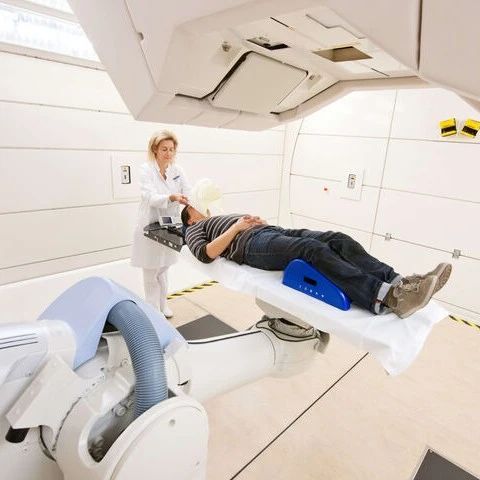
Core Insights - The medical cyclotron industry in China is experiencing continuous growth, with the market size expected to reach 413 million yuan in 2024, driven by technological advancements, increasing market demand, and supportive policies [1][11]. Technological Advancements - The performance and stability of medical cyclotrons have significantly improved due to ongoing technological developments, enabling better service to medical institutions and patients [1][11]. - The application of new materials and advanced manufacturing processes has enhanced the reliability and durability of the equipment, laying a solid foundation for the industry's long-term development [1][11]. Market Demand - The aging population and rising incidence of diseases such as cancer are leading to an increased demand for radiation therapy, which in turn boosts the market demand for medical cyclotrons [1][11]. - As healthcare standards improve and public health awareness rises, medical institutions are increasingly seeking high-end medical equipment, creating more opportunities for the development of medical cyclotrons [1][11]. Policy Support - The Chinese government has introduced several policies to support the industry, including initiatives aimed at promoting the upgrade of large-scale equipment and high-end medical devices [1][11]. Industry Overview - Medical cyclotrons are essential devices used in radiation therapy, particularly for tumor treatment, by generating high-energy electron or X-ray beams to damage cancer cell DNA [4][6]. - The industry has evolved through three stages: initial stage, preliminary development stage, and rapid development stage, with significant milestones such as the establishment of the first cyclotron in China in 1958 and the first domestic cyclotron being put into use in 2021 [6][7]. Industry Chain - The upstream of the medical cyclotron industry includes raw materials and components such as metals, plastics, electronic components, and magnetic systems, which directly affect the manufacturing quality and performance of cyclotrons [8]. - The downstream applications primarily involve medical and research institutions, where cyclotrons are used for medical diagnostics and scientific research [8]. Competitive Landscape - The market is currently dominated by international giants like Siemens Healthineers, GE Healthcare, and IBA, while domestic companies such as Sichuan Jiu Yi Yuan Particle Technology Co., Ltd. and Shaanxi Zhengze Biotechnology Co., Ltd. are rapidly emerging and achieving technological breakthroughs [12][13]. - Sichuan Jiu Yi Yuan Particle Technology Co., Ltd. focuses on high-end nuclear medical equipment and has developed a series of cyclotron products, while Shaanxi Zhengze Biotechnology Co., Ltd. specializes in small negative hydrogen cyclotrons and related equipment [12][13]. Future Trends - The medical cyclotron industry is expected to move towards greater intelligence, with advancements in control systems and beam stability, enhancing safety and reducing the need for manual intervention [15]. - There is a trend towards miniaturization and compactness of cyclotrons, which will lower installation costs and space requirements, facilitating wider adoption in medical institutions [15]. - The push for domestic alternatives is also a significant trend, with increasing government support for the localization of high-end medical equipment, which is expected to accelerate the industry's domestic production capabilities [15].


顶尖医院的前瞻性押注:HIT之后,下一个重点是质子治疗?
思宇MedTech· 2025-08-25 04:08
Core Viewpoint - Heidelberg University Hospital (UKHD) is making a strategic investment in the IBA Proteus® ONE compact proton therapy system, expected to be operational by mid-2030, reflecting a long-term vision for enhancing treatment capabilities and patient care [2][5][25]. Financial Model and Decision Logic - UKHD views the proton therapy system as a long-term asset rather than a short-term cash flow generator, anticipating returns from direct medical service income, research funding, and enhanced brand competitiveness [5][8][20]. - The hospital has demonstrated that high-investment equipment can achieve cost recovery through accumulated patient volume and interdisciplinary collaboration over time [4][6]. - The decision to invest now for future capabilities is based on a comprehensive financial model that considers long-term patient growth, insurance policy trends, and research output potential [11][12][23]. Patient Demographics and Clinical Needs - The increasing incidence of cancer, particularly in sensitive areas like head and neck tumors, highlights a growing demand for advanced treatment options such as proton therapy [12][13]. - Pediatric patients, who are particularly vulnerable to radiation side effects, benefit significantly from proton therapy, driving further investment in this area [13][14]. - UKHD's collaboration with research institutions enhances its ability to attract funding and conduct cutting-edge clinical trials, reinforcing its position in the market [15][16]. Management Approach and Investment Decisions - UKHD employs a structured governance framework that includes strategic analysis, medical controlling, and financial management to ensure thorough evaluation of major investments [17][18]. - The hospital's financial model typically spans 10-15 years, allowing for a long-term perspective on investments in medical technology [19][20]. - Regional integration and collaboration with other hospitals enhance UKHD's capacity to manage large investments and improve equipment utilization [21][24]. Summary Insights for Hospital Managers - The case of UKHD illustrates the importance of long-term vision in major equipment investments, emphasizing the need to evaluate potential returns over a decade or more rather than focusing solely on short-term financial outcomes [25][26]. - The strategic foresight demonstrated by UKHD serves as a reminder for healthcare institutions to align their investments with future patient needs and market trends [27][29].